
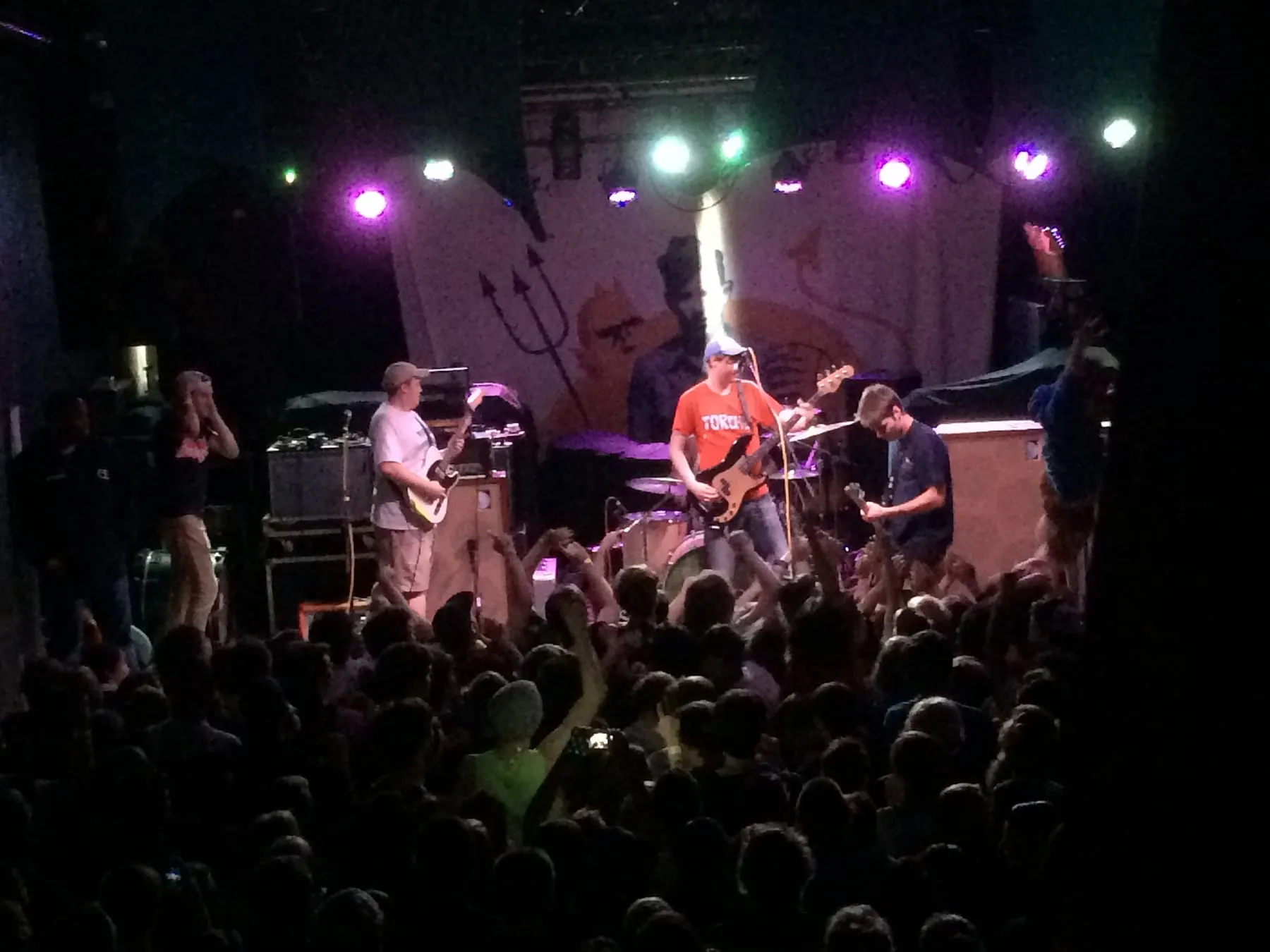
Photo by Ptncsu12 , licensed under CC BY-SA 3.0 · Wikimedia Commons
Rank #435
Modern Baseball
From Wikipedia
Modern Baseball was an American emo band from Philadelphia, Pennsylvania, consisting of Bren Lukens, Jake Ewald, Sean Huber, and Ian Farmer. The band formed in 2012 at Drexel University and released their first album, Sports, on Lame-O Records that same year. Their following albums, You're Gonna Miss It All and Holy Ghost, were released on Run For Cover Records in 2014 and 2016 respectively. The group has been on hiatus since 2017.
Discography & Previews
Browse through and click an album to open and play 30-second previews streamed from Apple Music.

Sports
2012 · 12 tracks

You’re Gonna Miss It All
2014 · 12 tracks

-
 SportsModern Baseball201212 tracks
 -
 You’re Gonna Miss It AllModern Baseball201412 tracks
 -
 Holy GhostModern Baseball201611 tracks
Deep Dive
Overview
Modern Baseball is an American emo band from Philadelphia, Pennsylvania, that emerged from the early 2010s indie and alternative rock scene. Formed in 2011 by Bren Lukens, Jake Ewald, Sean Huber, and Ian Farmer, the band became part of a wider resurgence of emo and pop-punk sensibilities in underground and indie rock circles during the 2010s. Their catalog spans three studio albums released between 2012 and 2016, each issued on small independent labels that became crucial nodes in the contemporary emo network. The band’s approach blended introspective songwriting with accessible melody and a DIY ethos rooted in the Philadelphia punk underground.
Formation Story
Modern Baseball coalesced at Drexel University in Philadelphia during 2011, a time when the city’s rock infrastructure was fed by university communities and grassroots DIY venues. The band emerged from the local scene where emo and indie rock aesthetics had begun to converge again after years of relative dormancy in mainstream attention. The founding lineup—Lukens, Ewald, Huber, and Farmer—brought complementary songwriting and instrumental skills that would define their sound from their earliest recordings. Philadelphia itself, with its legacy of punk and alternative rock heritage stretching back decades, provided fertile cultural soil for a band that would eventually draw from both emo’s emotional directness and indie rock’s artistic ambition.
Breakthrough Moment
Modern Baseball announced their arrival with Sports, released on Lame-O Records in 2012, the same year the band formed. The album’s stripped-down production and earnest emotional content found immediate resonance within underground emo and indie rock communities, establishing the band as a fixture on the college radio and independent music circuit. By their second full-length, You’re Gonna Miss It All, released in 2014 on the more established Run For Cover Records label, Modern Baseball had built sufficient momentum and critical goodwill to be recognized as central figures in the contemporary emo revival. The shift in record labels signaled growing industry interest, and the album’s title track became one of the band’s most recognizable songs within indie and emo circles.
Peak Era
The period from 2014 to 2016 represented Modern Baseball’s most prolific and visible years. You’re Gonna Miss It All established them as thoughtful songwriters capable of balancing vulnerability with melodic sophistication, while their 2016 follow-up, Holy Ghost, continued that trajectory with more expansive arrangements and deeper exploration of lyrical themes. During these years, the band toured actively across North America and abroad, appearing at indie rock festivals and building a dedicated fanbase through relentless live performance. The consistent output and growing reputation positioned them as one of the more compelling bands within the broader emo and indie rock ecosystem of the mid-2010s, a period when streaming platforms were beginning to reshape how underground music reached audiences.
Musical Style
Modern Baseball’s sound is rooted in emo’s confessional vocal delivery and emotional transparency, but filtered through indie rock’s emphasis on guitar-driven texture and production clarity. The band’s songwriting tends toward introspection without sentimentality, with lyrics that examine personal doubt, relationships, and existential uncertainty in concrete rather than grandiose terms. Their instrumentation typically features clean, ringing guitars, understated rhythm section work, and vocals that emphasize conversational phrasing over technical display. The arrangement aesthetic is notably restrained compared to earlier emo’s wall-of-sound production; instead, Modern Baseball leaves space within their compositions, allowing individual instrumental lines and vocal harmonies to breathe. Influences trace through both contemporary indie rock and earlier emo traditions, with particular affinities for bands that prioritized songwriter accessibility without sacrificing emotional depth.
Major Albums
Sports (2012)
Their debut introduced the band’s foundational sonic template and songwriting approach, establishing the introspective, guitar-forward framework that would define their catalog.
You’re Gonna Miss It All (2014)
This second album refined and expanded their vision, demonstrating increased compositional confidence and becoming their most widely recognized work within underground and indie contexts.
Holy Ghost (2016)
Their final album before hiatus showed the band continuing to develop their sound with greater sonic depth and thematic maturity, cementing their status as thoughtful indie rock craftspeople.
Signature Songs
- “You’re Gonna Miss It All” — The title track from their breakthrough album, embodying their approach to melancholic yet accessible indie-emo songwriting.
- “Fine, Great” — A fan favorite that showcases the band’s ability to pair emotional vulnerability with infectious melody.
- “Tears Over Beers” — Exemplifies their conversational lyrical style and restrained but effective arrangement sensibility.
- “Like a Rich Girl” — Demonstrates the guitar textures and harmonic sophistication that characterize their mature period.
Influence on Rock
Modern Baseball arrived during a pivotal moment when emo was transitioning from a stigmatized mid-2000s association into a source of renewed creative energy within underground indie rock. By treating emo sincerity as legitimate material for contemporary indie artists rather than a dated aesthetic to be ironic about or abandoned entirely, they helped reshape how a new generation of musicians approached emotional expression in rock music. Their presence on Bandcamp, streaming platforms, and the festival circuit influenced how emo and related genres circulated through digital networks in the 2010s. The band’s alignment with Run For Cover Records—itself a label known for cultivating thoughtful indie and emo-adjacent acts—positioned them within a broader artistic movement that proved emo sensibilities could coexist with indie rock credibility and critical appreciation.
Legacy
Although Modern Baseball entered a hiatus in 2017, their three albums remain touchstones within the 2010s emo and indie rock canon, regularly cited by contemporary bands emerging from similar emotional and sonic territories. Their recorded work continues to circulate widely on streaming platforms, introducing new listeners to their catalog long after the band’s active period. The band’s decision to step back rather than disband entirely has left the door open for potential future activity, a stance shared by several other contemporary acts navigating the demands and limitations of artistic collaboration. Their influence is particularly visible among indie and emo bands that emerged in the late 2010s and early 2020s, many of whom cite Modern Baseball as a model for how to balance emotional authenticity with compositional care and genre fluency.
Fun Facts
- Modern Baseball formed at Drexel University in Philadelphia, a city with deep roots in punk and alternative rock that directly shaped the band’s artistic sensibility.
- The band released their debut album Sports in 2012, the same year they formed, demonstrating their prolific creative output from their earliest period.
- Their record label transition from Lame-O Records to Run For Cover Records marked a significant step toward broader recognition within the indie rock infrastructure.
- Modern Baseball’s approach to emo songwriting arrived during a period when the genre was undergoing cultural reappraisal, helping to legitimize emotional expression within indie rock circles.