
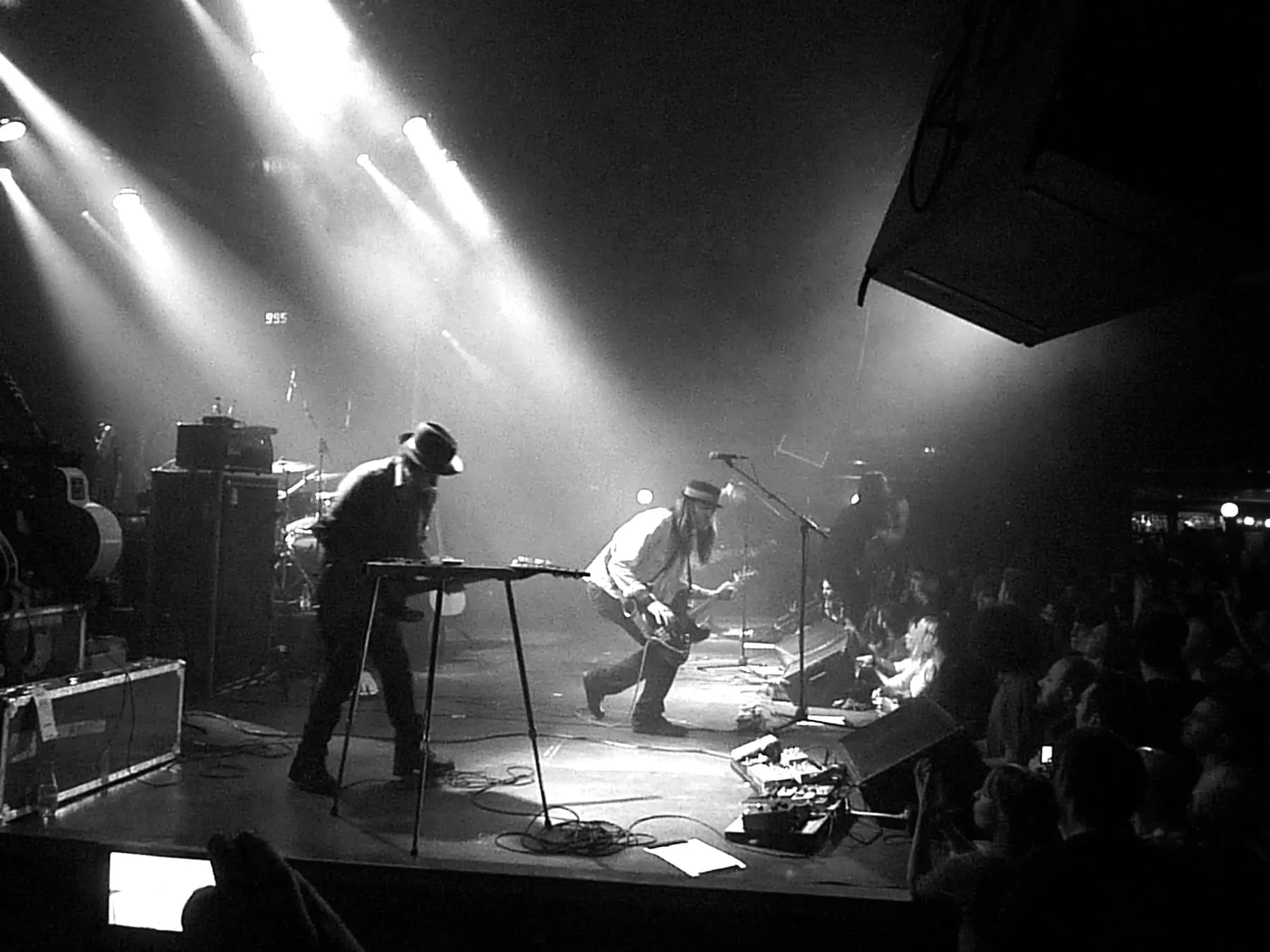
Photo by Teresa Sedó , licensed under CC BY-SA 2.0 · Wikimedia Commons
Rank #442
Blind Melon
From Wikipedia
Blind Melon is an American rock band formed in 1990 in Los Angeles, California. The band consists of guitarists Rogers Stevens and Christopher Thorn, drummer Glen Graham, vocalist Travis Warren and bassist Nathan Towne. They are best known for their 1993 hit "No Rain", and enjoyed critical and commercial success in the early 1990s with their neo-psychedelic take on alternative rock. The band has sold over 3.2 million albums in the United States as of 2008.
Members
- Shannon Hoon
Discography & Previews
Browse through and click an album to open and play 30-second previews streamed from Apple Music.


Soup
1995 · 14 tracks
-
 Blind MelonBlind Melon199213 tracks
 -
 SoupBlind Melon199514 tracks
Deep Dive
Overview
Blind Melon is an American rock band formed in Los Angeles in 1990, emerging as one of the defining acts of the 1990s alternative rock scene. Built on a neo-psychedelic foundation layered with alternative sensibilities, the band achieved widespread commercial success with their 1993 single “No Rain” and consolidated their position as major players in the era’s rock landscape. By 2008, Blind Melon had sold over 3.2 million albums in the United States alone, a testament to their resonance with audiences during and beyond their initial peak.
Formation Story
Blind Melon coalesced in Los Angeles in 1990, drawing together a lineup that would define their signature sound. The core ensemble—guitarists Rogers Stevens and Christopher Thorn, drummer Glen Graham, vocalist Shannon Hoon, and bassist Nathan Towne—assembled during a fertile moment in alternative rock’s mainstream breakthrough. Los Angeles in the early 1990s provided a rich creative backdrop; the city was simultaneously home to grunge-adjacent acts and to bands pulling from psychedelia and funk traditions. Blind Melon’s formation occurred as the alternative rock wave was cresting nationally, positioning them to ride both the sonic and commercial currents of the decade.
Breakthrough Moment
Blind Melon’s 1992 self-titled debut album introduced the band to a broader audience and established their neo-psychedelic credentials, but the single “No Rain” became the undeniable breakthrough moment. Released in 1993 and centered on Hoon’s distinctive vocal delivery and the band’s melodic hooks, the song achieved ubiquitous radio and MTV presence. “No Rain” transcended typical alternative rock radio play to become a genuine crossover hit, propelling Blind Melon from regional Los Angeles act to nationally recognized band. The song’s success carried the self-titled album into sustained commercial life, proving that the band’s blend of psychedelic textures and accessible alternative rock sensibilities held broad appeal.
Peak Era
The early-to-mid 1990s represented Blind Melon’s peak creative and commercial period. Their 1992 debut established the template; Soup, released in 1995, saw the band consolidate their position with a second full-length that continued exploring their alternative-psychedelic fusion. This window from 1992 to 1995 marked when Blind Melon operated at their highest profile, touring extensively and maintaining significant presence in alternative rock radio and MTV rotation. The band’s ability to balance hooks with experimental textures kept them relevant even as the alternative rock landscape itself began to shift by the mid-1990s.
Musical Style
Blind Melon’s sonic identity rested on the interplay between Rogers Stevens and Christopher Thorn’s guitar work—often dreamy and textured rather than aggressive—layered over Glen Graham’s steady rhythmic foundation and Nathan Towne’s melodic bass lines. Shannon Hoon’s vocals functioned as a primary instrument, characterized by a warm, expressive delivery that could convey vulnerability and power in equal measure. The band’s neo-psychedelic approach drew from 1960s and 1970s psychedelic rock traditions while filtering those influences through the alternative rock sensibility of the early 1990s. Rather than pursue the heavier distortion favored by some of their contemporaries, Blind Melon favored clarity, melody, and atmospheric production—a choice that contributed to “No Rain“‘s accessibility and to the band’s broader commercial success. Songs typically showcased strong hooks and structured songwriting rather than extended jams, even when incorporating psychedelic elements.
Major Albums
Blind Melon (1992)
The self-titled debut introduced all the essential elements of the band’s sound: Stevens and Thorn’s complementary guitar textures, Hoon’s expressive vocals, and the neo-psychedelic alternative rock blend that would define their era. The album’s success, particularly after “No Rain” became a hit, established Blind Melon as major commercial players.
Soup (1995)
Released three years after their debut, Soup found the band refining and expanding their established approach, demonstrating their ability to follow major success without simply retreading familiar ground. The album confirmed that Blind Melon were not a one-hit phenomenon but a band capable of sustaining creative output at a commercial scale.
For My Friends (2008)
This album marked Blind Melon’s return to the studio after a significant hiatus, arriving thirteen years after Soup. The release demonstrated the band’s continued vitality and their commitment to active musical engagement well into the 2000s.
Signature Songs
- “No Rain” — The 1993 single that became the band’s defining moment, achieving crossover radio and MTV success and introducing Blind Melon to mass audiences.
- “Galaxie” — A track showcasing the band’s neo-psychedelic textures and Hoon’s vocal expressiveness within a structured alternative rock framework.
- “Change” — Demonstrates the band’s ability to craft emotionally resonant songs that balance melody with deeper instrumental textures.
- “Bed” — A song highlighting the chemistry between Hoon’s vocals and the guitarists’ complementary playing styles.
Influence on Rock
Blind Melon occupied a specific niche in 1990s rock: they proved that psychedelic elements could coexist successfully with alternative rock accessibility and commercial viability. While bands like Nirvana, Pearl Jam, and Soundgarden dominated the louder, more visceral end of 1990s rock, Blind Melon demonstrated that melody, neo-psychedelic atmosphere, and mainstream success were not mutually exclusive. Their presence on early-1990s radio and MTV helped establish that alternative rock encompassed multiple sonic approaches and emotional registers. The band’s success influenced how subsequent alternative and alternative-adjacent acts approached production and arrangement, showing that textures and atmospheric detail could matter as much as raw power.
Legacy
Blind Melon’s legacy rests primarily on their role in 1990s alternative rock history and the singular achievement of “No Rain,” a song that remains embedded in popular culture and continues to receive significant streaming and radio play decades after its release. The band’s commercial success—over 3.2 million albums sold in the United States by 2008—placed them among the significant rock acts of their era. Their continued activity and releases into the 2000s demonstrated longevity and a commitment to their musical identity that extended well beyond the initial peak. Blind Melon’s particular brand of neo-psychedelic alternative rock remains a touchstone for how the early 1990s approached rock music outside the grunge-dominated narrative.
Fun Facts
- The band formed in Los Angeles in 1990, a city that hosted multiple influential alternative rock scenes simultaneously during that era.
- “No Rain” became so iconic that it transcended typical rock radio rotation to achieve genuine mainstream crossover status in 1993.
- Blind Melon maintained an official website presence at blindmelon.com, supporting active fan engagement and information distribution about the band.