
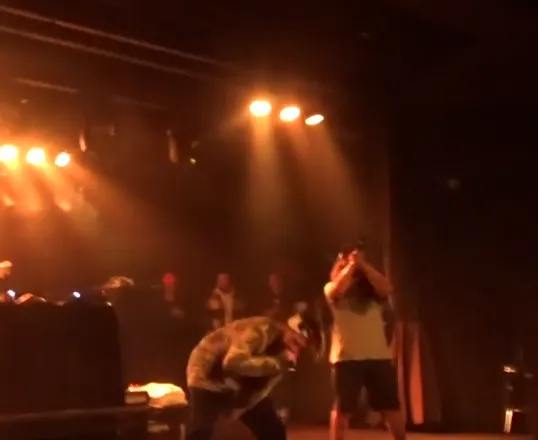
Photo by GrossyTwo , licensed under CC BY 3.0 · Wikimedia Commons
Rank #265
$uicideboy$
From Wikipedia
Suicideboys is an American hip-hop duo from New Orleans, Louisiana. Suicideboys were founded in 2013 by cousins Scott "Scrim" Arceneaux Jr. and Aristos "Ruby da Cherry" Petrou. The duo initially rose to popularity on SoundCloud for their abrasive, self-produced beats and harsh lyrical content, as well as their music videos and themes prominently featuring substance abuse and suicidal ideation. They own and operate their own label, G*59 Records, under which all of their music is distributed by The Orchard.
Members
- Ruby da Cherry
- Scott Arceneaux Jr.
Discography & Previews
Browse through and click an album to open and play 30-second previews streamed from Apple Music.
My Liver Will Handle What My Heart Can’t
2015 · 13 tracks
- 1 Vincent Van Gogh Ain't Got Shit on Me ↗ 2:15
- 2 Reign in Blood ↗ 2:53
- 3 Shattered Amethyst ↗ 2:07
- 4 Fold ↗ 2:44
- 5 Tulane ↗ 1:49
- 6 Cherish the Dead ↗ 1:59
- 7 Opal Ring ↗ 2:00
- 8 T.R.U. (Totally Rotten Underground) ↗ 2:08
- 9 Whoa, I'm Woeful ↗ 2:38
- 10 A Death in the Ocean Would Be Beautiful ↗ 1:58
- 11 Fuckthepopulation ↗ 2:30
- 12 Kill Yourself (Part III) ↗ 2:25
- 13 Iron Veil ↗ 1:57
7th or St. Tammany
2015 · 12 tracks
- 1 7th or St. Tammany ↗ 1:04
- 2 Dead Batteries ↗ 2:23
- 3 I'll Pay for It (If I Want It) ↗ 2:39
- 4 That's Very Minimalist of You ↗ 1:47
- 5 Romulus ↗ 2:02
- 6 Vices (feat. JGrxxn) ↗ 4:08
- 7 Straw Chairs ↗ 1:38
- 8 40 Oz. & Sober ↗ 3:00
- 9 Drugs/Hoes/Money/Etc. ↗ 2:24
- 10 St. Bernard ↗ 1:33
- 11 Leave Your Things Behind ↗ 2:40
- 12 Rag Round My Skull ↗ 2:22

High Tide in the Snake's Nest
2015 · 10 tracks
- 1 Diemonds ↗ 3:12
- 2 Ugly ↗ 2:35
- 3 $Outh $Ide $Uicide (feat. Pouya) ↗ 2:49
- 4 Mount Sinai ↗ 2:26
- 5 Lincoln Continental Memorial (feat. Slug Christ) ↗ 3:03
- 6 Mannequins Are My Best of Friends ↗ 1:56
- 7 Sunshine ↗ 1:57
- 8 Rotten and Paralyzed in a Tropical Paradise ↗ 2:32
- 9 Fake Pontchartrain ↗ 3:15
- 10 Exodus ↗ 2:06

Gray/Grey
2015 · 12 tracks
- 1 #1 Stunna ↗ 2:42
- 2 Loot (feat. Ramirez & Black Smurf) ↗ 3:25
- 3 Pontiac Sunfire ↗ 2:22
- 4 Magnolia (feat. KirbLaGoop) ↗ 2:39
- 5 Gabapentin Getaway ↗ 2:33
- 6 $Hrimp Poboy (feat. Supa) ↗ 4:24
- 7 Prettyleaf ↗ 2:55
- 8 To Kill a Mockingbird (feat. Na$Ty Matt) ↗ 2:50
- 9 Clouds as Witnesses ↗ 2:34
- 10 Guady Pack Shawty (feat. Yung God) ↗ 3:19
- 11 Behold a Pale Horse ↗ 2:25
- 12 Kill Yourself (Pt. II) ↗ 7:26
Now the Moon’s Rising
2015 · 10 tracks

YUNGDEATHLILLIFE
2015 · 13 tracks
- 1 I Miss My Dead Friends ↗ 1:47
- 2 That Time We Went to Wal Mart in Memphis to Steal Some Shit Before We Met up with ta to Shoot His Video ↗ 2:16
- 3 Lte ↗ 2:14
- 4 Gloss of Blood ↗ 1:44
- 5 La Croix ↗ 2:11
- 6 All My Life I've Wanted a Chevy ↗ 1:50
- 7 I Ended up Driving the Camaro off the Causeway Bridge ↗ 2:15
- 8 April Mourning ↗ 1:29
- 9 Cerberus (feat. Masta Drag) ↗ 3:26
- 10 In Order to Cast a Shadow You Must First Light a Fire ↗ 1:58
- 11 Handzum $Uicide ↗ 2:35
- 12 Sold My Soul to Satan Waiting in Line at the Mall ↗ 2:19
- 13 F**k Boy Blood Bath ↗ 2:00

Eternal Grey
2016 · 14 tracks
- 1 BREAKDALAW2k16 (feat. Pouya) ↗ 1:50
- 2 Say Cheese and Die ↗ 2:42
- 3 Eclipse ↗ 2:08
- 4 Chariot of Fire ↗ 2:11
- 5 I Want to Believe ↗ 1:22
- 6 Uglier ↗ 2:38
- 7 Water $Uicide (feat. Chris Travis) ↗ 2:34
- 8 Elysian Fields ↗ 2:34
- 9 275 $Uicide ↗ 2:09
- 10 Lucky Me ↗ 1:46
- 11 It's Hard to Win When You Always Lose ↗ 1:26
- 12 O Pana! ↗ 2:08
- 13 Ultimate $Uicide (feat. Denzel Curry) ↗ 2:51
- 14 Leave Your Things Behind II ↗ 2:47

Dark Side of the Clouds
2016 · 11 tracks
- 1 Paper Bag Mask ↗ 2:40
- 2 Cherry P.I.E. ↗ 2:12
- 3 Praisethedevil ↗ 1:48
- 4 Jeffer Drive ↗ 1:51
- 5 Am/Pm ↗ 2:05
- 6 Jon Voight (Live Fast, Die Young) ↗ 1:07
- 7 Marlboros & White Widow (feat. Germ) ↗ 3:02
- 8 Golden Calf (feat. Eddy Baker & Fat Nick) ↗ 3:32
- 9 Aite, Bet. ↗ 2:05
- 10 Grayscale ↗ 3:34
- 11 Novus Ordo Seclorum ↗ 1:36
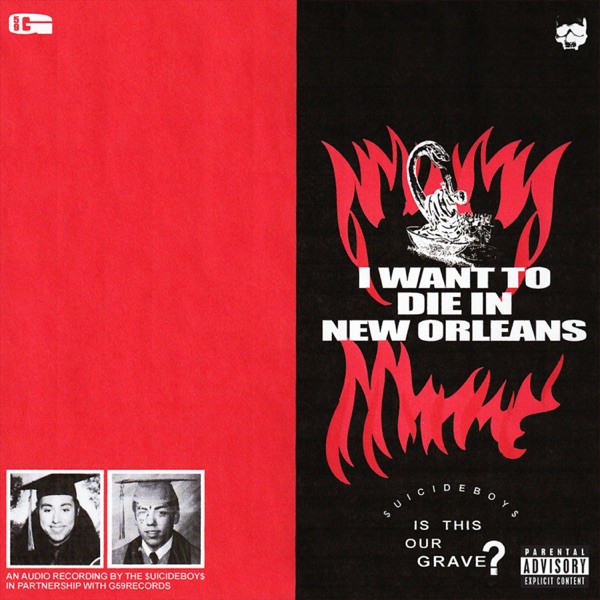
I Want to Die in New Orleans
2018 · 14 tracks
- 1 King Tulip ↗ 3:05
- 2 Bring out Your Dead ↗ 1:46
- 3 Nicotine Patches ↗ 2:36
- 4 10,000 Degrees ↗ 3:09
- 5 122 Days ↗ 3:04
- 6 Phanton Menace ↗ 2:22
- 7 Krewe Du Vieux (Comedy & Tragedy) ↗ 1:44
- 8 WAR TIME ALL THE TIME ↗ 2:26
- 9 Coma ↗ 2:18
- 10 Long Gone (Save Me from This Hell) ↗ 2:19
- 11 Meet Mr. NICEGUY ↗ 2:26
- 12 Carrollton ↗ 3:24
- 13 F**k the Industry ↗ 3:55
- 14 I No Longer Fear the Razor Guarding My Heel (IV) ↗ 7:54
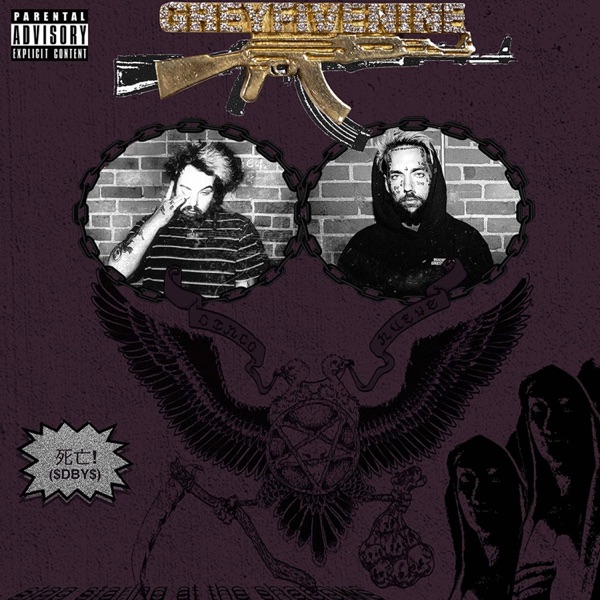
Stop Staring at the Shadows
2020 · 12 tracks
- 1 All Dogs Go to Heaven ↗ 2:34
- 2 I Wanna Be Romanticized ↗ 2:14
- 3 One Last Look at the Damage ↗ 1:38
- 4 [whispers Indistinctly] ↗ 2:45
- 5 Mega Zeph ↗ 1:42
- 6 Putrid Pride ↗ 1:47
- 7 That Just Isn't Empirically Possible ↗ 2:04
- 8 What the F**k Is Happening ↗ 1:46
- 9 Bizarro ↗ 3:34
- 10 Scope Set ↗ 1:33
- 11 F**k Your Culture ↗ 1:42
- 12 ...And to Those I Love, Thanks for Sticking Around ↗ 2:48

Long Term Effects of SUFFERING
2021 · 13 tracks
- 1 Degeneration in the Key of A Minor ↗ 2:08
- 2 If Self-Destruction Was an Olympic Event, I’d Be Tonya Harding ↗ 2:23
- 3 Life Is but a Stream~ ↗ 2:03
- 4 5 Grand at 8 to 1 ↗ 2:50
- 5 WE ENVY NOTHING IN THE WORLD. ↗ 2:51
- 6 Lighting the Flames of My Own Personal Hell ↗ 1:50
- 7 New Profile Pic ↗ 2:08
- 8 Bleach ↗ 2:40
- 9 Forget It ↗ 3:19
- 10 Avalon ↗ 2:21
- 11 Materialism as a Means to an End ↗ 2:46
- 12 Ugliest ↗ 2:58
- 13 The Number You Have Dialed Is Not in Service ↗ 2:46
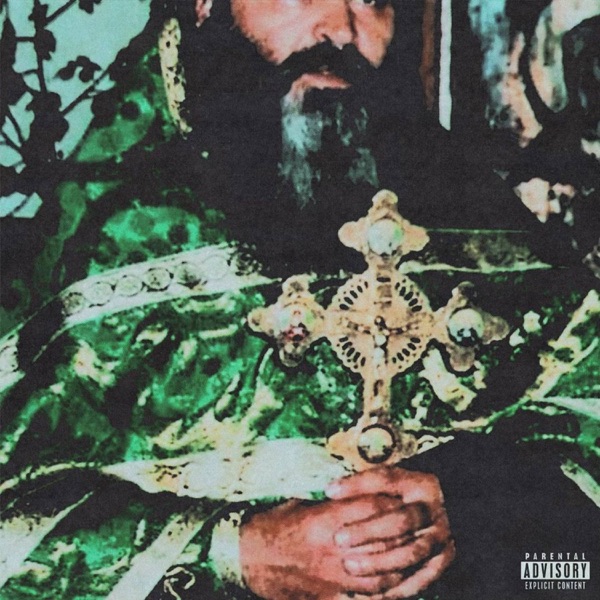
Sing Me a Lullaby, My Sweet Temptation
2022 · 13 tracks
- 1 Genesis ↗ 2:42
- 2 Matte Black ↗ 3:58
- 3 F*****g Your Culture ↗ 3:16
- 4 1000 Blunts ↗ 2:55
- 5 In Constant Sorrow ↗ 2:39
- 6 Escape From BABYLON ↗ 2:21
- 7 Ashes of Luxury ↗ 1:37
- 8 Resistance Is Useless ↗ 2:23
- 9 Eulogy ↗ 3:48
- 10 No Matter Which Direction I'm Going In, I Never Chase These Hoes ↗ 2:35
- 11 $uicideboy$ Were Better In 2015 ↗ 2:23
- 12 Unlucky Me ↗ 2:36
- 13 THE_EVIL_THAT_MEN_DO ↗ 2:53

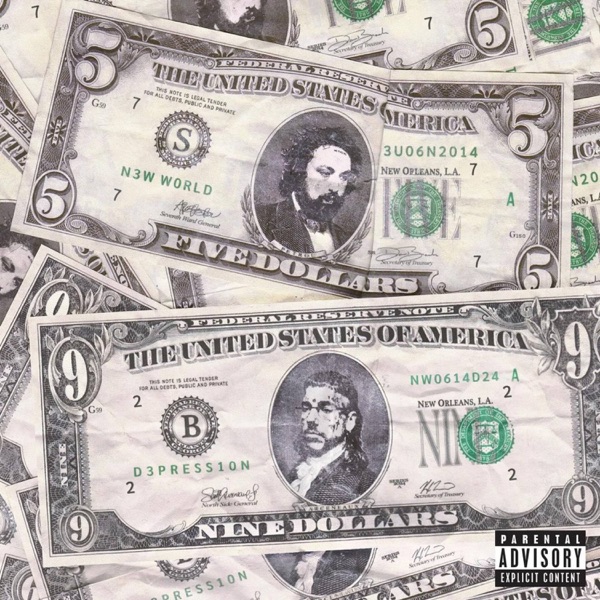
New World Depression
2024 · 13 tracks
- 1 Lone Wolf Hysteria ↗ 1:48
- 2 Mental Clarity Is a Luxury I Can't Afford ↗ 2:26
- 3 The Thin Grey Line ↗ 1:46
- 4 Thorns ↗ 2:11
- 5 Misery in Waking Hours ↗ 3:40
- 6 Burgundy ↗ 4:28
- 7 Transgressions ↗ 2:17
- 8 Are You Going to See the Rose in the Vase, or the Dust on the Table ↗ 2:31
- 9 All of My Problems Always Involve Me ↗ 2:02
- 10 The Light at the End of the Tunnel for $9.99 a Month ↗ 2:20
- 11 Drag 'Em to the River (Totalitarian Remix) ↗ 3:47
- 12 Us Vs. Them ↗ 3:05
- 13 Kill Yourself V ↗ 1:56

Thy Kingdom Come
2025 · 10 tracks
- 1 COUNT YOUR BLESSINGS ↗ 4:08
- 2 Napoleon ↗ 2:36
- 3 Oh, What a Wretched Man I Am! ↗ 2:40
- 4 Full of Grace (I Refuse to Tend My Own Grave) ↗ 3:00
- 5 Chain Breaker ↗ 2:14
- 6 Now and at the Hour of Our Death (feat. BONES) ↗ 4:15
- 7 Self-Inflicted ↗ 1:27
- 8 GREY+GREY+GREY ↗ 2:41
- 9 Carried Away (feat. Night Lovell) ↗ 3:44
- 10 Monochromatic ↗ 2:18

-
 My Liver Will Handle What My Heart Can’t$uicideboy$201513 tracks
 -
 7th or St. Tammany$uicideboy$201512 tracks
 -
 High Tide in the Snake's Nest$uicideboy$201510 tracks
 -
 Gray/Grey$uicideboy$201512 tracks
 -
 Now the Moon’s Rising$uicideboy$201510 tracks
 -
 YUNGDEATHLILLIFE$uicideboy$201513 tracks
 -
 Eternal Grey$uicideboy$201614 tracks
 -
 Dark Side of the Clouds$uicideboy$201611 tracks
 -
 I Want to Die in New Orleans$uicideboy$201814 tracks
 -
 Stop Staring at the Shadows$uicideboy$202012 tracks
 -
 Long Term Effects of SUFFERING$uicideboy$202113 tracks
 -
 Sing Me a Lullaby, My Sweet Temptation$uicideboy$202213 tracks
 -
 DIRTIESTNASTIEST$UICIDE$uicideboy$20227 tracks
 -
 New World Depression$uicideboy$202413 tracks
 -
 Thy Kingdom Come$uicideboy$202510 tracks
 -
 THY WILL BE DONE$uicideboy$202510 tracks
Deep Dive
Overview
$uicideboy$ is an American hip-hop duo from New Orleans, Louisiana, formed in 2014 by cousins Scott “Scrim” Arceneaux Jr. and Ruby da Cherry (Aristos Petrou). Operating at the intersection of cloud rap, trap music, emo rap, and punk rap, the pair built a global fanbase through self-produced beats, confrontational lyricism, and visual aesthetics centered on themes of substance abuse and suicidal ideation. Their ascent from SoundCloud bedroom project to prolific independent recording artists redefined how a hip-hop duo could sustain creative output and maintain artistic autonomy in the streaming era.
Formation Story
$uicideboy$ emerged from New Orleans in the early 2010s, a city with deep roots in hip-hop innovation and musical eclecticism. Cousins Scott Arceneaux Jr. (Scrim) and Aristos Petrou (Ruby da Cherry) began collaborating around 2013–2014, experimenting with production and recording in a DIY capacity. Rather than pursue traditional record-label infrastructure, the two cousins took full creative control over their sound and distribution, establishing themselves first and foremost as self-sufficient artists. Their foundation in New Orleans—a city steeped in psychedelic soul, funk, and historically unorthodox approaches to recording—informed their willingness to merge abrasive production with introspective, often dark lyricism.
Breakthrough Moment
$uicideboy$ rose to prominence on SoundCloud beginning in 2015, the same year they released a staggering number of projects: My Liver Will Handle What My Heart Can’t, 7th or St. Tammany, High Tide in the Snake’s Nest, Gray/Grey, Now the Moon’s Rising, and YUNGDEATHLILLIFE. The prolific output and unpolished, deliberately harsh production aesthetic resonated with listeners drawn to the platform’s underground rap ecosystem. Their music videos and thematic preoccupations—explicit, unflinching treatments of substance abuse and suicidal imagery—set them apart from mainstream hip-hop and aligned them with an emerging wave of younger artists channeling emotional turbulence through confrontational sonics. The volume and velocity of their output across 2015 established a template that would define their career: constant creation and release without waiting for traditional gatekeepers.
Peak Era
The years 2016–2018 marked $uicideboy$‘s consolidation as independent hip-hop’s most visible self-produced project. Eternal Grey (2016) and Dark Side of the Clouds (2016) refined their production and demonstrated growing sonic sophistication, while I Want to Die in New Orleans (2018) anchored their identity firmly to their geographical origin and thematic obsessions. The title itself—a direct invocation of the band’s hometown—signaled that despite their global SoundCloud reach, the duo’s creative center remained rooted in New Orleans’ particular cultural and sonic landscape. During this period, $uicideboy$ also formalized their role as label operators, launching and operating G*59 Records, through which they released their own music and provided a platform for affiliated artists, further embedding themselves as independent industry actors rather than simply recording artists.
Musical Style
$uicideboy$‘s sound fuses elements of cloud rap’s atmospheric distortion, trap music’s rhythmic hi-hat patterns and 808 drums, and the emotional rawness of emo rap. Both Scrim and Ruby da Cherry handle production and vocal duties, layering their voices with effects processing, pitch-shifting, and lo-fi aesthetics that prioritize mood over clarity. Their lyricism eschews conventional rap braggadocio in favor of introspection, depression, and existential anxiety delivered in deadpan or sung/half-sung vocal delivery. The production often deliberately obscures melody beneath layers of noise, distortion, and reverb—a choice that mirrors the murky psychedelia of New Orleans’ musical heritage while simultaneously alienating mainstream listeners. Over their decade-plus of releases, their sound has evolved from ultra-lo-fi bedroom recordings toward slightly more refined production, though they have maintained their core aesthetic of abrasive beats and unflinching lyrical content.
Major Albums
I Want to Die in New Orleans (2018)
A definitive statement of the duo’s identity, this album centers their geographic and thematic anchoring, featuring refined production that maintained their signature abrasiveness while expanding sonic range.
Stop Staring at the Shadows (2020)
Released after a two-year gap, this album demonstrated sustained commercial and critical momentum, consolidating their position as leaders of an underground hip-hop movement.
Long Term Effects of SUFFERING (2021)
Continuing their prolific pace, this project maintained their sonic consistency while exploring variations in mood and production density.
New World Depression (2024)
A recent installment reinforcing their continued creative activity and relevance nearly a decade into their career.
Signature Songs
- “Paris” — An emblematic fusion of their lo-fi production and introspective lyricism, establishing their sonic template early in their career.
- “Antarctica” — Showcases the duo’s ability to layer melody beneath distorted, abrasive production.
- “Kill Yourself” — A confrontational title paired with dark, experimental production that exemplifies their willingness to challenge listener comfort.
- “Long Gone” — Demonstrates their vocal interplay and ability to sustain atmospheric tension across extended instrumental passages.
Influence on Rock
While categorized as hip-hop, $uicideboy$ occupies an important position in the broader rock and alternative music landscape of the 2010s and beyond. Their self-produced, DIY ethos echoes punk rock’s anti-establishment lineage while their atmospheric production and thematic content align with the introspective, guitar-free alternative movements that have characterized post-2010 underground rock. Their success on SoundCloud and subsequent ability to build a global fanbase without traditional radio or major-label support has influenced how independent artists across genres approach platform strategy and direct-to-fan distribution. The duo’s embrace of emo rap—itself a genre-blending phenomenon—has validated the fusion of rock’s emotional vulnerability with hip-hop’s rhythmic and production possibilities, paving pathways for other artists working at the intersection of genres.
Legacy
$uicideboy$ remains active and prolific, with recent releases in 2024 and 2025 (New World Depression, Thy Kingdom Come, THY WILL BE DONE) confirming their continued creative engagement. Their ownership and operation of G*59 Records positions them not merely as recording artists but as independent label executives, a distinction that separates them from countless SoundCloud rappers who dissolved into obscurity. Their body of work—spanning from ultra-lo-fi 2015 projects to more refined recent recordings—documents a decade of consistent artistic evolution. The duo’s unflinching engagement with mental health, substance abuse, and existential themes has resonated particularly with younger listeners, establishing a cultural footprint that transcends traditional music industry metrics. Their achievement of sustained visibility and output in the independent streaming era, without compromising artistic vision or surrendering autonomy to major-label infrastructure, represents a significant template for how hip-hop artists can operate in the 2020s.
Fun Facts
- $uicideboy$ released six studio projects in 2015 alone, establishing an output velocity that would become their creative signature and distinguish them from peers operating on traditional album-cycle timelines.
- The duo distributes all music released under G*59 Records through The Orchard, a strategy that maintains independence while accessing professional distribution infrastructure.
- Their New Orleans origin connects them to a lineage of boundary-pushing southern producers and artists, from early psychedelic funk to contemporary experimental hip-hop.
- The duo’s commitment to unprocessed, deliberately imperfect production—even as studio technology improved—reflects an aesthetic choice rather than technical limitation, distinguishing their work from contemporaries pursuing cleaner sonics.