

Photo by Andrew King , licensed under CC BY-SA 2.0 · Wikimedia Commons
Rank #62
Traveling Wilburys
From Wikipedia
The Traveling Wilburys were a British and American supergroup formed in Los Angeles in 1988, consisting of Bob Dylan, George Harrison, Jeff Lynne, Roy Orbison, and Tom Petty. They were described as "perhaps the biggest supergroup of all time".
Members
- Bob Dylan
- George Harrison
- Jeff Lynne
- Roy Orbison
- Tom Petty
Discography & Previews
Browse through and click an album to open and play 30-second previews streamed from Apple Music.

Traveling Wilburys, Vol. 1
1988 · 10 tracks
- 1 Handle With Care (2016 Remaster) ↗ 3:19
- 2 Dirty World (2016 Remaster) ↗ 3:30
- 3 Rattled (2016 Remaster) ↗ 2:59
- 4 Last Night (2016 Remaster) ↗ 3:51
- 5 Not Alone Any More (2016 Remaster) ↗ 3:24
- 6 Congratulations (2016 Remaster) ↗ 3:29
- 7 Heading For The Light (2016 Remaster) ↗ 3:37
- 8 Margarita (2016 Remaster) ↗ 3:16
- 9 Tweeter And The Monkey Man (2016 Remaster) ↗ 5:28
- 10 End Of The Line (2016 Remaster) ↗ 3:27
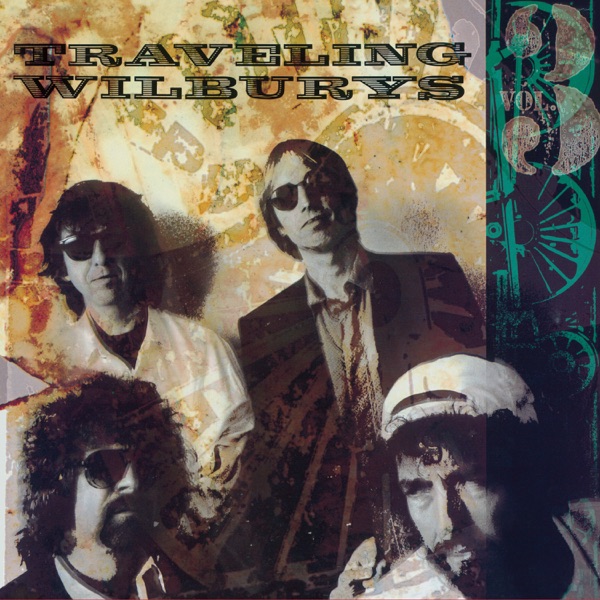
Traveling Wilburys, Vol. 3
1990 · 11 tracks
- 1 She's My Baby (2016 Remaster) ↗ 3:15
- 2 Inside Out (2016 Remaster) ↗ 3:35
- 3 If You Belonged To Me (2016 Remaster) ↗ 3:13
- 4 The Devil's Been Busy (2016 Remaster) ↗ 3:18
- 5 7 Deadly Sins (2016 Remaster) ↗ 3:17
- 6 Poor House (2016 Remaster) ↗ 3:16
- 7 Where Were You Last Night? (2016 Remaster) ↗ 3:04
- 8 Cool Dry Place (2016 Remaster) ↗ 3:37
- 9 New Blue Moon (2016 Remaster) ↗ 3:20
- 10 You Took My Breath Away (2016 Remaster) ↗ 3:19
- 11 Wilbury Twist (2016 Remaster) ↗ 2:57
-
 Traveling Wilburys, Vol. 1Traveling Wilburys198810 tracks
 -
 Traveling Wilburys, Vol. 3Traveling Wilburys199011 tracks
Deep Dive
Overview
The Traveling Wilburys were a British and American supergroup formed in Los Angeles in 1988, bringing together five of rock music’s most accomplished and creatively distinct voices: Bob Dylan, George Harrison, Jeff Lynne, Roy Orbison, and Tom Petty. Their emergence represented a rare convergence of individual mastery within a collective framework—a project built not on commercial calculation alone but on mutual respect, shared roots in rock and folk traditions, and a genuine desire to explore songwriting and performance outside the weight of individual legacy. Described as perhaps the biggest supergroup of all time, they functioned as equal partners in an endeavor that felt both timely and timeless, bridging the Americana sensibility of country rock with the sophistication of folk-rock composition and the technical precision of professional studio craft.
Formation Story
The Traveling Wilburys came together in Los Angeles in 1988 when five artists at different points in their careers—Dylan approaching the end of his Knocked Out Loaded era, Harrison stepping back from solo prominence, Lynne at the helm of Electric Light Orchestra’s legacy, Orbison in the midst of a late-career resurgence, and Petty as one of America’s working rock stalwarts—found common ground in a spirit of creative collaboration and informality. The project emerged from a relaxed studio setting where ego was deliberately minimized and the focus remained on melody, harmony, and the pleasures of ensemble rock and country-inflected songwriting. Rather than a calculated corporate venture, the group functioned as peers reuniting with the shared tradition of rock and roll’s roots, each member contributing vocal, instrumental, and compositional talents to a body of work that reflected their collective influences in Americana, folk, and electric rock.
Breakthrough Moment
The release of Traveling Wilburys, Vol. 1 in 1988 immediately positioned the group as a cultural phenomenon. The album’s arrival was accompanied by significant media attention—the combination of Dylan, Harrison, and Orbison alone guaranteed worldwide press, but the actual quality and accessibility of the material ensured that the initial curiosity translated into genuine commercial and critical success. The album demonstrated that a supergroup could function not as a novelty but as a legitimate creative entity, with each member’s voice and songwriting integrated into a cohesive whole rather than sequestered into separate features. This debut became the moment that transformed the Traveling Wilburys from an intriguing rumor into a permanent fixture in the rock record.
Peak Era
The band’s peak creative period spanned 1988 to 1990, during which they released three studio albums: Traveling Wilburys, Vol. 1 in 1988, followed by Silver Wilburys, Traveling Wilburys, Vol. 3, and With a Little Help From Our Friend Jeff in 1990. This concentrated stretch saw the group working with momentum and focus, building on the success of their debut and exploring further variations on their signature blend of roots rock, country, and folk-inflected melodies. The period represented the group’s most sustained creative activity, during which they consolidated their sound and deepened the interplay between their individual voices and the collective identity they had established.
Musical Style
The Traveling Wilburys synthesized roots rock, country rock, folk rock, and heartland rock into a style that felt both contemporary in its studio production and timeless in its melodic and lyrical sensibilities. Their arrangements typically featured acoustic and electric guitars, prominent vocal harmonies, and a rhythmic foundation that drew from country and folk traditions while maintaining rock and roll’s dynamic drive. The group’s approach emphasized strong melodies, accessible songwriting that nonetheless carried emotional and thematic depth, and the kind of ensemble interplay that emerged from musicians who understood how to serve the song rather than overshadow it. Vocally, the five distinctive voices—Dylan’s carved rasp, Harrison’s understated warmth, Lynne’s polished tenor, Orbison’s soaring operatic range, and Petty’s straightforward Americana delivery—created a vocal tapestry that could shift character from track to track while maintaining a unified aesthetic identity rooted in American popular song traditions.
Major Albums
Traveling Wilburys, Vol. 1 (1988)
The supergroup’s debut established the template for their sound and proved that five disparate voices and songwriting styles could function cohesively within a single album framework. It became both a critical and commercial success, demonstrating that the group was far more than a celebrity gathering.
Silver Wilburys (1990)
Released alongside Traveling Wilburys, Vol. 3, this album continued the group’s exploration of roots rock and folk-influenced material, maintaining their established approach while developing variations on their core sound and thematic concerns.
Traveling Wilburys, Vol. 3 (1990)
Despite the sequential numbering suggesting a third installment, this album was released as the group’s third studio project, further solidifying the Wilburys’ catalogue during their most productive period and reinforcing their command of ensemble rock composition and performance.
With a Little Help From Our Friend Jeff (1990)
Also appearing in 1990, this album represented another facet of the group’s output during their peak creative window, adding further dimension to their recorded legacy and demonstrating their willingness to explore different configurations and approaches to their fundamental musical identity.
Signature Songs
- A rock and country-inflected composition typical of their ensemble approach and harmonically sophisticated in ways that recalled both folk traditions and contemporary pop-rock craft.
- The group’s ability to deploy multiple lead voices across a single track, allowing each member to contribute distinctly while serving a unified melodic and rhythmic structure.
- Recordings that showcased Roy Orbison’s distinctive vocal range and the ways his operatic presence balanced and deepened the other members’ contributions.
- Tracks that drew from country, Americana, and roots rock lineages while maintaining contemporary studio production values and arrangement sophistication.
Influence on Rock
The Traveling Wilburys demonstrated that supergroups could transcend novelty status and operate as genuine creative entities rather than celebrity assemblies. Their emergence and success in 1988 reinvigorated interest in roots rock, country rock, and folk-influenced songwriting among mainstream audiences, proving that a rock idiom grounded in American musical traditions could command contemporary attention and commercial success. The group’s influence extended to younger artists interested in ensemble rock, collaborative songwriting across distinct voices, and the integration of country, folk, and rock elements within professional production frameworks. By treating the supergroup format as a serious creative endeavor rather than a one-off event, the Traveling Wilburys elevated the conceptual and artistic possibilities available to established artists seeking to work outside individual career trajectories.
Legacy
Although the Traveling Wilburys’ active period proved relatively brief, their recorded output secured a lasting place in rock music history. The group’s albums remained in circulation and were reissued and remastered in the decades following their formation, with Traveling Wilburys, Volume 1 Extended Edition appearing in 2002 to provide expanded access to their material. The band operated within a recorded legacy model, their significance measured less by touring and live performance than by the studio albums they had created. Their work influenced how subsequent generations understood the possibilities of ensemble rock and collaborative ventures among established artists, establishing a template that balanced commercial viability with artistic credibility. The Traveling Wilburys represented a singular moment when five of rock’s most recognizable figures aligned around a shared creative vision, producing work that satisfied both the curiosity surrounding their collaboration and the musical expectations such an assembly warranted.
Fun Facts
- The group’s playful use of pseudonyms—each member adopted a “Wilbury” surname in humorous combination with their real name, creating a sense of informal community within the project.
- The Traveling Wilburys maintained an official website at https://www.travelingwilburys.com/, extending their digital presence across decades and generations of rock listeners.
- Roy Orbison, whose career had experienced a significant revival in the 1980s, found renewed prominence as part of the supergroup, his distinctive voice positioned alongside some of rock’s most celebrated performers.
- The group’s catalogue spanned recordings released by multiple major labels including Warner Bros. Records, Concord Records, and Rhino, reflecting the administrative complexity of managing five established artists’ recording rights and catalog control.