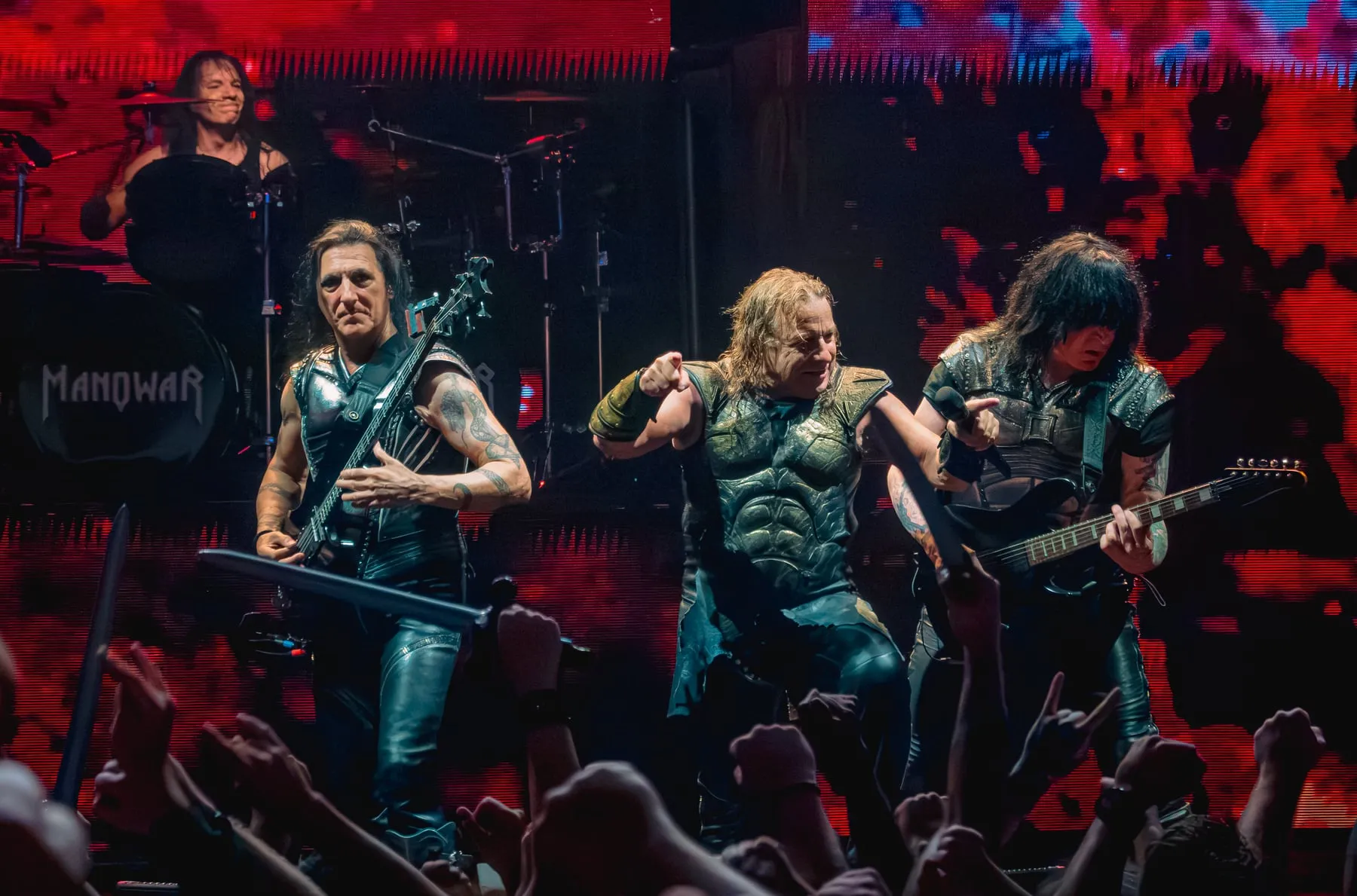
Photo by Justice for the Beholder of the Harvester of Blackened Straw , licensed under CC BY-SA 4.0 · Wikimedia Commons
Rank #427
Manowar
From Wikipedia
Manowar is an American heavy metal band from Auburn, New York. Formed in 1980, the group is known for lyrics based on fantasy and mythology as well as numerous songs celebrating the genre and its core audience. The band is also known for a loud and emphatic sound. In an interview for MTV in February 2007, bassist Joey DeMaio lamented that "these days, there's a real lack of big, epic metal that is drenched with crushing guitars and choirs and orchestras... so it's nice to be one of the few bands that's actually doing that". In 1984, Manowar was included in the Guinness Book of World Records for delivering the loudest performance, a record that they have since broken on two occasions. They also hold the world record for the longest heavy metal concert after playing for five hours and one minute in Bulgaria in 2008. They are known for their slogan "death to false metal".
Members
- David Shankle
- Eric Adams
- Joey DeMaio
- Ross the Boss
Discography & Previews
Browse through and click an album to open and play 30-second previews streamed from Apple Music.



Kings of Metal
1988 · 10 tracks


Warriors of the World
2002 · 12 tracks
- 1 Call To Arms (Remastered) ↗ 5:30
- 2 The Fight For Freedom (Remastered) ↗ 4:30
- 3 Nessun Dorma (Remastered) ↗ 3:26
- 4 Valhalla (Remastered) ↗ 0:35
- 5 Swords In the Wind (Remastered) ↗ 5:19
- 6 An American Trilogy (Remastered) ↗ 4:16
- 7 The March (Remastered) ↗ 4:00
- 8 Warriors of the World United (Remastered) ↗ 5:51
- 9 Hand of Doom (Remastered) ↗ 5:49
- 10 House of Death (Remastered) ↗ 4:22
- 11 Fight Until We Die (Remastered) ↗ 4:01
- 12 House of Death (Live At O2 Academy 2011) ↗ 4:40

Gods of War
2007 · 16 tracks
- 1 Overture to the Hymn of the Immortal Warriors ↗ 6:20
- 2 The Ascension ↗ 2:30
- 3 King of Kings ↗ 4:18
- 4 Army of the Dead, Pt. 1 ↗ 1:59
- 5 Sleipnir ↗ 5:14
- 6 Loki God of Fire ↗ 3:50
- 7 Blood Brothers ↗ 4:54
- 8 Overture to Odin ↗ 3:42
- 9 The Blood of Odin ↗ 3:57
- 10 The Sons of Odin ↗ 6:24
- 11 Glory Majesty Unity ↗ 4:42
- 12 Gods of War ↗ 7:26
- 13 Army of the Dead, Pt. 2 ↗ 2:21
- 14 Odin ↗ 5:27
- 15 Hymn of the Immortal Warriors ↗ 5:29
- 16 Die for Metal ↗ 5:17


Kings of Metal MMXIV
2014 · 18 tracks
- 1 Hail and Kill MMXIV ↗ 6:13
- 2 Kings of Metal MMXIV ↗ 3:42
- 3 The Heart of Steel MMXIV (Acoustic Intro) ↗ 5:09
- 4 A Warrior's Prayer MMXIV ↗ 5:44
- 5 The Blood of the Kings MMXIV ↗ 8:01
- 6 Thy Kingdom Come MMXIV ↗ 4:07
- 7 The Sting of the Bumblebee MMXIV ↗ 1:17
- 8 Thy Crown and Thy Ring MMXIV (Orchestral Version) ↗ 4:57
- 9 On Wheels of Fire MMXIV ↗ 4:15
- 10 Thy Crown and Thy Ring MMXIV (Metal Version) ↗ 4:57
- 11 The Heart of Steel MMXIV (Guitar Instrumental) ↗ 4:50
- 12 Hail and Kill MMXIV (Instrumental) ↗ 6:13
- 13 Kings of Metal MMXIV (Instrumental) ↗ 3:42
- 14 The Heart of Steel MMXIV (Orchestral Intro Version) [Instrumental] ↗ 4:50
- 15 The Blood of the Kings MMXIV (Instrumental) ↗ 8:01
- 16 Thy Kingdom Come MMXIV (Instrumental) ↗ 4:07
- 17 Thy Crown and Thy Ring MMXIV (Orchestral Version - Instrumental) ↗ 4:57
- 18 On Wheels of Fire MMXIV (Instrumental) ↗ 4:15
-
 Battle HymnsManowar19828 tracks
 -
 Into Glory RideManowar19837 tracks
 -
 Hail to EnglandManowar19847 tracks
 -
 Sign of the HammerManowar19848 tracks
 -
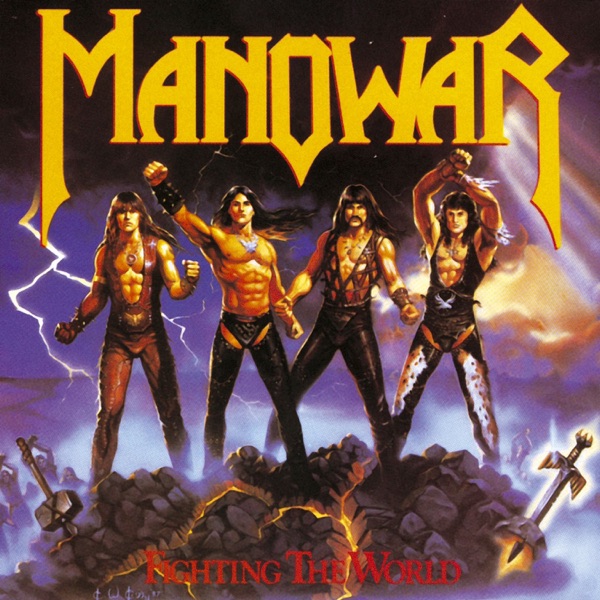
 Fighting the WorldManowar19879 tracks
 -
 Kings of MetalManowar198810 tracks
 -
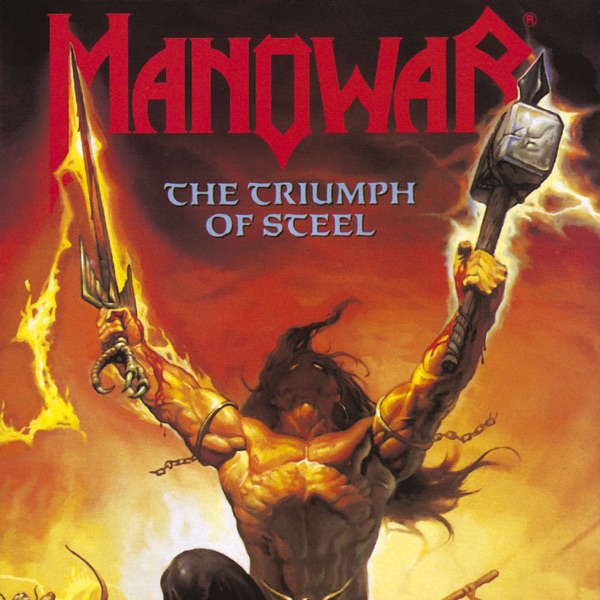
 The Triumph of SteelManowar19928 tracks
 -
 Louder Than HellManowar199610 tracks
 -
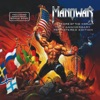 Warriors of the WorldManowar200212 tracks
 -
 Gods of WarManowar200716 tracks
 -
 Battle Hymns MMXIManowar201010 tracks
 -
 The Lord of SteelManowar201210 tracks
 -
 Kings of Metal MMXIVManowar201418 tracks
Deep Dive
Overview
Manowar is an American heavy metal band formed in Auburn, New York, in 1980. Built on a foundation of fantasy and mythology-driven lyrics combined with orchestral arrangements and crushing guitar work, the band carved out a distinct identity within the broader metal landscape. Fronted by singer Eric Adams and bassist Joey DeMaio, with Ross the Boss on guitar and David Shankle on drums, Manowar became synonymous with a maximalist approach to metal—one that embraced operatic scale, mythological grandeur, and an uncompromising commitment to what they termed “true metal,” a philosophy that explicitly rejected anything perceived as false or diluted within the genre.
Formation Story
Manowar came together in Auburn, New York, in 1980, emerging from the post-punk and early heavy metal ferment of the early 1980s. The lineup that would define the band’s classic sound consisted of bassist Joey DeMaio, vocalist Eric Adams, guitarist Ross the Boss, and drummer David Shankle. The band arrived at a moment when heavy metal was diversifying into multiple subgenres and when many acts were abandoning the genre’s more theatrical and ambitious elements in favor of leaner, faster forms. Against that tide, Manowar chose to amplify rather than minimize the epic dimensions of metal, drawing inspiration from both the mythological and fantasy traditions that had always lurked within rock and metal storytelling.
Breakthrough Moment
Manowar’s first album, Battle Hymns, arrived in 1982 and established the template for their approach: dense arrangements, operatic vocal delivery, and narratives steeped in classical and fantasy themes. The record introduced the band to a growing audience of metal fans hungry for the kind of orchestral grandeur and lyrical ambition the band offered. By 1984, with the release of Hail to England and Sign of the Hammer, Manowar had solidified their reputation and drew international attention. That same year, the band earned a place in the Guinness Book of World Records for delivering the loudest performance—a distinction that became central to their identity and that they would break on two subsequent occasions. The combination of record-breaking volume and increasingly sophisticated album production established them as one of metal’s most uncompromising and technically ambitious acts.
Peak Era
The late 1980s and early 1990s marked Manowar’s most commercially and creatively vital period. Fighting the World (1987) and Kings of Metal (1988) showcased the band at full command of their sound: layered orchestrations, Adams’s soaring vocals, Joey DeMaio’s thunderous bass work, and Ross the Boss’s guitar arrangements that blended metal riffing with classical compositional technique. The Triumph of Steel (1992) extended this era, cementing their status as the leading exponents of metal’s most grandiose and ambitious form. These records, released on major labels including Geffen and Atlantic, gave Manowar visibility beyond the underground metal circuit, though they remained a band whose appeal was concentrated among dedicated metal devotees who valued their unironic embrace of fantasy, mythology, and sheer sonic scale.
Musical Style
Manowar’s sound is defined by orchestral density, operatic vocal delivery, and a philosophy of “bigger and louder” applied to every element. Joey DeMaio’s bass work is thick and melodic rather than rhythmic, functioning almost as a second lead instrument. Ross the Boss’s guitar arrangements layer classical structures and dramatic chord progressions beneath traditional metal riffing. Eric Adams sings in a soaring, classically inflected tenor that treats his voice as another orchestral voice rather than as a traditional rock vocalist. Drums provide the backbone but rarely overwhelm the ensemble. Lyrically, the band drew consistently from mythology, fantasy literature, and what they framed as “true metal” — a polemical stance that celebrated metal’s tradition while rejecting trends they viewed as false or inauthentic. Over their career, the production grew more elaborate and studio-dependent, with choirs, orchestral instruments, and synthesized arrangements becoming standard fixtures rather than occasional embellishments.
Major Albums
Battle Hymns (1982)
The debut that announced Manowar’s arrival, establishing their commitment to orchestral metal and mythological storytelling on tracks that balanced ambition with accessibility.
Hail to England (1984)
A landmark in their early catalogue, this record helped bring them international recognition and was quickly followed by its companion, Sign of the Hammer, cementing their status as serious contenders in metal’s heavyweight division.
Kings of Metal (1988)
A career peak featuring some of their most effective synthesis of metal aggression and orchestral grandeur, demonstrating complete mastery of their formula.
The Triumph of Steel (1992)
Recorded at the height of their major-label era, this album represented the culmination of their 1980s vision with state-of-the-art production and arrangement.
Warriors of the World (2002)
A return to form after a gap in releases, showing the band rejuvenated and committed to the same maximalist aesthetics that had always defined them.
Signature Songs
- “Death to False Metal” — The band’s defining philosophical statement and recurring slogan, capturing their stance on authenticity within the genre.
- “Hail to England” — An epic title track from their 1984 album that exemplifies their approach to orchestral storytelling.
- “Battle Hymns” — The album-opening anthem from their 1982 debut, announcing their sound and ambition.
- “Kings of Metal” — A high-point of their catalogue that synthesizes all their core elements into a single composition.
- “Fighting the World” — The title track from 1987, reflecting themes of defiance and integrity central to the band’s worldview.
Influence on Rock
Manowar’s influence on metal and rock is primarily concentrated within the power metal and symphonic metal subgenres that emerged in the 1990s and 2000s. Bands across Europe and North America adopted and extended their approach to orchestral arrangement, fantasy lyricism, and operatic vocal delivery. Their unironic celebration of metal’s traditions and their explicit polemic against musical trends they viewed as false helped establish a particular strain of metal fundamentalism—the idea that metal’s core values could be preserved and amplified rather than evolved or compromised. In the wider context of rock, they represent a strand of thinking that views excess and grandiosity not as vices but as virtues, and that treats metal as a genre capable of sustaining serious, elaborate artistic ambition.
Legacy
Manowar remained active and touring continuously from their formation through the 2010s and beyond, releasing new material including The Lord of Steel (2012) and Kings of Metal MMXIV (2014) that showed them committed to the same aesthetic principles that had always guided them. Their 2008 performance in Bulgaria, where they played for five hours and one minute, established another world record—for the longest heavy metal concert—that further cemented their status as metal’s most committed maximalists. The band’s longevity and consistent touring presence kept them visible in metal communities even during periods when their commercial mainstream presence diminished. Their slogan “death to false metal” became a widely recognized rallying cry within metal culture, influencing how subsequent generations of metal fans thought about authenticity and genre boundaries. Through streaming platforms and catalog reissues, their full discography remains accessible, ensuring that new listeners can encounter their vision of metal as an art form of orchestral ambition and mythological grandeur.
Fun Facts
- In 1984, Manowar entered the Guinness Book of World Records for the loudest performance, a milestone they would break twice more in subsequent decades.
- The band has maintained relatively stable membership across their entire career, with the same core lineup of Eric Adams, Joey DeMaio, Ross the Boss, and David Shankle anchoring their sound from formation through the 2010s.
- Joey DeMaio’s bass work is so prominent in the band’s mix that it often functions as a lead instrument rather than traditional bass accompaniment, a distinctive production choice that became a hallmark of their sound.
- The band’s 2008 concert in Bulgaria lasted five hours and one minute, establishing the world record for the longest heavy metal concert performance.