
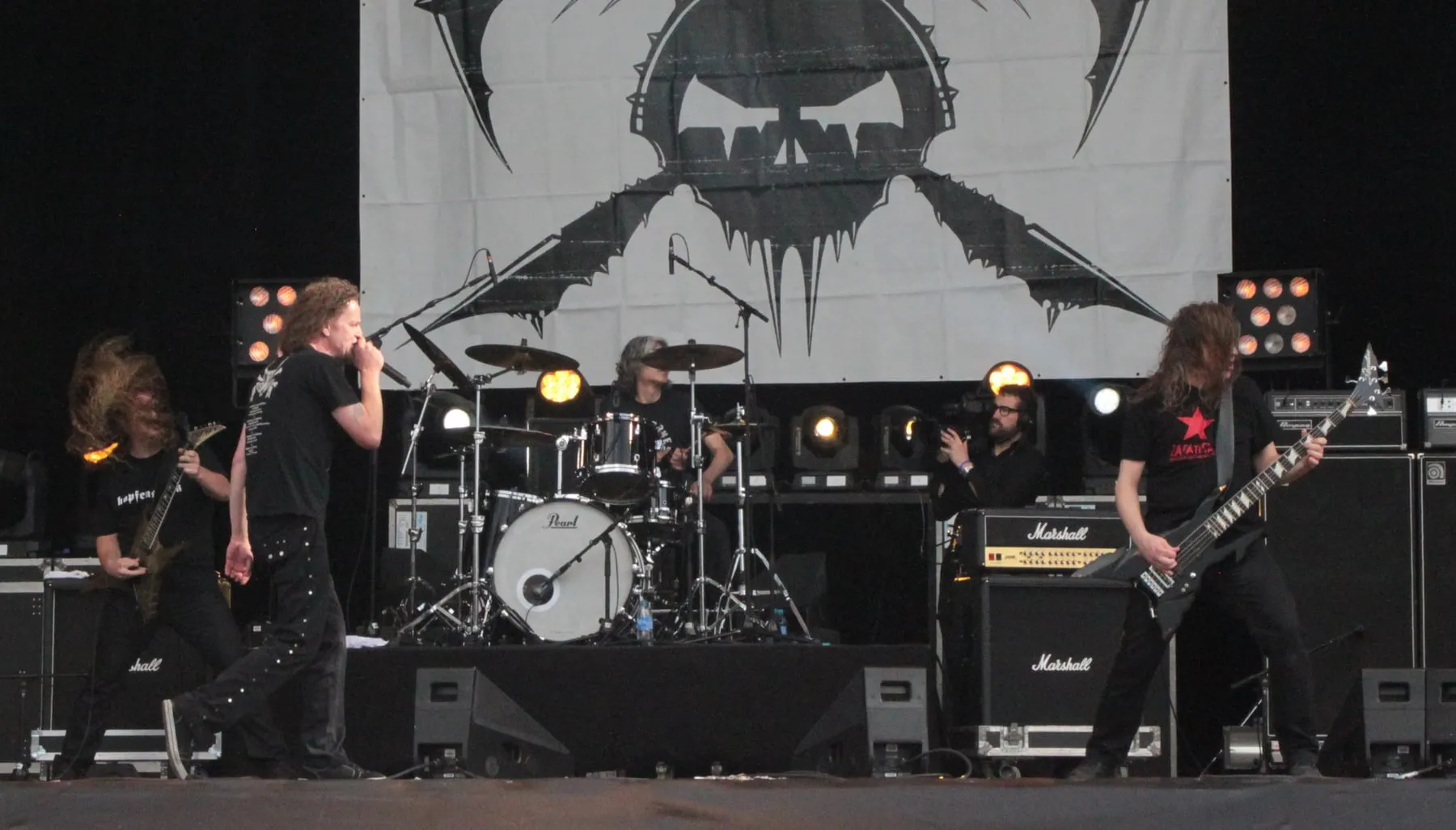
Photo by Llann Wé² , licensed under CC BY-SA 3.0 · Wikimedia Commons
Rank #344
Voivod
Quebec progressive thrash band of dissonant, sci-fi imagination.
From Wikipedia
Voivod is a Canadian heavy metal band from Jonquière, Quebec. The original line-up consisted of vocalist Denis "Snake" Bélanger, guitarist Denis "Piggy" D'Amour, drummer Michel "Away" Langevin and bassist Jean-Yves "Blacky" Thériault. The band has had numerous members changes throughout its 44-year career, with Langevin as the only consistent member. As of 2014, the line-up includes Langevin, Bélanger, Daniel "Chewy" Mongrain (guitar) and Dominic "Rocky" Laroche (bass).
Members
- Michel Langevin · drum (1982–present)
- Daniel Mongrain · guitar
- Denis Bélanger · voice
- Denis D'Amour · guitar (?–2005)
Studio Albums
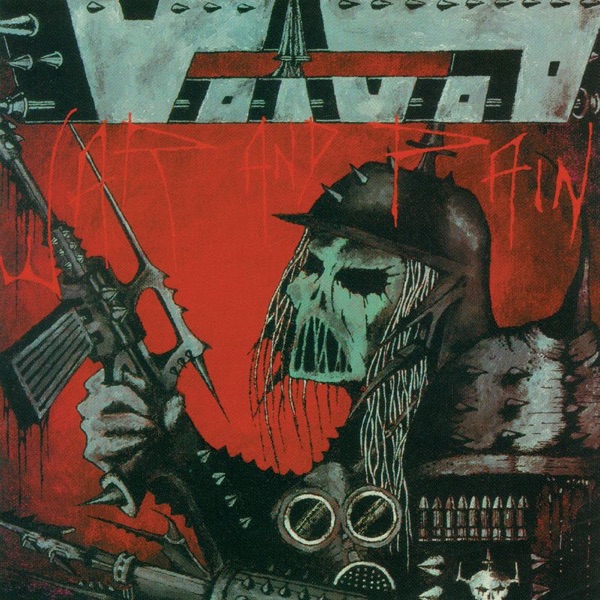
- 1984 War and Pain
- 1986 Rrröööaaarrr
- 1987 Killing Technology
- 1988 Dimension Hatröss
- 1989 Nothingface
- 1991 Angel Rat
- 1993 The Outer Limits
- 1995 Negatron
- 1997 Phobos
- 2003 Voivod
- 2006 Katorz
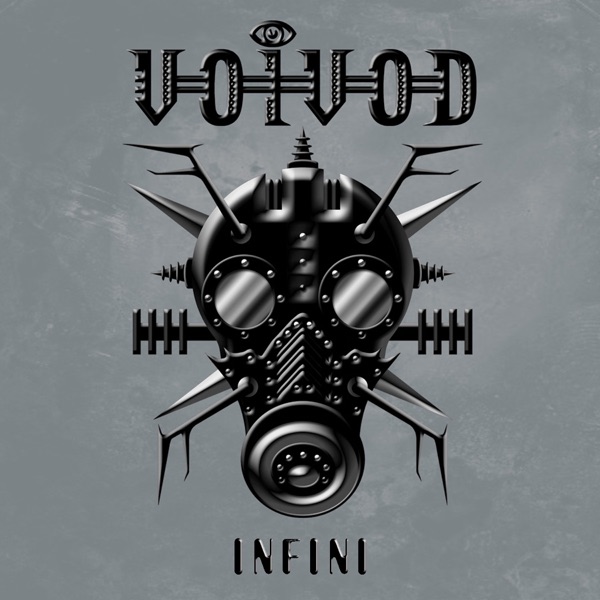
- 2009 Infini
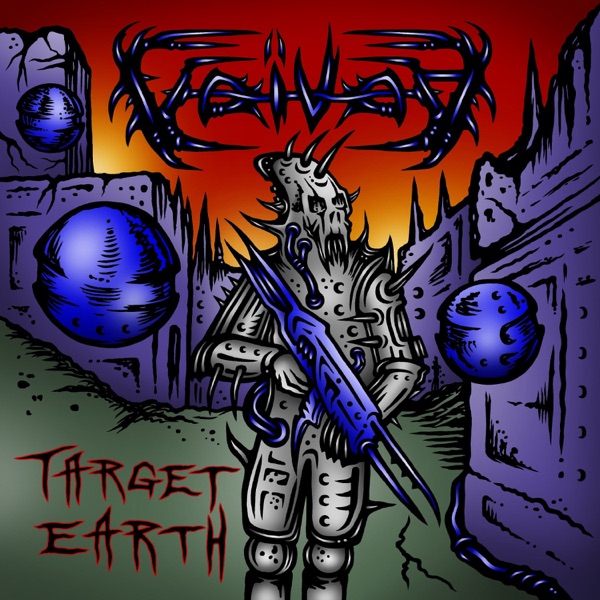
- 2013 Target Earth
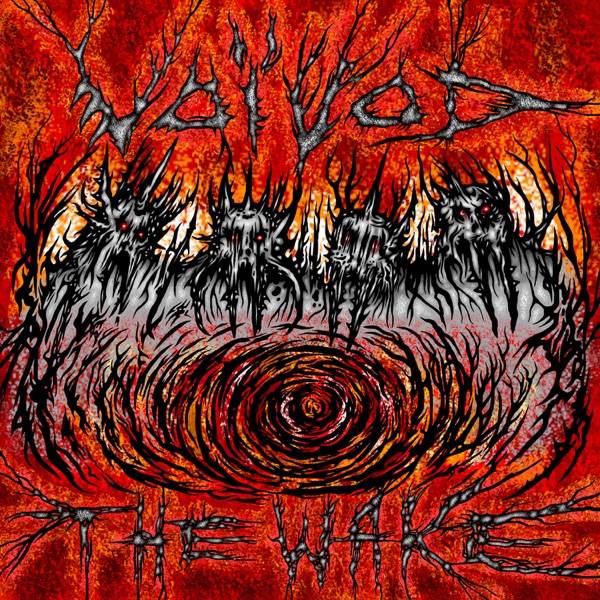
- 2018 The Wake
- 2022 Synchro Anarchy
- 2023 Morgöth Tales
Source: MusicBrainz
Deep Dive
Overview
Voivod is a Canadian heavy metal band from Jonquière, Quebec, whose music synthesizes thrash metal’s velocity with progressive rock’s compositional ambition and art-rock’s willingness to unsettle. Formed in 1982, the band constructed a signature sound built on dissonant guitar work, angular rhythms, and science-fiction imagery that set them apart from the more straightforward thrash metal landscape of North America. Their longevity—spanning four decades and sixteen studio albums—and the singular creative vision that persists across lineup changes have made them essential architects of progressive metal.
Formation Story
Voivod emerged from Jonquière, a pulp-and-paper industrial town in Quebec’s Saguenay region, in 1982. The original lineup consisted of vocalist Denis “Snake” Bélanger, guitarist Denis “Piggy” D’Amour, drummer Michel “Away” Langevin, and bassist Jean-Yves “Blacky” Thériault. The band crystallized around a shared aesthetic that drew from punk’s DIY ethos, heavy metal’s sonic weight, and a distinctly weird, outsider sensibility that would come to define their approach. Langevin emerged as the sole constant member throughout the band’s entire history, serving as the primary anchor of their sonic identity across all subsequent transformations.
Breakthrough Moment
Voivod’s first two albums, War and Pain (1984) and Rrröööaaarrr (1986), established their technical prowess and uncompromising aesthetic within the emerging thrash metal underground. However, Killing Technology (1987) marked a watershed moment, demonstrating that the band could sustain complex arrangements and unconventional song structures while maintaining the propulsive force of thrash. The album’s success on the metal underground circuit elevated Voivod from a regional Quebec phenomenon to an internationally recognized force within progressive and extreme metal circles. By the late 1980s, with Dimension Hatröss (1988) and Nothingface (1989), Voivod had secured a position as one of metal’s most intellectually ambitious bands, attracting listeners who sought harmonic sophistication and lyrical depth alongside crushing heaviness.
Peak Era
The band’s creative and commercial zenith arrived with Angel Rat (1991) and The Outer Limits (1993), twin albums that refined their approach to maximum effect. Angel Rat showcased Voivod at their most accessible without sacrificing complexity, while The Outer Limits deepened their science-fiction preoccupations and proved their ability to expand their sonic palette. These records solidified the band’s status within the international metal community and demonstrated their capacity to evolve beyond the rigid genre boundaries. The early-to-mid 1990s represented the period when Voivod’s influence rippled most visibly through the metal underground, inspiring countless bands to embrace progressive structures and conceptual depth.
Musical Style
Voivod’s sound is built on the dissonant, jagged guitar riffing of Denis D’Amour, whose approach emphasized unconventional voicings and atonal passages rather than power-chord simplicity. Langevin’s drumming alternates between propulsive, straightforward thrash-metal patterns and polyrhythmic complexity, often within a single song. Bélanger’s vocals blend aggressive metal delivery with a distinctive nasal timbre and willingness to slide into spoken-word passages and atmospheric interjections. The band’s compositional approach avoids verse-chorus-verse predictability in favor of suite-like progressions that build through shifts in texture, tempo, and harmonic content. Lyrically, Voivod consistently drew from science-fiction, dystopian, and surreal imagery, creating a thematic universe distinct from thrash metal’s more conventional subject matter. Their music synthesizes thrash metal’s aggression and speed with progressive rock’s harmonic and structural ambition, creating a template that influenced the broader progressive metal movement.
Major Albums
War and Pain (1984)
Voivod’s debut announced the band’s arrival with raw, chaotic thrash that already displayed an idiosyncratic sense of composition; the album established their willingness to prioritize creative unorthodoxy over polish.
Killing Technology (1987)
This third album crystallized Voivod’s approach to progressive thrash, balancing technical sophistication with visceral impact and demonstrating their ability to sustain complex arrangements across a full-length release.
Angel Rat (1991)
Voivod’s most commercially successful work refined their formula without dilution, achieving genuine accessibility while retaining the dissonant guitar work and unconventional structures that defined them; the album remains their peak commercial moment.
The Outer Limits (1993)
This successor deepened Voivod’s science-fiction conceptual framework and expanded their sonic palette, further cementing their status as metal’s most intellectually adventurous North American band of the era.
Infini (2009)
Released after a seven-year hiatus, Infini proved Voivod remained vital and creative, demonstrating that the band’s core identity persisted across decades and numerous member changes.
Target Earth (2013)
Voivod’s thirteenth studio album sustained their commitment to progressive thrash, confirming that longevity had not diminished their creative ambitions or technical facility.
Signature Songs
- Mechanical Mind — An early Voivod statement showcasing their marriage of thrash brutality and prog-rock dissonance.
- Ravenous Medicine — Demonstrates Bélanger’s distinctive vocal approach and the band’s ability to construct tension through angular guitar work.
- Killing Technology — The title track that defined their breakthrough moment, exemplifying their approach to composition and technical mastery.
- Astronomy Domine — A signature work that exemplifies Voivod’s sci-fi thematic preoccupations and willingness to embrace abstract, unsettling soundscapes.
- Angel Rat — The title track from their most successful album, balancing accessibility with the dissonant sophistication their fanbase demanded.
Influence on Rock
Voivod fundamentally shaped the progressive metal subgenre by demonstrating that thrash metal’s speed and aggression could coexist with compositional complexity and harmonic sophistication. Their refusal to follow thrash metal’s conventional trajectories—either toward simplification or toward speed-competition with their American peers—created a distinctive lineage within metal that prioritized composition and conceptual coherence. Bands including Dream Theater, Watchtower, and countless progressive metal acts trace a direct lineage through Voivod’s example, which proved that metal audiences existed for music that demanded active listening and rewarded technical scrutiny. Their consistent output across four decades provided a template for artistic longevity within the metal underground, demonstrating that progressive ambition and commercial viability need not be mutually exclusive.
Legacy
Voivod’s forty-year career and sixteen studio albums establish them as one of heavy metal’s most prolific and consistently creative acts. The band’s survival through numerous lineup changes—with Michel Langevin as the sole original member—speaks to the strength of their core identity and compositional vision. As of 2023, with Morgöth Tales and Synchro Anarchy (2022), Voivod continues to record and tour, maintaining their position within the international metal community. Their discography has become a canonical reference point within progressive metal and thrash metal histories alike, studied by musicians and enthusiasts seeking to understand how metal can accommodate both visceral impact and intellectual substance. Streaming platforms and digital distribution have made their complete catalog perpetually accessible, introducing their work to successive generations of metal listeners who might otherwise have missed their crucial role in metal’s artistic development.
Fun Facts
- Michel Langevin has been the only consistent member throughout Voivod’s entire 44-year history, making him the anchor of the band’s creative identity across all lineup changes and stylistic evolutions.
- The band originates from Jonquière, Quebec, a small industrial town, making them an improbable source of metal innovation that nonetheless achieved international significance.
- Voivod has released at least one new studio album in every decade since their formation, demonstrating sustained creative commitment rarely matched in heavy metal.
- The band’s lyrical themes consistently draw from science fiction and dystopian imagery, creating a thematic universe distinct from thrash metal’s conventional subject matter and contributing to their status as metal’s most imaginatively conceptual North American band.
Discography & Previews
Click any album to expand its track list. Each track plays a 30-second preview streamed from Apple Music. Tap the link icon next to a track to open it in Apple Music for full playback.


- 1 Experiment (Dimension Hatröss Demo 1987) [2022 Remaster] ↗ 5:43
- 2 Tribal Convictions (Dimension Hatröss Demo 1987) [2022 Remaster] ↗ 4:50
- 3 Chaosmongers (Dimension Hatröss Demo 1987) [2022 Remaster] ↗ 4:30
- 4 Technocratic Manipulators (Dimension Hatröss Demo 1987) [2022 Remaster] ↗ 4:20
- 5 Macrosolutions to Megaproblems (Dimension Hatröss Demo 1987) [2022 Remaster] ↗ 5:11
- 6 Brain Scan (Dimension Hatröss Demo 1987) [2022 Remaster] ↗ 4:57
- 7 Psychic Vacuum (Dimension Hatröss Demo 1987) [2022 Remaster] ↗ 3:50
- 8 Cosmic Drama (Dimension Hatröss Demo 1987) [2022 Remaster] ↗ 4:53


- 1 Obsolete Beings ↗ 5:35
- 1 Inner Combustion (Live 2018) ↗ 4:23
- 2 The End of Dormancy ↗ 7:42
- 2 Order of the Blackguards (Live 2018) ↗ 5:04
- 3 Orb Confusion ↗ 6:00
- 3 Psychic Vacuum (Live 2018) ↗ 4:17
- 4 Iconspiracy ↗ 5:15
- 4 Lost Machine (Live 2018) ↗ 6:01
- 5 Spherical Perspective ↗ 7:41
- 5 Fall (Live 2018) ↗ 6:38
- 6 Event Horizon ↗ 6:11
- 6 Voivod (Live 2018) ↗ 6:23
- 7 Always Moving ↗ 5:12
- 8 Sonic Mycelium ↗ 12:24


- 1 Condemned to the Gallows (2023 Version) ↗ 4:34
- 2 Thrashing Rage (2023 Version) ↗ 4:16
- 3 Killing Technology (2023 Version) ↗ 6:31
- 4 Macrosolutions to Megaproblems (2023 Version) ↗ 5:19
- 5 Pre-Ignition (2023 Version) ↗ 5:07
- 6 Nuage Fractal (2023 Version) ↗ 3:41
- 7 Fix My Heart (2023 Version) ↗ 4:36
- 8 Rise (feat. Eric Forrest) [2023 Version] ↗ 5:01
- 9 Rebel Robot (feat. Jason Newsted) [2023 Version] ↗ 4:51
- 10 Morgöth Tales ↗ 4:58
- 11 Home (Cover Version) ↗ 4:38