
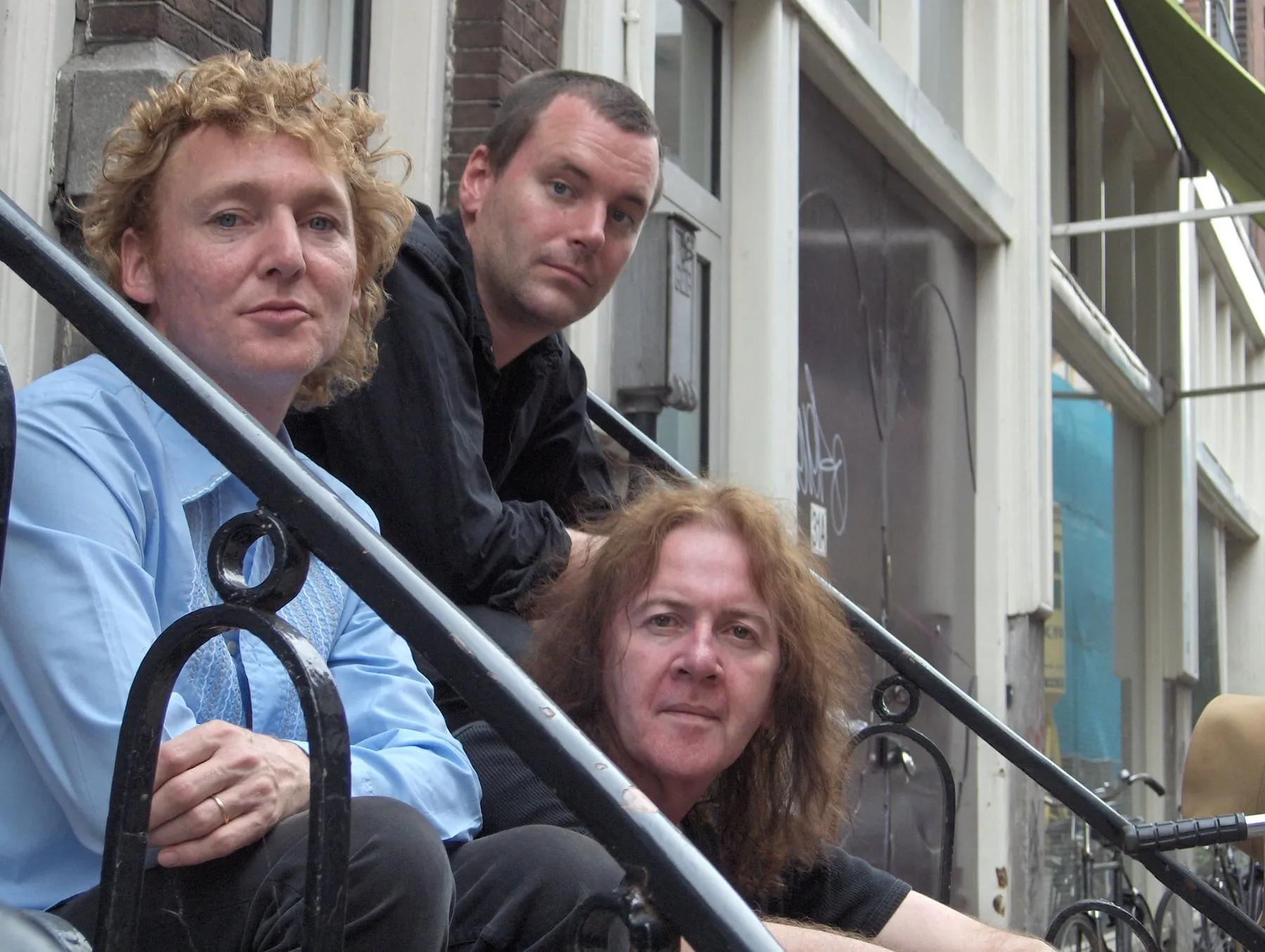
Photo by Elisabet Corlin , licensed under CC BY-SA 3.0 · Wikimedia Commons
Rank #316
The Saints
Brisbane band whose '(I'm) Stranded' was the first non-American/British punk single.
From Wikipedia
The Saints were an English instrumental band, that worked for the record producer Joe Meek.
Deep Dive
Overview
The Saints were an Australian punk rock and post-punk band formed in Brisbane in 1973, arriving at a critical moment when punk rock remained almost entirely dominated by American and British acts. Their debut single “(I’m) Stranded” in 1977 stands as a watershed moment in punk historiography—the first punk single released outside the United States and United Kingdom to achieve international recognition. This fact alone altered the geographic distribution of punk’s creative authority and signaled that the movement’s energy could ignite anywhere young musicians felt the cultural need to strip rock music down to its raw components. Beyond that pioneering release, The Saints sustained a prolific recording career for decades, evolving from raw, short-form punk into more expansive post-punk and art-rock territories, maintaining artistic credibility across shifting tastes and industry cycles.
Formation Story
The Saints crystallized in Brisbane in 1973, emerging from the Australian underground at a time when the city had little to no established rock infrastructure of international standing. The band’s founding members coalesced around a shared rejection of the prevailing rock aesthetics of the early 1970s—the bloated progressive rock and stadium-rock conventions that dominated radio and album charts. Drawing on the energy of garage rock and the provocative attitude beginning to bubble up in New York and London, they began writing and performing material that married explosive guitars and rapid-fire drumming to angular, sometimes detached vocals. Brisbane’s geographic isolation from the British and American music capitals, paradoxically, freed them to develop their sound without the pressure to match London or New York trends in real time.
Breakthrough Moment
(I’m) Stranded arrived in 1977 as a stunning arrival on the international stage. The record captured The Saints at their most urgent: jagged, minimalist punk that owed as much to 1960s garage rock as it did to the contemporary Sex Pistols or Ramones. What made the record’s impact particularly significant was its origin story. Here was a band from Brisbane—not London, not New York—releasing a punk album that held its own alongside the era’s canonical punk documents. The single and album title track, “(I’m) Stranded,” epitomized the band’s approach: economical, repetitive, menacing, with lyrics that conveyed existential alienation through blunt, unfussy delivery. The album’s arrival on the international market proved that punk rock was not an American or British monopoly, and it established The Saints as serious contenders in the emerging post-punk landscape rather than mere regional novelties.
Peak Era
The Saints’ most artistically ambitious and commercially visible period spanned from their debut through the early 1980s. Following (I’m) Stranded, they released Prehistoric Sounds and Eternally Yours in 1978, both of which deepened their sonic palette and showed the band moving beyond the rigid three-minute punk template into more complex arrangements and thematic concerns. By The Monkey Puzzle (1981) and I Thought This Was Love, but This Ain’t Casablanca (1982), The Saints had embraced a looser, more experimental ethos—still rooted in punk’s refusal of convention, but increasingly interested in texture, dynamics, and longer compositional forms. These albums demonstrated that the band’s initial impact was not a one-off novelty but evidence of songwriting and arranging talent that could sustain artistic growth. Throughout the 1980s and into the 1990s, The Saints continued recording steadily, adapting to post-punk and alternative rock contexts without losing their essential character.
Musical Style
The Saints’ sound, from their first album onward, was defined by economy and edge. Punk rock formed their foundation—short songs built on buzzsaw guitars, propulsive bass lines, and tight drumming—but they inflected that punk template with the angular, anti-melodic approach of late-1970s post-punk. Vocals came delivered with a deliberate flatness, rejecting both the snarled aggression of American punk and the theatrical posturing of British punk in favor of a more deadpan, almost detached register. As the band evolved through the 1980s, they incorporated elements of art-rock experimentation: longer songs, more varied production, and arrangements that played with space and silence rather than filling every available sonic space with distortion. Lyrically, the band maintained concerns with alienation, urban disconnection, and social observation, delivered through straightforward, unpretentious language. The band’s evolving sound showed that punk rock, rather than being a fixed aesthetic frozen in 1976, could accommodate growth and experimentation while maintaining its core commitment to authenticity and refusal of mainstream convention.
Major Albums
(I’m) Stranded (1977)
The Saints’ debut and their most historically significant release—a landmark punk record that proved the genre could originate outside London or New York, with taut, minimal songs that balanced visceral energy with angular songwriting.
Eternally Yours (1978)
A rapid follow-up that consolidated the band’s approach while introducing more varied song structures and thematic depth, showing the Saints were not a one-album phenomenon.
The Monkey Puzzle (1981)
By their fourth album, The Saints had moved toward more expansive, experimental arrangements, blending punk’s urgency with post-punk’s willingness to deconstruct and rebuild rock’s traditional forms.
I Thought This Was Love, but This Ain’t Casablanca (1982)
A title reflecting the band’s increasingly sophisticated approach to narrative and mood, with songs that ranged from short bursts to longer, more introspective pieces.
Permanent Revolution (1991)
Released in the post-grunge climate of the early 1990s, this album showed The Saints’ continued relevance and artistic vitality after nearly two decades as a working band.
Signature Songs
- (I’m) Stranded — The title track of their debut, a compact punk manifesto that became their signature and an international punk landmark.
- This Perfect Day — A driving punk number showcasing the band’s gift for catchy yet angular melody.
- Erotic Neurotic — Demonstrates the band’s evolution toward more playful, surreal lyrical content.
- Know Your Product — A social commentary track that reflects the band’s sustained interest in critique and observation.
Influence on Rock
The Saints’ primary contribution to rock history is a historical one: they proved that punk rock was not geographically or culturally bound to Britain or America. By releasing (I’m) Stranded from Brisbane in 1977, they opened conceptual space for punk and post-punk movements to emerge globally—Australia itself would develop a vigorous post-punk and new-wave scene throughout the late 1970s and 1980s, partly in the wake The Saints had cut. Additionally, The Saints modeled a version of punk-to-post-punk evolution that emphasized artistic development over the genre’s self-imposed obsolescence. Rather than breaking up or retreating into nostalgic recreation, they grew as songwriters and arrangers, showing that punk rock’s initial iconoclasm could be sustained across decades without becoming either parody or irrelevance. Their example influenced later Australian and international alt-rock and post-punk revival bands who valued longevity and artistic integrity over early career peaks.
Legacy
More than forty years after their debut, The Saints remain central to punk and post-punk historiography, particularly in accounting for the genre’s global reach and sustained artistic credibility. Music historians and critics regularly cite (I’m) Stranded as a foundational punk document, equivalent in impact if not in sales or cultural saturation to the Sex Pistols’ Never Mind the Bollocks or the Ramones’ debut. The band’s continuous recording output through the 1980s, 1990s, 2000s, and into the 2010s—with albums including Howling (1996), Permanent Revolution (1991), King of the Sun (2012), and Long March Through the Jazz Age (2025)—testifies to their refusal of industry obsolescence and commercial pressure. The Saints remain active and recording, a rare achievement for a band formed in the 1970s, and their catalog continues to be reassessed and reissued. For researchers and listeners interested in post-punk’s geographic and stylistic diversity, The Saints stand as proof that punk rock’s most essential values—urgency, authenticity, formal innovation—transcended any single national origin.
Fun Facts
- Brisbane in the mid-1970s had virtually no international rock infrastructure or record labels, making The Saints’ rise to international recognition all the more improbable and unprecedented.
- The band’s prolific recording schedule over their first five years produced five studio albums between 1977 and 1982, a pace that reflected both their creative energy and the independent label ecosystem that supported them.
- The Saints’ decision to continue recording and performing through the 1990s and 2000s—periods when original punk bands were either nostalgic heritage acts or defunct—placed them in a small category of sustained artistic development.