
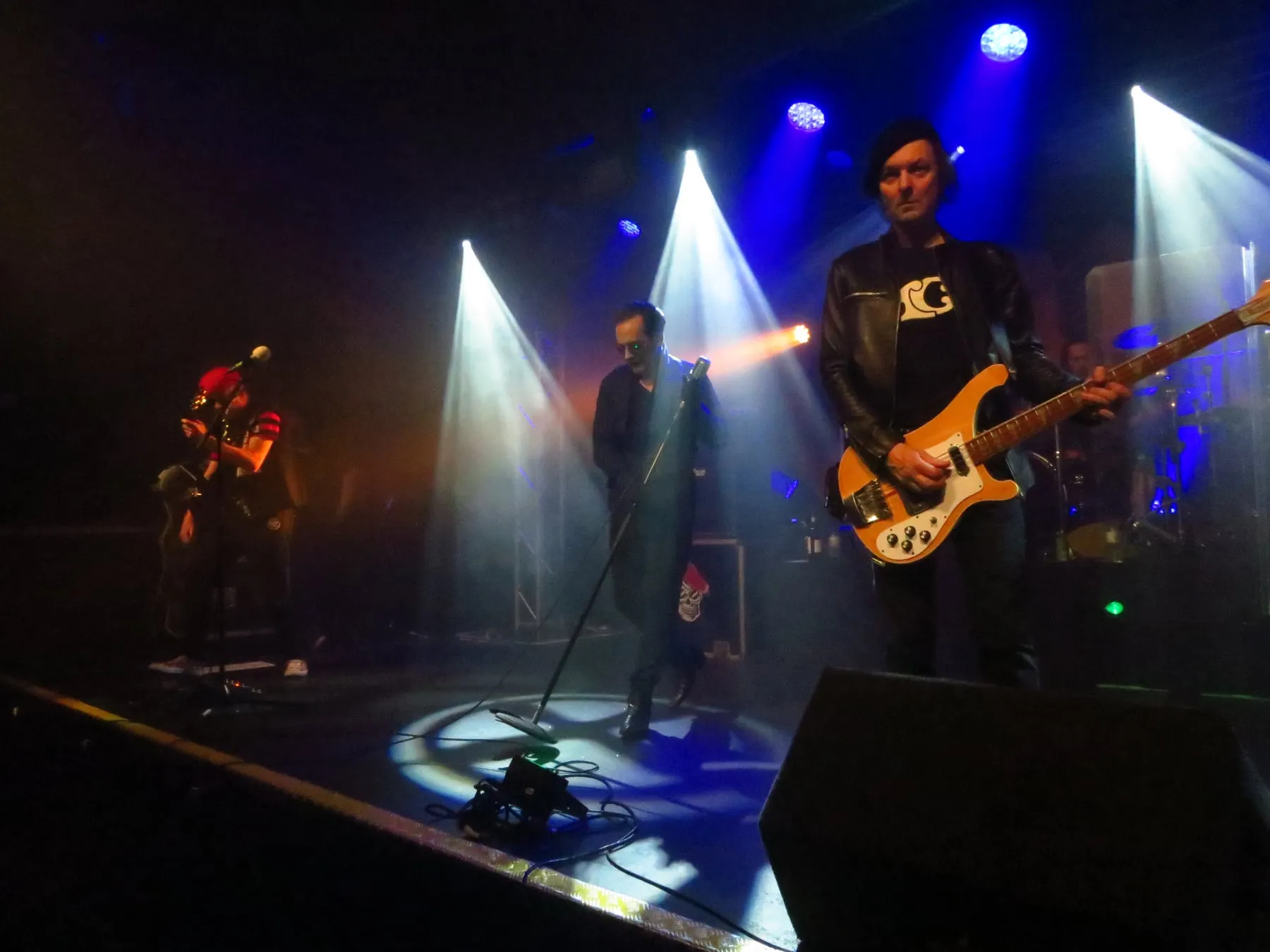
Photo by Kev inr , licensed under CC BY-SA 4.0 · Wikimedia Commons
Rank #215
The Damned
London punks who released the first British punk single, then evolved into goth.
From Wikipedia
The Damned are an English rock band formed in London in 1976 by lead vocalist Dave Vanian, guitarist Brian James, bassist Captain Sensible and drummer Rat Scabies. They were the first punk band from the United Kingdom to release a single, "New Rose" (1976), release a studio album, Damned Damned Damned (1977) and tour the United States. Nine of the band's singles charted within the top 40 on the UK singles chart.
Members
- Brian James (1976–1978)
- David Vanian (1976–present)
- Rat Scabies (1976–1977)
- Lu Edmonds (1977–1978)
- Algy Ward (1978–1980)
- Roman Jugg (1981–1989)
- Bryn Merrick (1983–1989)
- Alan Lee Shaw (1993–1996)
- Moose Harris (1993–1996)
- Monty Oxy Moron (1996–present)
- Patricia Morrison (1997–2005)
- Pinch (1999–present)
- Stu West (2004–present)
- Captain Sensible
- Gary Holton
- Henry Badowski
- Jon Moss
- Lemmy
- Paul Gray
Deep Dive
Overview
The Damned are an English rock band formed in London in 1976 who occupy a singular place in punk history: they released the first British punk single, the first British punk album, and were the first British punk band to tour the United States. Fronted by vocalist Dave Vanian, they emerged from the same London scene that produced the Sex Pistols and The Clash, but their trajectory proved markedly different. Where their contemporaries burnt bright and fractured within years, The Damned persisted through multiple lineup shifts and stylistic transformations, evolving from raw, three-chord punk into a more sophisticated amalgam of gothic rock, post-punk, and psychedelic pop. Their longevity and willingness to reinvent themselves established them as architects of multiple punk and post-punk movements across four decades.
Formation Story
The Damned coalesced in 1976 around the nucleus of Dave Vanian on lead vocals, Brian James on guitar, Captain Sensible on bass, and Rat Scabies on drums. All four were based in London and arrived at punk rock through the ferment of the mid-1970s punk scene, which had crystallized around clubs like the Roxy Theatre and venues in the capital. Unlike the Sex Pistols, who were shaped by manager Malcolm McLaren’s theatrical vision, or The Clash, who grafted reggae and roots influences onto punk’s skeleton, The Damned emerged as straightforward practitioners of high-speed, amplified rock and roll played with punk urgency. Their formation was rapid and organic; within months of coalescing, they were recording and gigging, positioning themselves at the vanguard of Britain’s incipient punk movement.
Breakthrough Moment
The Damned’s breakthrough arrived swiftly. In 1976, they released “New Rose,” which became the first punk single ever issued by a British band—a distinction that belonged to no other act, British or otherwise, at that moment. The single’s impact was immediate and symbolic; it announced that punk was not a American phenomenon or a New York-centric movement, but a force capable of generating British bands of equal vigor and directness. That same year, they entered the studio to record their debut album, which appeared in both 1977 versions: Damned Damned Damned and Music for Pleasure. The former became the first punk album released by a British band, cementing their historical priority. Following the success of these releases, The Damned became the first British punk band to tour the United States, bringing their abrasive sound and theatrical presentation to American audiences who were still absorbing the Sex Pistols’ legend and discovering punk’s potential beyond London’s confines.
Peak Era
The band’s creative and commercial peak extended from the late 1970s through the early 1980s. Machine Gun Etiquette (1979) and The Black Album (1980) represented The Damned at their most refined punk state—the songwriting tighter, the production clearer, the melodic sense more developed than their raw debut work. By 1982, with Strawberries, the band had begun to shift toward a post-punk and gothic sensibility, incorporating more atmospheric production and exploring darker lyrical and sonic territory. This evolution culminated in Phantasmagoria (1985), which marked their fully realized pivot toward gothic rock, complete with orchestral arrangements and Vanian’s theatrical vocal delivery. During this period, the band remained a fixture on the UK singles chart, with nine of their singles charting within the top 40. The mid-1980s represented the apex of their commercial visibility, though their influence would prove durable well beyond their moment of peak chart performance.
Musical Style
The Damned’s sound underwent substantial evolution across their career. In their initial punk phase, they delivered stripped-down three-chord rock propelled by Rat Scabies’ forceful drumming and Captain Sensible’s melodic bass lines, with Brian James’s guitar work oscillating between minimalist directness and stylistic flourish. Dave Vanian’s vocals were characteristically theatrical, never confined to the shouted monotone that defined some of their punk contemporaries; he possessed a range and dramatic sensibility that allowed for surprising melodic sophistication. As the late 1970s progressed, the band absorbed post-punk’s more experimental approach to rhythm and texture, introducing new instruments and production techniques that deepened their sonic palette. By the 1980s, with albums like Phantasmagoria and Anything (1986), they had fully integrated gothic rock’s aesthetic—darker, minor-key chord progressions, orchestral arrangements, string sections, and Vanian’s increasingly operatic vocal presentation. The band moved fluidly across punk, post-punk, psychedelic pop, and gothic rock without surrendering a core identity rooted in melody and theatrical performance.
Major Albums
Damned Damned Damned (1977)
The first punk album released by a British band, this debut distilled raw, high-velocity rock and roll into ten tracks that balanced primitive energy with emerging songwriting craft. Its priority in punk history is matched by its influence on subsequent British bands.
Machine Gun Etiquette (1979)
With a sharper production and more developed songs, this album demonstrated that punk vitality could coexist with melodic sophistication and tighter arrangements. Standout tracks showed the band’s growing command of structure and Dave Vanian’s range as a vocalist.
The Black Album (1980)
A darker, more experimental record that signaled The Damned’s movement beyond punk orthodoxy into post-punk territory. The album introduced atmospheric production and thematic cohesion that anticipated their later gothic evolution.
Phantasmagoria (1985)
The band’s most fully realized gothic rock statement, complete with orchestral arrangements and string sections. This album codified their shift toward a theatrical, darker aesthetic and achieved significant commercial success.
Not of This Earth (1995)
Released after a gap in studio output, this album saw the band reassert their gothic rock credentials while maintaining punk’s underlying urgency. It marked a career revival following the post-1980s wilderness years.
Signature Songs
- “New Rose” (1976) — The first British punk single, a three-minute declaration of intent combining melodic hooks with raw energy.
- “Blitzkrieg Bop” / “Neat Neat Neat” — Early punk anthems that demonstrated the band’s gift for infectious, memorable hooks.
- “Smash It Up” — A driving punk track that became one of their most recognizable songs and showcased their ability to balance aggression with pop sensibility.
- “Love Song” — A gothic-era composition that embodied Vanian’s theatrical vocal approach and the band’s post-punk direction.
- “Phantasmagoria” — The title track from their 1985 album, representing the full flowering of their gothic rock identity with orchestral grandeur.
Influence on Rock
The Damned’s historical significance rests primarily on their role as British punk’s vanguard—their priority in releasing the first British punk single and album established them as foundational figures in the movement’s British emergence. Beyond that pioneer status, their willingness to evolve from punk into post-punk and gothic rock created a template for how a punk-era band could sustain itself through stylistic transformation without abandoning core identity. They influenced subsequent gothic rock and post-punk bands who sought to merge punk’s energy with darker, more theatrical aesthetics. Their longevity also demonstrated that punk bands could endure beyond the three-to-five-year lifespan many had predicted; The Damned proved punk was a potential career, not merely a youthful gesture. Bands from the post-punk and gothic eras, and later alternative rock acts, drew on their example of sustained artistic reinvention.
Legacy
The Damned have remained active continuously from 1976 through the present day, with a revolving lineup that has maintained Dave Vanian and Captain Sensible as core members alongside various later additions including Patricia Morrison (1997–2005), Monty Oxy Moron (1996–present), and Pinch (1999–present). Their persistence alone constitutes a form of legacy—they are among the longest-surviving bands from the original punk cohort. Subsequent studio albums including Grave Disorder (2001), So, Who’s Paranoid? (2008), Evil Spirits (2018), and Darkadelic (2023) have ensured they remained visible in the contemporary rock landscape, albeit without the mainstream commercial prominence they enjoyed in the 1980s. Their place in punk history is secure and uncontested; their role in establishing British punk as an exportable, recorded phenomenon remains central to any historical account of the movement. Streaming platforms and reissues have made their 1970s and 1980s catalogue continuously available to new listeners, sustaining their cultural presence across generations.
Fun Facts
- The Damned toured the United States while the Sex Pistols were still establishing themselves, becoming the first British punk band to bring the sound to American audiences.
- Captain Sensible and Dave Vanian have remained the only continuous members of the band since its 1976 formation, providing organizational continuity across four decades of changing lineups.
- Nine of the band’s singles reached the UK top 40, demonstrating sustained commercial success across the 1970s and 1980s despite their status as art-rock and punk pioneers.
- The band’s evolution from punk to gothic rock occurred gradually across albums rather than as an abrupt shift, allowing them to bridge audiences from multiple eras and aesthetic camps.