
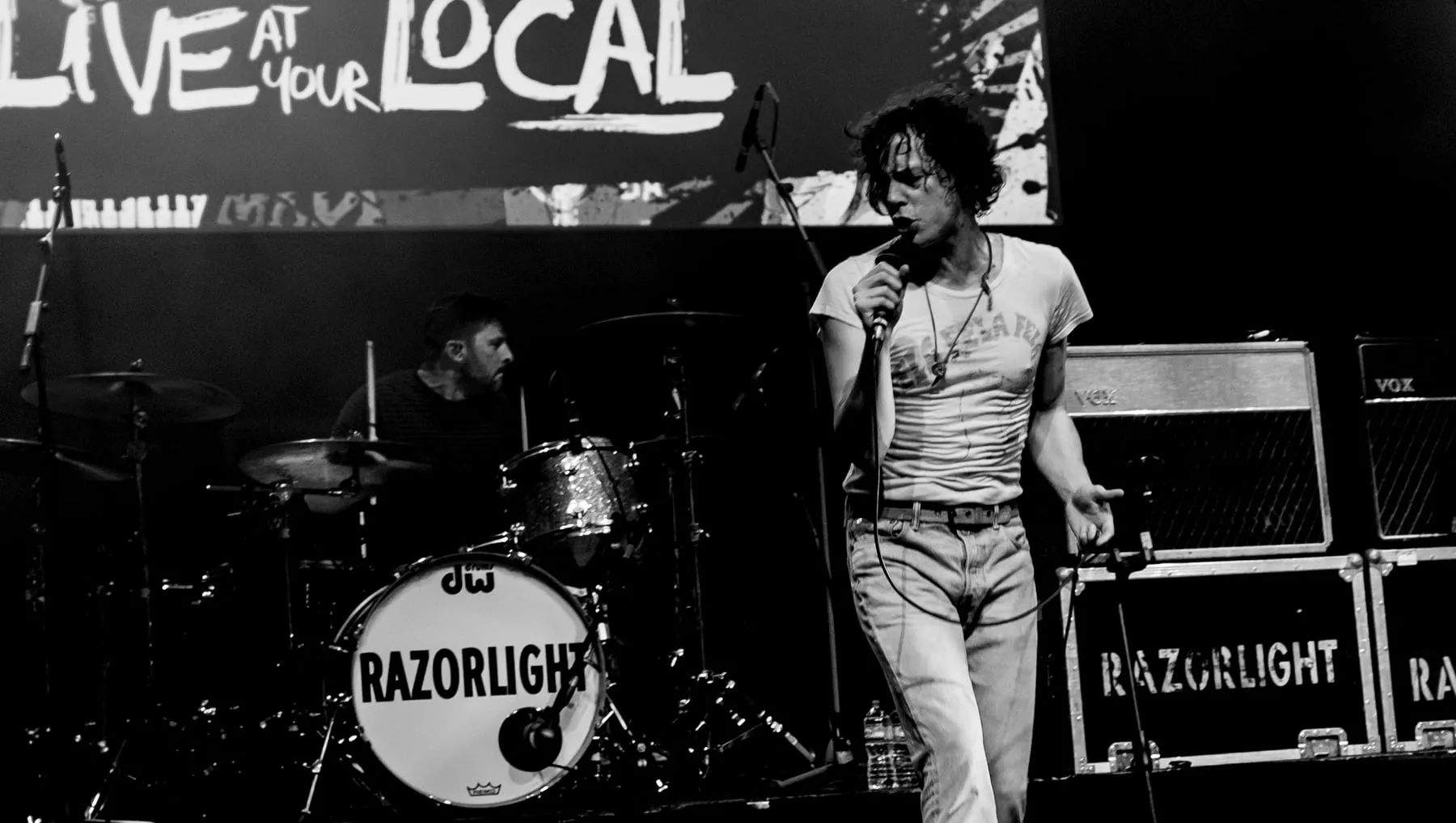
Photo by Raph_PH , licensed under CC BY 2.0 · Wikimedia Commons
Rank #365
Razorlight
London indie-rockers of late-2000s UK chart prominence.
From Wikipedia
Razorlight are an English indie rock band, formed in 2002 in London by lead singer and guitarist Johnny Borrell. Along with Borrell, the current line-up of the band is composed of founding members Björn Ågren on guitar and bassist Carl Dalemo, as well as drummer Andy Burrows. This lineup is a reunion of the lineup from the band's second and third albums.
Members
- Johnny Borrell
Studio Albums
- 2004 Up All Night
- 2006 Razorlight
- 2008 Slipway Fires
- 2018 Olympus Sleeping
- 2024 Planet Nowhere
Source: MusicBrainz
Deep Dive
Overview
Razorlight are an English indie rock band that emerged from London in 2002, becoming prominent fixtures in the UK music landscape throughout the late 2000s. Led by vocalist and guitarist Johnny Borrell, the band arrived during a fertile period for British guitar-driven indie rock and established themselves as part of the wider alternative rock movement of that era. Their blend of driving guitars, melodic sensibilities, and distinctive vocal delivery carved out a distinct identity within the crowded indie rock marketplace.
Formation Story
Razorlight was formed in 2002 in London by Johnny Borrell, who established himself as the band’s creative center and primary songwriter. The initial lineup incorporated founding members Björn Ågren on guitar and Carl Dalemo on bass, musicians who would prove essential to the band’s earliest recorded output. These three members, alongside drummer contributions, formed the backbone of Razorlight’s sound during their formative years. Based in London, the band emerged from a city with a deep-rooted tradition of indie and alternative rock, positioning themselves within a scene that valued guitar-based composition and energetic live performance.
Breakthrough Moment
Razorlight’s recorded trajectory began with their debut album Up All Night in 2004, which introduced their raw indie rock approach to a broader audience. The release established the band’s sonic identity and built momentum for their subsequent efforts. It was their second self-titled album, Razorlight, released in 2006, that solidified their position as major players in contemporary indie rock. This record expanded their reach across the UK music charts, demonstrating that the band had successfully translated their energetic live presence into compelling studio recordings. The success of this period coincided with a broader resurgence of British indie rock in the mid-2000s.
Peak Era
The band’s most commercially successful and critically engaged period centered around the mid-to-late 2000s, anchored by the 2006 self-titled album and the follow-up Slipway Fires in 2008. During this stretch, Razorlight established themselves as consistent performers on the UK charts and a dependable fixture in alternative rock radio and touring circuits. These albums represented the band at their most confident, with a firmly established lineup and a clear understanding of their musical direction. The period from 2006 to 2008 marked Razorlight’s zenith in terms of public profile and commercial performance, though the band’s later evolution would prove equally important to their artistic trajectory.
Musical Style
Razorlight’s sound is anchored in indie rock with strong alternative rock sensibilities, built upon the foundation of electric guitars, propulsive rhythms, and Borrell’s distinctive vocal delivery. The band’s arrangement typically emphasizes melodic guitar work and energetic rhythm sections, drawing from the lineage of post-punk revival and 21st-century indie rock. Their songwriting favors direct, hook-laden compositions that balance introspection with driving instrumentation. The rhythm section—particularly the interplay between Dalemo’s bass lines and various drummers—provides a dynamic framework for Ågren’s guitar textures and Borrell’s lead guitar work. Over the course of their albums, the band demonstrated an ability to evolve their approach, incorporating different production styles and instrumental textures while maintaining the core characteristics that defined their identity.
Major Albums
Up All Night (2004)
Razorlight’s debut introduced the band’s energetic indie rock blueprint, establishing Johnny Borrell’s songwriting voice and the group’s live-performance intensity captured in studio form. This album served as both introduction and declaration of intent within the indie rock landscape.
Razorlight (2006)
The self-titled second album represented a significant leap in songwriting sophistication and commercial appeal, anchoring the band’s place in mid-2000s alternative rock. The album’s success on the UK charts validated the band’s approach and expanded their audience considerably.
Slipway Fires (2008)
Razorlight’s third album continued the band’s artistic development, demonstrating their ability to sustain momentum and refine their sound. This record solidified the band’s working chemistry and reputation as a consistent creative force.
Olympus Sleeping (2018)
Following a significant hiatus, Razorlight returned with this album, marking a re-engagement with recording after a decade-long absence from the studio. The album signaled the band’s continued relevance and desire to revisit their craft.
Planet Nowhere (2024)
Razorlight’s most recent album shows the band continuing to perform and record, demonstrating longevity and a commitment to ongoing creative work well into the 2020s.
Signature Songs
- “Golden Touch” — A standout track that exemplifies the band’s ability to craft melodic indie rock with immediate hook appeal and memorable vocal moments.
- “America” — A signature composition showcasing Borrell’s songwriting and the band’s capacity for emotional directness within their indie rock framework.
- “Unwound” — A track that demonstrates the band’s rhythmic drive and guitar-based arrangement sophistication.
Influence on Rock
Razorlight contributed to the broader landscape of 2000s indie and alternative rock, representing the continuation of guitar-based songwriting traditions within a contemporary context. Their success on UK charts during the mid-2000s aligned with a wider international interest in British indie rock acts, placing them alongside other bands working within similar sonic territories. While not universally credited as originators, Razorlight’s commercial success and sustained touring demonstrated that melodic, guitar-driven indie rock maintained significant appeal in the digital era. Their presence in the alternative rock ecosystem helped sustain interest in guitar-centric songwriting during a period when electronic and experimental approaches were equally prominent.
Legacy
Razorlight’s legacy rests primarily on their contributions to 2000s indie rock culture and their lasting presence in alternative rock touring and recording. The band’s decision to reunite and return to the studio with Olympus Sleeping in 2018 demonstrated their continued connection to their fanbase and the enduring appeal of their work. The 2024 release of Planet Nowhere further underscores their ongoing creative commitment. Their trajectory—from 2002 formation through mid-2000s commercial peak to hiatus and return—mirrors broader patterns in rock music, where bands increasingly revisit their catalogs and undertake reunion projects decades after their initial commercial prominence.
Fun Facts
- Johnny Borrell has been the sole continuous member of Razorlight throughout the band’s history, serving as the consistent creative force across all lineup changes and hiatuses.
- The current working lineup reunites founding members Björn Ågren and Carl Dalemo alongside Johnny Borrell, recreating the core instrumental partnership from the band’s second and third albums.
- Razorlight’s recording output spans two decades, from 2004 to 2024, with a notable ten-year gap between Slipway Fires (2008) and Olympus Sleeping (2018) before their return.
- The band was formed and remains based in London, a city with centuries of rock and pop music history serving as their artistic home throughout their career.
Discography & Previews
Click any album to expand its track list. Each track plays a 30-second preview streamed from Apple Music. Tap the link icon next to a track to open it in Apple Music for full playback.

- 1 Leave Me Alone ↗ 3:50
- 2 Rock 'N' Roll Lies ↗ 3:08
- 3 Vice ↗ 3:13
- 4 Up All Night ↗ 4:03
- 5 Which Way Is Out ↗ 3:19
- 6 Rip It Up ↗ 2:25
- 7 Don't Go Back to Dalston ↗ 2:59
- 8 Golden Touch ↗ 3:25
- 9 Stumble and Fall ↗ 3:02
- 10 Get It and Go ↗ 3:23
- 11 In The City ↗ 4:51
- 12 To The Sea ↗ 5:31
- 13 Fall, Fall, Fall ↗ 2:38
- 14 Somewhere Else ↗ 3:17


- 1 Adam Green Skit ↗ 0:20
- 2 Got to Let the Good Times Back into Your Life ↗ 2:40
- 3 Razorchild ↗ 3:02
- 4 Brighton Pier ↗ 2:45
- 5 Good Night ↗ 1:37
- 6 Carry Yourself ↗ 3:53
- 7 Japanrock ↗ 3:14
- 8 Midsummer Girl ↗ 2:43
- 9 Iceman ↗ 2:59
- 10 Sorry? ↗ 3:07
- 11 Olympus Sleeping ↗ 2:50
- 12 No Answers ↗ 4:03
- 13 City of Women ↗ 3:10
