
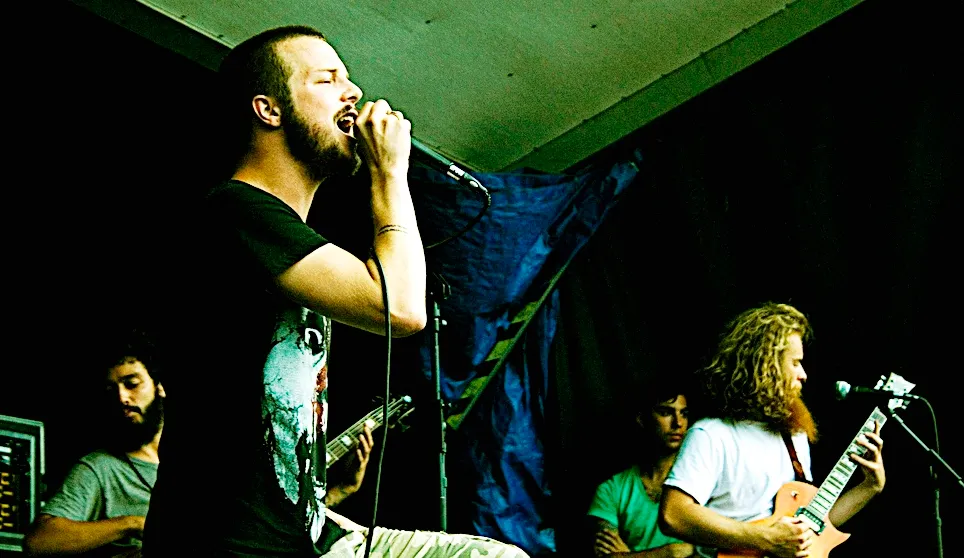
Photo by christian bueno , licensed under CC BY 2.0 · Wikimedia Commons
Rank #350
Protest the Hero
Whitby technical-metalcore band of dazzling fretwork.
From Wikipedia
Protest the Hero is a Canadian progressive metal band from Whitby, Ontario. Originally named Happy Go Lucky, the band changed their name to Protest the Hero and released their debut EP, Search for the Truth, in 2002. In 2005, the band released their first album Kezia on Canadian indie label Underground Operations.
Deep Dive
Overview
Protest the Hero is a Canadian progressive metal band from Whitby, Ontario, that emerged in the early 2000s as a distinctive voice within the technical metalcore landscape. Operating at the intersection of intricate instrumental virtuosity and complex compositional architecture, the band constructed a catalog marked by densely layered guitars, polyrhythmic drumming, and angular songwriting that demanded close listening. Their presence ranks them among the significant progressive metal acts of the 2010s, though their influence extends beyond a single decade of output.
Formation Story
The band’s origins trace to 1999 in Ontario, initially operating under the name Happy Go Lucky before adopting the moniker Protest the Hero. After several years developing their sound, they released their debut EP, Search for the Truth, in 2002, announcing their arrival with a project that showcased the technical ambitions that would define their career. The six-year gap between formation and their first studio album allowed the ensemble to refine their approach, moving from regional visibility to the threshold of broader recognition.
Breakthrough Moment
Protest the Hero’s first album, Kezia, arrived in 2005 on the Canadian indie label Underground Operations. The record immediately signaled a band of uncommon technical sophistication, establishing the template that would characterize their subsequent output: guitar work of meticulous intricacy, demanding vocal arrangements, and song structures that resisted easy categorization within mainstream metalcore. Kezia’s reception elevated the band from local act to a presence within the progressive and metalcore underground, setting the stage for the broader exposure that would follow.
Peak Era
The band’s most creatively robust and commercially visible period spanned the late 2000s into the early 2010s, anchored by the release of Fortress in 2008, Scurrilous in 2011, and Volition in 2013. During this window, Protest the Hero refined the architecturally ambitious metalcore template they had established, deepening their exploration of unconventional time signatures, counterpoint between instruments, and compositional density. These three albums solidified their standing as leading practitioners of the progressive metalcore fusion, attracting an international fanbase attuned to technical rigor and formal innovation in heavy music.
Musical Style
Protest the Hero’s sound is defined by its architectural complexity and instrumental density. Multiple guitar lines often counterpoint against one another, creating intricate harmonic and rhythmic textures that place significant demands on listener and performer alike. The drumming operates with polyrhythmic sophistication, frequently shifting time signatures within songs and maintaining independence from the guitars rather than simply anchoring them. Vocals function as another textural element rather than a conventional lead instrument, delivered with precision and integrated into the overall compositional scheme. The band’s progressive metal foundation absorbs metalcore’s heaviness and aggression, but filters both through a sensibility that privileges formal complexity and instrumental interplay over simple brutality. This approach places them within a lineage stretching from math rock and technical death metal toward a distinctly Canadian progressive aesthetic.
Major Albums
Kezia (2005)
The band’s debut announced their technical ambitions and intricate compositional approach, establishing on a Canadian indie label the formula that would sustain their career.
Fortress (2008)
This album deepened Protest the Hero’s exploration of polyrhythmic complexity and instrumental counterpoint, representing the band operating at peak technical sophistication and architectural ambition.
Scurrilous (2011)
Released during the band’s most visible period, Scurrilous consolidated their standing as leading figures in progressive metalcore, balancing accessibility with uncompromising formal complexity.
Volition (2013)
This album marked the continuation of the band’s creative peak, further refining their template of dense instrumental writing and demanding compositional structures.
Palimpsest (2020)
Appearing after a seven-year gap since Volition, Palimpsest demonstrated the band’s continued commitment to technical exploration and progressive metal composition.
Signature Songs
- Ectopic Archon — A showcase for the band’s polyrhythmic sophistication and instrumental interplay across multiple time signatures.
- Goddess Bound — Demonstrates the band’s ability to construct demanding compositions without sacrificing structural coherence.
- Bloodmeat — An example of the band’s integration of technical metalcore density with progressive metal’s architectural ambitions.
- Tilting Against Windmills — Exemplifies the vocal and instrumental balance the band achieved during their peak creative period.
Influence on Rock
Protest the Hero occupied a crucial position within the progressive metalcore movement, demonstrating that technical sophistication and genuine compositional ambition could coexist with heavy music’s aggression. Their emergence in the early 2000s occurred amid a broader diversification of metalcore, during which bands began expanding the genre beyond its metallic hardcore foundations toward more complex harmonic and rhythmic territories. The band’s success—both critical and within their engaged fanbase—validated the commercial viability of uncompromising technical complexity in metal music, influencing subsequent generations of progressive metal acts that similarly valued instrumental intricacy and formal innovation. Their Canadian origin contributed to a broader assertion of Canadian progressive metal’s significance within international heavy music conversations.
Legacy
Protest the Hero’s legacy rests on their consistent prioritization of technical excellence and compositional integrity across their four-decade operational timeline. The span from Kezia through Palimpsest demonstrates a band willing to sustain their artistic vision across multiple decades, resisting both the commercial pressures toward simplification and the tendency toward stylistic calcification that affects many long-running heavy music acts. The Vagrant Records partnership extended their reach beyond the Canadian indie underground, establishing them as recognized figures within international progressive metal circles. Streaming platforms have ensured ongoing exposure for their catalog, particularly among audiences seeking heavy music that demands active listening and rewards repeated engagement.
Fun Facts
- The band originally performed under the name Happy Go Lucky before adopting Protest the Hero, signaling a dramatic shift in both nomenclature and artistic self-conception.
- A seven-year gap separated Volition (2013) from Palimpsest (2020), among the longest hiatuses in their recording history.
- Protest the Hero maintained continuous activity and recording presence across more than two decades, from their 1999 formation through the 2020s.
- The band’s technical approach to metalcore positioned them outside mainstream metal visibility but within a dedicated ecosystem of musicians and listeners valuing instrumental complexity.