
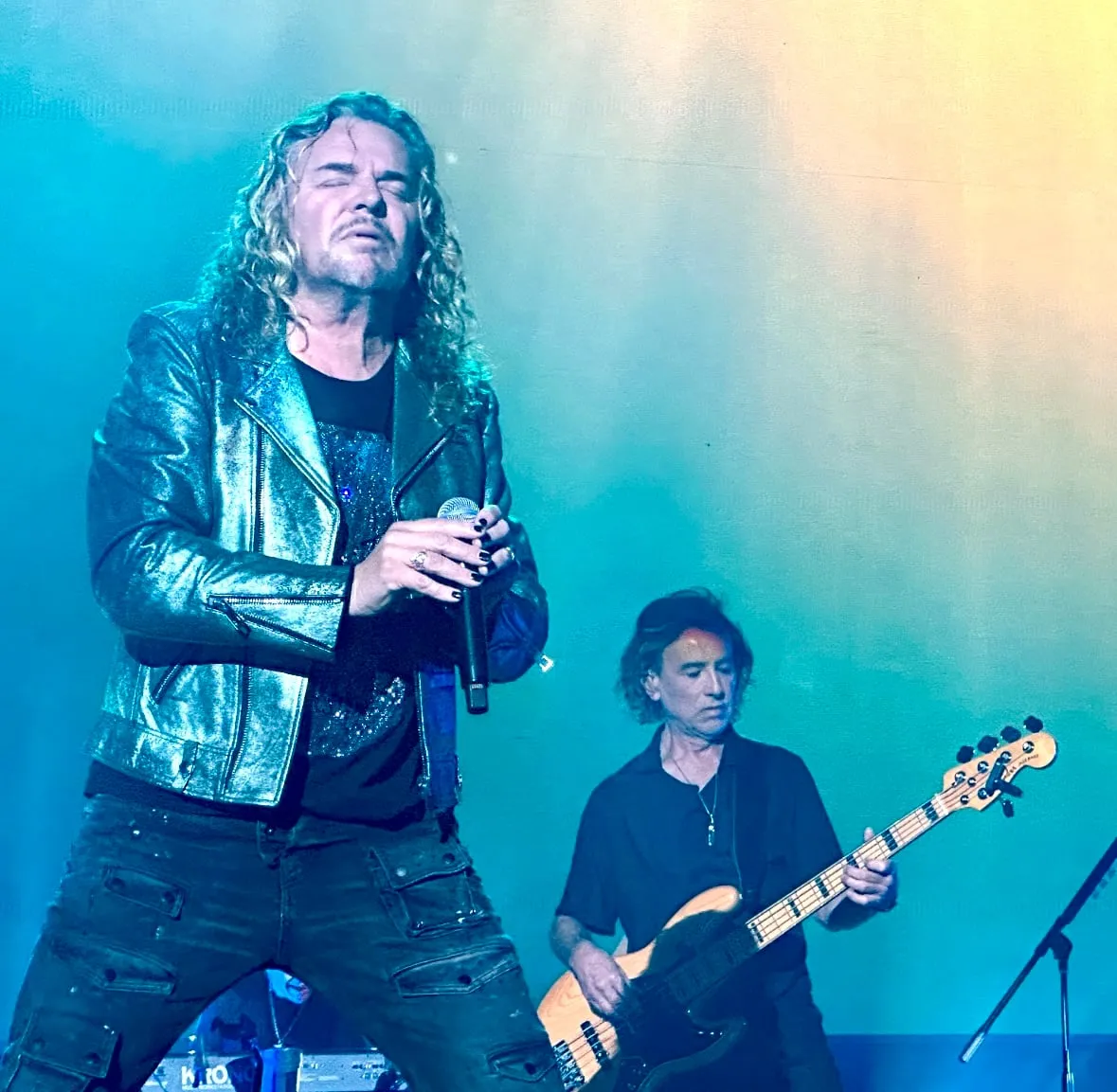
Photo by MerleEllaPatsy , licensed under CC BY-SA 4.0 · Wikimedia Commons
Rank #266
Maná
Guadalajara band who became one of the most popular Latin rock acts.
From Wikipedia
Maná is a Mexican pop rock band formed in 1981. Originally called Sombrero Verde, the current lineup of members is vocalist-guitarist Fher Olvera, drummer Alex González, guitarist Sergio Vallín and bassist Juan Calleros. The band is one of the best-selling Latin Mexican music artists and the most successful Latin American band of all time with over 45 million records sold worldwide. Maná has earned four Grammy Awards, eight Latin Grammy Awards, five MTV Video Music Awards Latin America, six Premios Juventud awards, 19 Billboard Latin Music Awards and 15 Premios Lo Nuestro awards.
Members
- Alex González · drum kit (1981–present)
- Fernando Olvera · voice (1981–present)
- Juan Calleros · bass guitar (1981–present)
- César López · guitar (1991–1994)
- Gustavo Orozco · guitar (1994–1995)
- Juan Carlos Toribio · keyboard instrument (1994–present)
- Sergio Vallín · lead guitar (1995–present)
Studio Albums
- 1987 Maná
- 1990 Falta amor
- 1992 ¿Dónde jugarán los niños?
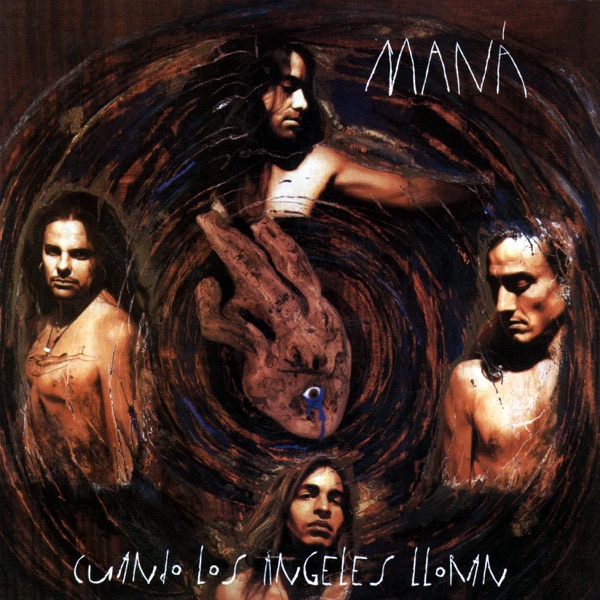
- 1995 Cuando los ángeles lloran
- 1997 Sueños líquidos
- 2002 Revolución de amor
- 2006 Amar es combatir
- 2011 Drama y luz
- 2015 Cama incendiada
- 2025 Noches de cantina
Source: MusicBrainz
Deep Dive
Overview
Maná is a Mexican pop rock band from Guadalajara that stands among the most commercially successful Latin American musical acts in history, with over 45 million records sold worldwide. Formed in 1986, the band fused rock with Latin American sensibilities and became a defining force in rock en español and Latin alternative during the 1990s and 2000s. Their four Grammy Awards and eight Latin Grammy Awards reflect a rare crossover achievement—appealing equally to Spanish-language audiences and international listeners who gravitated toward their melodic, guitar-driven rock sound.
Formation Story
Maná began its journey in 1981 under the name Sombrero Verde before settling on the name Maná in 1986. The classic lineup coalesced around vocalist-guitarist Fernando Olvera, drummer Alex González, and bassist Juan Calleros, all present from the band’s earliest incarnation. The Guadalajara origin proved significant; the city’s growing rock scene provided both a testing ground and a launching pad for a band willing to blend electric rock with Spanish-language lyrics and thematic content rooted in Latin American identity. Juan Carlos Toribio joined on keyboards in 1994, solidifying the instrumental foundation that would carry the band through decades of recording and touring.
Breakthrough Moment
Maná’s recorded output began with their self-titled debut, Maná, in 1987, but the band’s breakthrough to mainstream recognition accelerated with ¿Dónde jugarán los niños? in 1992. Released during a pivotal moment when Latin rock was beginning to penetrate international markets, the album paired expansive rock arrangements with socially conscious lyrics, themes of childhood innocence, and environmental awareness. The record established Maná’s signature approach: stadium-ready production, accessible melodies, and substance-driven songwriting that resonated beyond regional boundaries. By the mid-1990s, the band had secured a major-label partnership with Warner Music Group and was touring internationally, a pathway confirmed by Cuando los ángeles lloran (1995), which deepened their global footprint.
Peak Era
The period from 1995 to 2002 represented Maná’s creative and commercial zenith. Sueños líquidos (1997) consolidated their international presence with a more polished, radio-friendly approach while maintaining the underlying rock sensibility. The album demonstrated their ability to scale production and arrangement sophistication without sacrificing the direct emotional punch that had attracted listeners across Latin America and the diaspora. Revolución de amor (2002) followed with ambitious production and represented the culmination of their earlier trajectory—a work of scale and ambition that affirmed Maná’s status as one of the hemisphere’s largest rock acts. During this period, the band earned multiple MTV Video Music Awards Latin America, Billboard Latin Music Awards, and Premios Lo Nuestro recognitions, establishing a consistency of commercial success rare among rock bands in any language.
Musical Style
Maná’s sound is rooted in pop rock and alternative rock, drawing on the guitar-driven energy of Anglo-American rock while integrating Latin rhythmic sensibilities and Spanish-language melody traditions. Fernando Olvera’s vocal approach—warm, emotive, and capable of both intimate verses and anthemic choruses—sits at the center, supported by Sergio Vallín’s lead guitar work (Vallín joined in 1995, replacing earlier guitar configurations). The rhythm section of Alex González on drums and Juan Calleros on bass provides a foundation that balances precision with groove, anchored further by Juan Carlos Toribio’s keyboard textures. Lyrically, the band addressed themes of social justice, personal relationships, environmental concern, and existential reflection—a deliberate distance from purely escapist pop rock. Their arrangements evolved from the relative restraint of early records to the fuller, more orchestrated production of their late-1990s and 2000s work, yet the core remained recognizable: accessible, guitar-centered rock in Spanish.
Major Albums
Falta amor (1990)
The band’s second album marked a step forward in songwriting maturity and production clarity, establishing the melodic and thematic foundations that would define their approach through the decade.
¿Dónde jugarán los niños? (1992)
Title translating to “Where Will the Children Play?”, this album cemented Maná’s international breakthrough with socially conscious lyrics paired to polished rock arrangements, attracting both Latin American listeners and crossover audiences.
Cuando los ángeles lloran (1995)
Released during Maná’s transition to major-label machinery, this record showcased enhanced production and featured Sergio Vallín’s lead guitar work, representing a consolidation of their growing international fame.
Sueños líquidos (1997)
The album refined Maná’s pop rock formula with increasingly sophisticated arrangements and confirmed their status as one of Latin America’s largest rock exports, driving substantial radio and MTV presence.
Revolución de amor (2002)
An ambitious work combining intricate production, thematic ambition, and the full maturity of the classic lineup, marking the pinnacle of their commercial and critical reach.
Amar es combatir (2006)
Released in the band’s third decade of activity, the album sustained their commercial presence while continuing to address social and personal themes through their established rock framework.
Signature Songs
- Vivir sin aire — A ballad showcasing Olvera’s emotional vocal range and the band’s ability to construct memorable melodies around themes of love and longing.
- Angel — One of the band’s most internationally recognized songs, exemplifying their gift for accessible rock hooks paired to emotional directness.
- Radiografía — Demonstrates the band’s engagement with social commentary and introspection within a rock structure.
- Labios compartidos — A romantic rock composition highlighting the interplay between Vallín’s guitar work and Olvera’s vocal phrasing.
Influence on Rock
Maná played a crucial role in establishing Latin rock and rock en español as globally viable mainstream categories during the 1990s. Their commercial breakthrough helped prove that Spanish-language rock could achieve stadium attendance, radio airplay, and award recognition on an international scale without sacrificing artistic identity or lyrical substance. The band’s success opened pathways for subsequent Latin American and Latino rock acts, demonstrating that rock music could be both commercially ambitious and linguistically rooted in Spanish. Their influence extended across Latin America and into Spanish-speaking diaspora communities in North America, Europe, and beyond, establishing rock en español as a legitimate category with its own touring infrastructure, awards bodies, and media presence. The band’s thematic preoccupation with social conscience—environmental degradation, personal connection, existential reflection—also reinforced the idea that rock, regardless of language, could engage substantive subjects alongside commercial appeal.
Legacy
Maná remained active through 2025, with the release of Noches de cantina marking five decades of recorded output spanning 1987 to present. The band’s sustained presence across recording, touring, and broadcasting reflects both their core fan loyalty and their ability to maintain relevance through changing media landscapes. Their 45 million records sold worldwide place them among the most commercially successful acts in Latin American music history, with award recognition spanning Grammy, Latin Grammy, MTV Video Music, Billboard Latin Music, and Premios Lo Nuestro categories. The band’s trajectory—sustained success across a 40-year span from formation to the present without major lineup disruptions—remains unusual in rock music. Streaming platforms have kept their catalog consistently available to new generations, while their extensive touring schedule has maintained a direct relationship with live audiences across the Americas and beyond.
Fun Facts
- The band was originally called Sombrero Verde before changing their name to Maná in 1986, a shift that marked their transition toward their later sonic and thematic identity.
- Fernando Olvera, Alex González, and Juan Calleros have remained with the band continuously from 1981 to the present, providing rare stability in rock music lineup configurations.
- Sergio Vallín’s arrival as lead guitarist in 1995 coincided with Maná’s major-label signing and represented a key instrumental voice for the band’s most commercially successful period.
- The band maintained a recording and touring presence across six different decades (1980s through 2020s), surviving multiple shifts in rock music tastes and industry structure.
Discography & Previews
Click any album to expand its track list. Each track plays a 30-second preview streamed from Apple Music. Tap the link icon next to a track to open it in Apple Music for full playback.

- 1 No Ha Parado de Llover (Live) ↗ 6:41
- 2 En el Muelle de San Blás (Live) ↗ 7:00
- 3 Vivir Sin Aire (Live) ↗ 5:45
- 4 Cuando los Ángeles Lloran (Live) ↗ 7:06
- 5 Cachito (Live) ↗ 5:20
- 6 Te Solté la Rienda (Live) ↗ 4:06
- 7 Desapariciónes (Live) ↗ 7:04
- 8 Falta Amor (Live) ↗ 4:15
- 9 Coladito (Live) ↗ 1:35
- 10 Ana (Live) ↗ 5:07
- 11 Rayando el Sol (Live) ↗ 5:01
- 12 Se me olvidó otra vez (Live) ↗ 3:42
- 13 Perdido en un Barco (Live) ↗ 4:44
- 14 Oye Mi Amor (Live) ↗ 5:42



- 1 Hechicera (2019 Remasterizado) ↗ 4:59
- 2 Un Lobo Por Tu Amor (2019 Remasterizado) ↗ 5:21
- 3 Cómo Dueles en Los Labios (2019 Remasterizado) ↗ 4:08
- 4 Chamán (2019 Remasterizado) ↗ 5:13
- 5 Tú Tienes Lo Que Quiero (2019 Remasterizado) ↗ 4:39
- 6 Clavado en Un Bar (2019 Remasterizado) ↗ 5:13
- 7 Róbame El Alma (2019 Remasterizado) ↗ 4:04
- 8 En El Muelle de San Blas (2019 Remasterizado) ↗ 5:54
- 9 La Sirena (2019 Remasterizado) ↗ 5:29
- 10 Me Voy a Convertir en Un Ave (2019 Remasterizado) ↗ 5:02
- 11 Cómo Te Extraño Corazón (2019 Remasterizado) ↗ 5:11
- 12 Ámame Hasta Que Me Muera (2019 Remasterizado) ↗ 5:28

- 1 Justicia, Tierra y Libertad ↗ 5:17
- 2 Ay, Doctor ↗ 5:29
- 3 Fe ↗ 4:40
- 4 Sábanas Frías ↗ 5:19
- 5 Pobre Juan ↗ 5:12
- 6 ¿Por Qué Te Vas? ↗ 4:43
- 7 Mariposa Traicionera ↗ 4:25
- 8 Sin Tu Cariño ↗ 4:59
- 9 Eres Mi Religión ↗ 5:28
- 10 No Voy a Ser Tu Esclavo ↗ 4:26
- 11 Ángel de Amor ↗ 4:56
- 12 Nada Que Perder ↗ 5:13

- 1 Manda Una Señal (2019 Remasterizado) ↗ 5:09
- 2 Labios Compartidos (2019 Remasterizado) ↗ 5:19
- 3 Ojalá Pudiera Borrarte (2019 Remasterizado) ↗ 4:56
- 4 Arráncame El Corazón (2019 Remasterizado) ↗ 4:44
- 5 Tengo Muchas Alas (2019 Remasterizado) ↗ 4:32
- 6 Dime Luna (2019 Remasterizado) ↗ 4:50
- 7 Bendita Tu Luz (feat. Juan Luis Guerra 4.40) [2019 Remasterizado] ↗ 4:24
- 8 Tú Me Salvaste (2019 Remasterizado) ↗ 4:20
- 9 Combatiente (2019 Remasterizado) ↗ 4:37
- 10 El Viaje (2019 Remasterizado) ↗ 4:16
- 11 El Rey Tiburón (2019 Remasterizado) ↗ 4:52
- 12 Somos Mar y Arena (2019 Remasterizado) ↗ 4:42
- 13 Relax (2019 Remasterizado) ↗ 4:16

- 1 Lluvía al Corazón ↗ 4:09
- 2 Amor Clandestino ↗ 4:52
- 3 Mi Reina del dolor ↗ 4:06
- 4 El Espejo ↗ 5:23
- 5 Sor María ↗ 5:03
- 6 Vuela Libre Paloma ↗ 5:25
- 7 No Te Rindas ↗ 5:04
- 8 Latinoamérica ↗ 5:31
- 9 El Dragon ↗ 4:47
- 10 El Verdadero Amor Perdóna ↗ 4:41
- 11 Envenename ↗ 3:37
- 12 No Te Rindas (Versión Alternativa) ↗ 4:12

- 1 Adicto a Tu Amor (2020 Remasterizado) ↗ 4:04
- 2 La Cama Incendiada (2019 Remasterizado) ↗ 4:37
- 3 La Prisión (2019 Remasterizado) ↗ 4:19
- 4 Ironía (2019 Remasterizado) ↗ 5:17
- 5 Peligrosa (2019 Remasterizado) ↗ 3:45
- 6 Mi Verdad (feat. Shakira) [2019 Remasterizado] ↗ 4:34
- 7 Suavecito (2019 Remasterizado) ↗ 5:08
- 8 La Telaraña (2019 Remasterizado) ↗ 4:26
- 9 Electrizado (2019 Remasterizado) ↗ 3:33
- 10 Somos Más Americanos (2019 Remasterizado) ↗ 3:49
- 11 La Telaraña (Remix) [2019 Remasterizado] ↗ 4:22

- 1 Vivir Sin Aire ↗ 3:53
- 2 Te Lloré Un Río ↗ 3:51
- 3 Mariposa Traicionera ↗ 4:03
- 4 Rayando el Sol (feat. Pablo Alborán) ↗ 4:19
- 5 Amor Clandestino ↗ 3:47
- 6 No Ha Parado De Llover (with Sebastián Yatra) ↗ 4:05
- 7 Eres Mi Religión ↗ 4:28
- 8 El Reloj Cucú (feat. Mabel) ↗ 4:17
- 9 Ojalá Pudiera Borrarte ↗ 4:33