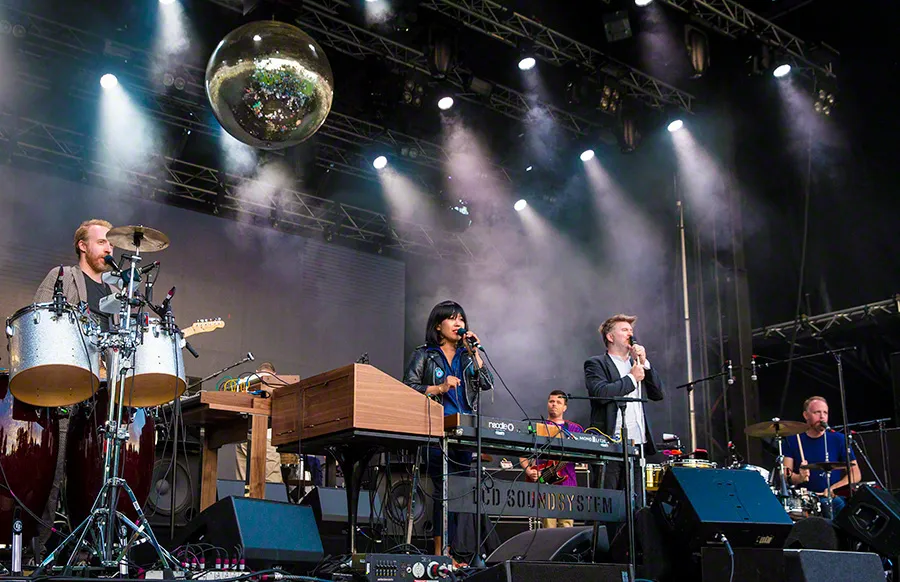
Photo by Tore Sætre , licensed under CC BY-SA 4.0 · Wikimedia Commons
Rank #403
LCD Soundsystem
James Murphy's NYC dance-punk band of restless, witty disco-rock.
From Wikipedia
LCD Soundsystem is an American dance-punk revival band from Brooklyn, New York, formed in 2002 by James Murphy, co-founder of DFA Records. The band comprises Murphy, Nancy Whang, Pat Mahoney (drums), Tyler Pope, Al Doyle, and Korey Richey. They have been signed to DFA since their inception, and also signed to Columbia Records in 2016.
Studio Albums
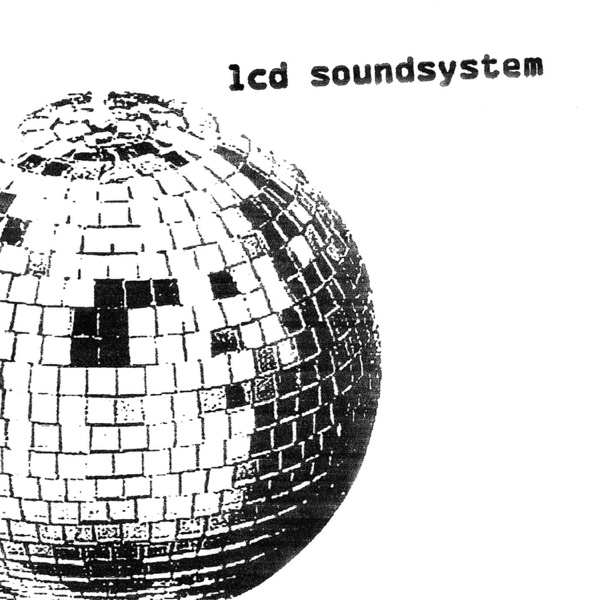
- 2005 LCD Soundsystem
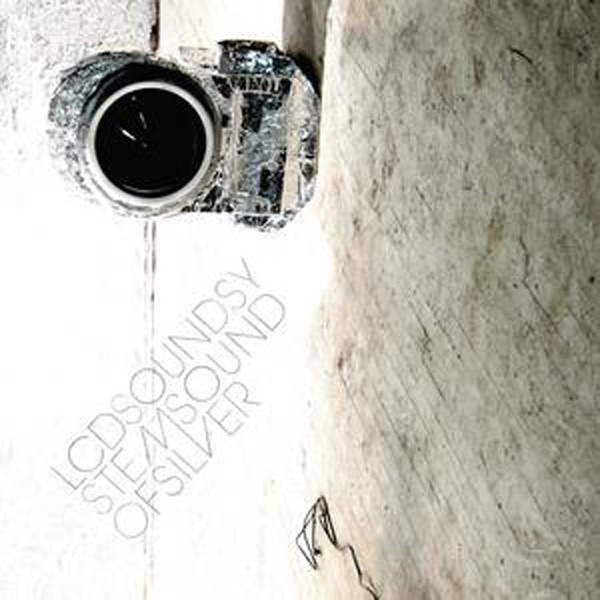
- 2007 Sound of Silver
- 2010 This Is Happening
- 2017 American Dream
Source: MusicBrainz
Deep Dive
Overview
LCD Soundsystem is an American dance-punk revival band from Brooklyn, New York, formed in 2002 by James Murphy, co-founder of DFA Records. The project emerged at a moment when indie rock was reassessing its relationship to electronic music and the rhythmic precision of dance culture. Murphy’s vision was to fuse post-punk’s angular sensibility with disco and house music’s propulsive grooves—a collision that generated a body of work defined by witty, frequently anxious lyrics delivered over instrumental arrangements that could shift from skeletal synth-pop to densely layered funk within a single album.
Formation Story
James Murphy established LCD Soundsystem in 2002 in Brooklyn, a period when the borough was becoming a nexus for indie rock innovation. Murphy, already known through his work at DFA Records—the label he co-founded—used the project as an outlet for his own songwriting and production philosophy. The band solidified around a lineup that included Nancy Whang on vocals and keyboards, Pat Mahoney on drums, Al Doyle on guitar and keyboards, and later members Tyler Pope and Korey Richey. The formation happened amid the post-9/11 New York underground, which was marked by experimental approaches to electronic music and rock genre boundaries. DFA Records served as the band’s home from inception, a label already known for fusing rock and dance aesthetics through its work with other acts.
Breakthrough Moment
LCD Soundsystem released their self-titled debut in 2005, which immediately established Murphy’s writing voice and the band’s sonic identity. The album combined sparse production with instrumental variety—minimal synth melodies interspersed with full ensemble arrangements, drum machines alongside live drums, and Murphy’s deadpan vocal delivery underpinning observations about technology, alienation, and New York urban life. The self-titled debut positioned them as a serious creative force in indie rock rather than a novelty act importing dance music tropes. By the time Sound of Silver arrived in 2007, LCD Soundsystem had become one of the most influential bands of the contemporary indie rock landscape, their catalog establishing a template that countless acts would attempt to replicate.
Peak Era
The period spanning 2005 through 2010—from the self-titled debut through This Is Happening—represented LCD Soundsystem’s most creatively vital and commercially successful interval. Sound of Silver in 2007 refined the formula established on the debut, deepening both the band’s sonic sophistication and Murphy’s lyrical introspection. This Is Happening in 2010 continued the trajectory, finding the group sustaining their momentum while the broader indie rock landscape had begun to fragment into numerous micro-genres and nostalgic revivals. During these five years, LCD Soundsystem moved from underground recognition to international touring prominence and substantial influence on how contemporary artists understood the intersection of electronic production and rock instrumentation.
Musical Style
LCD Soundsystem’s sound rests on a fundamental tension between the precision and emotional remove associated with electronic music production and the immediacy of rock performance. James Murphy’s production aesthetic favors clarity and restraint—each instrumental element is defined, often sparse enough that the spaces between sounds matter as much as the sounds themselves. The band’s rhythmic foundation alternates between programmed drums and Pat Mahoney’s live playing, frequently layering both to create a sense of rigid pulsation beneath organic performance. Nancy Whang’s keyboard work and occasional vocal contributions add textural depth, while Al Doyle’s guitar playing tends toward rhythmic and atmospheric intervention rather than traditional lead work. Murphy’s lyrics adopt an observational, frequently self-aware tone, addressing themes of urban isolation, technological mediation, and social anxiety with a wit that prevents sentimentality. The genre lineage runs through post-punk revival acts, early electronic dance music, and the minimalist compositional approach of bands like Talking Heads, while the production owes debts to 1980s synth-pop and contemporary house music aesthetics.
Major Albums
LCD Soundsystem (2005)
The debut established the band’s core identity: minimalist electronic production married to tangible rock instrumentation, Murphy’s neurotic vocal delivery, and a deep understanding of both post-punk and dance music grammar. Tracks alternated between skeletal synth arrangements and fully orchestrated ensemble pieces, setting a template for all subsequent work.
Sound of Silver (2007)
The second album expanded on the debut’s foundation without abandoning its principles, deepening both the instrumental sophistication and the emotional complexity of Murphy’s songwriting. The album cemented LCD Soundsystem’s position as one of the most important contemporary indie rock acts.
This Is Happening (2010)
This third studio album sustained the band’s creative momentum, continuing their exploration of the intersection between electronic precision and rock performance while maintaining the lyrical intelligence that had always defined the project.
American Dream (2017)
Released after a period of reduced activity, American Dream represented a return to form and marked a new chapter in the band’s ongoing evolution, demonstrating their continued relevance within contemporary indie rock.
Signature Songs
- “Daft Punk Is Playing at My House” — The debut single that crystallized the band’s ability to conjoin ironic observation with infectious electronic-rock propulsion.
- “All My Friends” — A centerpiece examination of aging and urban friendship set against a building instrumental backdrop that exemplifies the band’s dynamic range.
- “Someone Great” — A showcase for Nancy Whang’s vocal contribution and the band’s capacity for genuine emotional resonance beneath the electronic production.
- “New York I Love You” — An extended piece that builds from sparse beginnings into a full ensemble statement, demonstrating the band’s ambition and compositional sophistication.
Influence on Rock
LCD Soundsystem’s primary contribution to contemporary rock music was the legitimization of electronic production and dance music rhythmic sensibilities within the indie rock mainstream. In the early 2000s, when rock traditionalists often regarded synthesizers and programmed drums with suspicion, Murphy’s project demonstrated that these tools could serve complex songwriting and genuine emotional expression rather than superficial novelty. The band’s success influenced an entire cohort of indie rock acts to engage more seriously with electronic music production, dance grooves, and the rhythmic precision of electronic instrumentation. Their approach also validated the idea that intellectual irony and dance-floor vitality were not mutually exclusive, encouraging subsequent artists to avoid false choices between artistic seriousness and popular accessibility. The post-punk revival movement of the 2000s and beyond traces significant lineage through LCD Soundsystem’s demonstration that 1970s punk and post-punk traditions could be productively engaged with contemporary electronic music.
Legacy
LCD Soundsystem remains a crucial reference point in contemporary indie rock, their three foundational albums representing some of the most important rock music of the 2000s. The band’s signing to Columbia Records in 2016, alongside their continuing association with DFA Records, underscored their institutional importance within the broader music industry. The release of American Dream in 2017 demonstrated that the band retained creative vitality and remained capable of producing work relevant to contemporary listeners. Their streaming presence remains substantial, with their catalog maintaining visibility through contemporary music platforms and continued discovery by new audiences. The band’s influence extends beyond direct musical imitation; they established a template for how indie rock could engage with electronic music, dance culture, and production sophistication without sacrificing lyrical intelligence or emotional authenticity. Their catalog continues to inform ongoing conversations about the relationship between rock and electronic music, and artists across multiple genres continue to reference their work as a model for intellectual rigor combined with popular appeal.
Fun Facts
- James Murphy co-founded DFA Records before forming LCD Soundsystem, and the band remained signed to the label from their 2002 inception through subsequent major label deals with Columbia Records.
- The band’s Brooklyn location positioned them at the center of the 2000s indie rock renaissance, a period when the borough became synonymous with contemporary rock innovation.
- Nancy Whang’s contributions as both vocalist and keyboardist added a collaborative creative dimension to Murphy’s songwriting vision, preventing the project from becoming a pure solo vehicle.
- The band’s name references the Liquid Crystal Display technology, reflecting James Murphy’s engagement with contemporary technological terminology as subject matter for artistic exploration.
Discography & Previews
Click any album to expand its track list. Each track plays a 30-second preview streamed from Apple Music. Tap the link icon next to a track to open it in Apple Music for full playback.
- 1 Daft Punk Is Playing at My House ↗ 5:15
- 1 Losing My Edge ↗ 7:53
- 2 Too Much Love ↗ 5:42
- 2 Beat Connection ↗ 8:07
- 3 Tribulations ↗ 4:59
- 3 Give It Up ↗ 3:55
- 4 Movement ↗ 3:04
- 4 Tired ↗ 3:35
- 5 Never As Tired As When I'm Waking Up ↗ 4:50
- 5 Yeah (Crass Version) ↗ 9:21
- 6 On Repeat ↗ 8:02
- 6 Yeah (Pretentious Version) ↗ 11:06
- 7 Thrills ↗ 3:43
- 7 Yr City's a Sucker ↗ 9:22
- 8 Disco Infiltrator ↗ 4:56
- 9 Great Release ↗ 6:35