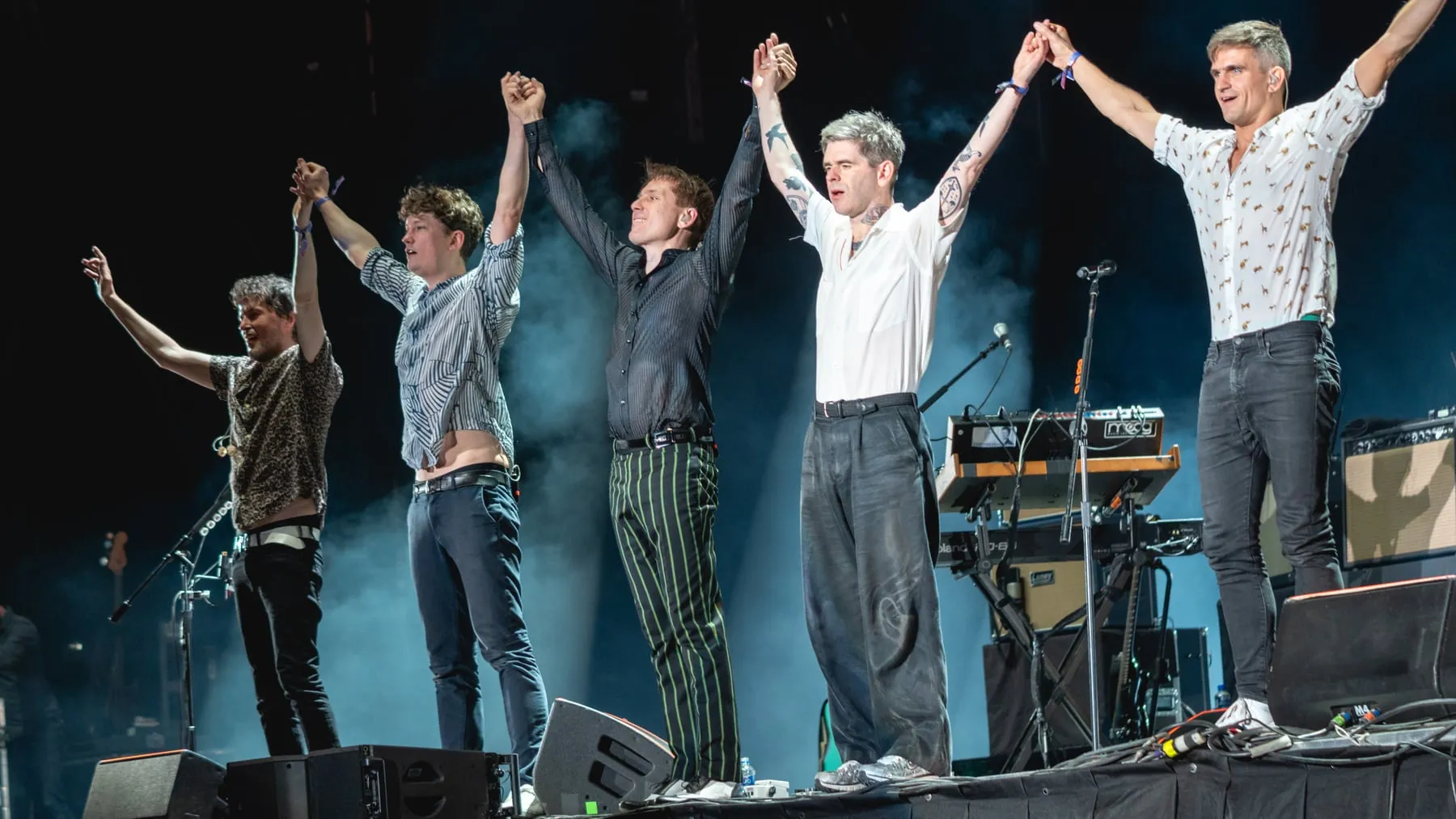
Photo by Raph_PH , licensed under CC BY 2.0 · Wikimedia Commons
Rank #361
Franz Ferdinand
Glasgow indie-rockers whose dance-punk hooks defined a 2000s sound.
From Wikipedia
Franz Ferdinand are a Scottish rock band formed in Glasgow in 2002. Their original line-up was composed of Alex Kapranos, Nick McCarthy, Bob Hardy (bass) and Paul Thomson. Julian Corrie and Dino Bardot joined the band in 2017 after McCarthy left during the previous year, and Audrey Tait joined the band after Thomson left in 2021. The band were categorised as a post-punk revival band, and garnered multiple UK top 20 hits in the 2000s. They have been nominated for several Grammy Awards and have received two Brit Awards—winning one for Best British Group—as well as one NME Award.
Members
- Dino Bardot (2017–present)
- Miaoux Miaoux (2017–present)
- Audrey Tait (2021–present)
- Alex Kapranos
- Nick McCarthy (?–2016)
- Paul Thomson (?–2021)
- Robert Hardy
Studio Albums
- 2004 Franz Ferdinand
- 2005 You Could Have It So Much Better
- 2009 Tonight: Franz Ferdinand
- 2013 Right Thoughts, Right Words, Right Action
- 2018 Always Ascending
- 2025 The Human Fear
Source: MusicBrainz
Deep Dive
Overview
Franz Ferdinand are a Scottish rock band formed in Glasgow in 2002 who became central figures in the 2000s post-punk revival movement. Their taut, rhythmically propulsive sound—built on interlocking guitars, sharp production, and a dance-inflected energy—set them apart within the broader indie rock landscape. Over two decades, they accumulated multiple UK top 20 hits, Grammy nominations, two Brit Awards (including Best British Group), and an NME Award, establishing themselves as one of the decade’s defining rock acts.
Formation Story
Franz Ferdinand coalesced in Glasgow in 2002 from the musical backgrounds of Alex Kapranos (vocals, guitar), Nick McCarthy (guitar, keyboards), Bob Hardy (bass), and Paul Thomson (drums). The city had a rich post-punk heritage, and the band drew from that lineage while synthesizing contemporary influences. Their name, borrowed from the Austro-Hungarian Archduke whose assassination triggered World War I, signaled an intellectual edge and a willingness to channel historical reference into pop-oriented rock. The four-piece locked into a sound defined by precision, rhythmic interplay, and an almost mathematical approach to songwriting that eschewed verse-chorus-verse orthodoxy.
Breakthrough Moment
Franz Ferdinand’s self-titled debut album, released in 2004, arrived as a fully formed statement. The record announced the band as a major force: its tight arrangements, infectious hooks, and propulsive rhythm section generated immediate critical attention and commercial momentum across the UK. Within a year, they released You Could Have It So Much Better in 2005, consolidating their early success and deepening their reputation as live performers. These two albums in rapid succession positioned them as the face of a new post-punk wave, one that married the angular guitars and neurotic energy of 1980s post-punk with contemporary indie-rock production and a dancefloor sensibility.
Peak Era
The years between 2004 and 2009 marked Franz Ferdinand’s most creatively fertile and commercially dominant period. Their first two albums established the template, and Tonight: Franz Ferdinand, released in 2009, demonstrated a band confident enough to evolve their sound while maintaining their core identity. Throughout this era, they accumulated chart success, sold out venues worldwide, and cultivated a reputation as an exceptional live act—one that rewarded repeated listening and extended touring. The band’s music worked equally well in indie clubs and larger venues, a rarity that underscored the broad appeal of their songwriting and performance.
Musical Style
Franz Ferdinand’s sound was built on a foundation of restless, syncopated rhythms and tightly intertwined guitar and keyboard lines. Kapranos’s vocals—delivered with precision and minimal ornamentation—served more as another instrumental voice than as a traditional frontman vehicle. The rhythm section of Hardy and Thomson locked into propulsive, often unexpected grooves; rather than serving as backdrop, drums and bass functioned as equal compositional partners. McCarthy’s keyboards and second guitar added textural depth and melodic counterpoint. The band’s arrangements often omitted chorus sections or inverted traditional song structures, creating a sense of perpetual forward momentum. Lyrically, Kapranos favored oblique, observational approaches over direct confessional modes, fitting the band’s overall aesthetic of controlled intensity and intellectual remove. Their post-punk lineage was evident—the influence of bands like Gang of Four and Joy Division ran through their DNA—but they updated that template with contemporary indie production values and an almost mathematical precision that owed as much to LCD Soundsystem as to 1980s precedent.
Major Albums
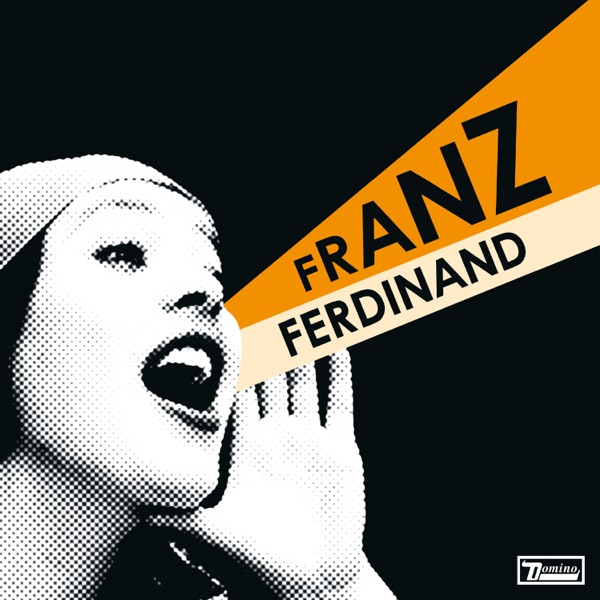
Franz Ferdinand (2004)
The debut that announced the band’s arrival, marked by sharp guitar interplay, propulsive rhythms, and the kind of hook-laden songwriting that made post-punk revival accessible without sacrificing edge. The record’s success on both indie and mainstream rock radio established the template for their continued success.
You Could Have It So Much Better (2005)
A swift follow-up that deepened their songwriting and production, this album consolidated their commercial gains and demonstrated that their 2004 statement was not a one-album phenomenon but rather the opening of a genuine creative voice.
Tonight: Franz Ferdinand (2009)
Four years after their previous record, this album found the band experimenting with dub production techniques and more expansive arrangements while maintaining the rhythmic precision and lyrical restraint that defined their earlier work.
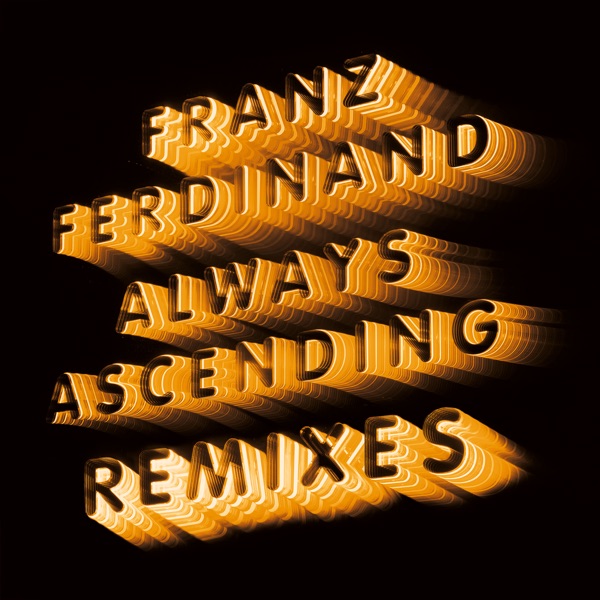
Always Ascending (2018)
Released a decade after their previous album, this record marked the band’s return with a new lineup that included Julian Corrie (keyboards) and Dino Bardot (guitar) joining after McCarthy’s 2016 departure. The album reasserted their presence in contemporary rock.
Signature Songs
- Take Me Out — The explosive single that defined their commercial breakthrough, built on a stop-start guitar riff and an irresistible rhythmic hook.
- Matinée — A tighter, more stripped-back showcase of their ability to generate propulsion from minimal elements.
- Do You Want To — A track that exemplified their gift for unconventional song structures that nonetheless feel inevitable in retrospect.
- Michael — A driving single that demonstrated their range within their established sonic vocabulary.
- This Fire — A later-era highlight showing their continued evolution while maintaining core identity.
Influence on Rock
Franz Ferdinand’s revival of post-punk via a contemporary indie-rock lens influenced the trajectory of 2000s rock broadly. Their success demonstrated that audiences remained receptive to rhythmically complex, angular guitar music delivered with precision and intelligence rather than irony. The band’s dance-inflected approach also bridged indie and electronic music communities in productive ways, influencing acts that sought to move beyond traditional rock instrumentations. Their emphasis on the rhythm section as compositional equal rather than accompaniment became a touchstone for 2000s indie rock. The band also helped establish Glasgow as a source of innovative rock music beyond the Britpop-era associations of earlier decades, paving the way for subsequent generations of Scottish acts.
Legacy
Franz Ferdinand’s albums remain widely streamed and their songs continue to appear in films and television, ensuring ongoing cultural presence across generations of listeners. The band’s 2002–2009 period is now recognized as essential to understanding early 21st-century rock music. Their nomination for Grammy Awards and Brit Award wins provided institutional recognition of their achievements. After a decade-long hiatus, their 2018 return with Always Ascending demonstrated that their songwriting and performance remained relevant. The 2025 album The Human Fear represents their continued activity and creative engagement, affirming a career that has spanned over two decades without surrendering their core aesthetic identity. For listeners discovering post-punk revival or exploring 2000s rock, Franz Ferdinand remain an essential point of entry.
Fun Facts
- The band’s name references Archduke Franz Ferdinand of Austria, whose assassination in 1914 precipitated World War I, embedding historical reference into their identity from inception.
- Alex Kapranos and Nick McCarthy’s songwriting partnership during the early albums was built on meticulous attention to rhythmic detail, with the band spending considerable time on arrangement and production before recording.
- The band has maintained active touring throughout their career despite long gaps between album releases, building a loyal fanbase that has sustained them across nearly a quarter-century of existence.
- Franz Ferdinand’s lineup has undergone significant changes in recent years, with McCarthy departing in 2016, Thomson leaving in 2021, and new members joining in subsequent years, yet the band continues recording and performing under the original name.
Discography & Previews
Click any album to expand its track list. Each track plays a 30-second preview streamed from Apple Music. Tap the link icon next to a track to open it in Apple Music for full playback.

- 1 The Fallen ↗ 3:42
- 2 Do You Want To ↗ 3:35
- 3 This Boy ↗ 2:22
- 4 Walk Away ↗ 3:36
- 5 Evil and a Heathen ↗ 2:06
- 6 You're the Reason I'm Leaving ↗ 2:47
- 7 Eleanor Put Your Boots On ↗ 2:50
- 8 Well That Was Easy ↗ 3:02
- 9 What You Meant ↗ 3:25
- 10 I'm Your Villain ↗ 4:04
- 11 You Could Have It So Much Better ↗ 2:42
- 12 Fade Together ↗ 3:03
- 13 Outsiders ↗ 4:03