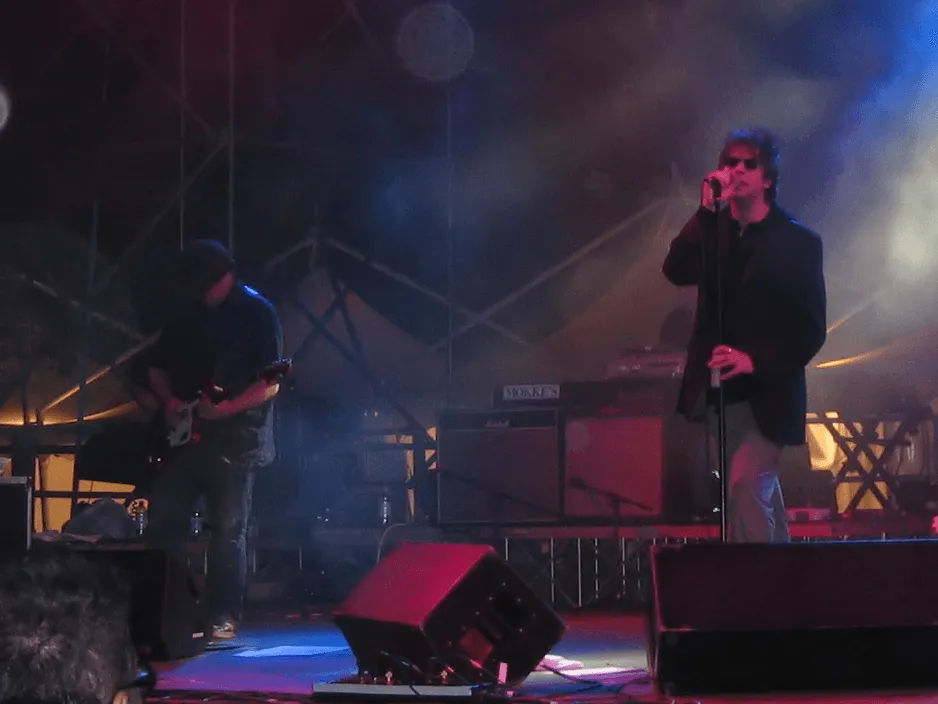
Photo by derivative work: JD554 ( talk ) Bunnymen_2005-08-06.jpg : GothEric , licensed under CC BY-SA 2.0 · Wikimedia Commons
Rank #107
Echo & the Bunnymen
Liverpool post-punk band of cinematic atmosphere and Doors-y drama.
From Wikipedia
Echo & the Bunnymen are an English rock band formed in Liverpool in 1978. The original line-up consisted of vocalist Ian McCulloch, guitarist Will Sergeant and bassist Les Pattinson. In 1980, Pete de Freitas joined as the band's drummer.
Members
- Ian McCulloch
Studio Albums
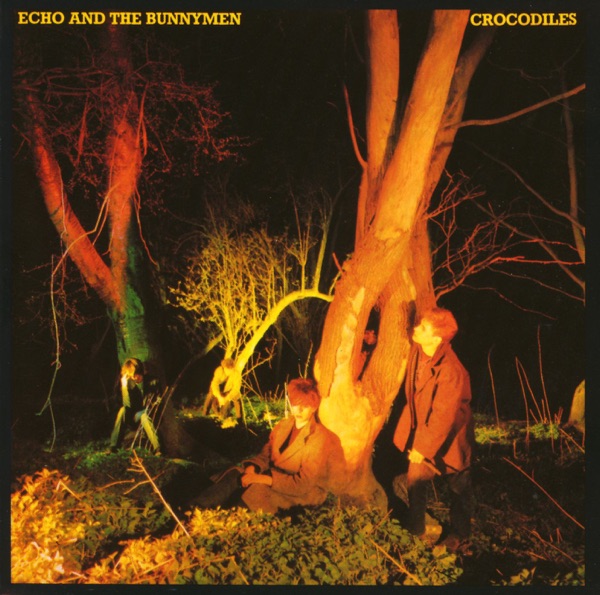
- 1980 Crocodiles
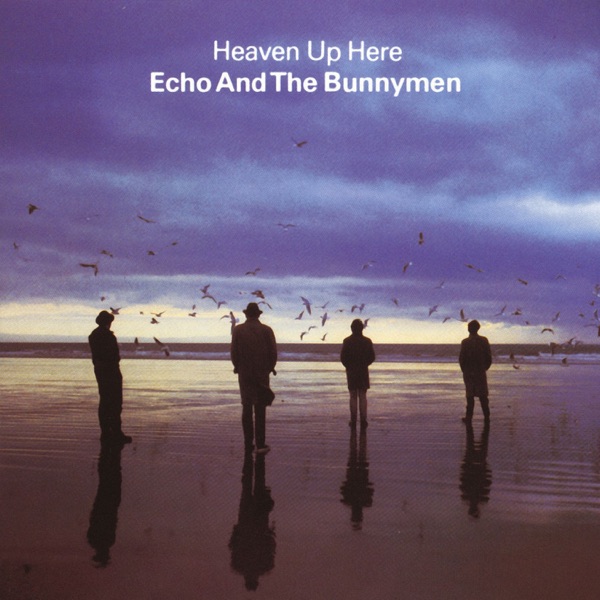
- 1981 Heaven Up Here
- 1983 Porcupine
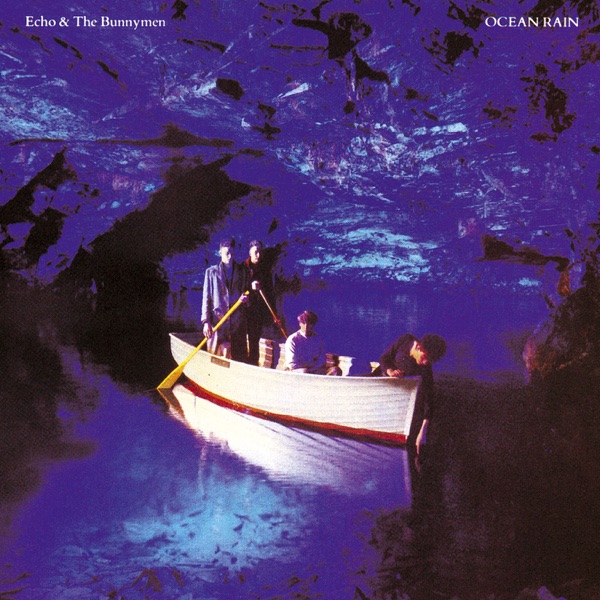
- 1984 Ocean Rain
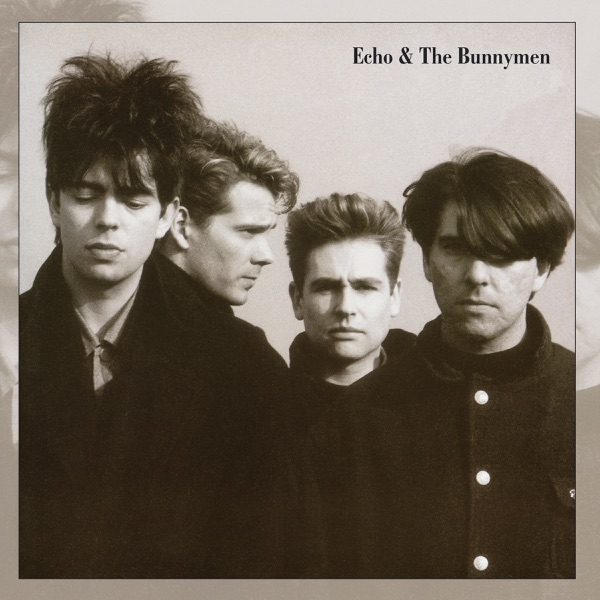
- 1987 Echo & the Bunnymen
- 1990 Reverberation
- 1997 Evergreen
- 1999 What Are You Going to Do With Your Life?
- 2001 Flowers
- 2005 Siberia
- 2009 The Fountain
- 2014 Meteorites
- 2018 The Stars, the Oceans & the Moon
Source: MusicBrainz
Deep Dive
Overview
Echo & the Bunnymen are an English rock band formed in Liverpool in 1978 who stand as one of post-punk’s most atmospheric and cinematically ambitious acts. Built on the foundation of Ian McCulloch’s dramatic baritone vocals, Will Sergeant’s textural guitar work, and a rhythm section anchored by Les Pattinson’s bass and Pete de Freitas’s precise drumming, the band crafted a sound that drew from gothic sensibilities, psychedelic experimentation, and the theatrical grandeur of artists like The Doors. Over more than four decades of recording, they established themselves as architects of a particular strain of post-punk—one less concerned with punk’s raw velocity than with moody introspection, reverb-drenched production, and emotional grandeur.
Formation Story
Echo & the Bunnymen emerged from Liverpool’s late-1970s post-punk ferment, coalescing around Ian McCulloch’s vision and the instrumental foundation laid by Will Sergeant and Les Pattinson. The three-piece came together in 1978 during a period when punk’s first wave was fracturing into countless new directions; Liverpool, already steeped in rock heritage from The Beatles and Cavern Club mythology, became home to a fresh wave of experimental acts. The original trio operated as a complete unit for the band’s first recordings before the lineup solidified further in 1980 with the arrival of drummer Pete de Freitas, whose sharp, economical playing provided the technical precision the band’s increasingly elaborate arrangements demanded.
Breakthrough Moment
The band’s commercial and critical breakthrough came with their debut album Crocodiles in 1980, a release that announced a fully formed aesthetic: moody, orchestrated post-punk with gothic undertones and a grandiose sensibility. Following that debut, Heaven Up Here in 1981 deepened their exploration of atmospheric production and emotional intensity, establishing them as serious contenders in the post-punk conversation. The band consolidated their reputation through the early-to-mid 1980s, particularly with Porcupine in 1983 and the magnum opus Ocean Rain in 1984, the latter functioning as their artistic and commercial peak—a landmark album that proved post-punk could achieve both critical respect and mainstream reach without sacrificing experimental ambition.
Peak Era
The years spanning the release of Porcupine through Ocean Rain and into the self-titled Echo & the Bunnymen in 1987 marked the band’s most creatively vital and commercially successful period. These albums represented the fullest realization of their sonic vision: orchestral arrangements, layered reverb, McCulloch’s increasingly confident and emotionally direct vocal delivery, and Sergeant’s increasingly sophisticated guitar textures. The 1984 Ocean Rain in particular achieved a balance between accessibility and artistic ambition that eluded many of their post-punk contemporaries, suggesting that gothic drama and emotional complexity could sustain an audience beyond the indie and alternative circuits. By 1987, the band had established themselves not as a cult act but as significant figures in 1980s rock.
Musical Style
Echo & the Bunnymen’s sound inhabits a space where post-punk’s angular aggression softens into gothic atmosphere, neo-psychedelia’s textural ambition, and art-rock’s theatrical grandeur. Ian McCulloch’s vocal approach—deep, measured, and often trembling with barely restrained emotion—recalls Jim Morrison’s dramatic intensity while remaining distinct in its restraint and precision. Will Sergeant’s guitar work, dominated by clean electric tones and heavy use of reverb and delay, builds landscapes rather than delivers rock-standard heroics; his playing is about space, echo, and suggestion rather than velocity or distortion. Les Pattinson’s bass lines provide harmonic and rhythmic scaffolding while Pete de Freitas’s drumming eschews the syncopation favored by some post-punk contemporaries in favor of steady, propulsive frameworks that anchor the band’s more elaborate instrumental constructions. The production sensibility—lush, echo-heavy, layered with synthesizers and orchestral textures—situates them alongside other 1980s acts exploring gothic and atmospheric approaches to rock, yet their particular alchemy of melancholy, drama, and pop-song structure remains distinctive.
Major Albums
Crocodiles (1980)
The debut that introduced the band’s signature gothic atmosphere and theatrical approach to post-punk, establishing the template for their career while radiating the confidence of a fully formed artistic vision.
Heaven Up Here (1981)
A darker and more introspective follow-up that deepened the band’s exploration of emotional vulnerability and atmospheric production, consolidating their reputation as serious contenders in post-punk.
Ocean Rain (1984)
Their masterpiece and most balanced achievement, balancing gothic drama, artistic ambition, and genuine emotional resonance in a format that achieved both critical acclaim and significant chart presence across multiple markets.
Echo & the Bunnymen (1987)
A self-titled album that represented the band’s creative confidence at its height, showcasing mature songwriting and a refined production aesthetic without sacrificing the atmospheric qualities that defined their work.
Evergreen (1997)
A late-period studio album marking the band’s continued creative engagement following years of activity in the 1990s, demonstrating their commitment to recording new material alongside touring.
Signature Songs
- The Cutter — A standout track crystallizing the band’s ability to merge post-punk structure with gothic drama and mainstream appeal.
- Bring You Back — Demonstrates McCulloch’s emotional directness and the band’s knack for building tension through restraint and atmosphere.
- Never Stop — Showcases the band’s ability to construct propulsive yet moody arrangements that avoid punk clichés while retaining rock energy.
- Nocturnes — Exemplifies their orchestral approach and the cinematic quality that distinguished them from their post-punk peers.
Influence on Rock
Echo & the Bunnymen’s particular synthesis of post-punk austerity with gothic grandeur and neo-psychedelic texture influenced subsequent generations of alternative and indie rock artists who sought emotional depth and atmospheric sophistication. Their demonstration that post-punk could achieve both artistic credibility and mainstream reach without compromise proved influential on the broader trajectory of 1980s rock, particularly among artists exploring darker tonalities and baroque production aesthetics. The band’s approach to reverb-heavy guitar work, orchestral arrangement, and dramatic vocal delivery established templates that persisted throughout the 1990s alternative rock boom and continue to resonate in contemporary gothic and indie rock practices.
Legacy
Echo & the Bunnymen have maintained an active recording and touring presence for decades, releasing studio albums continuously from their debut through the 2010s and into the 2020s, including Meteorites in 2014 and The Stars, the Oceans & the Moon in 2018. Their catalog remains central to post-punk and gothic rock discourse, with Ocean Rain particularly recognized as a landmark album of 1980s rock. The band continues to perform, anchored by Ian McCulloch’s enduring command of their material, and their body of work has achieved canonical status within the broader alternative rock tradition, proving durable across generational shifts in listening habits and remaining accessible via streaming platforms.
Fun Facts
- The band’s name derives from a recurring character in a 1960s Batman television series episode, chosen for its surrealist appeal rather than direct thematic connection to the band’s music.
- Pete de Freitas, who joined in 1980 and became central to the band’s sound through much of their most successful period, was a session player and member of several Liverpool acts before becoming a full-time Bunnymen member.
- The band recorded extensively under various record labels including Korova and Warner Bros. Records, navigating the broader music industry landscape while maintaining artistic independence in their sonic approach.
Discography & Previews
Click any album to expand its track list. Each track plays a 30-second preview streamed from Apple Music. Tap the link icon next to a track to open it in Apple Music for full playback.

- 1 The Cutter ↗ 3:53
- 2 The Back of Love ↗ 3:14
- 3 My White Devil ↗ 4:41
- 4 Clay ↗ 4:16
- 5 Porcupine ↗ 6:00
- 6 Heads Will Roll ↗ 3:33
- 7 Ripeness ↗ 4:50
- 8 Higher Hell ↗ 5:02
- 9 Gods Will Be Gods ↗ 5:26
- 10 In Bluer Skies ↗ 4:32
- 11 Fuel ↗ 4:05
- 12 The Cutter (Alternate Version) ↗ 4:06
- 13 My White Devil (Alternative Version) ↗ 5:02
- 14 Porcupine (Alternative Version) ↗ 4:03
- 15 Ripeness (Alternative Version) ↗ 4:42
- 16 Gods Will Be Gods (Alternative Version) ↗ 5:30
- 17 Never Stop (Discotheque) ↗ 4:46
- 1 The Game ↗ 3:51
- 2 Over You ↗ 4:03
- 3 Bedbugs and Ballyhoo ↗ 3:29
- 4 All in Your Mind ↗ 4:33
- 5 Bombers Bay ↗ 4:24
- 6 Lips Like Sugar ↗ 4:52
- 7 Lost and Found ↗ 3:38
- 8 New Direction ↗ 4:49
- 9 Blue Blue Ocean ↗ 5:10
- 10 Satellite ↗ 3:05
- 11 All My Life ↗ 4:11
- 12 Jimmy Brown (Early Version of "Bring On the Dancing Horses") [Bonus Track] ↗ 4:05
- 13 Hole In the Holy (Bonus Track) ↗ 4:43
- 14 Soul Kitchen (Bonus Track) ↗ 3:54
- 15 The Game (Acoustic Demo) [Bonus Track] ↗ 3:58
- 16 Bedbugs and Ballyhoo (Original Single Version) [Bonus Track] ↗ 3:40
- 17 Over Your Shoulder (Bonus Track) ↗ 4:09
- 18 Bring On the Dancing Horses (Extended Mix) [Bonus Track] ↗ 5:51


- 1 Don't Let It Get You Down ↗ 3:51
- 2 In My Time ↗ 3:26
- 3 I Want to Be There (When You Come) ↗ 3:39
- 4 Evergreen ↗ 4:10
- 5 I'll Fly Tonight ↗ 4:24
- 6 Nothing Lasts Forever ↗ 3:55
- 7 Baseball Bill ↗ 4:04
- 8 Altamont ↗ 3:52
- 9 Just a Touch Away ↗ 5:09
- 10 Empire State Halo ↗ 4:00
- 11 Too Young to Kneel ↗ 3:40
- 12 Forgiven ↗ 5:49
- 13 I Want to Be There (When You Come) [Live Version] ↗ 3:30
- 14 Bedbugs and Ballyhoo (Live) ↗ 3:44
- 15 Rescue (Live) ↗ 3:53
- 16 Lips Like Sugar (Live) ↗ 4:43




- 1 Bring on the Dancing Horses (Transformed) ↗ 4:01
- 2 The Somnambulist ↗ 3:23
- 3 Nothing Lasts Forever (Transformed) ↗ 4:09
- 4 Lips Like Sugar (Transformed) ↗ 4:27
- 5 Rescue (Transformed) ↗ 4:17
- 6 Rust (Transformed) ↗ 5:03
- 7 Angels & Devils (Transformed) ↗ 3:39
- 8 Bedbugs & Ballyhoo (Transformed) ↗ 3:25
- 9 Zimbo (Transformed) ↗ 4:33
- 10 Stars Are Stars (Transformed) ↗ 3:30
- 11 Seven Seas (Transformed) ↗ 3:43
- 12 Ocean Rain (Transformed) ↗ 5:41
- 13 The Cutter (Transformed) ↗ 4:23
- 14 How Far? ↗ 4:40
- 15 The Killing Moon (Transformed) ↗ 4:59