
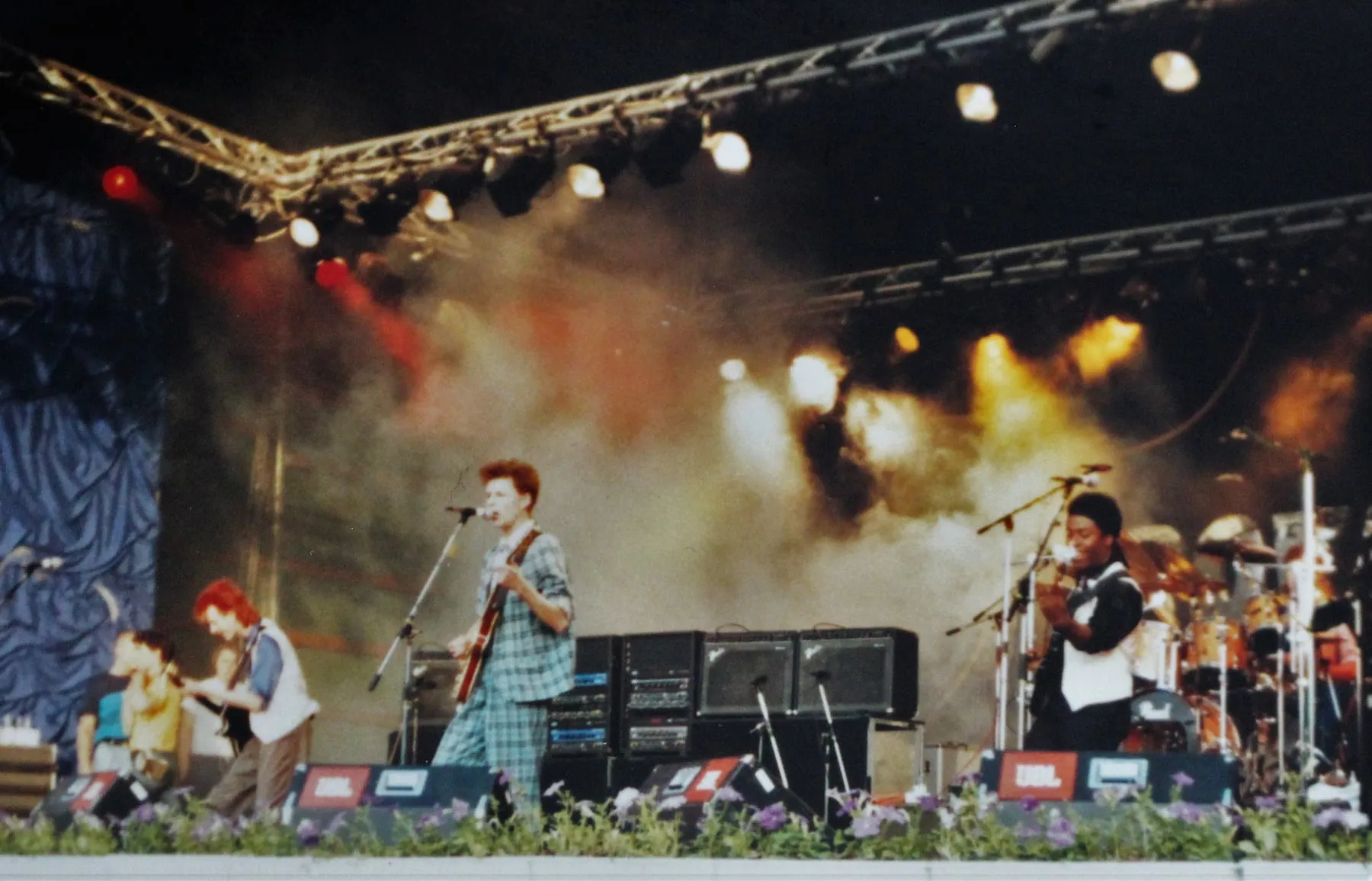
Photo by Accept-Finland , licensed under CC BY-SA 4.0 · Wikimedia Commons
Rank #226
Big Country
Scottish New Wave band whose bagpipe-toned guitars stamped a unique sound.
From Wikipedia
Big Country is a Scottish rock band formed in Dunfermline, Fife, in 1981 by lead singer and guitarist Stuart Adamson, guitarist Bruce Watson, bassist Tony Butler and drummer Mark Brzezicki. Their debut album The Crossing (1983) reached number three in the UK and delivered their only U.S. Top 40 hit, “In a Big Country”. Follow‑ups Steeltown (1984) and The Seer (1986) also landed in the UK top ten, with The Seer producing the Irish number one hit "Look Away" and featuring a collaboration with Kate Bush on its title track.
Members
- Stuart Adamson
Deep Dive
Overview
Big Country is a Scottish rock band that emerged from Dunfermline, Fife, in 1981 and carved out a distinctive niche within the New Wave and alternative rock landscape of the 1980s. The band’s signature sound—characterized by guitars tuned and played to mimic bagpipes, a instrument deeply rooted in Scottish cultural identity—set them apart from their contemporaries and gave their music an instantly recognizable texture. From their breakthrough debut in 1983 through a prolific recording career spanning four decades, Big Country synthesized post-punk energy with distinctly Scottish musical heritage, becoming one of the most identifiable rock acts of their era.
Formation Story
Big Country coalesced in Dunfermline in 1981 when Stuart Adamson (lead vocals and guitar) joined forces with Bruce Watson (guitar), Tony Butler (bass), and Mark Brzezicki (drums). The lineup brought together musicians versed in the post-punk and new wave movements that had swept Britain in the late 1970s, yet they sought a sonic identity that would distinguish them from the synth-heavy and art-rock acts dominating new wave at the time. Their shared vision centered on using electric guitars as the primary textural and melodic instrument, with Watson and Adamson developing the technique of treating their guitars as bagpipes—an approach that would become their artistic calling card and the foundation of their sound.
Breakthrough Moment
Big Country’s ascent from regional Scottish act to international presence occurred with the release of their debut album, The Crossing, in 1983. The album reached number three on the UK charts and yielded “In a Big Country,” a song that became their only U.S. Top 40 hit and remains their most enduring anthem. The track’s anthemic chorus, driven by the band’s signature guitar interplay and Adamson’s soaring vocal delivery, struck a chord with audiences on both sides of the Atlantic. The Crossing announced Big Country as major players in the new wave pantheon, establishing the musical template—layered guitars, rhythmically propulsive bass lines, and Adamson’s emotionally direct singing—that would define their early work.
Peak Era
The mid-1980s represented Big Country’s commercial and creative zenith. Following the success of The Crossing, they consolidated their position with Steeltown (1984), which also reached the UK top ten, and The Seer (1986), their third straight UK top-ten album. The Seer demonstrated the band’s growing ambition and willingness to experiment with their sound while maintaining their core identity. The album produced “Look Away,” which topped the Irish charts, and featured a notable collaboration with Kate Bush on the album’s title track—a testament to their growing artistic stature. By the mid-1980s, Big Country had established themselves as one of Britain’s leading rock exports, competing on radio and MTV with acts across the post-punk and new wave spectrum.
Musical Style
Big Country’s sound rested on a fundamentally novel approach to electric guitar in rock music: the conscious and systematic deployment of guitars to approximate the tonal qualities and melodic phrasing of Scottish bagpipes. This technique, employed most prominently by Watson and Adamson, created a wall of shimmering, sustained tones that gave their arrangements a distinctly orchestral character unusual for new wave and alternative rock bands of their era. Beneath this guitar architecture, Butler’s melodic bass lines provided harmonic complexity and forward momentum, while Brzezicki’s drumming emphasized rhythm and propulsion without excessive flourish. Adamson’s vocals—high-pitched, urgent, and emotionally unguarded—completed the picture. The combination of post-punk energy, new wave sensibility, and this Scottishly inflected guitar work made Big Country instantly identifiable and difficult to categorize within the prevailing trends of 1980s rock.
Major Albums
The Crossing (1983)
Big Country’s debut established all the signature elements of their sound: the bagpipe-toned guitars, melodic bass work, and anthemic songwriting. The album’s success in both Britain and North America demonstrated that their distinctive approach held broad commercial appeal.
Steeltown (1984)
The follow-up consolidated their early success and reached the UK top ten, proving that The Crossing was not a one-off achievement. The album maintained their core sound while exploring variations in production and arrangement.
The Seer (1986)
Big Country’s third consecutive UK top-ten album, The Seer showcased the band at peak creative confidence, featuring “Look Away” and a collaboration with Kate Bush that underscored their artistic credibility and ambition.
Peace in Our Time (1988)
Released in the late 1980s, this album represented the band’s continued output during a period when many of their new wave contemporaries were fragmenting or fading from commercial prominence.
The Journey (2013)
After a gap of several years, Big Country returned to recording with this album, signaling their ongoing commitment to creating new material and maintaining their presence in rock music.
Signature Songs
- “In a Big Country” — The band’s only U.S. Top 40 hit and their most recognizable song, defined by its soaring chorus and the instantly distinctive bagpipe-guitar sound.
- “Look Away” — A chart-topper in Ireland from The Seer, showcasing the band’s gift for crafting emotionally resonant arena rock.
- “Fields of Fire (400 Miles)” — A cornerstone track from their debut that exemplifies their fusion of post-punk urgency with melodic accessibility.
- “Steeltown” — The title track from their 1984 album, reflecting thematic concerns rooted in working-class Scottish experience.
Influence on Rock
Big Country’s impact on rock music, while sometimes overlooked in retrospectives dominated by punk purists and synth-pop evangelists, was substantial. Their demonstration that new wave could accommodate guitar-driven, non-ironic emotionalism opened space for subsequent alternative rock acts that rejected both punk’s aggression and synth-pop’s detachment. The bagpipe-guitar technique, while never widely adopted by other bands, represented a genuine innovation in rock instrumentation and arrangement—a creative solution to the problem of how to distinguish one’s band in an increasingly crowded marketplace. Their success also validated the possibility of a distinctly regional, even provincial, rock identity; Big Country never attempted to obscure their Scottishness or to adopt the cosmopolitan pose of many new wave acts. Later alternative and indie rock bands would follow a similar path, building their identity around regional or national character rather than attempting to transcend it.
Legacy
Big Country remained active throughout subsequent decades, releasing studio albums into the 2010s and continuing to tour, though they never regained the commercial heights of their 1980s peak. The enduring popularity of “In a Big Country” as a classic rock staple and the continued visibility of their early albums on streaming platforms and in rock radio rotation has ensured their place in the canonical history of 1980s rock. Their success demonstrated that new wave, despite its association with synthesizers and ironic detachment, could also encompass guitar-based, emotionally direct approaches to songwriting and arrangement. The band’s insistence on Scottish identity and their innovative approach to guitar sound have made them touchstones for subsequent generations of Scottish and British rock musicians seeking to build distinctive voices within established genres.
Fun Facts
- Stuart Adamson served as the lead singer and guitarist throughout the band’s existence, making him the primary voice and creative force in Big Country’s trajectory.
- The band’s signature bagpipe-guitar technique was not a deliberate attempt to recreate traditional Scottish instruments but rather emerged organically from Watson and Adamson’s experimentation with tuning and playing method.
- The Seer featured a guest appearance by Kate Bush on the album’s title track, a significant cross-genre collaboration that underscored Big Country’s artistic standing in the mid-1980s.
- Despite their strong roots in Scotland and distinctly Scottish musical identity, Big Country achieved their only U.S. Top 40 hit with their very first single, “In a Big Country,” a remarkable commercial achievement for a debut act from outside the United States.