

Photo by https://www.flickr.com/photos/ichliebe/ , licensed under CC BY 2.0 · Wikimedia Commons
Rank #453
Tokio Hotel
From Wikipedia
Tokio Hotel is a German pop rock band formed in 2001 by singer Bill Kaulitz, guitarist Tom Kaulitz, bassist Georg Listing, and drummer Gustav Schäfer. Starting from the foundation, the band's music genres were pop rock and alternative rock; since 2014, the band began to perform electropop and synth-pop.
Members
- Bill Kaulitz
- Georg Listing
- Gustav Schäfer
- Tom Kaulitz
Discography & Previews
Browse through and click an album to open and play 30-second previews streamed from Apple Music.

Scream
2007 · 15 tracks
- 1 Scream ↗ 3:18
- 2 Ready, Set, Go! ↗ 3:34
- 3 Monsoon (Gateway Version) ↗ 4:01
- 4 Love Is Dead ↗ 3:41
- 5 Don't Jump ↗ 4:08
- 6 Live Every Second ↗ 3:49
- 7 On the Edge ↗ 4:07
- 8 Sacred ↗ 4:00
- 9 Break Away ↗ 3:25
- 10 Rescue Me ↗ 3:49
- 11 Final Day ↗ 3:13
- 12 Forgotten Children ↗ 4:37
- 13 By Your Side ↗ 4:22
- 14 1000 Oceans (Single Version) ↗ 4:04
- 15 Durch Den Monsun ↗ 3:56

Humanoid
2009 · 19 tracks
- 1 Noise (Live) ↗ 4:23
- 2 Human Connect to Human (Live) ↗ 3:52
- 3 Break Away (Live) ↗ 3:24
- 4 Pain of Love (Live) ↗ 4:52
- 5 World Behind My Wall (Live) ↗ 4:19
- 6 Hey You (Live) ↗ 3:49
- 7 Alien (English Version) [Live] ↗ 3:06
- 8 Ready, Set, Go! (Live) ↗ 3:36
- 9 Humanoid (German Version) [Live] ↗ 2:22
- 10 Phantomrider (Live) ↗ 5:51
- 11 Dogs Unleashed (Live) ↗ 3:44
- 12 Love & Death (Live) ↗ 3:18
- 13 In Your Shadow I Can Shine (Live) ↗ 3:05
- 14 Automatic (Live) ↗ 3:14
- 15 Screamin' (Live) ↗ 4:17
- 16 Darkside of the Sun (Live) ↗ 3:54
- 17 Zoom Into Me (Live) ↗ 3:38
- 18 Monsoon (Live) ↗ 4:06
- 19 Forever Now (Live) ↗ 4:13
Humanoid
2009 · 19 tracks
- 1 Noise (Live) ↗ 4:23
- 2 Human Connect to Human (Live) ↗ 3:52
- 3 Break Away (Live) ↗ 3:24
- 4 Pain of Love (Live) ↗ 4:52
- 5 World Behind My Wall (Live) ↗ 4:19
- 6 Hey You (Live) ↗ 3:49
- 7 Alien (English Version) [Live] ↗ 3:06
- 8 Ready, Set, Go! (Live) ↗ 3:36
- 9 Humanoid (German Version) [Live] ↗ 2:22
- 10 Phantomrider (Live) ↗ 5:51
- 11 Dogs Unleashed (Live) ↗ 3:44
- 12 Love & Death (Live) ↗ 3:18
- 13 In Your Shadow I Can Shine (Live) ↗ 3:05
- 14 Automatic (Live) ↗ 3:14
- 15 Screamin' (Live) ↗ 4:17
- 16 Darkside of the Sun (Live) ↗ 3:54
- 17 Zoom Into Me (Live) ↗ 3:38
- 18 Monsoon (Live) ↗ 4:06
- 19 Forever Now (Live) ↗ 4:13

Kings of Suburbia
2014 · 15 tracks
- 1 Feel It All ↗ 4:02
- 2 Stormy Weather ↗ 3:30
- 3 Run, Run, Run ↗ 3:27
- 4 Love Who Loves You Back ↗ 3:50
- 5 Covered In Gold ↗ 4:30
- 6 Girl Got a Gun ↗ 2:48
- 7 Kings of Suburbia ↗ 3:24
- 8 We Found Us ↗ 3:24
- 9 Invaded ↗ 3:29
- 10 Never Let You Down ↗ 3:13
- 11 Louder Than Love ↗ 3:36
- 12 Masquerade ↗ 3:18
- 13 Dancing In the Dark ↗ 3:27
- 14 The Heart Get No Sleep ↗ 3:50
- 15 Great Day ↗ 3:19

2001
2022 · 16 tracks
- 1 Durch den Monsun 2020 ↗ 3:55
- 2 HIM ↗ 3:35
- 3 White Lies ↗ 3:04
- 4 Ain't Happy ↗ 3:28
- 5 Just A Moment (feat. VVAVES) ↗ 3:04
- 6 Hungover You ↗ 3:33
- 7 Smells Like Summer (feat. Asdis) ↗ 3:04
- 8 Happy People (feat. Daði Freyr) ↗ 3:00
- 9 Here Comes The Night ↗ 3:04
- 10 Dreamer ↗ 3:16
- 11 Runaway ↗ 3:31
- 12 When We Were Younger ↗ 2:40
- 13 Bad Love ↗ 2:23
- 14 Another Lover ↗ 3:58
- 15 Berlin (feat. VVAVES) ↗ 3:25
- 16 Back To The Ocean ↗ 3:49
-
 ScreamTokio Hotel200715 tracks
 -
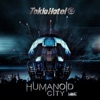 HumanoidTokio Hotel200919 tracks
 - HumanoidTokio Hotel200919 tracks
-
 Kings of SuburbiaTokio Hotel201415 tracks
 -
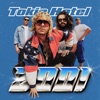 2001Tokio Hotel202216 tracks
Deep Dive
Overview
Tokio Hotel is a German pop rock band that emerged from Magdeburg in 2001 as a project uniting twin brothers Bill and Tom Kaulitz with bassist Georg Listing and drummer Gustav Schäfer. The band began their career in the tradition of pop rock and alternative rock, establishing themselves as one of Germany’s most successful acts in the 2000s. Over two decades of activity, they have navigated shifts in sound and production sensibility, eventually incorporating electropop and synth-pop elements into their sonic vocabulary. Their trajectory reflects both the commercial and artistic pressures facing rock and pop acts across the digital era.
Formation Story
Tokio Hotel crystallized in Magdeburg, a city in eastern Germany, in 2001 when vocalist Bill Kaulitz and guitarist Tom Kaulitz, identical twin brothers, joined forces with bassist Georg Listing and drummer Gustav Schäfer. The band was rooted in the pop rock and alternative rock idiom, drawing influence from the broader European and international rock landscape of the early 2000s. Magdeburg provided the foundation for their early rehearsals and local performances, though the band would soon expand their reach far beyond their regional origins. The young lineup’s chemistry and songwriting ambitions positioned them to connect with a generation of listeners hungry for guitar-driven pop music that blended accessible melodies with rock textures.
Breakthrough Moment
Tokio Hotel’s debut album Schrei, released in 2005, marked their first major statement and introduced their blend of pop rock and emo sensibilities to a wider audience. The record’s success in Germany and beyond established them as more than a local curiosity; it demonstrated the international viability of their approach. Building on this foundation, the band released Zimmer 483 (also presented as Scream in English-language markets) in 2007, consolidating their position and extending their reach across Europe and into the global marketplace. These early albums established the sonic and commercial template that would define their early career, proving that German-language pop rock, infused with emo and alternative rock elements, could achieve substantial mainstream traction.
Peak Era
The period from 2007 to 2009 represented Tokio Hotel’s most commercially visible window and creatively fertile stretch. The international promotion of Zimmer 483 / Scream across 2007 and 2008 solidified their fanbase, while the 2009 release of Humanoid demonstrated their willingness to evolve their production and songwriting approach. Humanoid saw the band experimenting with more elaborate production and a broadening sonic palette, signaling their movement toward the electronic and synth-pop textures they would fully embrace in later years. This era yielded consistent touring and media attention, particularly among younger listeners, establishing them as a significant force in the pop-rock landscape of the late 2000s.
Musical Style
Tokio Hotel’s sound in their formative years was anchored by guitar-driven pop rock with emo and alternative rock flourishes. Bill Kaulitz’s distinctive vocal delivery, characterized by emotional expressiveness and tonal clarity, functioned as the band’s primary emotional conduit, while Tom Kaulitz’s guitar work provided harmonic and textural foundation. The rhythm section of Listing and Schäfer maintained a rock orientation rooted in drums and bass, though production choices increasingly incorporated synthesizers and electronic elements as albums progressed. By 2014, with Kings of Suburbia, the band’s incorporation of electropop and synth-pop signaled a more decisive shift away from guitar-centric rock toward synthesizer-led soundscapes. The 2017 album Dream Machine continued this trajectory, while their 2022 self-titled 2001 suggested further refinement and reconsideration of their electronic-pop direction. This evolution reflected both their artistic interests and the changing landscape of pop music across the streaming era.
Major Albums
Schrei (2005)
Tokio Hotel’s debut introduced their pop rock and emo sensibilities to German and European audiences, establishing the vocal and instrumental blueprint that would define their early identity.
Zimmer 483 / Scream (2007)
Released in both German and English versions, this album deepened their songwriting and production sophistication while demonstrating international commercial viability beyond German-speaking territories.
Humanoid (2009)
The band’s third full-length studio album showcased increased production complexity and early signs of their eventual movement toward electronic and synthesizer-based arrangements.
Kings of Suburbia (2014)
Marking a decisive sonic reorientation, Kings of Suburbia embraced electropop and synth-pop as primary aesthetic anchors, moving substantially away from guitar-dominant rock toward electronic production.
Dream Machine (2017)
This album continued the band’s electropop and synth-pop evolution, refining their approach to synthesizer-driven songwriting and production.
2001 (2022)
Tokio Hotel’s self-titled return suggested both a retrospective nod to their founding year and a reconsideration of their electronic-pop direction within contemporary production contexts.
Signature Songs
- “Schrei” — The title track from their debut, exemplifying their early blend of pop sensibility and emotional vocal intensity.
- “Automatic” — A notable track from Zimmer 483 / Scream that showcased their ability to craft accessible pop-rock with alternative edge.
- “Humanoid” — The title track from their 2009 album, reflecting their experimentation with production and evolving sound palette.
Influence on Rock
Tokio Hotel arrived at a moment when emo and pop-punk influences were reshaping rock music globally, and their German-language approach to these aesthetics widened the conversation around what rock and pop could sound like in non-English markets. Their success demonstrated that European artists could sustain international careers outside the traditional Anglo-American rock canon, paving pathways for subsequent German and European pop-rock acts. Their eventual embrace of electropop and synth-pop, beginning in 2014, aligned them with broader industry trends toward electronic production and away from guitar-centric rock, reflecting the seismic shifts in rock music during the streaming era. While not foundational architects of any single subgenre, Tokio Hotel functioned as a bridge between early-2000s emo-inflected pop rock and the electronic pop landscape that came to dominate the 2010s.
Legacy
Tokio Hotel’s enduring activity—spanning more than two decades from 2001 to the present—marks them as one of Germany’s longest-running and most commercially successful pop-rock exports. Their catalog, spanning six studio albums across multiple record labels including Island Records, Cherrytree Records, and Interscope Records, has accumulated substantial streaming presence across digital platforms. The band’s willingness to evolve their sound from guitar-driven pop rock to electropop and synth-pop demonstrates both artistic restlessness and commercial awareness. Though they did not achieve the same level of critical canonization as some of their Anglo-American contemporaries, their sustained touring, recording activity, and fanbase retention mark them as a significant presence in European pop music and a notable reference point for discussions of 2000s emo and alternative rock’s global reach.
Fun Facts
- Bill and Tom Kaulitz are identical twins, making Tokio Hotel one of rock music’s notable sibling-fronted acts.
- The band’s name, “Tokio Hotel,” references the Japanese spelling of Tokyo, reflecting their early ambitions toward international recognition and their embrace of a somewhat enigmatic, cosmopolitan image.
- Tokio Hotel signed to major international labels including Island Records and Interscope, indicating substantial investment in their global commercial potential during their peak years.