
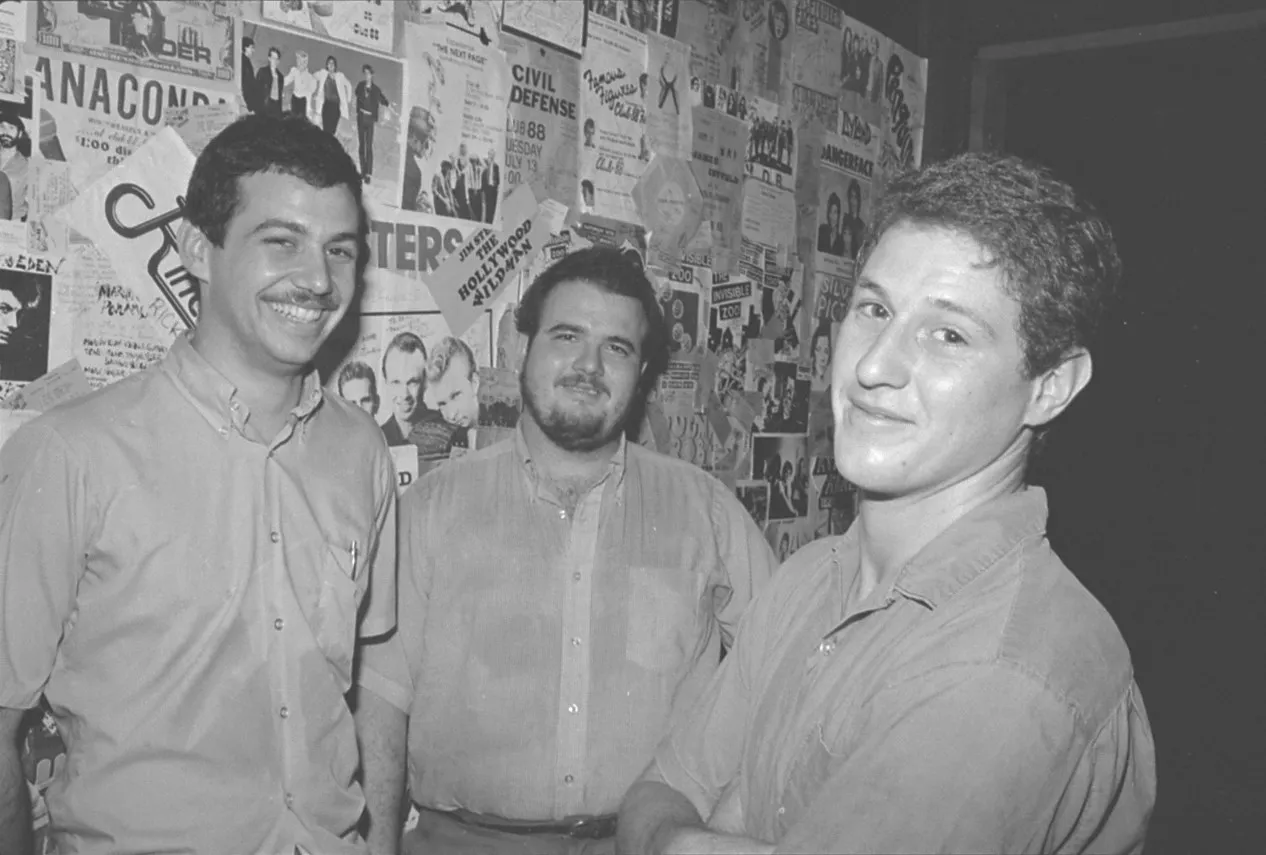
Photo by UCLA Library Special Collections , licensed under CC BY 2.0 · Wikimedia Commons
Rank #192
Minutemen
From Wikipedia
Minutemen were an American punk rock band formed in San Pedro, California, in 1980. Composed of guitarist/vocalist D. Boon, bassist/vocalist Mike Watt, and drummer George Hurley, Minutemen recorded four albums and eight EPs before Boon's death in an automobile accident in 1985; the band broke up shortly thereafter. They were noted in the California punk community for a philosophy of "jamming econo"—a sense of thriftiness reflected in their touring and short, tight songs, and for their eclectic style, drawing on hardcore punk, funk, jazz, and other sources.
Members
- D. Boon
- Frank Tonche
- George Hurley
- Mike Watt
Discography & Previews
Browse through and click an album to open and play 30-second previews streamed from Apple Music.

The Punch Line
1981 · 18 tracks
- 1 Search ↗ 0:54
- 2 Tension ↗ 1:20
- 3 Games ↗ 1:04
- 4 Boiling ↗ 0:58
- 5 Disguises ↗ 0:48
- 6 The Struggle ↗ 0:42
- 7 Monuments ↗ 0:52
- 8 Ruins ↗ 0:49
- 9 Issued ↗ 0:41
- 10 The Punch Line ↗ 0:41
- 11 Song for El Salvador ↗ 0:32
- 12 History Lesson ↗ 0:38
- 13 Fanatics ↗ 0:31
- 14 No Parade ↗ 0:52
- 15 Straight Jacket ↗ 1:00
- 16 Gravity ↗ 0:57
- 17 Warfare ↗ 0:55
- 18 Static ↗ 0:52

What Makes a Man Start Fires?
1983 · 18 tracks
- 1 Bob Dylan Wrote Propaganda Songs ↗ 1:29
- 2 One Chapter In the Book ↗ 1:03
- 3 Fake Contest ↗ 1:43
- 4 Beacon Sighted Through Fog ↗ 1:01
- 5 Mutiny In Jonestown ↗ 1:08
- 6 East Wind / Faith ↗ 2:08
- 7 Pure Joy ↗ 1:30
- 8 99 ↗ 1:00
- 9 The Anchor ↗ 2:34
- 10 Sell or Be Sold ↗ 1:44
- 11 The Only Minority ↗ 1:00
- 12 Split Red ↗ 0:54
- 13 Colors ↗ 2:06
- 14 Plight ↗ 1:38
- 15 The Tin Roof ↗ 1:09
- 16 Life As a Rehearsal ↗ 1:35
- 17 This Road ↗ 1:25
- 18 Polarity ↗ 1:49
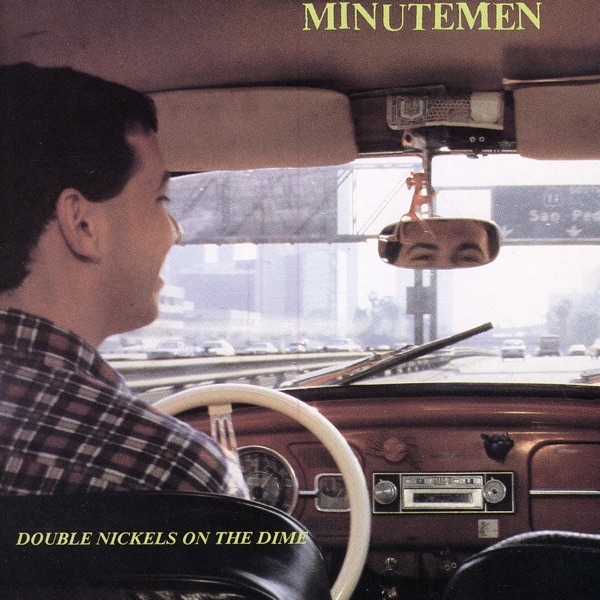
Double Nickels on the Dime
1984 · 43 tracks
- 1 D.'s Car Jam / Anxious Mo-Fo ↗ 1:20
- 2 Theatre Is the Life of You ↗ 1:31
- 3 Viet Nam ↗ 1:30
- 4 Cohesion ↗ 1:57
- 5 It's Expected I'm Gone ↗ 2:05
- 6 #1 Hit Song ↗ 1:49
- 7 Two Beads at the End ↗ 1:53
- 8 Do You Want New Wave or Do You Want the Truth ↗ 1:51
- 9 Don't Look Now ↗ 1:47
- 10 Shit from an Old Notebook ↗ 1:36
- 11 Nature Without Man ↗ 1:47
- 12 One Reporters Opinion ↗ 1:52
- 13 Political Song for Michael Jackson to Sing ↗ 1:31
- 14 Maybe Partying Will Help ↗ 1:56
- 15 Toadies ↗ 1:38
- 16 Retreat ↗ 2:01
- 17 The Big Foist ↗ 1:31
- 18 God Bows to Math ↗ 1:16
- 19 Corona ↗ 2:26
- 20 The Glory of Man ↗ 2:58
- 21 Take 5, D. ↗ 1:40
- 22 My Heart and the Real World ↗ 1:06
- 23 History Lesson, Pt. 2 ↗ 2:12
- 24 You Need the Glory ↗ 2:03
- 25 The Roar of the Masses Could Be Farts ↗ 1:21
- 26 West Germany ↗ 1:49
- 27 The Politics of Time ↗ 1:13
- 28 Themselves ↗ 1:18
- 29 Please Don't Be Gentle with Me ↗ 0:48
- 30 Nothing Indeed ↗ 1:22
- 31 No Exchange ↗ 1:52
- 32 There Ain't Shit on T.V. Tonight ↗ 1:35
- 33 This Ain't No Picnic ↗ 1:58
- 34 Spillage ↗ 1:54
- 35 Untitled Song for Latin America ↗ 2:04
- 36 Jesus and Tequila ↗ 2:53
- 37 June 16th ↗ 1:49
- 38 Storm in My House ↗ 1:59
- 39 Martin's Story ↗ 0:53
- 40 Dr. Wu ↗ 1:46
- 41 The World According to Nouns ↗ 2:07
- 42 Love Dance ↗ 2:03
- 43 Three Car Jam ↗ 0:39

3‐Way Tie (for Last)
1985 · 16 tracks
- 1 The Price of Paradise ↗ 3:39
- 2 Lost ↗ 2:33
- 3 The Big Stick ↗ 2:35
- 4 Political Nightmare ↗ 3:57
- 5 Courage ↗ 2:35
- 6 Have You Ever Seen the Rain? ↗ 2:30
- 7 The Red and the Black ↗ 4:10
- 8 Spoken Word Piece ↗ 1:07
- 9 No One ↗ 3:29
- 10 Stories ↗ 1:36
- 11 What Is It ↗ 1:51
- 12 Ack Ack Ack ↗ 0:28
- 13 Just Another Soldier ↗ 1:58
- 14 Situations At Hand ↗ 1:24
- 15 Hittin' the Bong ↗ 0:42
- 16 Bermuda ↗ 1:41
-
 The Punch LineMinutemen198118 tracks
 -
 What Makes a Man Start Fires?Minutemen198318 tracks
 -
 Double Nickels on the DimeMinutemen198443 tracks
 -
 3‐Way Tie (for Last)Minutemen198516 tracks
Deep Dive
Overview
Minutemen were an American punk rock band formed in San Pedro, California, in 1980. Composed of guitarist and vocalist D. Boon, bassist and vocalist Mike Watt, and drummer George Hurley, the band became one of the most distinctive acts to emerge from the California punk underground. Their influence extended far beyond their geographic origin, establishing a template for how punk rock could absorb funk, jazz, and experimental impulses without sacrificing the genre’s core intensity. Though the band’s active period lasted only five years before Boon’s death in an automobile accident in 1985, Minutemen left behind a catalog that remains foundational to understanding punk’s evolution in the 1980s.
Formation Story
Minutemen emerged from San Pedro, a working-class port town south of Los Angeles that had developed its own vital punk scene distinct from the Hollywood and West Hollywood centers that dominated Southern California punk in the early 1980s. D. Boon, Mike Watt, and George Hurley coalesced around a shared philosophy that would come to define them: “jamming econo,” a deliberate practice of thriftiness in both their creative output and their approach to touring and recording. This was not poverty of ambition but rather a disciplined rejection of excess—in sound, in presentation, and in the economic demands they placed on themselves and their audience. The band recorded and toured on minimal budgets, played short, tightly constructed songs that eschewed bloat, and maintained fierce independence from major-label pressure. This ethos, rooted in the DIY ethic of American punk but applied with almost monastic rigor, became their defining characteristic.
Breakthrough Moment
Minutemen’s breakthrough came with the release of Double Nickels on the Dime in 1984. The album arrived as a sprawling, ambitious document that contradicted none of the band’s core principles while revealing the full scope of their musical vocabulary. Rather than limit themselves to a single register, the album moved fluidly between hardcore punk assaults, funk-inflected basslines, jazz-inflected passages, and compressed indie rock moments—all within the framework of jamming econo. The album’s reach extended beyond the punk underground into college radio and the broader alternative rock audience that was beginning to cohere in the mid-1980s. Double Nickels on the Dime demonstrated that punk rock, properly executed, could be intellectually restless and eclectic without losing its urgency or its working-class directness. The album marked the moment when Minutemen transitioned from respected regional act to influential force within the emerging alternative rock landscape.
Peak Era
The period from 1983 to 1985 represented Minutemen’s creative and commercial peak. Following their second album, What Makes a Man Start Fires? in 1983, the band had developed full confidence in their aesthetic vision. Double Nickels on the Dime in 1984 was their artistic culmination, expanding their scope across the double album format while maintaining discipline and economy. In 1985, the band released two final albums: …Just a Minute Men and 3‐Way Tie (for Last), continuing to explore and refine their approach even as they approached the end of their time together. These final records showed a band at the height of their powers, uncompromising in their vision and increasingly ambitious in their sonic palette. The band’s live performances during this period became legendary within the punk and alternative communities, characterized by the same intensity and precision that marked their recordings.
Musical Style
Minutemen’s sound was built on the collision of distinct musical impulses held in deliberate tension. D. Boon’s guitar work ranged from sharp, economical punk attacks to more exploratory, angular lines influenced by post-punk and no-wave. Mike Watt’s bass playing, however, was the band’s true signature—melodic and percussive, drawing from funk and jazz traditions while remaining locked into punk’s forward momentum. George Hurley’s drumming provided propulsive energy while maintaining the precision and tightness that the jamming econo philosophy demanded. Vocally, both Boon and Watt brought conversational directness to their lyrics, avoiding punk’s sometimes-predictable anger in favor of observation and uncertainty. The band’s arrangements were deceptively complex; songs that seemed spare at first revealed layers of interaction and counterpoint upon closer listening. This willingness to incorporate funk grooves, jazz chords, and experimental production techniques into a punk framework set them apart from their contemporaries and prefigured much of what alternative rock would become in the late 1980s and 1990s.
Major Albums
The Punch Line (1981)
Minutemen’s debut established the band’s fundamental approach: short songs, direct energy, and a refusal to accept punk orthodoxy as a limitation rather than a foundation.
What Makes a Man Start Fires? (1983)
The second album deepened the band’s exploration of funk and jazz influences while maintaining punk’s aggression, showing a band growing in confidence and musical ambition.
Double Nickels on the Dime (1984)
The band’s masterwork and the high point of their recorded output, this double album stands as one of the most important punk records of the 1980s, balancing eclecticism with uncompromising songcraft.
…Just a Minute Men (1985)
Released in the final months before Boon’s death, the album continued the band’s trajectory toward greater complexity and abstraction without sacrificing their core ethos.
Signature Songs
- “Bureaucracy” — A biting critique of institutional inertia delivered with the band’s characteristic tightness and Mike Watt’s melodic bass work.
- “Corona” — An instrumental showcase that demonstrates how much rhythmic and harmonic information the band could pack into a concise frame.
- “Fake Englishman” — A funk-influenced track that proves punk rock and groove could coexist without either compromising its essence.
- “Political Song for Michael Jackson to Sing” — A statement of the band’s political consciousness expressed through their eclectic musical language.
Influence on Rock
Minutemen’s influence reshaped how alternative and indie rock artists understood the relationship between punk energy and musical eclecticism. By demonstrating that punk could absorb funk, jazz, and experimental approaches without becoming less punk, they opened pathways that countless bands would follow. Their philosophy of jamming econo—the idea that constraint could generate creativity rather than limit it—became a model for independent rock production and touring ethics. The band’s refusal to accept genre boundaries as fixed inspired subsequent generations of musicians who wanted intensity and experimentation simultaneously. Major figures in post-punk, indie rock, and alternative metal traced through Minutemen’s influence, and their records became touchstones for musicians interested in how to maintain artistic integrity within punk’s constraints.
Legacy
Minutemen’s legacy is inseparable from the trajectory of rock music in the decades following their dissolution. Though the band was active for only five years, their recorded output has never fallen out of print and continues to be discovered by new generations of musicians and listeners. Mike Watt’s subsequent career—including his solo work, his tenure in The Stooges, and his various collaborations—kept Minutemen’s spirit alive and ensured their influence remained visible. The reissue campaigns and expanded reissues of their catalog have allowed deeper appreciation of their work, and their records have become standard references for anyone interested in the origins of alternative rock. Minutemen demonstrated a model of artistic seriousness and economic independence that remains relevant to independent musicians decades later. Their impact on how rock music understood the relationship between restraint and ambition, between punk’s founding energy and genre exploration, secures their position as one of the most influential American rock bands of the 1980s.
Fun Facts
- The band’s name, Minutemen, referenced the American Revolutionary War militia, reflecting their sense of punk rock as a kind of cultural resistance movement.
- Mike Watt’s bass playing became so influential that subsequent generations of punk and alternative musicians studied his recorded work as seriously as guitarists studied more traditional influences.
- The title Double Nickels on the Dime was a reference to truck driving slang, reflecting the band’s working-class aesthetic and their commitment to DIY touring culture.
- D. Boon died in a single-car automobile accident on December 3, 1985, at age 23, bringing the band’s activities to an abrupt end shortly after releasing their final albums.