
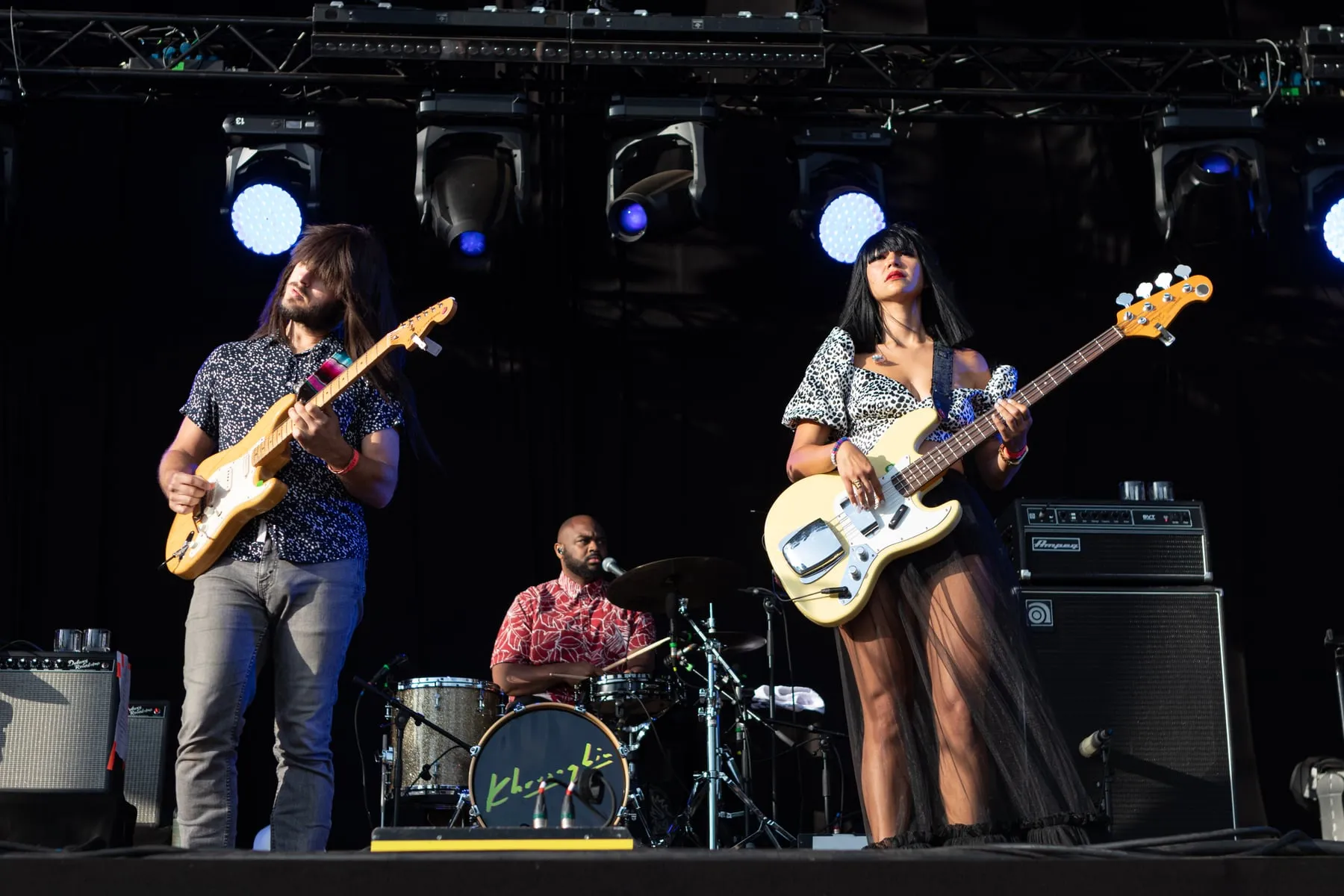
Photo by Alexander Kellner , licensed under CC BY-SA 4.0 · Wikimedia Commons
Rank #412
Khruangbin
From Wikipedia
Khruangbin is an American musical trio from Houston, Texas. The band consists of Laura Lee Ochoa, Mark Speer, and Donald "DJ" Johnson. The trio is known for blending global music influences, such as Thai rock, Iranian pop, and dub, with American soul, rock, and psychedelia.
Members
- Donald Johnson
- Laura Lee
- Mark Speer
Discography & Previews
Browse through and click an album to open and play 30-second previews streamed from Apple Music.
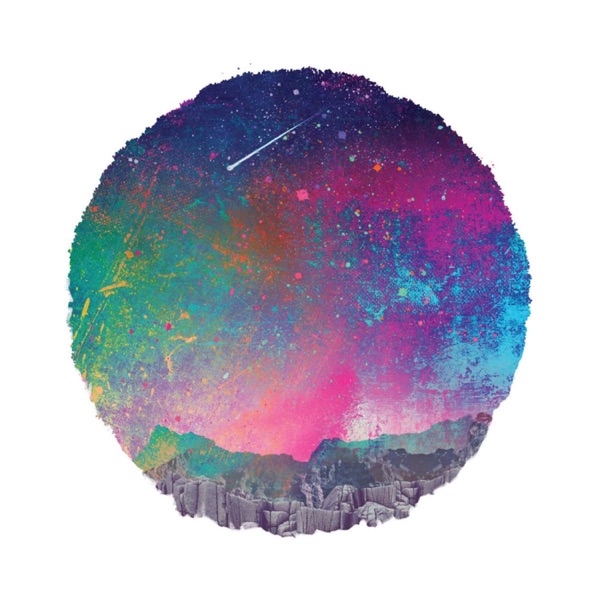
The Universe Smiles Upon You
2015 · 10 tracks


A LA SALA
2024 · 12 tracks

The Universe Smiles Upon You ii
2025 · 10 tracks
-
 The Universe Smiles Upon YouKhruangbin201510 tracks
 -
 Con todo el mundoKhruangbin201810 tracks
 -
 MordechaiKhruangbin202010 tracks
 -
 AliKhruangbin20228 tracks
 -
 A LA SALAKhruangbin202412 tracks
 -
 The Universe Smiles Upon You iiKhruangbin202510 tracks
Deep Dive
Overview
Khruangbin is an American instrumental rock trio from Houston, Texas, formed in 2004. Comprising Laura Lee Ochoa on bass, Mark Speer on guitar, and Donald “DJ” Johnson on drums, the band has built a distinctive sound that blends Thai rock, Iranian pop, and dub production with American soul, rock, and psychedelic foundations. Over two decades, Khruangbin has become known for their hypnotic, groove-oriented approach to instrumental rock—music that emphasizes texture, rhythm, and global sonic palette over conventional song structures.
Formation Story
Khruangbin emerged from the Houston psychedelic and experimental music scene in 2004, a period when the city’s rock underground was exploring post-punk revival and instrumental experimentalism. The trio of Laura Lee, Mark Speer, and Donald Johnson came together with a shared interest in drawing from world music traditions—particularly the krautrock-influenced psychedelic rock of Thailand and the warm, layered pop production of Iran—and recontextualizing those sounds through an American lens of soul, blues, and studio-craft psychedelia. The Burton-based origin reflects Houston’s suburban and regional character as a breeding ground for acts uninterested in coastal industry gatekeeping.
Breakthrough Moment
Khruangbin’s debut album, The Universe Smiles Upon You, released in 2015, introduced their signature sound to a wider audience and established the band’s reputation for instrumental depth and global sonic adventure. The album’s success—driven by word-of-mouth, streaming platforms, and college radio discovery—positioned them as key figures in a broader wave of instrumental and psychedelic rock revival occurring in the mid-2010s. The record’s immersive, production-heavy approach and refusal of vocals became their calling card, allowing listeners to focus entirely on interplay, texture, and the hypnotic pull of their rhythm section anchored by Laura Lee’s melodic bass work.
Peak Era
The band’s most creatively prolific and commercially successful period spanned from 2015 through 2022. Following The Universe Smiles Upon You, Khruangbin released Con todo el mundo in 2018, which deepened their exploration of Spanish-language song titles and Latin American and Middle Eastern sonic influence, further cementing their status as a group unafraid to reference global geography in both form and content. Mordechai arrived in 2020, continuing their momentum during the pandemic era, while Ali in 2022 maintained their position as one of the most consistent and exploratory instrumental bands working. Throughout this stretch, their live performances—marked by tight, psychedelic grooves and immersive visual accompaniment—became increasingly central to their identity.
Musical Style
Khruangbin’s sound is anchored by precise, melodically inventive bass lines played by Laura Lee, layered guitar textures from Mark Speer that draw from psychedelic rock, funk, and Eastern modal traditions, and the crisp, propulsive drumming of Donald Johnson. The production is characteristically warm and detailed, with heavy use of reverb, echo, and studio layering that recall both vintage analog recording and contemporary dub sensibilities. Their instrumental approach allows for extended passages without melody hooks or lyrical anchors, inviting listeners into meditative, groove-based spaces. Structurally, their songs often eschew traditional verse-chorus-verse architecture in favor of evolving, theme-and-variations frameworks—a common trait in both psychedelia and non-Western instrumental traditions. The band’s sonic range encompasses moments of near-ambient spaciousness, tight funk-derived grooves, and dense, orchestral arrangements achieved by overdubbing and layering rather than expansion of the core trio.
Major Albums
The Universe Smiles Upon You (2015)
The debut established Khruangbin’s signature sound: immersive, groove-heavy instrumental rock steeped in global influence and studio detail. Its success proved there was an audience for contemporary instrumental psychedelia rooted in world music rather than guitar-heroics.
Con todo el mundo (2018)
The follow-up deepened their exploration of Latin American and Middle Eastern sonic textures, with song titles in Spanish signaling a commitment to non-English-language cultural reference. The record expanded their international fanbase and demonstrated their ability to evolve their sound while maintaining their essential identity.
Mordechai (2020)
Released during the pandemic, Mordechai continued their trajectory of lush, layered instrumental exploration. The album solidified their status as one of the most consistent and imaginative acts in contemporary psychedelic rock.
Ali (2022)
Their most recent major statement, Ali sustained their reputation for meticulous production and hypnotic groove, proving their creative well remained deep as they approached two decades of activity.
Signature Songs
- “Maria” (from Con todo el mundo) — A signature showcase of Laura Lee’s melodic bass work and the band’s ability to sustain tension through minimalist arrangement.
- “Calf Born with Two Heads” (from The Universe Smiles Upon You) — An early defining track that demonstrates their psychedelic grooves and layered production approach.
- “Dern Daler Nacht” — One of the band’s most-loved instrumental pieces, exemplifying their mastery of tension and release within elongated passages.
- “Mong Lus” — A fixture of their live shows, it highlights the interplay between rhythm section and lead guitar within a tightly locked groove.
Influence on Rock
Khruangbin’s success as an instrumental band in the 21st century helped revive broader interest in psychedelic and experimental rock free from vocal-centric songwriting. Their embrace of global sonic sources—Thai, Iranian, Latin American, and dub production—demonstrated that American rock musicians could draw from and honor non-Western traditions without appropriation, instead creating something genuinely hybrid and exploratory. They emerged alongside and influenced a broader wave of instrumental psychedelic acts in the 2010s and 2020s, helping establish a contemporary market for complex, non-commercial rock music in an era of streaming and playlist culture. Their meticulous studio approach and live-show spectacle elevated the presentation possibilities of instrumental rock beyond the conventions of the classic prog era.
Legacy
From their 2004 formation through the present, Khruangbin have maintained artistic independence and critical respect while building a devoted global fanbase. Their consistency—releasing albums roughly every two to three years from 2015 onward—has positioned them as a reliable anchor in the psychedelic rock canon of the 2010s and 2020s. With A LA SALA (2024) and The Universe Smiles Upon You ii (2025), they continue to expand their catalog, proving their vitality after two decades. Their influence extends beyond music into visual culture and live-performance design, with their tours becoming multi-sensory experiences that prioritize immersion. As streaming platforms have fragmented radio, Khruangbin’s direct relationship with global audiences through digital distribution and festival appearances has allowed them to sustain an expansive, dedicated listenership independent of traditional industry gatekeeping.
Fun Facts
- The band’s name, “Khruangbin,” translates to “airplane” in Thai, reflecting their interest in Thai rock and global sonic sources from the earliest stages of their project.
- Their decision to remain entirely instrumental—eschewing vocals across all releases—remains unusual and deliberate in contemporary rock, positioning them as committed formalists in an era of genre boundary-crossing.
- Laura Lee Ochoa’s bass-centric songwriting approach inverts traditional rock hierarchy, making the bass line rather than lead guitar or vocals the primary melodic and compositional anchor.