
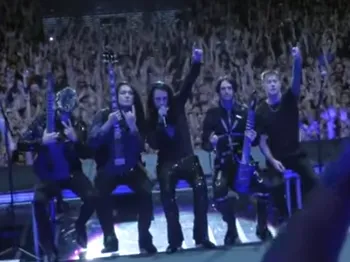
Photo by Stephen Nahorniak , licensed under CC BY 3.0 · Wikimedia Commons
Rank #350
Falling in Reverse
From Wikipedia
Falling in Reverse is an American rock band formed in 2008 by lead vocalist Ronnie Radke. Originally named From Behind These Walls, it was renamed Falling in Reverse shortly after formation. They are currently signed to Epitaph Records. The band has undergone numerous lineup changes, with Radke being the only remaining original member.
Members
- Ronnie Radke
Discography & Previews
Browse through and click an album to open and play 30-second previews streamed from Apple Music.

The Drug in Me Is You
2011 · 11 tracks

Fashionably Late
2013 · 15 tracks
- 1 Champion ↗ 4:03
- 2 Bad Girls Club ↗ 3:42
- 3 Rolling Stone ↗ 3:53
- 4 Fashionably Late ↗ 3:33
- 5 Alone ↗ 4:39
- 6 Born to Lead ↗ 5:20
- 7 It's over When It's Over ↗ 3:54
- 8 Game Over ↗ 3:09
- 9 Self - Destruct Personality ↗ 4:16
- 10 F**k the Rest ↗ 4:25
- 11 Keep Holding On ↗ 4:55
- 12 Drifter ↗ 2:47
- 13 Where Have You Been ↗ 3:19
- 14 Goddamn ↗ 3:10
- 15 Rolling Stone (Shy Kidx Remix) ↗ 4:40

Just Like You
2015 · 14 tracks
- 1 Chemical Prisoner ↗ 4:20
- 2 God, If You Are above... ↗ 3:36
- 3 Sexy Drug ↗ 3:15
- 4 Just Like You ↗ 3:33
- 5 Guillotine IV (The Final Chapter) ↗ 3:36
- 6 Stay Away ↗ 3:22
- 7 Wait and See ↗ 4:39
- 8 The Bitter End ↗ 4:04
- 9 My Heart's to Blame ↗ 3:50
- 10 Get Me Out ↗ 3:45
- 11 Die for You ↗ 3:44
- 12 Brother ↗ 3:21
- 13 My Apocalypse II ↗ 3:45
- 14 Pray ↗ 3:37


-
 The Drug in Me Is YouFalling in Reverse201111 tracks
 -
 Fashionably LateFalling in Reverse201315 tracks
 -
 Just Like YouFalling in Reverse201514 tracks
 -
 Coming HomeFalling in Reverse20171 track
 -
 Popular MonsterFalling in Reverse202411 tracks
Deep Dive
Overview
Falling in Reverse is an American post-hardcore band formed in Las Vegas in 2008 by vocalist Ronnie Radke. Beginning as a project with roots in the metalcore and emo-inflected alternative rock of the late 2000s, the band emerged from the broader post-hardcore revival that dominated the alternative music landscape in the 2010s. Their catalogue spans from 2011’s The Drug in Me Is You through to 2024’s Popular Monster, establishing them as a durable presence within Epitaph Records’ roster and the wider post-hardcore ecosystem. Falling in Reverse built their identity on visceral vocal performance, dynamic instrumental tension, and thematic preoccupations with personal struggle and introspection.
Formation Story
Falling in Reverse originated in Las Vegas in 2008 under the initial name From Behind These Walls before quickly pivoting to their permanent moniker. Ronnie Radke founded the project as a vehicle for his songwriting and vocal expression within the post-hardcore idiom. Las Vegas, though not typically associated with the post-hardcore underground in the same way that Southern California or the Midwest were, provided the band with an outsider position from which to operate. The city’s relative isolation from major music industry centers meant the band developed organically, building a local following before expanding nationally through touring and digital distribution. Radke would remain the sole original member through subsequent years, as the band experienced frequent lineup fluctuations—a characteristic common to post-hardcore acts navigating the genre’s volatile terrain throughout the 2010s.
Breakthrough Moment
Falling in Reverse achieved wider recognition following the release of The Drug in Me Is You in 2011. The album arrived at a moment when post-hardcore was experiencing renewed commercial viability, with bands like Pierce the Veil, Escape the Fate, and Asking Alexandria commanding substantial audiences. The Drug in Me Is You positioned the band within that milieu, showcasing Radke’s volatile vocal approach and the group’s capacity for both abrasive intensity and melodic moments. The album’s title track and its music video became touchstones within the post-hardcore community, drawing listeners and establishing the band’s core aesthetic. This debut LP served as the foundation for their expansion beyond the Las Vegas underground, leading to wider touring opportunities and growing presence on the Epitaph Records label, where they would remain signed for subsequent releases.
Peak Era
The period bracketed by Fashionably Late (2013) and Just Like You (2015) represented Falling in Reverse’s commercial and creative zenith. Fashionably Late demonstrated the band’s ability to refine their compositional approach while maintaining the aggressive energy that defined their debut. By Just Like You in 2015, the band had solidified their fanbase and secured a recognizable position within post-hardcore’s ecosystem. These years coincided with extensive touring, festival appearances, and deepening connections with their audience through digital platforms. Coming Home in 2017 continued this trajectory, further establishing the band’s consistency as working musicians and evolving songwriters. This era cemented Falling in Reverse as more than a one-album act, proving their capacity for longevity within a genre often characterized by early peaks and subsequent decline.
Musical Style
Falling in Reverse’s sound is rooted in post-hardcore’s foundational grammar: dissonant, fractured guitar work interspersed with moments of relative harmonic stability, punctuated by dynamic shifts between screamed and sung vocal passages. Radke’s performance is the band’s most distinctive element—his delivery alternates between controlled melodic singing and guttural, anguished screams, often within the same composition. This polarity mirrors the lyrical thematic concerns of personal turmoil, addiction, and psychological struggle. The band’s instrumentation draws equally from metalcore’s rhythmic density and post-hardcore’s emphasis on angular, unconventional song structures. Their songwriting favors narrative directness in verses and hook-driven, more radio-friendly choruses—a balance characteristic of second-generation post-hardcore bands seeking broader appeal without sacrificing genre conventions. Over the course of their discography, the band has permitted their pop-punk and emo influences to become more pronounced, particularly in melodic vocal work and arrangement, while maintaining the underlying intensity that defines the post-hardcore approach.
Major Albums
The Drug in Me Is You (2011)
Falling in Reverse’s debut stands as their definitive statement, combining raw post-hardcore aggression with introspective lyricism. The album’s commercial success and staying power within the fanbase established the band’s core identity and introduced Ronnie Radke’s volatile vocal dynamic to a widening audience.
Fashionably Late (2013)
This second album demonstrated the band’s refinement of their approach, deepening their songwriting sophistication while preserving the visceral intensity of their debut. Fashionably Late solidified their position as more than a transient alternative rock act.
Just Like You (2015)
Released at the peak of their commercial trajectory, Just Like You showcased the band’s ability to balance melodic accessibility with post-hardcore abrasiveness, cementing their status within the genre’s contemporary landscape.
Coming Home (2017)
The 2017 release continued Falling in Reverse’s evolution, demonstrating sustained creative output and fan engagement throughout a period when many post-hardcore acts experienced declining relevance.
Popular Monster (2024)
Returning after a notable gap, Popular Monster marked the band’s recent entry into the 2020s music landscape, signaling their continued activity and commercial viability.
Signature Songs
- The Drug in Me Is You — The title track and lead single from their debut, defining the band’s aesthetic and showcasing Radke’s full dynamic vocal range across screams and melodic passages.
- Fuck If I Know — A standout from the post-hardcore catalogue, exemplifying the band’s capacity for both aggression and accessible hooks within a single composition.
- This Addiction — A widely recognized track that demonstrates the band’s thematic preoccupation with personal struggle and their ability to marry introspective lyrics with instrumental intensity.
- The Guillotine — A mid-era track that showcases the band’s refinement of their compositional approach and Radke’s increasingly assured vocal performance.
Influence on Rock
Falling in Reverse’s contribution to post-hardcore’s evolution lies primarily in their demonstration of commercial viability for the genre beyond its regional cult bases. Their presence on Epitaph Records—a label with significant reach beyond the underground—helped establish post-hardcore as a sustainable career path for working musicians throughout the 2010s. The band’s emphasis on Radke’s volatile vocal performance influenced subsequent post-hardcore acts to foreground personality and emotional directness in their own work. While not pioneers of the post-hardcore sound itself—that lineage traces through bands like Glassjaw, Poison the Well, and Hopesfall—Falling in Reverse exemplified the second-generation approach to the genre: taking established structural and sonic conventions and adapting them for broader consumption without wholly abandoning the genre’s foundational aesthetics. Their sustained presence in the music landscape through the 2010s and 2020s provided a template for post-hardcore longevity.
Legacy
Falling in Reverse’s legacy remains bound to the post-hardcore and metalcore communities where their music continues to maintain substantial streaming presence and touring viability. The band’s durability as a touring act—particularly given the volatility that characterizes both the post-hardcore genre and Ronnie Radke’s public profile—speaks to the underlying strength of their fanbase. Their albums remain consistent fixtures within post-hardcore playlists and recommendation algorithms, indicating enduring cultural resonance within their genre’s ecosystem. The 2024 release of Popular Monster confirmed the band’s continued relevance and commercial viability, suggesting their trajectory extends beyond the typical lifespan of 2010s alternative acts. Falling in Reverse stands as a representative example of post-hardcore’s evolution from regional movement to sustainable genre with established infrastructure, touring circuits, and label support.
Fun Facts
- The band’s original name, From Behind These Walls, was abandoned shortly after formation, with the new moniker serving as their permanent identity from the early days of their existence.
- Las Vegas’s geographic distance from the traditional post-hardcore strongholds on the coasts gave the band a distinct outsider position within the broader movement.
- Ronnie Radke’s status as the sole remaining original member underscores the common high turnover rate experienced by post-hardcore bands navigating demanding touring schedules and volatile interpersonal dynamics.
- The band has maintained their Epitaph Records affiliation across multiple album cycles, providing stability within an industry often characterized by label changes and roster flux.