
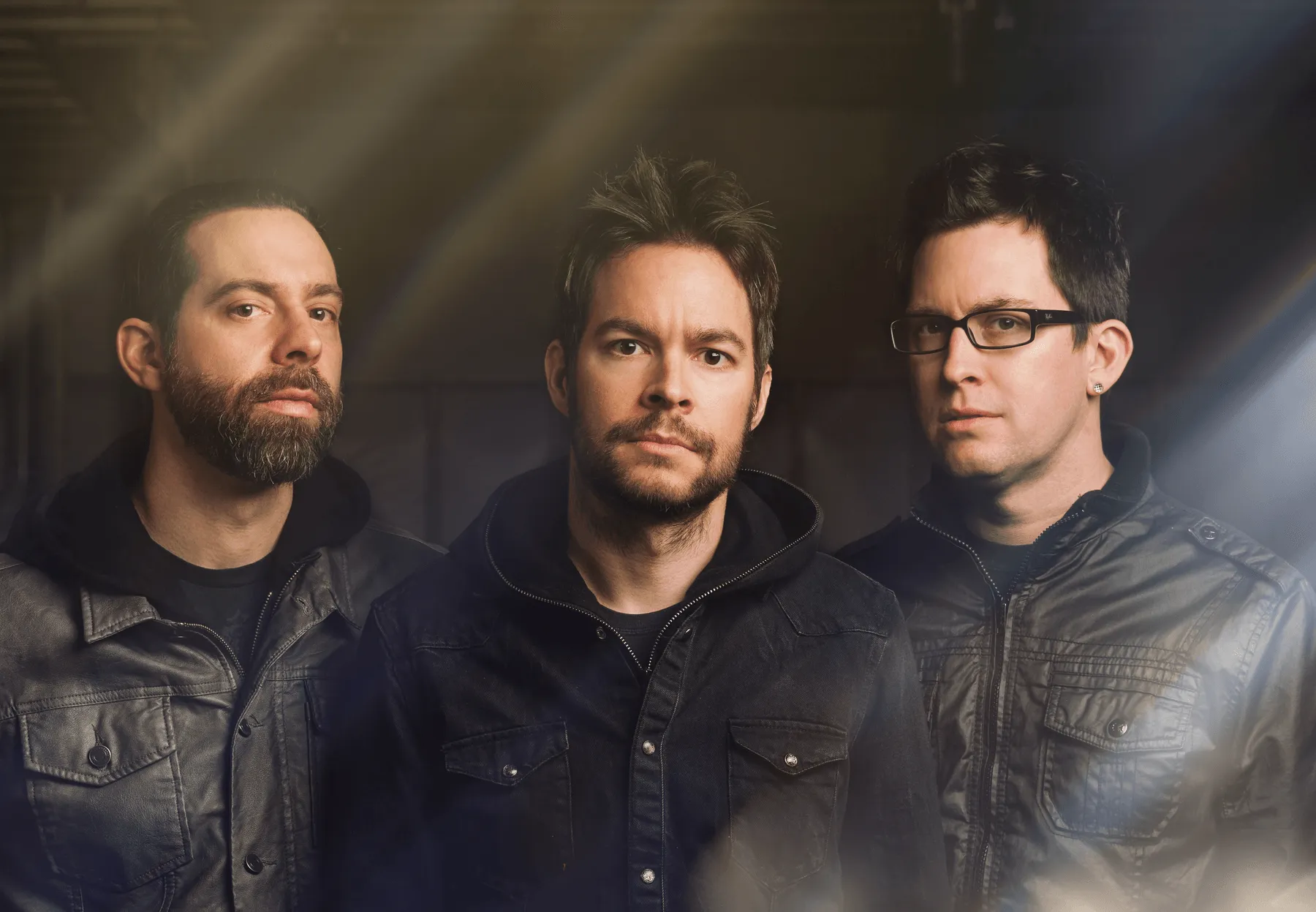
Photo by Epic Records , licensed under CC BY-SA 3.0 · Wikimedia Commons
Rank #451
Chevelle
From Wikipedia
Chevelle is an American rock band formed in Grayslake, Illinois, in 1995. The band was originally composed of two brothers, Pete Loeffler and Sam Loeffler, along with Matt Scott. Scott was replaced by Sam and Pete's brother, Joe Loeffler, in 1996. When Joe left the band in 2005, Geno Lenardo subbed in as the touring bassist until he was replaced by Pete and Sam's brother-in-law, Dean Bernardini. Bernardini departed from the band in 2019, and in 2021, Kemble Walters joined the band as a touring bassist.
Members
- Pete Loeffler
Discography & Previews
Browse through and click an album to open and play 30-second previews streamed from Apple Music.


This Type of Thinking (Could Do Us In)
2004 · 11 tracks

Vena Sera
2007 · 12 tracks


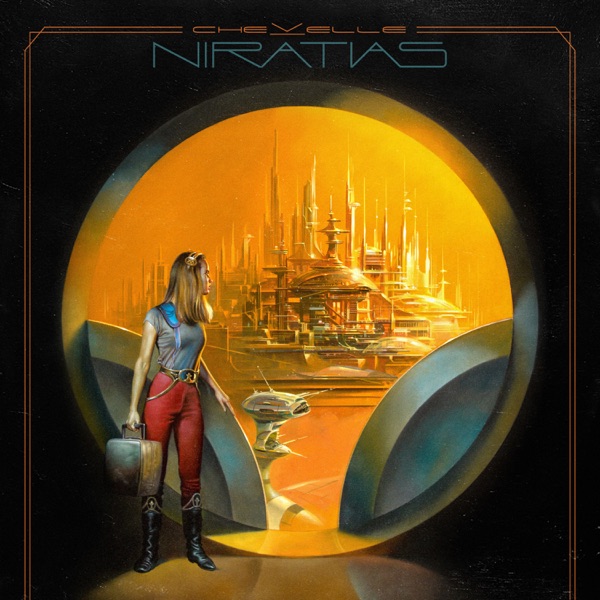
NIRATIAS
2021 · 13 tracks
- 1 Verruckt ↗ 3:31
- 2 So Long, Mother Earth ↗ 4:52
- 3 Mars Simula ↗ 4:11
- 4 Sleep the Deep ↗ 1:06
- 5 Self Destructor ↗ 5:48
- 6 Piistol Star (Gravity Heals) ↗ 4:50
- 7 VVurmhole ↗ 0:20
- 8 Peach ↗ 4:16
- 9 Test Test...Enough ↗ 2:09
- 10 Endlessly ↗ 5:15
- 11 Remember When ↗ 4:30
- 12 Ghost and Razor ↗ 5:51
- 13 Lost In Digital Woods ↗ 4:01

Bright as Blasphemy
2025 · 9 tracks
-
 Point #1Chevelle199911 tracks
 -
 This Type of Thinking (Could Do Us In)Chevelle200411 tracks
 -
 Vena SeraChevelle200712 tracks
 -
 Sci‐Fi CrimesChevelle200911 tracks
 -
 Hats Off to the BullChevelle201111 tracks
 -
 La GárgolaChevelle201410 tracks
 -
 The North CorridorChevelle201610 tracks
 -
 NIRATIASChevelle202113 tracks
 -
 Bright as BlasphemyChevelle20259 tracks
Deep Dive
Overview
Chevelle is an American rock band that emerged from Grayslake, Illinois, in the mid-1990s to become one of the defining acts of the nu-metal and post-grunge era. Built on the songwriting partnership of brothers Pete and Sam Loeffler, the band carved out a distinctive niche in heavy rock that balanced aggressive instrumentation with introspective lyricism and unconventional song structures. Over nearly three decades, Chevelle has maintained consistent creative output and touring presence, establishing themselves as reliable practitioners of densely arranged hard rock unmoored from genre trends.
Formation Story
Chevelle formed in Grayslake, Illinois, in 1995 when brothers Pete and Sam Loeffler joined forces with Matt Scott. The band’s earliest iteration reflected the post-grunge and emerging nu-metal landscape of the mid-1990s Midwest, though the brothers had grown up immersed in heavy rock and metal. By 1996, the lineup shifted when Matt Scott departed and Joe Loeffler, another brother, joined as bassist, establishing the core family unit that would define the band’s creative identity. The Loeffler brothers’ shared musical sensibility became the band’s backbone, with Pete and Sam handling vocals and instrumentation while establishing a songwriting dynamic that remained central to Chevelle’s output throughout subsequent decades.
Breakthrough Moment
Chevelle’s commercial and critical breakthrough came with their third studio album, This Type of Thinking (Could Do Us In) (2004). Released on Epic Records, the record expanded on the melodic heaviness they had been developing since their 1999 debut Point #1 and 2002’s Wonder What’s Next, but it achieved significantly wider recognition and radio exposure. The album demonstrated the band’s capacity to construct intricate arrangements—layered guitars, propulsive rhythms, and vocal harmonies embedded within dense mixes—that distinguished them from the more streamlined commercial nu-metal acts dominating the era. This Type of Thinking (Could Do Us In) served as a fulcrum: it validated the band’s independent artistic vision while connecting them to a growing audience that valued technical proficiency and compositional ambition.
Peak Era
Chevelle’s most prolific and artistically cohesive period stretched from 2007 through 2011, encompassing Vena Sera (2007), Sci‐Fi Crimes (2009), and Hats Off to the Bull (2011). During this span, the band refined their signature sound—heavy, intellectually structured rock with science-fiction and philosophical thematic undercurrents—without chasing market trends. Joe Loeffler departed in 2005, replaced initially by Geno Lenardo and then by Dean Bernardini as the touring bassist, changes that did not disrupt the band’s creative momentum. These three albums demonstrated Chevelle at their most confident, balancing accessibility with uncompromising arrangements and establishing a template for sustained career longevity in the post-grunge era.
Musical Style
Chevelle’s sound synthesizes nu-metal heaviness, post-grunge melancholy, and hard-rock technical precision into a distinctly cerebral package. The band’s core aesthetic relies on layered, distorted guitars that often function almost orchestrally, creating dense textural tapestries behind Pete and Sam Loeffler’s vocals. Their songwriting resists verse-chorus simplicity; instead, compositions tend toward unexpected structural turns, instrumental passages that develop and mutate across multiple sections, and dynamic shifts between whispered verses and towering choruses. Thematically, Chevelle has consistently drawn on science fiction, existential questioning, and abstract imagery rather than personal confession or straightforward narrative, setting them apart from more introspective post-grunge peers. The band’s production choices emphasize clarity within density—every instrument occupies distinct space while remaining part of a cohesive whole—a trait maintained across their entire discography from Point #1 onward.
Major Albums
Wonder What’s Next (2002)
The band’s second full-length established the core formula of Chevelle’s approach: propulsive, heavy arrangements paired with clever melodic ideas and philosophical song titles that suggested deeper lyrical substance than typical hard rock..
This Type of Thinking (Could Do Us In) (2004)
A breakthrough both commercially and artistically, this album expanded the band’s reach while refining their intricate compositional approach, becoming their most widely recognized work and a touchstone of mid-2000s hard rock.
Vena Sera (2007)
Released during the band’s creative peak, Vena Sera showcased Chevelle’s ability to sustain album-length artistic ambition across ten tracks of sophisticated, uncompromising heavy rock.
Sci‐Fi Crimes (2009)
The band’s most cohesive thematic statement, this record deepened their science-fiction narrative interests while maintaining the dense instrumental interplay and dynamic vocal performances that defined their sound.
La Gárgola (2014)
Recorded as the band approached two decades of activity, La Gárgola demonstrated that Chevelle’s creative reserves remained substantial, with none of the fatigue or formula-repetition common among long-running acts.
Signature Songs
- “The Red” — A standout from This Type of Thinking (Could Do Us In), defined by stop-start dynamics and Sam Loeffler’s characteristic vocal intensity.
- “Jhonny” — From Wonder What’s Next, showcasing the band’s ability to construct compelling hooks within unconventional arrangements.
- “Face to the Floor” — A Vena Sera centerpiece demonstrating the band’s gift for marrying heaviness with genuine melodic sophistication.
- “Grind” — From Point #1, the track that first signaled Chevelle’s arrival and established their aesthetic foundation.
Influence on Rock
Chevelle operated somewhat orthogonally to broader hard-rock and metal trends, maintaining artistic independence that influenced a cohort of similarly ambitious acts prioritizing compositional complexity and intellectual thematic depth over commercial concession. Their sustained output across the 2000s and 2010s—a period when nu-metal declined and post-grunge fragmented into subgenres—demonstrated that uncompromising heavy rock could sustain a viable career without reinvention or trend-chasing. The band’s approach, emphasizing technical proficiency and arrangements that reward repeated listening, influenced subsequent generations of hard rock and alternative metal acts who similarly resisted oversimplification. Chevelle’s existence proved that audiences for sophisticated, intellectually engaged heavy music remained substantial even as mainstream rock radio fragmented.
Legacy
Chevelle’s legacy rests on their consistent delivery of high-quality material across nearly three decades without significant artistic decline or embarrassing capitulation to passing fashions. The band’s ability to maintain a productive recording career—releasing NIRATIAS in 2021 and Bright as Blasphemy in 2025—demonstrates that their artistic model remains viable long after the nu-metal and post-grunge eras that birthed them have faded from commercial dominance. Chevelle’s sustained touring presence and catalog appreciation among serious rock listeners places them squarely within the second tier of post-grunge acts: not achieving the household recognition of Nirvana or Soundgarden, but commanding genuine respect and dedication from audiences who value craft, ambition, and refusal to compromise.
Fun Facts
- The band was formed entirely by the Loeffler brothers, with Pete and Sam as co-founders and Joe joining in 1996, creating a rare instance of a major rock act built on one family unit.
- Chevelle’s record label history includes Squint Entertainment and Epic Records, reflecting their movement from independent to major-label distribution.
- The band’s continuous touring and recording activity since 1995 makes them one of the longest-continuously-active hard rock acts to emerge from the 1990s.
- Dean Bernardini served as the touring bassist from 2005 until 2019, providing stable personnel during the band’s most productive recording period.