
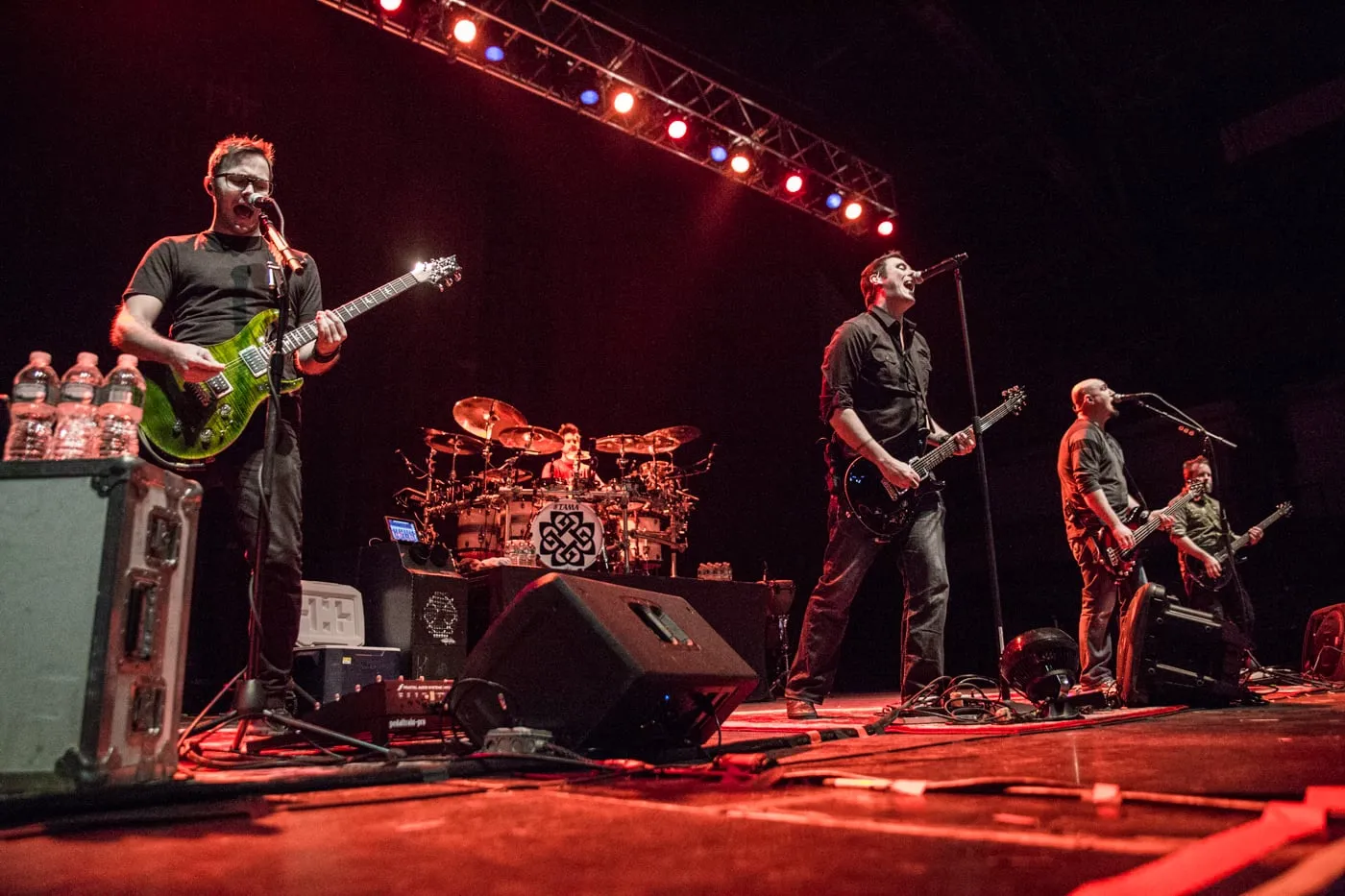
Photo by Jim Conners - 27K Photography , licensed under CC BY-SA 4.0 · Wikimedia Commons
Rank #309
Breaking Benjamin
From Wikipedia
Breaking Benjamin is an American rock band from Wilkes-Barre, Pennsylvania, formed in 1999 by lead singer and guitarist Benjamin Burnley and drummer Jeremy Hummel. The first lineup of the band also included guitarist Aaron Fink and bassist Mark James Klepaski. This lineup released two albums, Saturate (2002) and We Are Not Alone (2004), before Hummel was replaced by Chad Szeliga in 2005. The band released two more studio albums, Phobia (2006) and Dear Agony (2009), before entering an extended hiatus in early 2010 due to Burnley's recurring illnesses.
Discography & Previews
Browse through and click an album to open and play 30-second previews streamed from Apple Music.


Phobia
2006 · 13 tracks


Aurora
2020 · 10 tracks
- 1 So Cold (Aurora Version) ↗ 4:33
- 2 Failure (Aurora Version) ↗ 3:38
- 3 Far Away ↗ 4:52
- 4 Angels Fall (Aurora Version) ↗ 3:46
- 5 Red Cold River (Aurora Version) ↗ 3:19
- 6 Tourniquet (Aurora Version) ↗ 4:22
- 7 Dance with the Devil (Aurora Version) ↗ 3:44
- 8 Never Again (Aurora Version) ↗ 3:42
- 9 Torn In Two (Aurora Version) ↗ 4:05
- 10 Dear Agony (Aurora Version) ↗ 4:16
-
 SaturateBreaking Benjamin200213 tracks
 -
 We Are Not AloneBreaking Benjamin200412 tracks
 -
 PhobiaBreaking Benjamin200613 tracks
 -
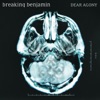 Dear AgonyBreaking Benjamin200911 tracks
 -
 Dark Before DawnBreaking Benjamin201512 tracks
 -
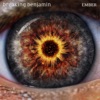 EmberBreaking Benjamin201812 tracks
 -
 AuroraBreaking Benjamin202010 tracks
Deep Dive
Overview
Breaking Benjamin is an American rock band from Wilkes-Barre, Pennsylvania, that emerged from the post-grunge and nu metal landscape of the late 1990s. Formed in 1999 by lead singer and guitarist Benjamin Burnley, the band built a dedicated fanbase across two decades with a sound rooted in heavy alternative rock and post-grunge aesthetics. Breaking Benjamin’s mix of distorted guitars, introspective lyrics, and melodic hooks positioned them alongside peers in the alternative metal and nu metal genres, earning them sustained commercial success despite an extended hiatus in the early 2010s.
Formation Story
Breaking Benjamin came together in Wilkes-Barre, Pennsylvania in 1999, with Benjamin Burnley as the creative and vocal centerpiece. The original lineup also included guitarist Aaron Fink, bassist Mark James Klepaski, and drummer Jeremy Hummel. The band emerged during a period when post-grunge and nu metal were consolidating into the mainstream rock landscape, and their Pennsylvania roots placed them in a region with a deep industrial and heavy rock history. This founding four-piece would define the band’s sound across their first two studio releases.
Breakthrough Moment
Breaking Benjamin released their debut album Saturate in 2002, introducing their heavy, groove-oriented approach to alternative rock. The band consolidated their presence with the follow-up We Are Not Alone in 2004, establishing themselves as a fixture in the alternative metal and nu metal marketplace. These early releases built a loyal fanbase and laid the groundwork for broader recognition, but it was the album Phobia in 2006—released after drummer Chad Szeliga replaced Jeremy Hummel in 2005—that marked the band’s creative and commercial peak.
Peak Era
From 2005 through 2009, Breaking Benjamin achieved their most artistically accomplished and commercially successful period. The arrival of Chad Szeliga on drums in 2005 solidified a lineup that would record two landmark albums: Phobia (2006) and Dear Agony (2009). These records showcased the band’s refined melodic sensibilities alongside heavier instrumentation, drawing audiences across both dedicated nu metal and mainstream alternative rock communities. The creative momentum and touring intensity of this era established Breaking Benjamin as a reliable presence on rock radio and festival lineups before Burnley’s recurring health issues forced the band into an extended hiatus beginning in early 2010.
Musical Style
Breaking Benjamin’s sound blends the heaviness and rhythmic drive of nu metal and post-grunge with melodic sensibilities rooted in alternative rock. Benjamin Burnley’s vocals—often delivered in a half-sung, half-spoken register—provide a distinctive emotional anchor to songs built around downtuned guitars, crisp drum programming, and bass lines that emphasize groove and bottom-end weight. The band’s songwriting typically favors introspective, sometimes explicitly dark lyrical themes paired with accessible, radio-friendly hooks. Aaron Fink’s guitar work ranges from textural effects and clean tones to heavy distortion, allowing the songs to shift between atmospheric verses and explosive choruses. Over their career, the band’s production evolved from the rawer energy of Saturate toward the more polished and layered approach of later records, though the core aesthetic—heavy yet melodic, aggressive yet introspective—remained constant.
Major Albums
Saturate (2002)
Breaking Benjamin’s debut introduced their core sound: post-grunge heaviness meeting alternative rock melody, with Burnley’s distinctive vocal approach front and center.
We Are Not Alone (2004)
The band’s second album refined their formula and expanded their fanbase, solidifying the four-piece’s commercial trajectory before drummer changes.
Phobia (2006)
Released with new drummer Chad Szeliga, Phobia stands as the band’s artistic and commercial apex, showcasing tighter arrangements and more developed songwriting across both heavier and more introspective tracks.
Dear Agony (2009)
The final album before the extended hiatus, Dear Agony balanced the band’s established sound with deeper emotional resonance, serving as a capstone to their most consistent creative period.
Dark Before Dawn (2015)
Breaking Benjamin’s return after five years of hiatus demonstrated their continued ability to craft melodic heavy rock, proving the band’s appeal remained intact despite Burnley’s ongoing health challenges.
Ember (2018)
Released two years after their comeback, Ember showed the band sustaining momentum in the contemporary alternative rock and nu metal landscape.
Signature Songs
- So Cold — A standout track emphasizing the band’s gift for pairing introspective lyrics with memorable hooks and heavy instrumentation.
- Fade Away — Demonstrates the band’s ability to balance vulnerability in vocal delivery with driving guitar work and rhythm.
- I Will Not Bow — Showcases the heavier, more aggressive side of Burnley’s songwriting and the band’s rhythmic power.
- Dear Agony — Exemplifies the title track’s emotional depth and the band’s evolving production sophistication.
- So Cold (Acoustic Version) — Highlights how the band’s core melodies and lyrics translate across different arrangements.
- Dance with the Devil — A fan favorite capturing the band’s knack for catchy, darkly-themed alternative metal.
Influence on Rock
Breaking Benjamin contributed to the persistence of post-grunge and nu metal aesthetics well into the 2000s, operating at a moment when those genres faced declining radio support but maintained dedicated underground and touring communities. The band’s consistent touring schedule and loyal fanbase helped sustain an alternative metal ecosystem that might otherwise have contracted more severely. Their emphasis on melodic hooks within heavy production influenced subsequent generations of metalcore and alternative metal bands that sought mainstream accessibility without abandoning heaviness. While not pioneers of their sound, Breaking Benjamin proved that post-grunge and nu metal could maintain relevance and commercial viability across two decades, encouraging other bands to continue working in those genres despite shifting trends.
Legacy
Breaking Benjamin’s return to touring and recording after their 2010 hiatus demonstrated the band’s enduring appeal and the loyalty of their fanbase. The release of Dark Before Dawn in 2015, followed by Ember in 2018 and Aurora in 2020, established them as an active force in contemporary alternative rock, touring consistently and maintaining a streaming presence across all major platforms. Their Wilkes-Barre roots and two-decade career in a single region make them significant to their hometown’s rock heritage. The band’s longevity—navigating health crises, lineup changes, and shifting industry landscapes—positions them as a reliable fixture of late-1990s and 2000s rock culture, with their albums continuing to reach new listeners through streaming and consistent radio airplay on alternative and rock formats.
Fun Facts
- Benjamin Burnley founded the band as a solo project before expanding it into the full-lineup four-piece, making him the sole constant member across all lineup changes and hiatuses.
- The band’s extended hiatus beginning in 2010 was driven by Burnley’s recurring illnesses, highlighting how personal health crises can reshape major acts’ careers and touring schedules.
- Breaking Benjamin remained based in Wilkes-Barre throughout their career, resisting the typical pressure for rock bands to relocate to major music industry hubs.
- The band has maintained consistent touring schedules since their 2015 return, demonstrating strong fan loyalty and a stable marketplace for post-grunge and alternative metal music in the streaming era.