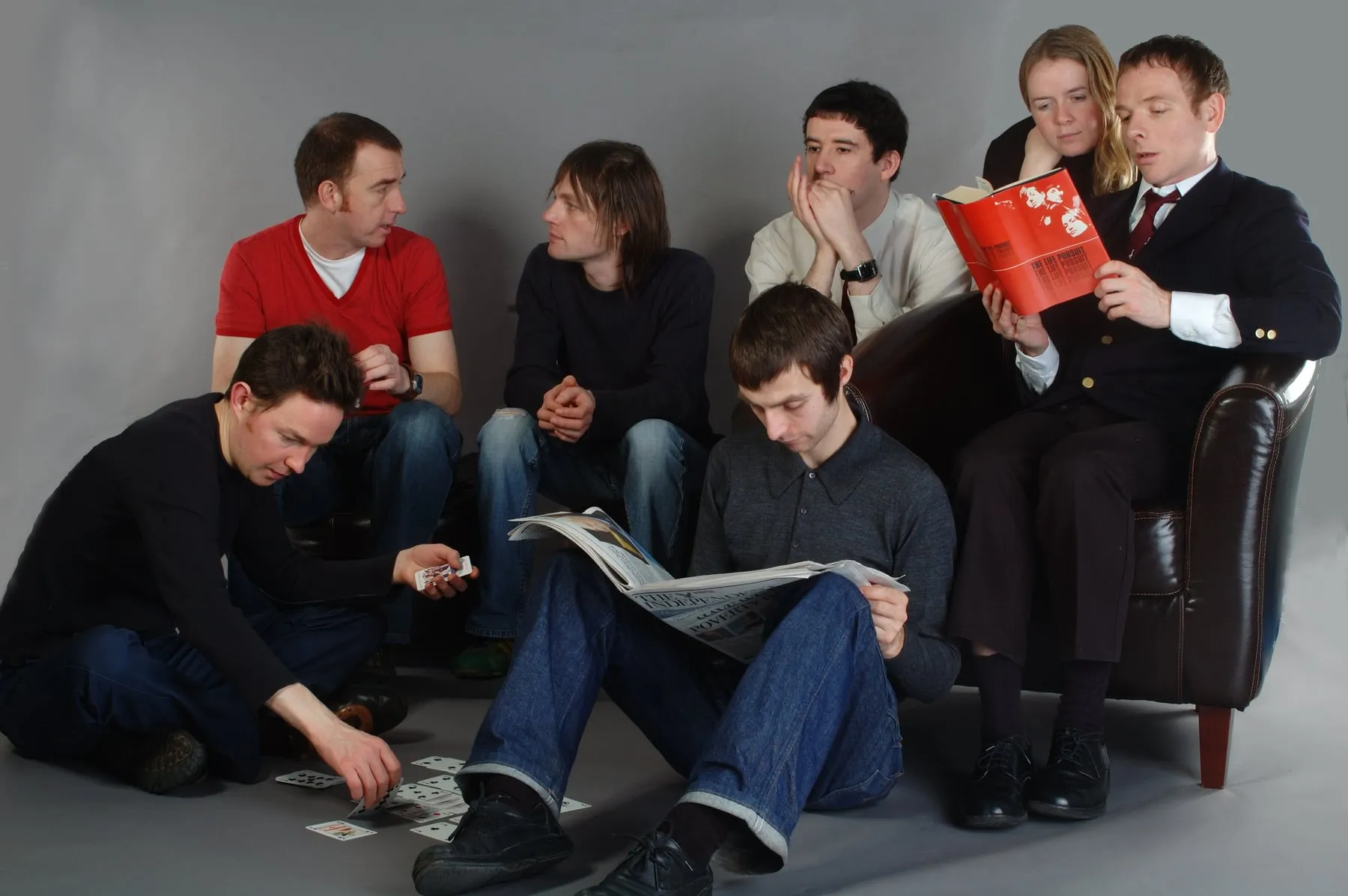
Photo by Marisa Privitera , licensed under CC BY-SA 2.5 · Wikimedia Commons
Rank #161
Belle and Sebastian
From Wikipedia
Belle and Sebastian are a Scottish indie pop band formed in Glasgow in 1994. Led by Stuart Murdoch, Belle and Sebastian have released twelve studio albums. The band are often compared with acts such as the Smiths and Nick Drake. Belle and Sebastian took their name from a short story Murdoch had written about a boy and girl, whose title was a play on the 1965 television series Belle and Sebastian.
Members
- Bobby Kildea
- Chris Geddes
- Isobel Campbell
- Mick Cooke
- Richard Colburn
- Sarah Martin
- Stevie Jackson
- Stuart David
- Stuart Murdoch
Discography & Previews
Browse through and click an album to open and play 30-second previews streamed from Apple Music.

If You’re Feeling Sinister
1996 · 10 tracks
- 1 The Stars of Track and Field ↗ 4:48
- 2 Seeing Other People ↗ 3:48
- 3 Me and the Major ↗ 3:52
- 4 Like Dylan In the Movies ↗ 4:14
- 5 The Fox In the Snow ↗ 4:11
- 6 Get Me Away from Here, I'm Dying ↗ 3:25
- 7 If You're Feeling Sinister ↗ 5:21
- 8 Mayfly ↗ 3:42
- 9 The Boy Done Wrong Again ↗ 4:18
- 10 Judy and the Dream of Horses ↗ 3:41

Tigermilk
1996 · 10 tracks

The Boy With the Arab Strap
1998 · 12 tracks
- 1 It Could Have Been a Brilliant Career ↗ 2:23
- 2 Sleep the Clock Around ↗ 4:58
- 3 Is It Wicked Not To Care? ↗ 3:22
- 4 Ease Your Feet In the Sea ↗ 3:36
- 5 A Summer Wasting ↗ 2:07
- 6 Seymour Stein ↗ 4:43
- 7 A Space Boy Dream ↗ 3:02
- 8 Dirty Dream Number Two ↗ 4:14
- 9 The Boy With the Arab Strap ↗ 5:14
- 10 Chickfactor ↗ 3:32
- 11 Simple Things ↗ 1:46
- 12 The Rollercoaster Ride ↗ 6:37

Fold Your Hands Child, You Walk Like a Peasant
2000 · 11 tracks
- 1 I Fought in a War ↗ 4:10
- 2 The Model ↗ 4:00
- 3 Beyond the Sunrise ↗ 4:10
- 4 Waiting for the Moon to Rise ↗ 3:13
- 5 Don't Leave the Light on, Baby ↗ 4:41
- 6 The Wrong Girl ↗ 3:23
- 7 The Chalet Lines ↗ 2:34
- 8 Nice Day for a Sulk ↗ 2:34
- 9 Women's Realm ↗ 4:36
- 10 Family Tree ↗ 4:04
- 11 There's Too Much Love ↗ 3:27

Dear Catastrophe Waitress
2003 · 12 tracks
- 1 Step Into My Office, Baby ↗ 4:12
- 2 Dear Catastrophe Waitress ↗ 2:23
- 3 If She Wants Me ↗ 5:05
- 4 Piazza, New York Catcher ↗ 3:03
- 5 Asleep On a Sunbeam ↗ 3:23
- 6 I'm a Cuckoo ↗ 5:26
- 7 You Don't Send Me ↗ 3:08
- 8 Wrapped Up In Books ↗ 3:34
- 9 Lord Anthony ↗ 4:15
- 10 If You Find Yourself Caught In Love ↗ 4:16
- 11 Roy Walker ↗ 2:57
- 12 Stay Loose ↗ 6:42

The Life Pursuit
2006 · 15 tracks
- 1 Act of the Apostle ↗ 2:56
- 2 Another Sunny Day ↗ 4:04
- 3 White Collar Boy ↗ 3:21
- 4 The Blues Are Still Blue ↗ 4:09
- 5 Dress Up in You ↗ 4:24
- 6 Sukie in the Graveyard ↗ 3:00
- 7 We Are the Sleepyheads ↗ 3:34
- 8 Song for Sunshine ↗ 4:06
- 9 Funny Little Frog ↗ 3:08
- 10 To Be Myself Completely ↗ 3:18
- 11 Act of the Apostle II ↗ 4:21
- 12 For the Price of a Cup of Tea ↗ 3:20
- 13 Mornington Crescent ↗ 5:40
- 14 Meat and Potatoes ↗ 4:24
- 15 I Took a Long Hard Look ↗ 3:32

Girls in Peacetime Want to Dance
2015 · 14 tracks
- 1 Nobody's Empire ↗ 5:08
- 2 Allie ↗ 3:16
- 3 The Party Line ↗ 4:14
- 4 The Power of Three ↗ 3:57
- 5 The Cat With the Cream ↗ 5:18
- 6 Enter Sylvia Plath ↗ 6:49
- 7 The Everlasting Muse ↗ 5:25
- 8 Perfect Couples ↗ 5:30
- 9 Ever Had a Little Faith? ↗ 4:22
- 10 Play For Today ↗ 7:33
- 11 The Book of You ↗ 4:23
- 12 Today (This Army's For Peace) ↗ 5:26
- 13 Piggy In the Middle ↗ 4:22
- 14 A Politician's Silence ↗ 5:43

A Bit of Previous
2022 · 12 tracks
- 1 Young and Stupid ↗ 2:55
- 2 If They’re Shooting At You ↗ 4:31
- 3 Talk to Me, Talk to Me ↗ 4:27
- 4 Reclaim the Night ↗ 3:13
- 5 Do It for Your Country ↗ 3:51
- 6 Prophets On Hold ↗ 4:47
- 7 Unnecessary Drama ↗ 4:17
- 8 Come On Home ↗ 3:55
- 9 A World Without You ↗ 3:03
- 10 Deathbed of My Dreams ↗ 3:48
- 11 Sea of Sorrow ↗ 4:59
- 12 Working Boy in New York City ↗ 4:16

Late Developers
2023 · 11 tracks
- 1 Juliet Naked ↗ 3:22
- 2 Give a Little Time ↗ 3:23
- 3 When We Were Very Young ↗ 3:53
- 4 Will I Tell You a Secret ↗ 2:16
- 5 So In the Moment ↗ 3:23
- 6 The Evening Star ↗ 4:25
- 7 When You're Not With Me ↗ 4:43
- 8 I Don't Know What You See In Me ↗ 3:39
- 9 Do You Follow ↗ 4:19
- 10 When the Cynics Stare Back From the Wall ↗ 4:21
- 11 Late Developers ↗ 4:20
-
 If You’re Feeling SinisterBelle and Sebastian199610 tracks
 -
 TigermilkBelle and Sebastian199610 tracks
 -
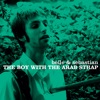 The Boy With the Arab StrapBelle and Sebastian199812 tracks
 -
 Fold Your Hands Child, You Walk Like a PeasantBelle and Sebastian200011 tracks
 -
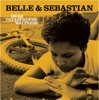 Dear Catastrophe WaitressBelle and Sebastian200312 tracks
 -
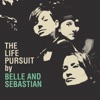 The Life PursuitBelle and Sebastian200615 tracks
 -
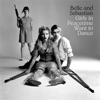 Girls in Peacetime Want to DanceBelle and Sebastian201514 tracks
 -
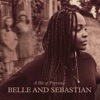 A Bit of PreviousBelle and Sebastian202212 tracks
 -
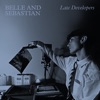 Late DevelopersBelle and Sebastian202311 tracks
Deep Dive
Overview
Belle and Sebastian are a Scottish indie pop band from Glasgow who emerged in the mid-1990s as one of the defining voices of art-school indie rock. Led by singer-songwriter Stuart Murdoch, the band’s meticulously arranged compositions and literary sensibility positioned them alongside touchstones like the Smiths and Nick Drake—artists who married intricate instrumental work to deeply personal lyrics. Their twelve studio albums span from 1996 to the present, establishing them as a long-running ensemble capable of reinvention while maintaining a distinctive artistic vision centered on Murdoch’s narratively rich songwriting.
Formation Story
Belle and Sebastian coalesced in Glasgow in 1994, though their first official releases appeared in 1996. The band’s name derived from a short story written by Stuart Murdoch, a play on the 1965 television series Belle and Sebastian, reflecting Murdoch’s interest in literary texture and cultural reference. The founding lineup included Murdoch (vocals, guitar), Stuart David (bass), Stevie Jackson (guitar), Richard Colburn (drums), and Chris Geddes (keyboards), soon augmented by additional instrumentalists including Mick Cooke, Sarah Martin, and Isobel Campbell. This ensemble approach—expanding from a core songwriting partnership to a full orchestral chamber-pop unit—became definitive of the Belle and Sebastian sound. The Glasgow indie scene of the early 1990s provided the musical and cultural context, a city with a tradition of introspective, guitar-driven indie rock that the band would extend and refine.
Breakthrough Moment
Belle and Sebastian’s rapid succession of releases in 1996 established immediate critical traction. Tigermilk and If You’re Feeling Sinister both arrived that year, with the latter becoming the more celebrated entry point. The follow-up album, The Boy With the Arab Strap (1998), deepened their audience and refined their production approach, consolidating the band’s reputation as serious artists rather than a one-album phenomenon. These early records on Rough Trade Records demonstrated a band uninterested in commercial shortcuts, instead investing in elaborate arrangements, string sections, and lo-fi recording aesthetics that conveyed intimacy alongside compositional sophistication. By the end of the 1990s, Belle and Sebastian had become the centerpiece of a broader indie-pop renaissance that prized melody and literary sensibility over irony or bombast.
Peak Era
The period from 1998 through 2006 represented Belle and Sebastian’s most artistically prolific and commercially successful run. Albums like The Boy With the Arab Strap, Fold Your Hands Child, You Walk Like a Peasant (2000), Dear Catastrophe Waitress (2003), and The Life Pursuit (2006) showcased the band’s growing ambition and confidence. Each record found them experimenting with production styles, from the bedroom-pop minimalism of their earlier work to more polished, orchestrally rich arrangements. Dear Catastrophe Waitress and The Life Pursuit, in particular, signaled a band increasingly comfortable with melodic accessibility without sacrificing compositional depth. The band’s touring presence expanded significantly during this window, establishing them as a major draw in the international indie circuit. This era cemented Belle and Sebastian’s status beyond a cult phenomenon, earning them regular festival appearances and sustained critical attention across multiple album cycles.
Musical Style
Belle and Sebastian’s sound is built on an interplay between fragile, intimate vocal delivery—often nearly whispered or conversational—and densely orchestrated instrumental arrangements. Murdoch’s lyrics privilege narrative specificity, character studies, and wry social observation, rarely resorting to direct emotional proclamation. The band’s instrumentation typically features guitars (clean, fingerpicked, or gently strummed), keyboards, strings (both live and arranged), bass, and drums, deployed with chamber-pop sensibility reminiscent of British art-rock lineages. Early albums embraced lo-fi recording techniques and lo-fi indie-pop textures, while later work moved toward more polished production without losing the emphasis on melodic construction and lyrical detail. The band’s approach sits at the intersection of indie rock, art-pop, and singer-songwriter traditions, prioritizing compositional sophistication and emotional restraint over the volume and aggression of much contemporary rock. Over their career, they have resisted fixed stylistic boundaries, with albums like Belle and Sebastian Write About Love (2010) and Girls in Peacetime Want to Dance (2015) exploring electronic elements and danceable rhythms while preserving their core identity.
Major Albums
If You’re Feeling Sinister (1996)
Belle and Sebastian’s debut established the template: literary lyrics, gentle instrumentation, and lo-fi charm. It remains one of the band’s most celebrated records and a foundational text of 1990s indie pop.
The Boy With the Arab Strap (1998)
The follow-up refined and deepened the band’s approach, introducing more confident production choices and a slightly expanded instrumental palette while maintaining the introspective mood of their debut.
Fold Your Hands Child, You Walk Like a Peasant (2000)
This album demonstrated the band’s growing technical ambition, with more elaborate arrangements and a greater emphasis on ensemble interplay across its ten tracks.
Dear Catastrophe Waitress (2003)
A more upbeat and directly melodic record than its predecessors, Dear Catastrophe Waitress represented a turning point toward greater accessibility without compromising artistic intent.
The Life Pursuit (2006)
Belle and Sebastian’s most sonically polished effort to date, featuring live instrumentation and studio arrangements that showcased the full bandwidth of their ensemble sound.
Signature Songs
- “If You’re Feeling Sinister” — The title track and calling card, a narrative vignette set to fingerpicked guitar and hushed vocals that encapsulates the band’s literary and musical aesthetic.
- “The Boy With the Arab Strap” — A centerpiece of the 1998 album, this song demonstrates Murdoch’s gift for character-driven storytelling paired with elaborate instrumental arrangement.
- “Piazza, New York Catcher” — A standout from Fold Your Hands Child, featuring the band’s characteristic blend of conversational vocals and orchestral sweetness.
- “If You’re Feeling Sinister” (reprise) — The coda-like closer to their debut, an instrumental restatement that underscores the album’s cohesive emotional arc.
Influence on Rock
Belle and Sebastian helped revitalize the concept of chamber pop and literary indie rock in the 1990s, proving there remained an audience for intricate, melodically rich music that prioritized emotional nuance over bombast. Their careful orchestration and reliance on literary narrative influenced a generation of indie and art-pop acts, from Scottish and British indie rock to the broader international indie-pop landscape of the 2000s. The band demonstrated that indie rock could sustain itself through artistic ambition and compositional sophistication rather than irony or surface-level cool. Their long career—spanning nearly three decades—established a template for indie bands to age and evolve while maintaining artistic credibility, refusing easy compromises or formulaic repetition.
Legacy
Belle and Sebastian’s twelve studio albums and sustained touring presence have ensured their position as one of the major Scottish indie rock acts of the past thirty years. Their influence extends across multiple generations of indie, art-pop, and chamber-pop musicians who have drawn on their example of married melodic sophistication with lyrical depth. The band’s continued activity into the 2020s—with releases including A Bit of Previous and Late Developers (2023)—demonstrates their ongoing creative engagement rather than a fixed legacy. Critically, they remain recognized as peers to the most celebrated indie acts of their era, maintaining devoted fanbases and critical interest across streaming platforms and festival circuits. Their contribution to 1990s and 2000s indie rock stands as a reminder that commercial success and artistic seriousness need not be antagonistic.
Fun Facts
- The band’s name derives from Stuart Murdoch’s short story about a boy and girl, itself a reference to the 1965 television series Belle and Sebastian, blending literary creation with pop-culture revision.
- Belle and Sebastian were signed to Rough Trade Records, the legendary independent label also home to The Smiths and other British indie touchstones, continuing a lineage of serious art-rock in the label’s catalog.
- The band’s ensemble approach—including instrumentalists like Mick Cooke (trumpet and trombone) and Chris Geddes (keyboards)—created a chamber-pop sound that required careful live coordination and arrangement, making their concerts intimate spectacles of orchestrated indie rock.