
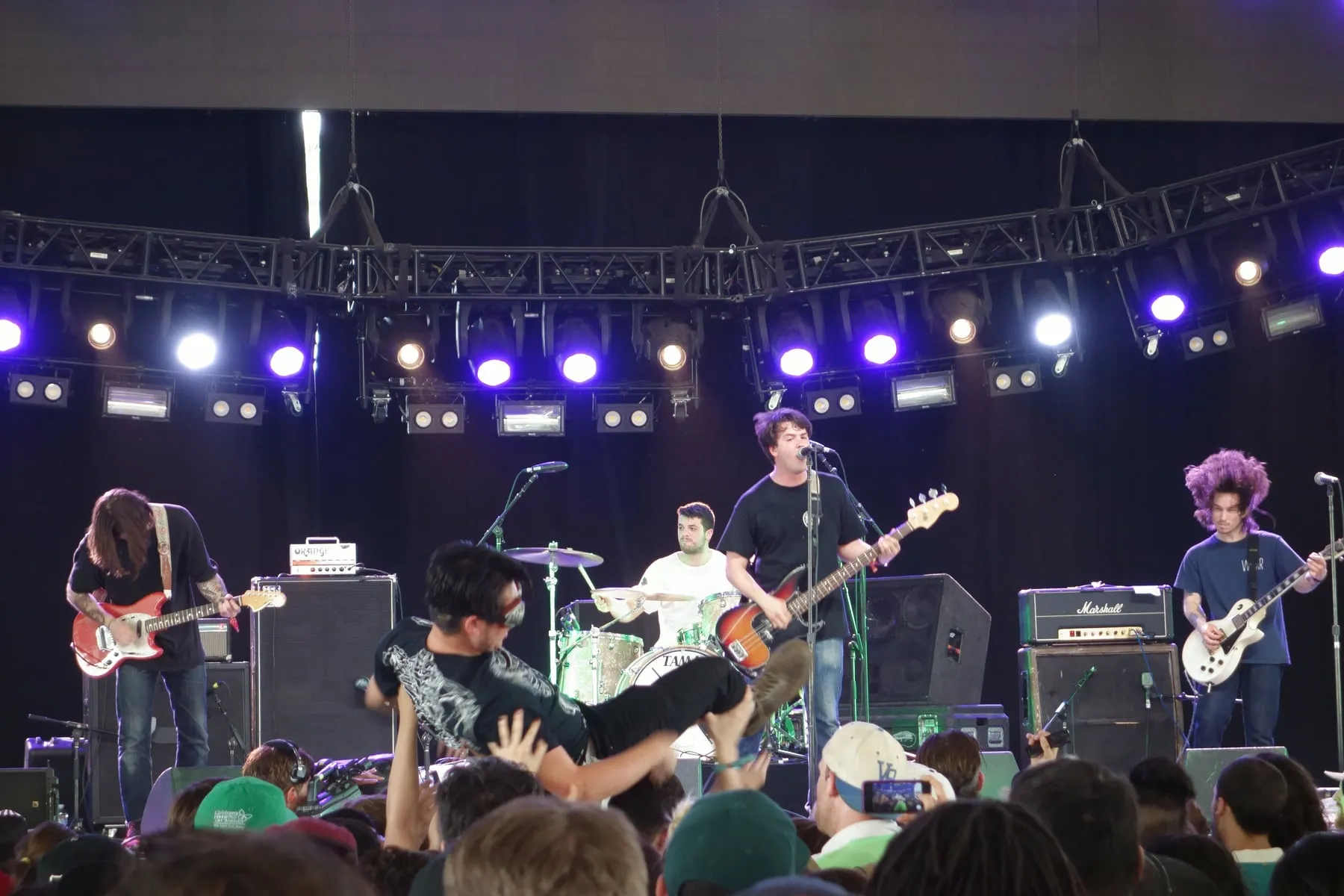
Photo by Sam Howzit , licensed under CC BY 2.0 · Wikimedia Commons
Rank #315
Title Fight
From Wikipedia
Title Fight was an American rock band from Kingston, Pennsylvania, formed in 2003. Beginning their career playing pop-punk, the band consisted of twelve year old twin brothers Ned and Ben Russin (drums), as well as Jamie Rhoden. In 2005, the band began to gain local attention, coinciding with the addition of Shane Moran (guitar), and the opening of their short-lived squat venue the Future. During this time, the band released five demos and a split EP, which culminated in the 2008 EP Kingston, which was a stylistic shift to emo-melodic hardcore.
Discography & Previews
Browse through and click an album to open and play 30-second previews streamed from Apple Music.

Shed
2011 · 12 tracks

-
 ShedTitle Fight201112 tracks
 -
 Floral GreenTitle Fight201211 tracks
 -
 HyperviewTitle Fight201510 tracks
Deep Dive
Overview
Title Fight is an American post-hardcore band from Kingston, Pennsylvania, that emerged in the early 2000s and built a devoted underground following across two decades. Beginning as a pop-punk outfit in their early teens, the band evolved into practitioners of emo-melodic hardcore, a style that emphasized angular guitars, introspective lyricism, and emotional intensity. Their three studio albums—Shed, Floral Green, and Hyperview—document a steady refinement of their songwriting and production approach, positioning them as minor fixtures in the broader post-hardcore and Midwest emo landscape.
Formation Story
Title Fight formed in 2003 in Kingston, Pennsylvania, when twin brothers Ned and Ben Russin—both drummers—joined forces with Jamie Rhoden to create a pop-punk ensemble. The band’s earliest years were marked by prolific demo recording; between their formation and 2008, they released five demos and contributed to a split EP, documenting their gradual shift in sound. A turning point came in 2005 when Shane Moran joined as guitarist, simultaneously expanding their sonic palette. That same year, the band opened their own squat venue, the Future, a short-lived but culturally important space in the Kingston music scene that allowed them to host local and touring acts. The opening of the Future coincided with growing local attention, establishing Title Fight as a fixture in their regional underground.
Breakthrough Moment
Title Fight’s stylistic pivot crystallized with the release of Kingston in 2008, an EP that marked their decisive turn toward emo-melodic hardcore. The EP served as both a statement of intent and a signpost for listeners following the band’s evolution. This shift in direction proved foundational to the band’s identity and set the stage for their debut full-length album. Kingston demonstrated that the band had outgrown pop-punk conventions and were ready to explore the more angular, emotionally complex terrain of post-hardcore, establishing them as serious contenders in a growing regional underground.
Peak Era
The band’s most creatively significant and commercially visible period spanned 2011 to 2015, coinciding with the release of their three studio albums. Shed, released in 2011, introduced Title Fight to a wider audience and established their sonic footprint in emo and post-hardcore circles. Floral Green, their 2012 follow-up, solidified their standing and is often regarded as their most cohesive work. Hyperview, released in 2015, continued their refinement of melodic hardcore songwriting. Throughout this five-year span, the band maintained steady touring and developed a reputation for intensity and precision in their live performances, building a loyal fanbase within the post-hardcore community.
Musical Style
Title Fight’s sound evolved from pop-punk sensibilities toward emo-melodic hardcore, a subgenre characterized by intricate guitar work, dynamic song structures, and vocals ranging from sung to shouted. The band’s approach emphasized angular, interlocking guitars—a hallmark of post-hardcore—layered over rhythmic foundations built by the dual drumming contributions of the Russin twins. Their songwriting favored emotional directness without sacrificing compositional complexity; songs typically built from quieter, introspective verses into more aggressive, visceral choruses. As the band matured across their three albums, their production became cleaner and more refined, allowing individual instrumental voices to emerge while maintaining the genre’s inherent intensity. The band’s evolution reflects broader trends in Midwest emo and post-hardcore, where melodic sensibility and technical execution came to define the aesthetic.
Major Albums
Shed (2011)
Title Fight’s debut full-length established their post-hardcore credentials and introduced listeners to their intricate guitar interplay and dynamic song construction. Shed captured the band at a formative moment, balancing raw energy with increasingly sophisticated arrangements.
Floral Green (2012)
Released one year after their debut, Floral Green refined the Title Fight template into its most accessible and accomplished form. The album is widely considered their strongest work and remains a touchstone in modern melodic hardcore circles.
Hyperview (2015)
Title Fight’s third studio album continued their artistic refinement, pushing toward even cleaner production and more intricate instrumentation. Hyperview demonstrated the band’s willingness to evolve while remaining anchored to their post-hardcore foundations.
Signature Songs
- “Floral Green” — The title track from their second album, exemplifying the band’s melodic approach to post-hardcore and showcasing their gift for dynamic arrangement.
- “The Last Thing You Forget” — A fan favorite that highlights the dual vocal and guitar textures central to their sound.
- “Shed” — An early showcase of their intricate riffing and emotional directness.
- “Shed Ones / Broken World” — Demonstrates the band’s ability to construct longer, multi-part compositions with sustained intensity.
Influence on Rock
While not mainstream figures, Title Fight contributed to the post-2000s revival of emo and post-hardcore, alongside bands from the Midwest and East Coast underground. Their emphasis on melodic sensibility within aggressive frameworks influenced younger post-hardcore and Midwest emo acts. The band’s consistent work ethic and regional presence helped sustain underground rock ecosystems at a time when mainstream attention to the genre was waning. Their recordings on the Anti- label and their presence in streaming and digital platforms ensured their music remained accessible to a global underground audience, allowing them to influence musicians far beyond Pennsylvania.
Legacy
Title Fight’s long-term impact has been modest but meaningful within post-hardcore and emo circles. The band has maintained an active presence since their formation, avoiding the burnout and breakup cycles that claim many underground rock acts. Their three studio albums remain in circulation through streaming services and physical formats, maintaining steady listener engagement decades after release. While they have not achieved mainstream commercial success or major institutional recognition, their consistent work and technical proficiency have earned them respect within the post-hardcore community. The band’s durability—remaining active for two decades—speaks to both their artistic commitment and their ability to sustain a dedicated fanbase in an era of fragmented music consumption.
Fun Facts
- The Russin twins were only twelve years old when they co-founded Title Fight alongside Jamie Rhoden, making them among the youngest founding members of any significant rock band in their era.
- Title Fight’s DIY venue, the Future, served as an incubator for Kingston’s underground music scene before closing, a common pattern in American post-punk and indie rock cities.
- The band’s official presence has been maintained via their Tumblr account rather than conventional social media platforms, reflecting their ethos as creatures of early-2010s internet culture.
- Title Fight released five demos before their first official EP, demonstrating their prolific work rate and commitment to the band’s development during their formative years.