
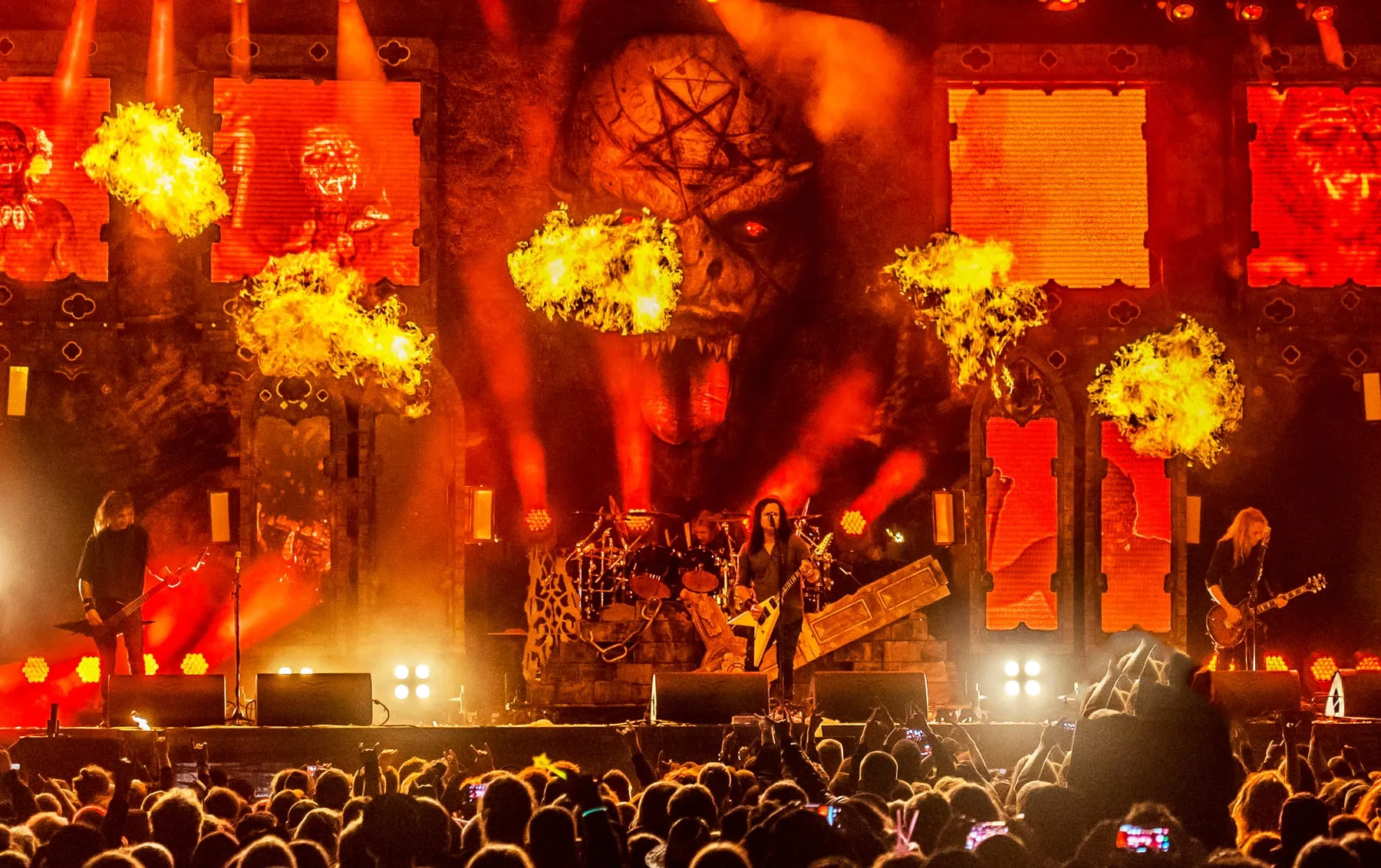
Photo by Frank Schwichtenberg , licensed under CC BY-SA 4.0 · Wikimedia Commons
Rank #482
Kreator
From Wikipedia
Kreator is a German thrash metal band from Essen, formed in 1982. Their current line-up consists of lead vocalist and rhythm guitarist Miland "Mille" Petrozza, drummer Jürgen "Ventor" Reil, lead guitarist Sami Yli-Sirniö, and bassist Frédéric Leclercq. The band's line-up has changed multiple times throughout its 44-year career, most noticeably their bassists and lead guitarists. Petrozza and Reil are the only two original members left in Kreator, although the latter left the band in 1994 but rejoined in 1996. Yli-Sirniö has been the lead guitarist of Kreator since 2001, while Leclercq joined in 2019 as the replacement of Christian "Speesy" Giesler, who had been in the band since 1994.
Members
- Christian Giesler
- Frank Gosdzik
- Frédéric Leclercq
- Jürgen Reil
- Mille Petrozza
- Sami Yli-Sirniö
- Tommy Vetterli
Discography & Previews
Browse through and click an album to open and play 30-second previews streamed from Apple Music.


Pleasure to Kill
1986 · 12 tracks
- 1 Choir of the Damned ↗ 1:40
- 2 Ripping Corpse ↗ 3:36
- 3 Death Is Your Saviour ↗ 3:58
- 4 Pleasure to Kill ↗ 4:09
- 5 Riot of Violence ↗ 4:56
- 6 The Pestilence ↗ 6:57
- 7 Carrion ↗ 4:48
- 8 Command of the Blade ↗ 3:56
- 9 Under the Guillotine ↗ 4:38
- 10 Flag of Hate ↗ 3:56
- 11 Take Their Lives ↗ 6:27
- 12 Awakening of the Gods ↗ 7:29


Renewal
1992 · 9 tracks
- 1 Winter Martyrium (2018 Remaster) ↗ 5:44
- 2 Renewal (2018 Remaster) ↗ 4:36
- 3 Reflection (2018 Remaster) ↗ 6:16
- 4 Brainseed (2018 Remaster) ↗ 3:17
- 5 Karmic Wheel (2018 Remaster) ↗ 6:06
- 6 Realitätskontrolle (2018 Remaster) ↗ 1:22
- 7 Zero to None (2018 Remaster) ↗ 3:12
- 8 Europe After the Rain (2018 Remaster) ↗ 3:13
- 9 Depression Unrest (2018 Remaster) ↗ 5:13

Cause for Conflict
1995 · 12 tracks
- 1 Prevail (2018 Remaster) ↗ 3:59
- 2 Catholic Despot (2018 Remaster) ↗ 3:24
- 3 Progressive Proletarians (2018 Remaster) ↗ 3:24
- 4 Crisis of Disorder (2018 Remaster) ↗ 4:17
- 5 Hate Inside Your Head (2018 Remaster) ↗ 3:39
- 6 Bomb Threat (2018 Remaster) ↗ 1:47
- 7 Men Without God (2018 Remaster) ↗ 3:46
- 8 Lost (2018 Remaster) ↗ 3:35
- 9 Dogmatic (2018 Remaster) ↗ 1:27
- 10 Sculpture of Regret (2018 Remaster) ↗ 2:59
- 11 Celestial Deliverance (2018 Remaster) ↗ 3:14
- 12 Isolation (2018 Remaster) ↗ 11:57

Outcast
1997 · 13 tracks
- 1 Leave This World Behind ↗ 3:29
- 2 Phobia ↗ 3:23
- 3 Forever ↗ 2:52
- 4 Black Sunrise ↗ 4:31
- 5 Nonconformist ↗ 3:15
- 6 Enemy Unseen ↗ 3:20
- 7 Outcast ↗ 4:53
- 8 Stronger Than Before ↗ 3:17
- 9 Ruin of Life ↗ 3:54
- 10 Whatever It May Take ↗ 3:47
- 11 Alive Again ↗ 3:47
- 12 Against the Rest ↗ 2:39
- 13 A Better Tomorrow ↗ 4:14

Violent Revolution
2001 · 12 tracks
- 1 Reconquering the Throne ↗ 4:13
- 2 The Patriarch ↗ 0:52
- 3 Violent Revolution ↗ 4:55
- 4 All of the Same Blood ↗ 6:12
- 5 Servant in Heaven - King in Hell ↗ 5:09
- 6 Second Awakening ↗ 4:48
- 7 Ghetto War ↗ 5:05
- 8 Replicas of Life ↗ 7:34
- 9 Slave Machinery ↗ 3:58
- 10 Bitter Sweet Revenge ↗ 5:25
- 11 Mind On Fire ↗ 3:57
- 12 System Decay ↗ 4:34

Enemy of God
2005 · 12 tracks
- 1 Enemy of God ↗ 5:44
- 2 Impossible Brutality ↗ 4:31
- 3 Suicide Terrorist ↗ 3:29
- 4 World Anarchy ↗ 3:55
- 5 Dystopia ↗ 3:41
- 6 Voices of the Dead ↗ 4:33
- 7 Murder Fantasies ↗ 4:50
- 8 When Death Takes Its Dominion ↗ 5:39
- 9 One Evil Comes: A Million Follow ↗ 3:20
- 10 Dying Race Apocalypse ↗ 4:41
- 11 Under a Total Blackened Sky ↗ 4:29
- 12 The Ancient Plague ↗ 7:00

Hordes of Chaos
2009 · 10 tracks

Phantom Antichrist
2012 · 10 tracks
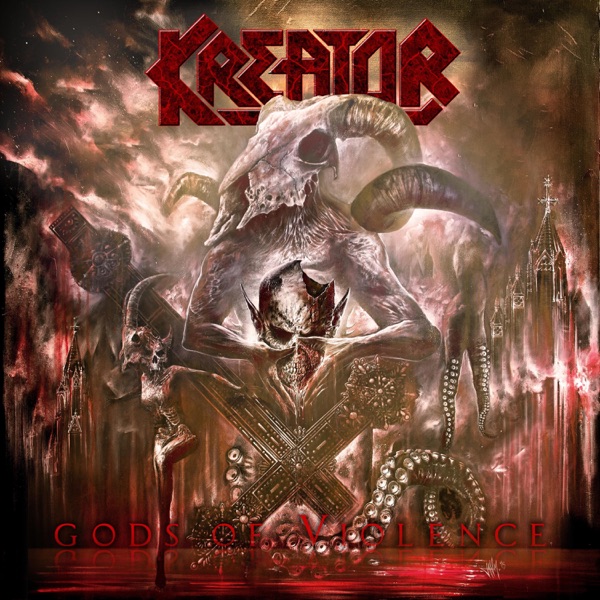
Gods of Violence
2017 · 11 tracks

Hate über alles
2022 · 11 tracks
- 1 Sergio Corbucci Is Dead ↗ 0:58
- 2 Hate Über Alles ↗ 3:49
- 3 Killer Of Jesus ↗ 4:05
- 4 Crush The Tyrants ↗ 4:11
- 5 Strongest Of The Strong ↗ 4:01
- 6 Become Immortal ↗ 4:23
- 7 Conquer And Destroy ↗ 4:45
- 8 Midnight Sun ↗ 3:38
- 9 Demonic Future ↗ 4:43
- 10 Pride Comes Before The Fall ↗ 4:49
- 11 Dying Planet ↗ 6:52

-
 Endless PainKreator198510 tracks
 -
 Pleasure to KillKreator198612 tracks
 -
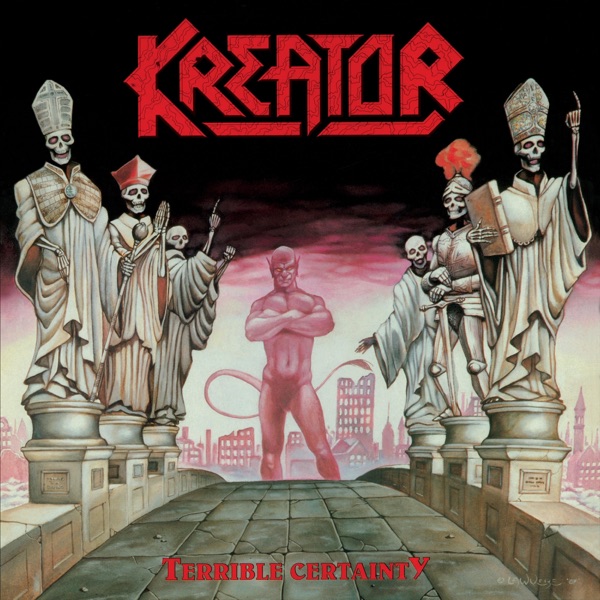
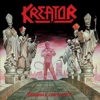 Terrible CertaintyKreator19878 tracks
 -
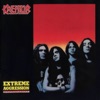 Extreme AggressionKreator19899 tracks
 -
 Coma of SoulsKreator199010 tracks
 -
 RenewalKreator19929 tracks
 -
 Cause for ConflictKreator199512 tracks
 -
 OutcastKreator199713 tracks
 -
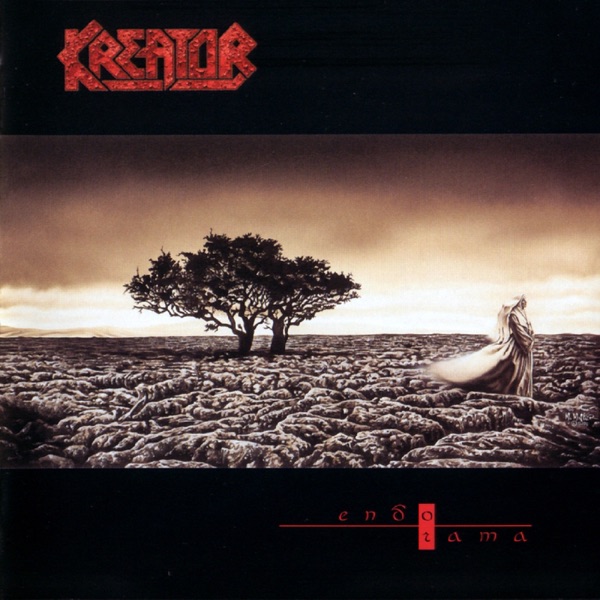
 EndoramaKreator199912 tracks
 -
 Violent RevolutionKreator200112 tracks
 -
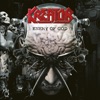 Enemy of GodKreator200512 tracks
 -
 Hordes of ChaosKreator200910 tracks
 -
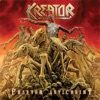 Phantom AntichristKreator201210 tracks
 -
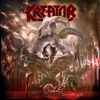 Gods of ViolenceKreator201711 tracks
 -
 Hate über allesKreator202211 tracks
 -
 Krushers of the WorldKreator202610 tracks
Deep Dive
Overview
Kreator is a German thrash metal band from Essen that has maintained a continuous recording and performing career since 1982. The band emerged from the industrial heartland of North Rhine-Westphalia and became one of Europe’s defining forces in thrash metal, establishing a template for aggressive, technically proficient songwriting that blended speed with composition. Over four decades, Kreator released sixteen studio albums and underwent significant lineup changes while retaining the songwriting vision of founder and lead vocalist Mille Petrozza and drummer Jürgen Reil, the only two original members to remain active with the band into the 2020s.
Formation Story
Kreator was formed in Essen, Germany, in 1982 by Mille Petrozza and Jürgen Reil, who established the band during the early emergence of thrash metal as a global phenomenon. The Essen scene, part of the larger industrial Ruhr Valley region, provided an unlikely but fitting backdrop for a band that would channel aggression and intensity into their music. The early lineup solidified around Petrozza’s songwriting and guitar work alongside Reil’s drumming, with the addition of bassist Frank Gosdzik and lead guitarist Tommy Vetterli, completing the classic-era lineup that would record the band’s first releases.
Breakthrough Moment
Kreator’s debut album, Endless Pain (1985), introduced their uncompromising approach to thrash metal and established the band within the European extreme metal underground. The album’s raw energy and technical precision attracted attention beyond Germany’s borders, and the follow-up, Pleasure to Kill (1986), solidified their reputation as one of thrash metal’s most potent new forces. By Terrible Certainty (1987), Kreator had cultivated an international fanbase and demonstrated their ability to refine their songwriting while maintaining the visceral assault that defined their early work.
Peak Era
Kreator’s creative and commercial peak spanned the late 1980s through the early 1990s. Extreme Aggression (1989) and Coma of Souls (1990) represented the band at their most focused and destructive, albums that showcased sophisticated song structures beneath layers of distortion and blast-beat intensity. These records cemented Kreator’s position as one of the “big four” architects of European thrash metal alongside Sodom and Destruction. The band’s lineup underwent changes during this period, most notably with bassist positions, but Petrozza and Reil’s core vision remained intact even as the band explored stylistic evolution in the 1990s.
Musical Style
Kreator’s sound is defined by driving thrash metal riffing underpinned by rapid-fire drumming and Petrozza’s harsh, barked vocal delivery. The band’s compositions balanced velocity with progression, rarely relying on simple power-chord chugging; instead, their guitarists developed intricate lead lines and counter-melodies that elevated thrash metal beyond its punk-derived roots. Over their career, Kreator experimented with industrial elements and atmospheric passages, particularly during the mid-to-late 1990s, but consistently returned to their thrash metal foundation. The bass lines, especially after Sami Yli-Sirniö joined as lead guitarist in 2001, often carried melodic weight, and the production evolved from raw early recordings to polished yet aggressive modern studio work.
Major Albums
Endless Pain (1985)
Kreator’s debut announced a new voice in European thrash metal, combining raw production with technically demanding riffing and establishing Petrozza’s songwriting as both aggressive and compositionally ambitious.
Pleasure to Kill (1986)
The sophomore effort refined the debut’s formula with sharper production and more elaborate song structures, positioning Kreator among thrash metal’s most vital emerging acts.
Extreme Aggression (1989)
This album showcased the band operating at peak intensity, with intricate guitar interplay and punishing rhythm-section work demonstrating why Kreator ranked among thrash metal’s elite practitioners.
Coma of Souls (1990)
Often considered one of their finest works, this album balanced technical proficiency with memorable song construction, making it a touchstone for thrash metal enthusiasts and a watershed moment in the band’s discography.
Violent Revolution (2001)
Released after the stabilization of the lineup with Sami Yli-Sirniö’s arrival as lead guitarist, this album signaled a return to thrash metal’s core after years of stylistic exploration, reclaiming the band’s essential identity.
Gods of Violence (2017)
This later-era album demonstrated that Kreator retained their creative drive well into their fourth decade, delivering heavy, technically proficient thrash metal that honored their legacy while remaining contemporary.
Signature Songs
- Endless Pain — The title track of their debut, an immediate declaration of the band’s ferocity and musical ambition that became an enduring set staple.
- Pleasure to Kill — A showcase of mid-song tempo shifts and intricate lead guitar work that exemplified Kreator’s refusal to simplify thrash metal formulas.
- Extreme Aggression — The title track captured the era’s intensity with relentless drumming and Petrozza’s commanding vocal presence.
- Enemy of God — A later work demonstrating the band’s ability to craft heavy, focused thrash metal material in their third decade.
- Outcast — From their 1997 album of the same name, illustrating their willingness to incorporate atmospheric elements without sacrificing heaviness.
Influence on Rock
Kreator stands as a foundational force in the European thrash metal tradition, influencing countless bands who emerged in the decades following their 1985 debut. Their insistence on technical proficiency and compositional sophistication elevated thrash metal beyond simplistic aggression and demonstrated that extreme music could sustain long-term artistic development. The band’s longevity—continuing to record and tour into the 2020s—provided a template for thrash metal bands to build lasting careers beyond their initial breakthrough period. Petrozza and Reil’s endurance as creative partners influenced how subsequent generations of metal musicians approached long-term collaboration and evolution within a single project.
Legacy
Kreator’s four-decade career established them as one of the most important non-English-speaking rock bands of their era, with their Essen origins becoming synonymous with a particular strain of European metal intensity. Their discography from 1985 through the early 1990s remains a fundamental text in thrash metal history, studied and emulated by musicians worldwide. The band’s continued recording and touring activity—including the 2022 album Hate über alles—ensured their presence in contemporary metal discourse and demonstrated that the thrash metal tradition they helped codify remained viable into the 2020s. Streaming platforms and reissues have introduced their catalog to new generations, while metal festival appearances have kept their music in circulation among dedicated fans and newcomers alike.
Fun Facts
- Kreator’s name originated as a reference to their role in creating thrash metal, a deliberate choice that reflected Petrozza’s confidence in the band’s artistic direction from the outset.
- Jürgen Reil left the band in 1994 but rejoined in 1996, making him one of few drummers to have returned to a major metal band after a hiatus and maintained continuity thereafter.
- Frédéric Leclercq, who joined as bassist in 2019, brought to the band a new era of lineup stability after Christian Giesler’s long tenure since 1994.
- The band has maintained an official website presence at kreator-terrorzone.de, reflecting their commitment to direct fan engagement in the digital age.