
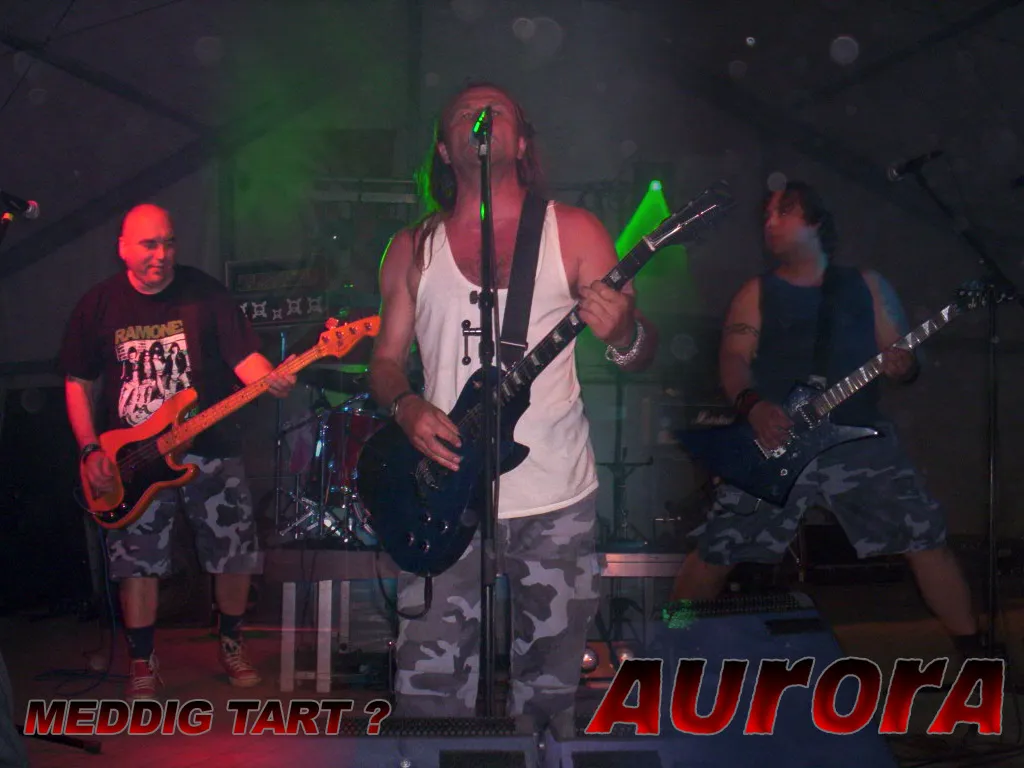
Photo by Scurty , licensed under CC BY-SA 3.0 · Wikimedia Commons
Rank #186
Aurora
From Wikipedia
Aurora is a punk band formed in Győr, Hungary in 1983.
Discography & Previews
Browse through and click an album to open and play 30-second previews streamed from Apple Music.

Demo
1987 · 12 tracks
-
 DemoAurora198712 tracks
Deep Dive
Overview
Aurora is a hardcore punk band formed in Győr, Hungary in 1983. Emerging from the Eastern European underground during the final years of the Cold War, Aurora carved out a distinctive space in the European punk landscape by fusing hardcore punk’s raw aggression with classic rock structures and sensibilities. Over four decades of continuous activity, they have built a substantial catalog of studio albums released primarily through the Hungaroton label, establishing themselves as a significant voice in Hungarian rock and punk music.
Formation Story
Aurora was formed in Győr, a city in northwestern Hungary, in 1983—a period when punk and hardcore were still considered marginal and sometimes dangerous in Eastern European communist states. The band emerged from the sparse punk underground of Hungary, a scene that operated in the shadows of state censorship and cultural isolation. By the early 1980s, punk had begun to penetrate the Iron Curtain, albeit slowly, and a handful of Hungarian musicians sought to translate that raw ethos into their own idiom. Aurora’s founding in Győr positioned them away from Budapest’s larger media apparatus, lending them a degree of insularity and independence that would inform their long-term artistic trajectory.
Breakthrough Moment
Aurora’s earliest documented recording, the Demo from 1987, marked their initial formal release. By 1992, the band had solidified their sound and released Előre kurvák gengszterek, their first full-length studio album. This record demonstrated a mature synthesis of hardcore punk aggression and rock melody—a balance that would become their signature. The early 1990s saw them consolidate their position within the Hungarian underground, releasing felTámadás in 1993, which further established their credentials as serious practitioners of punk rock rather than novelty acts. These albums, produced during Hungary’s transition from communist rule to democracy, captured a band determined to build a lasting body of work amid significant cultural upheaval.
Peak Era
The mid-to-late 1990s represented Aurora’s most prolific period. Between 1995 and 1999, they released five albums—Keserű cukor (1995), Nincs karácsony (1996), Illegális bál (1997), Viszlát Iván (1998), and Balkán Express (1999)—demonstrating both creative vitality and commercial consistency within their regional market. This five-year stretch showcased the band at peak productivity, refining their blend of hardcore energy and accessible rock songwriting. The titles themselves, in Hungarian, reflected a distinctly regional identity; Aurora was not chasing international trends but deepening their roots in Hungarian culture and language. The 2000s saw them continue recording with A rezervátum mélyén (2002) and Meddig tart? (2004), maintaining their presence in the European underground punk scene.
Musical Style
Aurora’s sound synthesizes hardcore punk’s velocity and intensity with the structural clarity and melodic sensibility of classic rock. Their vocals typically sit high in the mix with an aggressive delivery characteristic of European hardcore, while the instrumentation—guitar, bass, and drums—maintains the raw, relatively unpolished production aesthetic of punk, avoiding the glossy overdubs common in mainstream rock. Over their four-decade career, they have remained stylistically consistent, resisting temptation to soften their sound for commercial palatability. The Hungarian language becomes an instrument itself in their work, contributing to a sonic identity that is distinctly local and resistant to the homogenizing forces of global pop culture. While rooted in punk’s DIY ethos, Aurora’s compositions often display the song-craft discipline of classic rock, suggesting influences from both the Sex Pistols and early rock traditions.
Major Albums
Előre kurvák gengszterek (1992)
Their formal full-length debut established Aurora’s mature songwriting approach, balancing hardcore punk aggression with accessible rock structures and solidifying their position in the Hungarian underground.
Viszlát Iván (1998)
One of their most significant works, this album showcased the band at peak creative force during their most prolific decade, blending intricate arrangements with their characteristic raw energy.
A rezervátum mélyén (2002)
Released during the band’s third decade, this album demonstrated their ability to sustain creative momentum and relevance in the 2000s underground rock scene.
Tűréshatáron túl (2008)
This release proved Aurora’s continued vitality and commitment to producing new material, maintaining their position as active contributors to European punk and rock music.
Signature Songs
- “Előre kurvák gengszterek” — The title track from their 1992 debut exemplifies their fusion of hardcore punk velocity with rock melody.
- “Viszlát Iván” — A centerpiece of their 1998 album, showcasing their fully matured songwriting approach.
- “Balkán Express” — From the 1999 album of the same name, capturing the band’s regional identity and lyrical specificity.
Influence on Rock
Aurora’s significance lies partly in their geographic positioning as a Hungarian punk act operating during and after the transition from communism. They demonstrated that hardcore punk and rock could flourish outside Western Europe and North America, and that regional identity need not be a liability but rather a source of authentic artistic power. Their sustained output over decades helped validate the underground punk and rock scene in Hungary, showing younger musicians that long-term careers could be built on uncompromising artistic principles. While their direct international influence remains limited by language and distribution barriers, Aurora stands as evidence of punk’s global reach and the vitality of Eastern European rock culture in the post-Cold War era.
Legacy
As of 2021, Aurora remains an active recording band—their most recent studio album, Teszt alatt a türelem, released in 2021, marked their continued engagement with the craft. Over more than three and a half decades, they have accumulated seventeen studio albums, a substantial discography that places them among Hungary’s most prolific rock acts. The 2019 release 1988 + Viszlát Iván served as a retrospective gesture, pairing new material with a re-recorded version of their acclaimed 1998 album, suggesting a band willing to revisit their catalog while moving forward. Their longevity and consistency have secured their place in Hungarian rock history, though international recognition remains modest. The Hungaroton label has served as their steady home, providing a stable institutional framework for their ongoing work.
Fun Facts
- Aurora’s formation in 1983 placed them among the earliest punk and hardcore bands to emerge from Hungary during the final decade of communist rule.
- The band’s albums are predominantly sung in Hungarian, making them geographically specific in a way that most Western punk acts are not, and contributing to a distinct regional identity.
- Their prolific output between 1995 and 1999—five albums in five years—ranks among the highest productivity rates in European underground punk during that period.
- The 2019 re-recording of Viszlát Iván, originally from 1998, demonstrates the band’s continued connection to their mid-career peak and its lasting artistic significance within their own canon.