
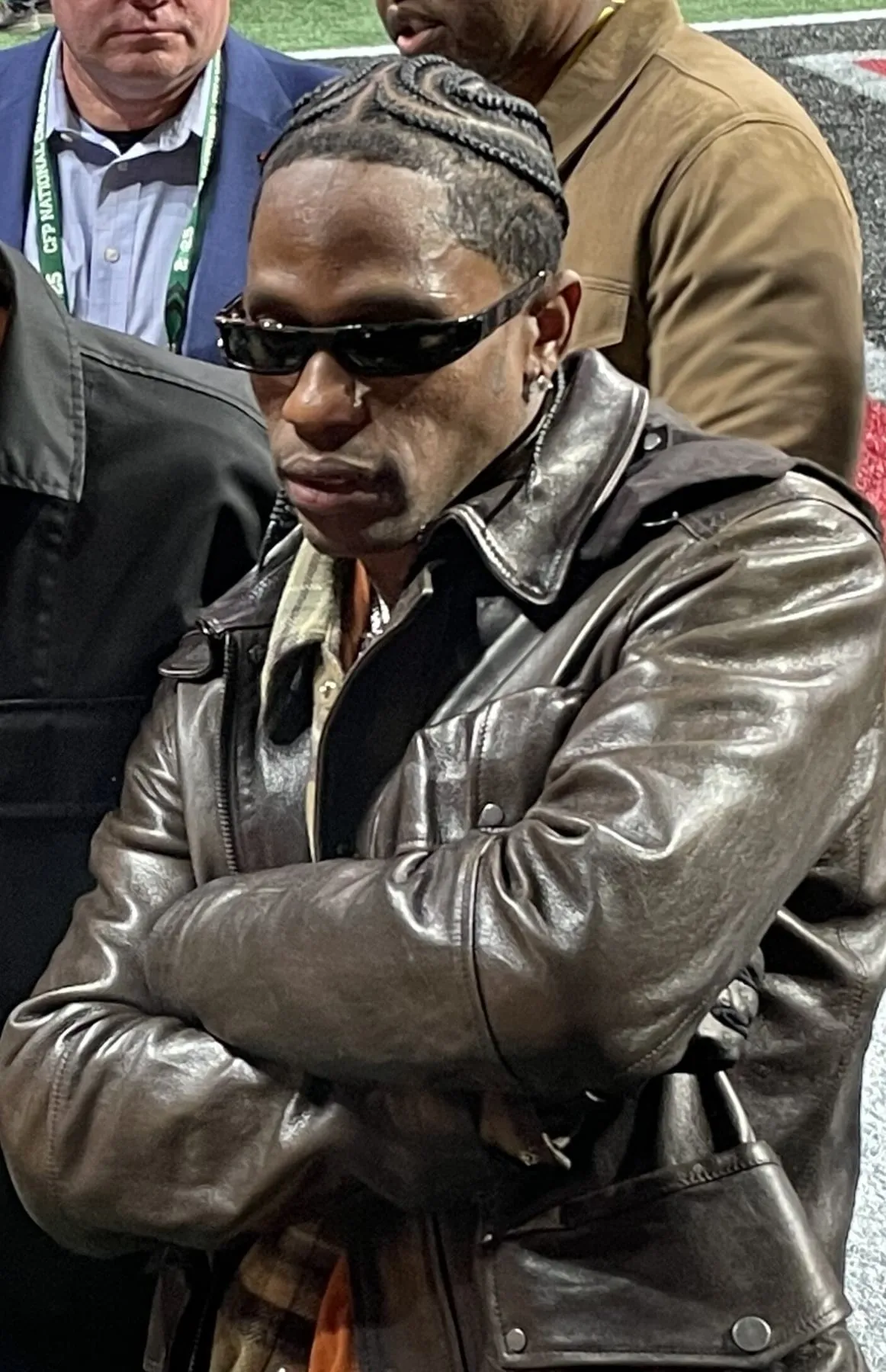
Photo by Bobak Ha'Eri , licensed under CC BY 3.0 · Wikimedia Commons
Rank #422
Travis Scott
From Wikipedia
Jacques Bermon Webster II, known professionally as Travis Scott, formerly stylized as Travi$ Scott, is an American rapper, singer, songwriter, and record producer. Scott has had five number-one hits on the U.S. Billboard Hot 100 chart, along with a total of over one hundred charting songs. In addition to ten Grammy Award nominations, he has won a Latin Grammy Award, Billboard Music Award, MTV Video Music Award, and several BET Hip Hop Awards. Scott's musical style has been described as a "blend between traditional hip-hop and lo-fi" and often characterized as an "ambient" drawing of notable influence from rappers Kanye West and Kid Cudi. His stage name is derived from the latter's real name, Scott Mescudi, combined with the name of a favorite uncle.
Discography & Previews
Browse through and click an album to open and play 30-second previews streamed from Apple Music.
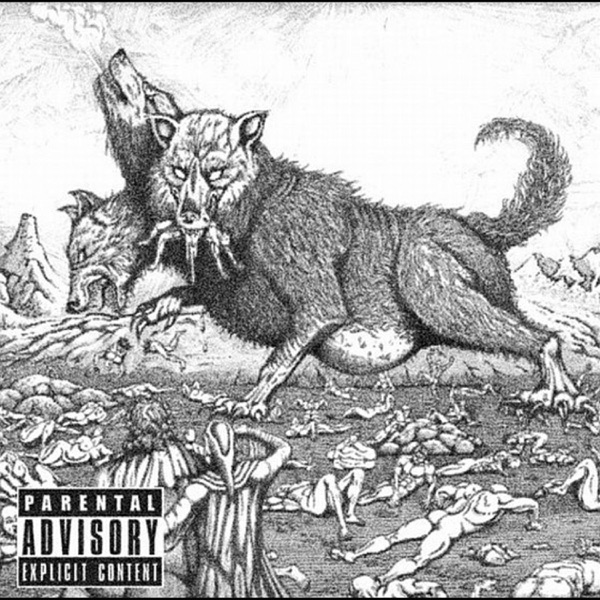

Days Before Rodeo
2014 · 12 tracks
- 1 Days Before Rodeo: The Prayer ↗ 3:20
- 2 Mamacita (feat. Rich Homie Quan & Young Thug) ↗ 4:33
- 3 Quintana Pt. 2 ↗ 3:06
- 4 Drugs You Should Try It ↗ 3:28
- 5 Don't Play (feat. The 1975 & Big Sean) ↗ 4:45
- 6 Skyfall (feat. Young Thug) ↗ 5:14
- 7 Zombies ↗ 4:14
- 8 Sloppy Toppy (feat. Migos & Peewee Longway) ↗ 4:34
- 9 Basement Freestyle ↗ 4:04
- 10 Backyard ↗ 4:30
- 11 Grey ↗ 3:40
- 12 BACC (Bonus) ↗ 2:11

Rodeo
2015 · 16 tracks
- 1 Pornography ↗ 3:52
- 2 Oh My Dis Side (feat. Quavo) ↗ 5:51
- 3 3500 (feat. Future & 2 Chainz) ↗ 7:42
- 4 Wasted (feat. Juicy J) ↗ 3:56
- 5 90210 (feat. Kacy Hill) ↗ 5:39
- 6 Pray 4 Love (feat. The Weeknd) ↗ 5:07
- 7 Nightcrawler (feat. Swae Lee & Chief Keef) ↗ 5:22
- 8 Piss On Your Grave (feat. Kanye West) ↗ 2:46
- 9 Antidote ↗ 4:23
- 10 Impossible ↗ 4:03
- 11 Maria I'm Drunk (feat. Justin Bieber & Young Thug) ↗ 5:50
- 12 Flying High (feat. Toro y Moi) ↗ 3:29
- 13 I Can Tell ↗ 3:56
- 14 Apple Pie ↗ 3:39
- 15 Ok Alright (feat. ScHoolboy Q) ↗ 6:58
- 16 Never Catch Me ↗ 2:56

Birds in the Trap Sing McKnight
2016 · 14 tracks
- 1 the ends ↗ 3:21
- 2 way back ↗ 4:33
- 3 coordinate ↗ 3:46
- 4 through the late night ↗ 4:46
- 5 beibs in the trap ↗ 3:34
- 6 sdp interlude ↗ 3:12
- 7 sweet sweet ↗ 3:42
- 8 outside ↗ 2:56
- 9 goosebumps ↗ 4:04
- 10 first take ↗ 5:14
- 11 pick up the phone (feat. Quavo) ↗ 4:12
- 12 lose ↗ 3:20
- 13 guidance ↗ 3:27
- 14 wonderful ↗ 3:37
Birds in the Trap Sing McKnight
2016 · 14 tracks
- 1 the ends ↗ 3:21
- 2 way back ↗ 4:33
- 3 coordinate ↗ 3:46
- 4 through the late night ↗ 4:46
- 5 beibs in the trap ↗ 3:34
- 6 sdp interlude ↗ 3:12
- 7 sweet sweet ↗ 3:42
- 8 outside ↗ 2:56
- 9 goosebumps ↗ 4:04
- 10 first take ↗ 5:14
- 11 pick up the phone (feat. Quavo) ↗ 4:12
- 12 lose ↗ 3:20
- 13 guidance ↗ 3:27
- 14 wonderful ↗ 3:37

ASTROWORLD
2018 · 17 tracks
- 1 STARGAZING ↗ 4:31
- 2 CAROUSEL ↗ 3:00
- 3 SICKO MODE ↗ 5:13
- 4 R.I.P. SCREW ↗ 3:06
- 5 STOP TRYING TO BE GOD ↗ 5:38
- 6 NO BYSTANDERS ↗ 3:38
- 7 SKELETONS ↗ 2:26
- 8 WAKE UP ↗ 3:52
- 9 5% TINT ↗ 3:16
- 10 NC-17 ↗ 2:37
- 11 ASTROTHUNDER ↗ 2:23
- 12 YOSEMITE ↗ 2:30
- 13 CAN'T SAY ↗ 3:18
- 14 WHO? WHAT! ↗ 2:57
- 15 BUTTERFLY EFFECT ↗ 3:11
- 16 HOUSTONFORNICATION ↗ 3:38
- 17 COFFEE BEAN ↗ 3:29

UTOPIA
2023 · 18 tracks
- 1 HYAENA ↗ 3:42
- 2 THANK GOD ↗ 3:05
- 3 MODERN JAM (feat. Teezo Touchdown) ↗ 4:15
- 4 MY EYES ↗ 4:11
- 5 GOD'S COUNTRY ↗ 2:08
- 6 SIRENS ↗ 3:24
- 7 FE!N (feat. Playboi Carti) ↗ 3:12
- 8 DELRESTO (ECHOES) [feat. Beyoncé] ↗ 4:34
- 9 I KNOW ? ↗ 3:32
- 10 TOPIA TWINS (feat. Rob49 & 21 Savage) ↗ 3:43
- 11 CIRCUS MAXIMUS (feat. The Weeknd & Swae Lee) ↗ 4:19
- 12 PARASAIL (feat. Yung Lean & Dave Chappelle) ↗ 2:35
- 13 SKITZO (feat. Young Thug) ↗ 6:07
- 14 LOST FOREVER (feat. Westside Gunn) ↗ 2:43
- 15 LOOOVE (feat. Kid Cudi) ↗ 3:47
- 16 K-POP (feat. Bad Bunny & The Weeknd) ↗ 3:05
- 17 TELEKINESIS (feat. SZA & Future) ↗ 5:54
- 18 TIL FURTHER NOTICE (feat. James Blake & 21 Savage) ↗ 5:15
-
 XXTravis Scott20131 track
 -
 Days Before RodeoTravis Scott201412 tracks
 -
 RodeoTravis Scott201516 tracks
 -
 Birds in the Trap Sing McKnightTravis Scott201614 tracks
 - Birds in the Trap Sing McKnightTravis Scott201614 tracks
-
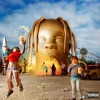 ASTROWORLDTravis Scott201817 tracks
 -
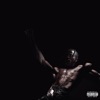 UTOPIATravis Scott202318 tracks
Deep Dive
Overview
Jacques Bermon Webster II, professionally known as Travis Scott, emerged as one of contemporary hip-hop’s most consequential figures by blending traditional rap with psychedelic production and lo-fi textures. From his early work in the early 2010s through his commercial ascendancy in the late 2010s, Scott carved out a distinct sonic territory that merged ambient production aesthetics with trap-inflected rhythms, Southern hip-hop roots, and pop sensibility. His influence extends beyond rap into psychedelic rock and alternative music, with his work acknowledged across multiple genres and award platforms, including Grammy nominations and Billboard recognition.
Formation Story
Born in 1991, Travis Scott came of age during hip-hop’s expansion into electronic production and the rise of influential producer-rappers. Growing up in Houston, Scott absorbed the city’s rap legacy while gravitating toward the instrumental and production-focused work of artists like Kid Cudi and Kanye West—influences so formative that he derived his stage name from Cudi’s birth name, Scott Mescudi, combined with a favorite uncle’s surname. Rather than emerging from a traditional band or crew structure, Scott’s “formation” was fundamentally that of a solo artist and producer, building his identity around distinctive production choices and sonic architecture rather than collective songwriting or ensemble performance. His early years, beginning in 2009 with projects like B.A.P.E. and Buddy Rich, were marked by self-directed experimentation, laying groundwork for a career built on individual artistic vision and collaborative production partnerships.
Breakthrough Moment
Scott’s breakthrough came in the early-to-mid 2010s as his production style and rapping voice gained critical attention. Projects like Owl Pharaoh (2013) and Days Before Rodeo (2014) demonstrated a maturing approach to beat-making and song arrangement, but his commercial and critical turning point arrived with Rodeo (2015). That album’s fusion of psychedelic textures, trap percussion, and atmospheric production caught both mainstream and underground ears, establishing Scott as more than a producer—a visionary songwriter and vocalist capable of sustaining full-length conceptual statements. The success of Rodeo positioned him for rapid expansion into global markets and collaborations with increasingly prominent artists across hip-hop, pop, and alternative music.
Peak Era
Scott’s most creatively dominant and commercially successful period spanned the mid-to-late 2010s, anchored by his album Birds in the Trap Sing McKnight (2016) and reaching its zenith with ASTROWORLD (2018). These albums synthesized all prior experiments—lo-fi ambience, trap drums, psychedelic layering, and pop hooks—into cohesive, widely praised bodies of work. Birds in the Trap Sing McKnight expanded his audience while maintaining the experimental edge that defined his core appeal, accumulating hundreds of charting songs collectively. ASTROWORLD, released in 2018, became his commercial peak, generating five number-one hits on the U.S. Billboard Hot 100 and establishing him as a culturally dominant figure in rap and beyond. This period cemented his status not just as a rapper but as a producer and curator of sound, influencing how hip-hop could incorporate psychedelic and alternative rock elements without losing rap credibility or commercial viability.
Musical Style
Travis Scott’s signature sound is built on a deliberate blend of traditional hip-hop structure and lo-fi ambient production—a combination that feels both spacious and intricate. His beats typically layer thick, reverb-heavy drums against ethereal, often psychedelic instrumental textures, creating what critics have described as an “ambient” approach to rap production. Vocally, Scott employs a range from straightforward rapping to melodic singing, often processing his voice through effects that blur the line between rap and R&B. His songwriting favors repetition, atmospheric build, and textural variation over traditional verse-chorus-verse structure, drawing influence from Kanye West’s maximalist production philosophy and Kid Cudi’s incorporation of psychedelia into hip-hop. The genre markers attached to his work—psychedelic rap, alternative R&B, pop rap, Southern hip-hop, trap, and psychedelic rock—reflect the actual eclecticism of his sound; his music genuinely inhabits multiple genre spaces simultaneously, which partly explains his reach across demographics typically siloed into separate streaming playlists and radio formats.
Major Albums
Rodeo (2015)
Earned Scott widespread critical recognition by synthesizing psychedelic production, trap rhythms, and melodic sensibility into a cohesive concept; marked the full emergence of his signature lo-fi ambient approach and established him as a major creative force beyond production.
Birds in the Trap Sing McKnight (2016)
Expanded his commercial reach while deepening his psychedelic textures and trap-influenced percussion; the album accumulated hundreds of charting songs and solidified his mainstream presence without sacrificing experimental vision.
ASTROWORLD (2018)
Scott’s commercial and cultural peak, generating five number-one Billboard Hot 100 hits and reaching audiences far beyond hip-hop purists; synthesized his entire artistic approach into a widely embraced statement that proved psychedelic rap could achieve genuine mainstream dominance.
UTOPIA (2023)
Released after a significant gap, representing Scott’s continued evolution and artistic ambition; demonstrates his longevity and ability to remain relevant across shifting hip-hop and broader pop landscape.
Signature Songs
- “Upper Echelon” — An early showcase of Scott’s psychedelic production ethos and lo-fi ambient approach, introducing his distinctive sonic signature.
- “Antidote” — One of his breakthrough tracks from Birds in the Trap Sing McKnight, exemplifying his blend of trap rhythms with ethereal, processed vocals.
- “SICKO MODE” — A multi-part production showcase from ASTROWORLD demonstrating his ability to layer and transition between contrasting sonic spaces within a single song.
- “Goosebumps” — A notable charting song exemplifying his accessible yet textured approach to trap-based production.
Influence on Rock
Travis Scott’s influence on rock and alternative music stems not from a traditional rock background but from his systematic integration of psychedelic aesthetics into hip-hop and rap. His work demonstrated that psychedelic rock sensibilities—reverb-heavy guitars, texture-forward production, spacious arrangements—could be translated into electronic and trap-based contexts without pastiche or inauthenticity. This cross-pollination influenced how contemporary producers in alternative rock and psychedelic genres approached beat-making and song structure, showing that the boundaries between psychedelic rock and psychedelic rap were permeable. His reliance on atmosphere over rhythm-only focus borrowed from rock production philosophy, while his hip-hop foundation ensured the influence moved bidirectionally, with alternative and psychedelic rock artists increasingly engaging with trap and lo-fi production techniques that Scott helped normalize.
Legacy
Travis Scott’s career trajectory from 2009 to the present represents a shift in how hip-hop could incorporate psychedelic, alternative, and rock elements into mainstream rap without genre dilution. His ten Grammy Award nominations, along with Latin Grammy, Billboard Music, MTV Video Music, and BET Hip Hop Award recognition, attest to his cross-genre reach and critical legitimacy. The sheer volume of charting songs—over one hundred—combined with multiple number-one Billboard Hot 100 hits indicates sustained commercial success and streaming dominance across multiple platform eras. His influence extends beyond direct imitation: the normalization of psychedelic rap as a viable commercial category, the acceptance of lo-fi ambient production in mainstream hip-hop, and the integration of alternative rock textural philosophy into trap music all trace, in part, through his career. As of 2023, with UTOPIA demonstrating continued creative engagement and his back catalog maintaining substantial streaming presence, Scott remains an active and influential figure in contemporary music, proving that psychedelic and alternative approaches can coexist with mainstream commercial success in hip-hop.
Fun Facts
- Scott’s stage name draws from Kid Cudi’s birth name, Scott Mescudi, revealing the depth of Cudi’s influence on his artistic identity and early production philosophy.
- He was formerly stylized as Travi$ Scott, a naming convention he later abandoned as his career matured and his artistic vision solidified beyond early experimentation.
- His work spans record labels including Cactus Jack Records, Grand Hustle Records, GOOD Music, and Epic Records, reflecting both independent ambition and major-label partnerships throughout his career.
- The gap between ASTROWORLD (2018) and UTOPIA (2023) represents a five-year hiatus, underlining his approach to album cycles as deliberate, infrequent statements rather than annual releases.