
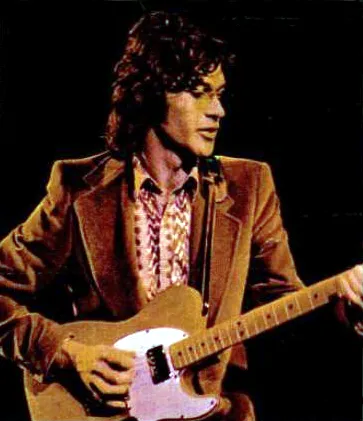
Photo by Capitol Records , licensed under Public domain · Wikimedia Commons
Rank #414
Robbie Robertson
From Wikipedia
Jaime Royal "Robbie" Robertson was a Canadian musician, composer, and producer. Robertson was the onetime lead guitarist for Bob Dylan's backing band. He was also the guitarist and primary songwriter of the Band from its inception until his 1976 departure. In his later solo career, Robertson released six albums.
Discography & Previews
Browse through and click an album to open and play 30-second previews streamed from Apple Music.
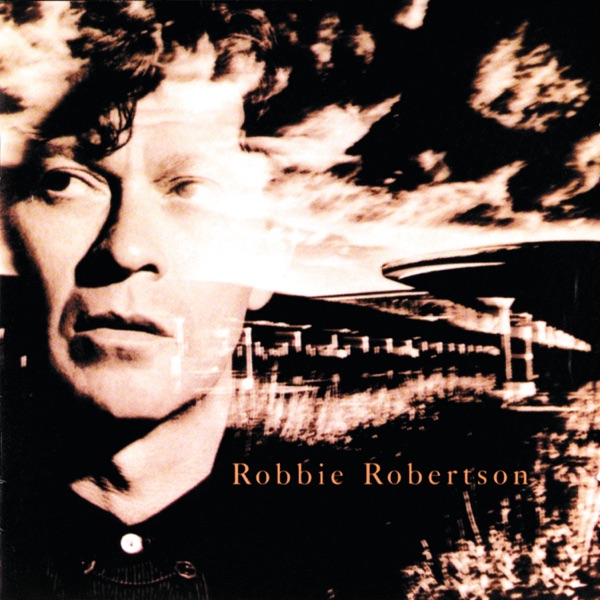

Storyville
1991 · 10 tracks

Contact From the Underworld of Redboy
1998 · 11 tracks
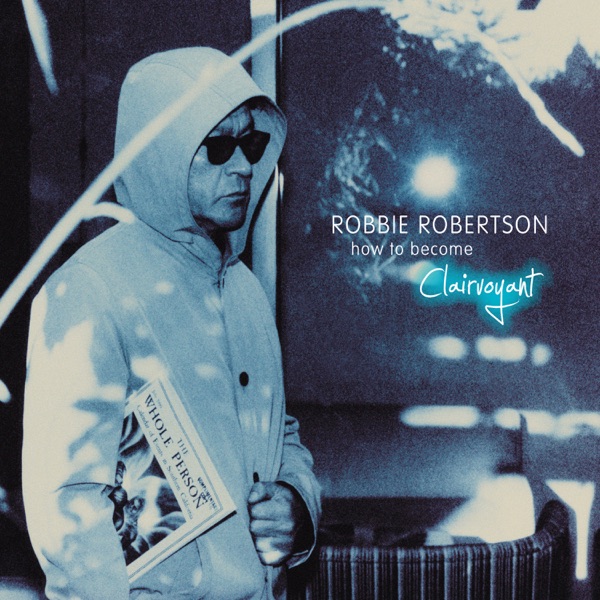
How to Become Clairvoyant
2011 · 18 tracks
- 1 Straight Down the Line ↗ 5:19
- 2 When the Night Was Young ↗ 5:05
- 3 He Don't Live Here No More ↗ 5:46
- 4 The Right Mistake ↗ 4:30
- 5 This Is Where I Get Off ↗ 5:09
- 6 Fear of Falling ↗ 5:17
- 7 She's Not Mine ↗ 4:28
- 8 Madame X ↗ 4:46
- 9 Axman ↗ 4:36
- 10 Won't Be Back ↗ 4:10
- 11 How To Become Clairvoyant ↗ 6:17
- 12 Tango For Django ↗ 3:50
- 13 The Right Mistake - Demo Version ↗ 4:04
- 14 He Don't Live Here No More - Demo Version ↗ 5:46
- 15 Fear of Falling - Demo Version ↗ 4:49
- 16 This Is Where I Get Off - Demo Version ↗ 5:04
- 17 Madame X - Demo Version ↗ 4:36
- 18 Houdini - Demo Version ↗ 4:21

Sinematic
2019 · 13 tracks
- 1 I Hear You Paint Houses (feat. Van Morrison) ↗ 5:03
- 2 Once Were Brothers ↗ 4:25
- 3 Dead End Kid ↗ 3:58
- 4 Hardwired ↗ 3:59
- 5 Walk in Beauty Way ↗ 5:38
- 6 Let Love Reign ↗ 5:12
- 7 Shanghai Blues ↗ 3:51
- 8 Wandering Souls ↗ 2:34
- 9 Street Serenade ↗ 5:06
- 10 The Shadow ↗ 4:26
- 11 Beautiful Madness ↗ 4:30
- 12 Praying for Rain ↗ 4:11
- 13 Remembrance ↗ 5:29
-
 Robbie RobertsonRobbie Robertson19879 tracks
 -
 StoryvilleRobbie Robertson199110 tracks
 -
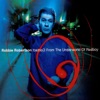 Contact From the Underworld of RedboyRobbie Robertson199811 tracks
 -
 How to Become ClairvoyantRobbie Robertson201118 tracks
 -
 SinematicRobbie Robertson201913 tracks
Deep Dive
Overview
Robbie Robertson stands as one of rock music’s most consequential figures—a Canadian guitarist, songwriter, and producer whose influence extends across multiple decades and genres. Born Jaime Royal Robertson in 1943, he became synonymous with two transformative acts: as the lead guitarist for Bob Dylan’s electric backing band during the mid-1960s folk-rock revolution, and as the guitarist and primary songwriter of The Band, the group that helped define what roots rock could be. His solo career, which began in earnest in 1987, demonstrated his continued creative reach into film scoring, Americana, and studio craftsmanship.
Formation Story
Robertson’s entry into rock music came through the Canadian rock and roll scene of the 1950s and early 1960s. Growing up in Canada, he absorbed the blues, country, and folk idioms that would later define his artistic vision. His early work as a session player and touring musician established him as a virtuoso electric guitarist before he caught the attention of Bob Dylan. When Dylan famously “went electric” and assembled a backing band in 1965–1966, Robertson became the lead guitarist for that controversial but historically pivotal ensemble, playing on some of the era’s most contested and ultimately influential recordings. This experience—navigating the intersection of folk tradition and rock electricity—set the template for everything that followed.
Breakthrough Moment
Robertson’s first major breakthrough came through his association with Dylan’s electric transformation, but his most enduring recognition arrived with The Band. Formed after the Dylan years, The Band emerged from the Canadian rock underground as a group that synthesized American roots music—folk, country, blues, gospel—into a cohesive and sophisticated sound. As the band’s guitarist and primary songwriter, Robertson authored the material that would define them: their debut album in 1968 established The Band as a major force in rock. The group’s ability to balance Robertson’s songwriting vision with the ensemble’s musical depth gave the early Band years a creative intensity that placed them alongside the era’s most important acts.
Peak Era
The Band’s creative peak extended through the late 1960s and 1970s, with Robertson serving as the driving force behind their sound and vision. Throughout this period, he composed the songs that became the band’s canon, songs rooted in North American history, rural imagery, and a deep understanding of how to marry lyrical storytelling with tightly arranged musicianship. Robertson remained with The Band until 1976, a departure that marked the end of a significant chapter in rock history. By leaving at that moment, he preserved the band’s legacy at its height rather than extending into diminishing returns—a creative decision that reflected his artistic judgment. The Band’s influence during the 1970s established Robertson as not merely a guitarist but a singular voice in American roots music.
Musical Style
Robertson’s guitar playing and compositional approach bridged blues-rock electricity with folk and country’s narrative traditions. His tone—often spare, always purposeful—prioritized clarity and restraint over technical excess. As a songwriter, Robertson favored narrative specificity, drawing on American history, frontier mythology, and small-town observation to populate his songs with vivid characters and settings. His arrangement sense, evident in The Band’s records, showed how to layer acoustic and electric instrumentation to create density without clutter. The genres spanning his work—folk rock, country rock, rhythm and blues—reflected his refusal to be bound by a single idiom; instead, he moved fluidly between them, guided by what the song demanded rather than genre convention.
Major Albums
Robbie Robertson (1987)
His debut solo album, arriving eleven years after leaving The Band, established Robertson as a substantial artist in his own right, incorporating elements of Americana, blues, and contemporary rock production while maintaining his signature songwriting clarity.
Storyville (1991)
This follow-up deepened Robertson’s exploration of narrative-driven songwriting and demonstrated his maturation as a solo artist capable of sustaining a full album’s vision without band context.
Contact From the Underworld of Redboy (1998)
Released in the late 1990s, this album showed Robertson engaging with contemporary production and arrangement while remaining grounded in his roots-music sensibility.
How to Become Clairvoyant (2011)
This later-career work continued Robertson’s pattern of steady solo output, maintaining his artistic voice decades into his career.
Sinematic (2019)
His final studio album, released when Robertson was in his mid-seventies, demonstrated his sustained creative engagement and ability to produce relevant material into his eighth decade.
Signature Songs
- “The Weight” — The Band’s most enduring composition, a narrative masterpiece featuring gospel-inflected musicianship and a character-driven story that became a rock standard.
- “The Night They Drove Old Dixie Down” — A Civil War ballad from The Band’s canon that showcased Robertson’s ability to inhabit historical perspective with nuance and emotional depth.
- “Up on Cripple Creek” — A The Band track that blended R&B grooves with Robertson’s lyrical specificity, becoming one of the group’s most performed songs.
- “Chest Fever” — An instrumental showcase for Robertson’s guitar work and The Band’s ensemble tightness, featuring keyboard work that defined the group’s sound.
Influence on Rock
Robertson’s influence on rock music operates on multiple levels. His work with Dylan’s electric band helped legitimize the fusion of folk and rock that defined the late 1960s, proving that electric instruments and folk sensibility were not incompatible. The Band, under his direction, established a template for roots-rock authenticity that influenced countless artists seeking to connect rock music to American vernacular traditions. His songwriting—particularly his narrative approach and lyrical specificity—influenced the singer-songwriter movement and country-rock traditions that followed. For younger guitarists and songwriters, Robertson demonstrated that technical prowess mattered less than clarity of vision and purposefulness of expression. His refusal to simply repeat The Band’s formula in his solo career established him as an artist willing to evolve while maintaining core values.
Legacy
Robbie Robertson’s death in 2023 marked the end of a career spanning seven decades. His legacy rests primarily on his work with The Band, whose influence on rock, country, and roots music has only deepened with time. The Band’s recordings remain canonical texts for understanding how rock could engage seriously with American musical traditions. Robertson’s solo career, though less celebrated than his work with The Band, demonstrated sustained creative ambition and added to his reputation as a serious artist rather than a legacy act. His later albums and continued touring into his seventies showed an artist committed to ongoing creative work rather than resting on historical achievement. The reissue and archival work surrounding both The Band and his solo catalog has introduced new generations to his songwriting and guitar work, ensuring his influence continues to circulate through rock music’s institutional memory.
Fun Facts
- Robertson’s tenure with Bob Dylan’s backing band, though brief, placed him at one of rock music’s most historically fraught moments, when folk purists and rock embracers collided over amplification and artistic direction.
- The Band’s early albums were recorded in a communal house in upstate New York, establishing a template for artist collectives that influenced rock music’s understanding of how albums could be created through extended collaboration.
- Robertson’s departure from The Band in 1976 preceded the group’s initial dissolution, meaning his solo career actually began before The Band itself officially ended.
- His solo albums were released across multiple decades without a unified commercial strategy, suggesting an artist more interested in creative expression than maintaining consistent chart presence or industry visibility.