
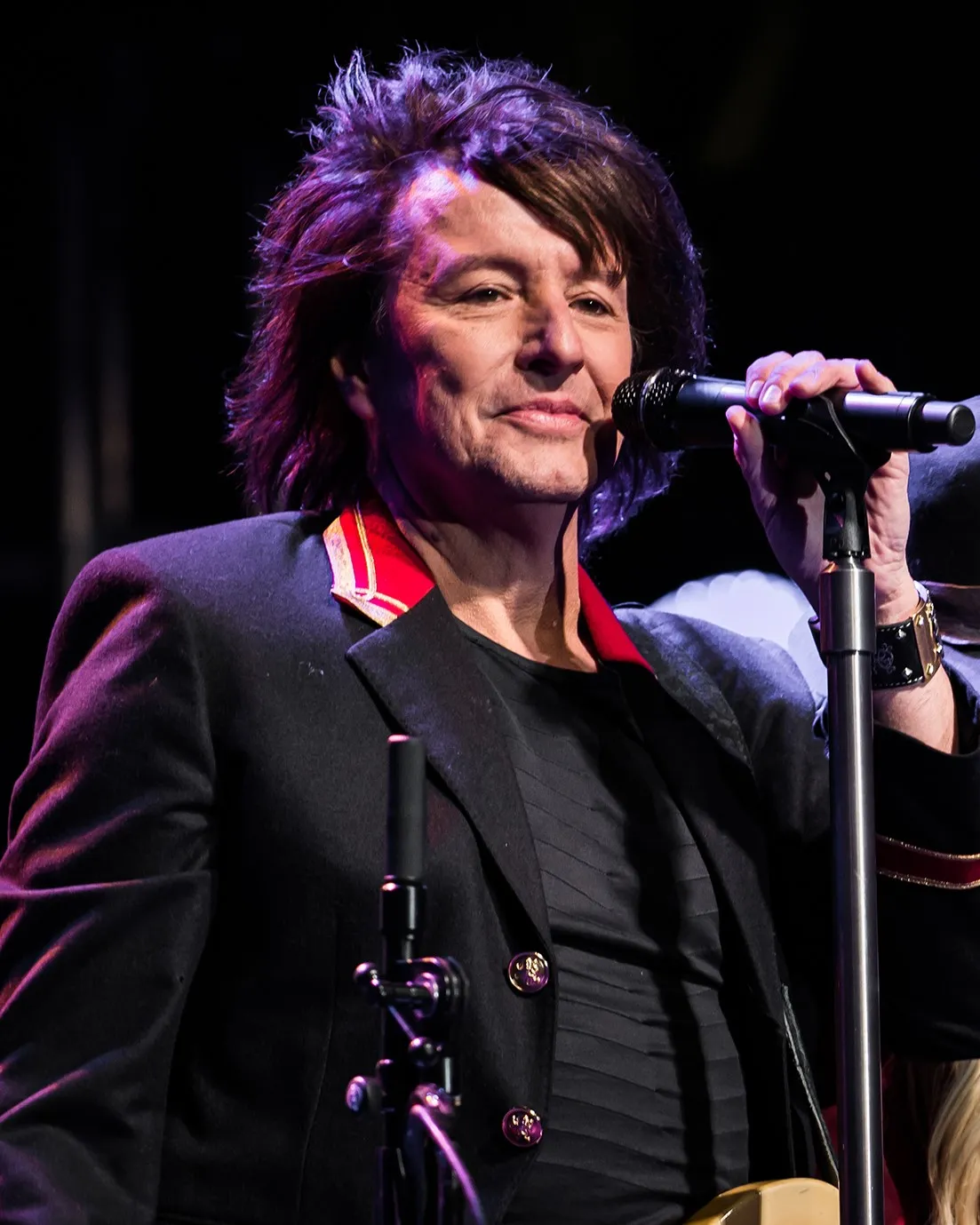
Photo by Justin Higuchi , licensed under CC BY 2.0 · Wikimedia Commons
Rank #443
Richie Sambora
From Wikipedia
Richard Stephen Sambora is an American musician, songwriter and singer. He was a member of the rock band Bon Jovi from 1983 to 2013. Sambora was the band's lead guitarist; he also provided backing vocals and played a major role in the band's songwriting. In 2018, Sambora was inducted into the Rock and Roll Hall of Fame as a member of Bon Jovi. He reunited with his former bandmates for a performance at the induction ceremony.
Discography & Previews
Browse through and click an album to open and play 30-second previews streamed from Apple Music.


Undiscovered Soul
1997 · 12 tracks
- 1 Made In America ↗ 5:35
- 2 Hard Times Come Easy ↗ 4:35
- 3 Fallen from Graceland ↗ 5:40
- 4 If God Was a Woman ↗ 4:02
- 5 All That Really Matters ↗ 4:19
- 6 You're Not Alone ↗ 4:19
- 7 In It for Love ↗ 4:19
- 8 Chained ↗ 3:27
- 9 Harlem Rain ↗ 5:02
- 10 Who I Am ↗ 7:09
- 11 Downside of Love ↗ 5:27
- 12 Undiscovered Soul ↗ 7:15
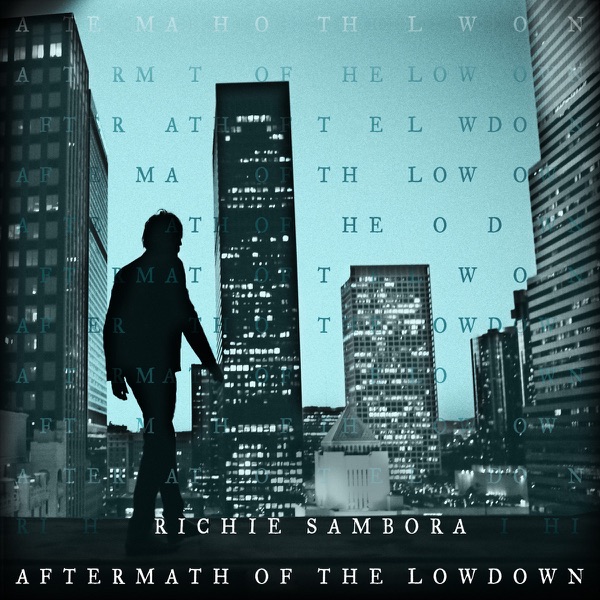
Aftermath of the Lowdown
2012 · 11 tracks
- 1 Burn That Candle Down ↗ 4:25
- 2 Every Road Leads Home to You ↗ 4:41
- 3 Taking a Chance On the Wind ↗ 4:48
- 4 Nowadays ↗ 4:00
- 5 Weathering the Storm ↗ 4:50
- 6 Sugar Daddy ↗ 4:38
- 7 I'll Always Walk Beside You ↗ 5:03
- 8 Seven Years Gone ↗ 5:37
- 9 Learning How to Fly with a Broken Wing ↗ 4:35
- 10 You Can Only Get So High ↗ 6:32
- 11 World ↗ 2:22
-
 Stranger in This TownRichie Sambora199110 tracks
 -
 Undiscovered SoulRichie Sambora199712 tracks
 -
 Aftermath of the LowdownRichie Sambora201211 tracks
Deep Dive
Overview
Richie Sambora stands as one of the defining guitarists of 1980s rock, best known for his decades-long tenure as lead guitarist, backing vocalist, and primary songwriter for Bon Jovi. Born in 1959, Sambora emerged during the height of the stadium rock era and became instrumental—both literally and creatively—in shaping the sound of one of rock’s most commercially successful bands. His contributions to songwriting and arrangement were as vital to Bon Jovi’s identity as frontman Jon Bon Jovi’s vocals, and his skill at crafting arena-ready hooks and layered guitar work helped define the band’s signature sound across multiple platinum albums.
Formation Story
Richie Stephen Sambora was born in 1959 and came of age as a guitarist during the era when arena rock and heavy metal were reshaping rock music’s commercial landscape. Growing up in the late 1970s, he absorbed influences from the virtuosic guitar-driven rock dominating FM radio and concert venues. His background as a skilled multi-instrumentalist and his instinct for melody and song structure set him apart from purely technical shredders. When he joined Bon Jovi in 1983, the band was on the cusp of breakthrough success, and Sambora’s arrival completed the lineup that would carry the group through its most creatively fertile and commercially dominant period.
Breakthrough Moment
Sambora’s introduction to a mass audience came through Bon Jovi’s third studio album, Slippery When Wet (1984), which sold millions of copies worldwide and established the band as stadium rock titans. Though the songwriting credits on that album and its successors are attributed to the band’s core team, Sambora’s guitar work and contributions to arrangements became inseparable from the band’s sonic identity. His playing on the album’s biggest singles—marked by soaring leads, rhythmic precision, and an instinct for what would translate in enormous venues—made him a household name among rock fans. Throughout the rest of the 1980s and into the 1990s, Sambora remained central to Bon Jovi’s continued commercial success, touring extensively and participating in the writing and recording of subsequent platinum releases.
Peak Era
Sambora’s peak years coincided with Bon Jovi’s most productive and commercially dominant period, roughly from 1984 through the mid-1990s. During this time, he balanced touring and recording with the band while also launching a solo career, releasing Stranger in This Town in 1991, followed by Makin’ Magic in 1993 and Undiscovered Soul in 1997. These solo projects allowed him to explore a slightly different sonic palette than the stadium rock formula of Bon Jovi, though they remained rooted in the classic rock idiom. His ability to maintain both identities—as the backbone of one of rock’s biggest bands and as a solo artist—demonstrated his versatility and creative range. Even as Bon Jovi’s recording pace slowed in the 2000s, Sambora continued to perform and record, underscoring a career built on consistent output and professional commitment.
Musical Style
Sambora’s guitar playing combines technical proficiency with a strong melodic sensibility, a balance that made him ideal for Bon Jovi’s particular brand of arena rock. His solos are economical rather than self-indulgent; they serve the song rather than showcase virtuosity for its own sake. On rhythm, he favors full, ringing chords that fill out the band’s sound in concert and on record, providing a harmonic bed that allows the vocals to sit prominently. His approach to songwriting emphasizes hook-driven structures, memorable chord progressions, and arrangements that prioritize the song’s emotional core. In his solo work, he adopted a more introspective and blues-inflected tone, moving slightly away from the polished production and radio-friendly hooks of Bon Jovi toward a rawer, more guitar-centric aesthetic. His backing vocal work with Bon Jovi added texture and emphasis to anthemic choruses, a detail that became a signature of the band’s live sound and helped define the arena rock formula of the era.
Major Albums
Stranger in This Town (1991)
Sambora’s debut solo album marked his first major step outside Bon Jovi’s framework. The record showcases a more blues-oriented, guitar-driven approach than his work with the band, featuring deeper production and a band setting that emphasizes live instrumentation and a slightly more introspective lyrical tone.
Makin’ Magic (1993)
Following the commercial success of his first solo outing, Sambora returned with a second full-length that continued to explore the bluesier, less polished side of his artistry while maintaining the melodic sensibility that defined his broader body of work.
Undiscovered Soul (1997)
Released while Bon Jovi remained active, Undiscovered Soul further consolidated Sambora’s parallel solo career, demonstrating his ability to sustain both a major-label solo project and his role as lead guitarist and songwriter for one of rock’s biggest acts.
Aftermath of the Lowdown (2012)
Coming late in his career and after Bon Jovi had entered a less active phase, this album represented Sambora’s continued commitment to solo recording and his ongoing relevance as a rock musician across multiple decades.
Signature Songs
- “Stranger in This Town” — The title track and lead single from his 1991 debut, establishing his solo identity as a guitarist-songwriter.
- “You’re the Only Reason” — A notable track from his early solo work that showcased his ability to blend rock credibility with accessible songwriting.
- “Lay Your Hands on Me” — From his solo catalog, demonstrating his range as both a vocalist and songwriter.
- “Just Like Heaven” — A solo-era song highlighting his bluesy guitar work and emotional vocal delivery.
Influence on Rock
Sambora’s primary influence on rock music comes through his work with Bon Jovi, where he helped define the sound of stadium rock in the 1980s and 1990s. His approach to lead guitar—economical, melodic, and always in service of the song—offered a counterpoint to the shred-oriented virtuosity that dominated metal and hard rock in the same era. His songwriting contributions to Bon Jovi, while often uncredited in popular memory, shaped the structure and emotional resonance of some of rock’s most enduring commercial hits. For guitarists working in the arena rock and classic rock idioms, Sambora demonstrated that technical skill and commercial appeal were not mutually exclusive; a player could be both a serious musician and an entertainer capable of captivating stadium audiences. His solo career, though less commercially dominant than his work with Bon Jovi, showed that rock musicians could sustain parallel identities and continue evolving artistically across decades.
Legacy
Richie Sambora’s legacy was cemented in 2018 when he was inducted into the Rock and Roll Hall of Fame as a member of Bon Jovi, recognition that acknowledged his central role in the band’s creation and success. He reunited with his bandmates for the induction ceremony, marking a formal acknowledgment of his contributions to rock music history. Beyond hall-of-fame status, Sambora remains a significant figure in classic rock culture; his songwriting and guitar work continue to be streamed, his solo albums remain available on digital platforms, and his decades of touring have made him a familiar face to rock audiences worldwide. The combination of his work with one of rock’s most successful bands and his parallel solo career positions him as a musician who successfully navigated the tension between commercial ambition and artistic independence, a balancing act that defines many careers in mainstream rock. His influence extends to younger guitarists and songwriters working in rock idioms who view his catalog as a template for combining accessibility with technical competence.
Fun Facts
- Sambora released five studio albums across his solo career while simultaneously maintaining his role as Bon Jovi’s lead guitarist and primary songwriter for the band.
- His record label for solo work was Mercury Records, the same label home to Bon Jovi, demonstrating the label’s confidence in him as both a bandmember and independent artist.
- Sambora’s songwriting contributions to Bon Jovi extended across the band’s most commercially successful period, from 1984 through the late 1990s, covering some of rock’s most enduring stadium anthems.