
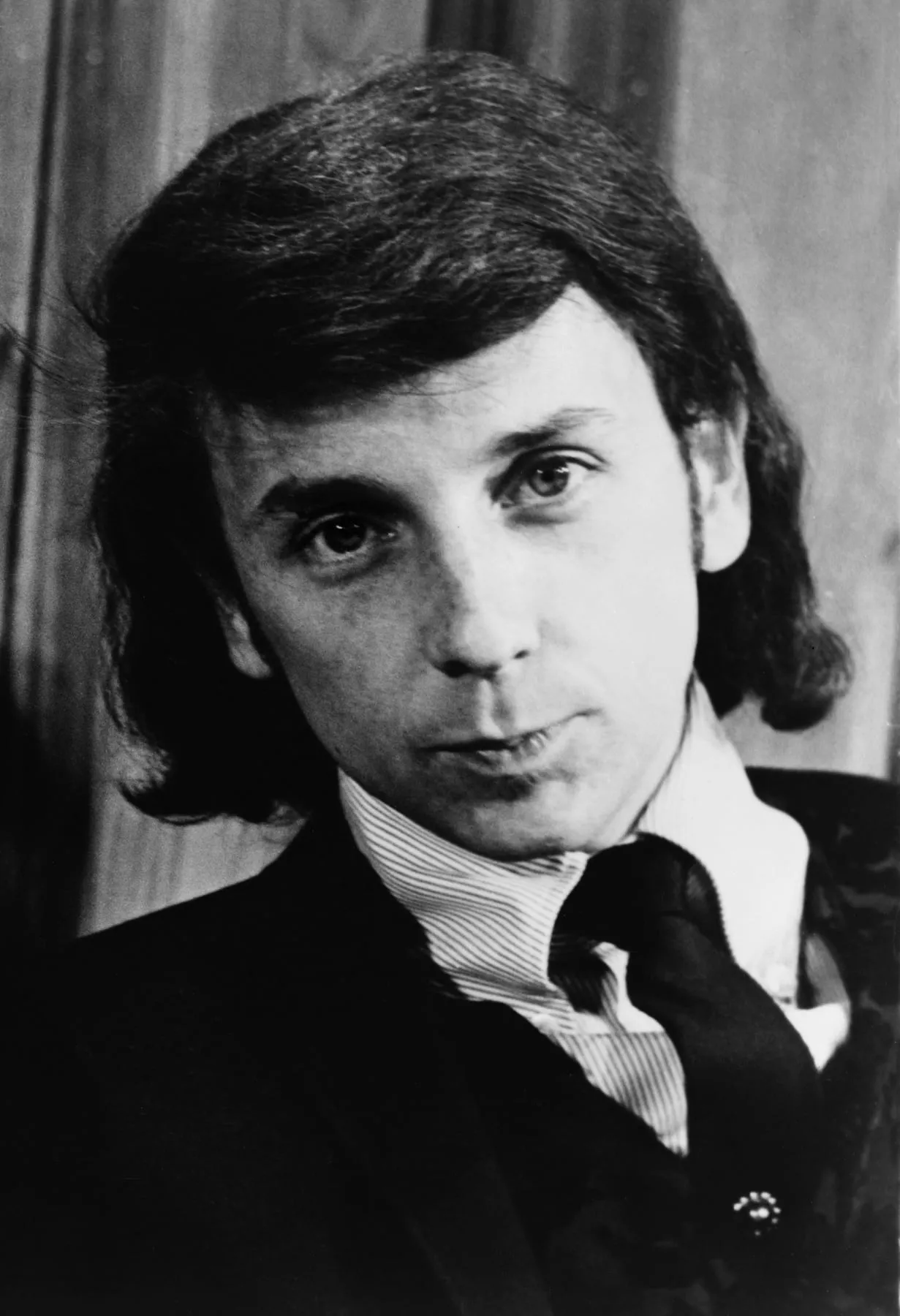
Photo by Unknown photographer , licensed under Public domain · Wikimedia Commons
Rank #34
Phil Spector
From Wikipedia
Harvey Phillip Spector was an American record producer and songwriter primarily known for his Wall of Sound production style in the 1960s, followed by his trials and imprisonment for murder after the 2000s. Considered the first music producer auteur, he is the most successful American producer of the 1960s and widely regarded as one of the most influential figures in pop music history.
Deep Dive
Overview
Harvey Phillip Spector stands as one of the most consequential and polarizing figures in popular music history. Emerging in the 1950s as a young musician and arranger, Spector pivoted toward production and became the dominant architectural force in American pop music during the 1960s. His Wall of Sound production technique—a dense, orchestral approach to recording that layered multiple instruments, vocals, and effects into a unified sonic mass—fundamentally altered how records were made and heard. Spector is widely regarded as the first true music producer auteur, a figure whose distinctive sonic signature was as recognizable as any lead singer’s voice. His influence rippled through rock, pop, and soul music for decades, though his later life and criminal conviction cast a long shadow over his artistic legacy.
Formation Story
Phil Spector was born in 1939 in New York and came of age during the postwar explosion of rhythm and blues, doo-wop, and early rock and roll. He grew up absorbing the sound of vocal groups and the emerging recording technologies of the era. As a teenager, he moved to Los Angeles in pursuit of a music career and quickly inserted himself into the vibrant Southern California pop and rock scene of the mid-1950s. Rather than pursue a performing career, Spector gravitated toward the mechanics of recording itself—the studio as instrument. By his early twenties, he had begun working as an arranger, producer, and songwriter, positioning himself at the intersection of artistic vision and technical mastery.
Breakthrough Moment
Spector’s reputation crystallized in the early 1960s through his work with vocal groups and female singers on the Philles Records label, which he co-founded. His arrangements and production approach on records by The Crystals and The Ronettes demonstrated a radically new aesthetic: instead of the relatively spare instrumentation typical of pop and rock records of the era, Spector constructed towering arrangements that blended orchestral strings, multiple percussion layers, echo effects, and densely stacked vocal harmonies. This sound—the Wall of Sound—was unprecedented in its ambition and density. Records like those on Philles became instant landmarks, distinguishing themselves on radio and establishing Spector as a visionary reshaping the landscape of popular music.
Peak Era
The early-to-mid 1960s represented Spector’s creative and commercial zenith. He was the most successful American record producer of the decade, commanding sessions with singers including Darlene Love and vocal groups whose records dominated the charts and defined the sound of the era. His approach was meticulous and controlling—he orchestrated every element of a recording, from arrangement to final mix, treating the studio and its technical apparatus as extensions of his compositional intent. This period saw him at the height of his influence, shaping the sonic identity of pop and rock music at a moment when production itself was beginning to emerge as a creative discipline equal to songwriting and performance.
Musical Style
The Wall of Sound was Spector’s signature contribution to recording aesthetics. Rather than featuring individual instruments distinctly, Spector layered them into a cohesive wash of sound, using studio technology—particularly echo chambers and overdubbing—to create depth and presence. Strings, horns, percussion, and voices occupied the same dense frequency space, creating a effect of grandeur and emotional intensity. His productions typically featured prominent, expressive female vocals floating atop these orchestral arrangements, blending the sophistication of studio pop with the emotional directness of rock and roll. The style drew from classical orchestration, R&B vocal traditions, and the emerging studio-craft innovations of the era. Spector’s technical precision and artistic ambition made him a pioneer of the album-era concept of the producer as auteur—a figure whose artistic signature transcended any single performer.
Major Albums
A Christmas Gift for You from Phil Spector (1963)
Spector’s ambitious holiday compilation assembled top vocal talent of the era and demonstrated the Wall of Sound at full scale, with Christmas standards reimagined as soaring, orchestral pop productions that prioritized Spector’s sonic vision over traditional holiday arrangements.
River of Dreams: The Very Best of Phil Spector (compilation)
This retrospective collection showcased his most celebrated production work, documenting the range of artists he shaped and the consistency of his artistic signature across different performers and genres.
Signature Songs
- “Be My Baby” (The Ronettes) — A defining Wall of Sound recording, opening with a thunderous drum break and building into a lush orchestral arrangement anchoring one of the era’s most enduring pop songs.
- “Uptown” (The Crystals) — An early Spector production demonstrating his sophisticated orchestral approach to youth-oriented pop material.
- “Walking in the Rain” (The Ronettes) — Showcased Spector’s innovative use of percussion and sound effects to create atmosphere and emotional depth.
- “Christmas (Baby Please Come Home)” (Darlene Love) — A Spector holiday production blending orchestral grandeur with raw emotional yearning, demonstrating his range across different vocal styles.
Influence on Rock
Phil Spector’s impact on rock and pop music production cannot be overstated. He demonstrated that the record producer could be a creative force equivalent to any performer, reshaping how records were conceptualized and constructed. His Wall of Sound technique influenced generations of producers and artists across rock, pop, and soul music. The orchestral density and emotional intensity he brought to pop records elevated the medium’s artistic ambitions at a critical moment in its development. Producers working in the 1970s and beyond—in genres ranging from rock to soul to progressive pop—drew inspiration from Spector’s willingness to use the studio as a compositional tool and his insistence that production craft was inseparable from artistic expression.
Legacy
Phil Spector’s legacy is irreducibly complex. As a record producer and architect of the Wall of Sound, he stands among the most influential figures in twentieth-century popular music, a pioneer who fundamentally altered how records are made and heard. His work defined an era and influenced countless artists and producers. However, his conviction for murder in the 2000s and subsequent imprisonment cast a profound shadow over his historical positioning. The separation of artistic achievement from personal conduct—a central tension in cultural memory—remains contested in Spector’s case. His recordings endure as documents of a transformative moment in pop music, while his life trajectory and criminal history complicate any straightforward celebration of his influence.
Fun Facts
- Spector was known for his meticulous, sometimes volatile perfectionism in the studio, conducting sessions with the intensity and precision of a classical conductor orchestrating a symphony.
- He co-founded Philles Records in the early 1960s as a vehicle for his Wall of Sound productions, maintaining near-total creative control over the label’s output.
- Spector worked across multiple record labels throughout his career, including A&M Records and Apple Records, adapting his production approach to different artists and genres while maintaining his distinctive sonic signature.