
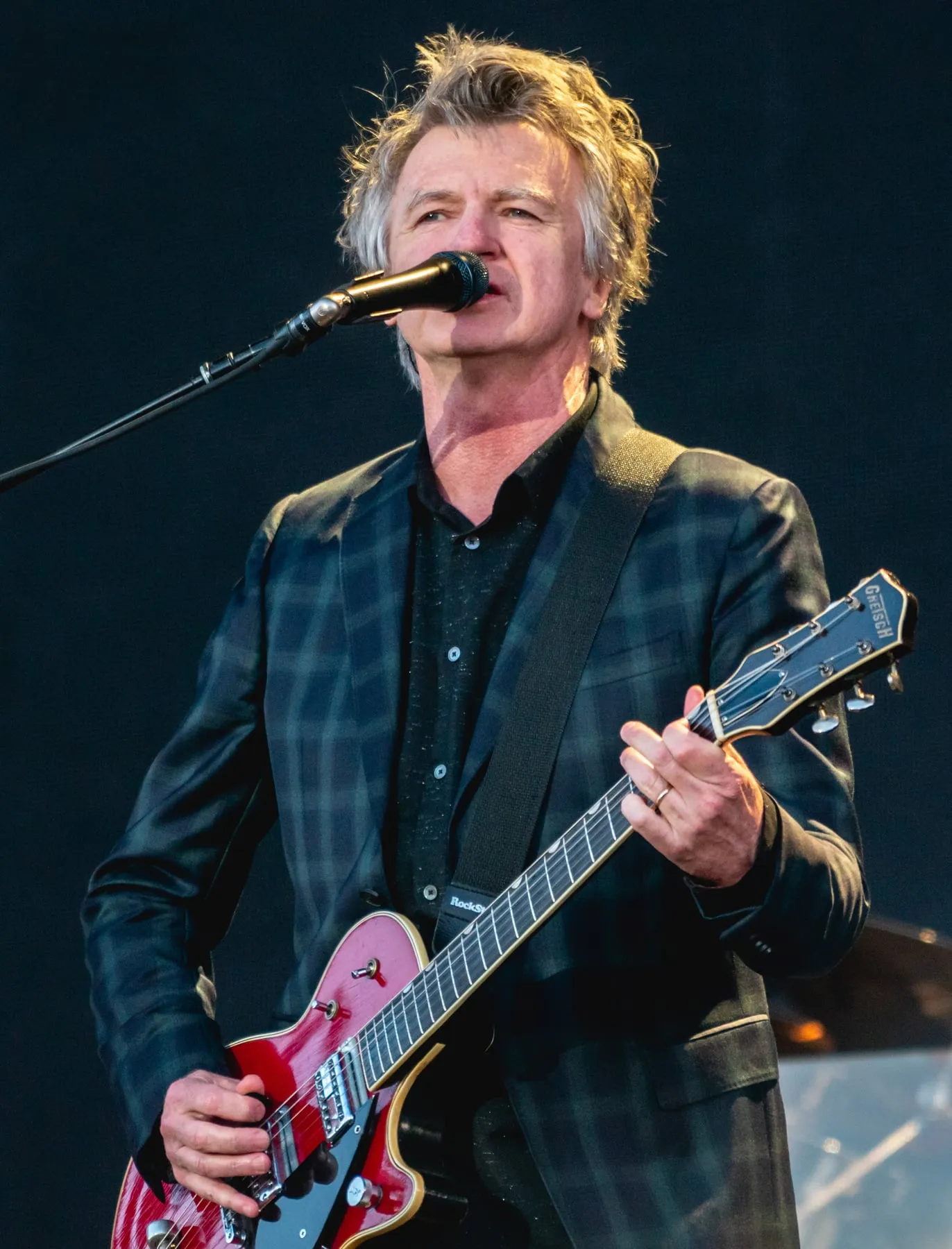
Photo by Raph_PH , licensed under CC BY 2.0 · Wikimedia Commons
Rank #297
Neil Finn
From Wikipedia
Neil Mullane Finn is a New Zealand singer-songwriter and musician. He is best known for being a principal member of Split Enz and for being the lead singer of Crowded House. He was also a member of Fleetwood Mac from 2018 until 2022. Ed O'Brien of Radiohead has hailed Finn as popular music's "most prolific writer of great songs".
Discography & Previews
Browse through and click an album to open and play 30-second previews streamed from Apple Music.

Try Whistling This
1990 · 13 tracks

Dizzy Heights
2014 · 12 tracks
- 1 Impressions ↗ 4:36
- 2 Dizzy Heights ↗ 3:07
- 3 Flying In the Face of Love ↗ 4:04
- 4 Divebomber ↗ 4:52
- 5 Better Than TV ↗ 3:34
- 6 Pony Ride ↗ 4:45
- 7 White Lies and Alibis ↗ 5:49
- 8 Your Next Move (Bonus Track) ↗ 3:00
- 9 Recluse ↗ 5:27
- 10 Strangest Friends ↗ 3:18
- 11 In My Blood ↗ 3:50
- 12 Lights of New York ↗ 3:34

-
 Try Whistling ThisNeil Finn199013 tracks
 -
 Dizzy HeightsNeil Finn201412 tracks
 -
 Out of SilenceNeil Finn201710 tracks
Deep Dive
Overview
Neil Finn is a New Zealand singer-songwriter whose career spanning decades has made him one of the most significant rock musicians from his country. Born in 1958, Finn established himself first as a principal member of Split Enz in the late 1970s and early 1980s, then achieved sustained international success as the lead singer of Crowded House throughout the 1980s and beyond. His prolific output as a songwriter—praised by Ed O’Brien of Radiohead as popular music’s “most prolific writer of great songs”—has resulted in a body of work that blends art rock sensibilities with new wave accessibility, establishing him as a cornerstone figure in rock music’s development across multiple decades.
Formation Story
Neil Finn was born in 1958 in New Zealand, emerging from a musical household and scene that would shape his approach to songwriting and arrangement. He came of age during the 1970s, a period when New Zealand’s rock scene was beginning to develop its own identity separate from British and American traditions. Finn’s early musical education and exposure to diverse influences—from progressive rock to punk—positioned him to become a bridge between experimental art rock and more commercially accessible popular music. His formative years in New Zealand provided the foundation for a career that would eventually extend far beyond his home country, though he would remain deeply rooted in Antipodean music culture.
Breakthrough Moment
Finn’s initial breakthrough came as a principal member of Split Enz, the New Zealand art rock band that gained a devoted following in the late 1970s and early 1980s. Split Enz established Finn’s credentials as both a performer and songwriter, introducing audiences to his distinctive compositional voice and stage presence. However, his breakthrough to mainstream international recognition came with the formation of Crowded House, the project that would define the next phase of his career. Through Crowded House, Finn achieved the kind of global reach and commercial success that positioned him as a major figure in rock music during the 1980s and 1990s.
Peak Era
Finn’s peak creative and commercial period spanned the 1980s through the early 1990s with Crowded House, a band that combined his art rock foundations with melodic new wave sensibilities. During this era, he became known for writing songs that balanced experimental arrangements with immediate, memorable hooks—a synthesis that appealed to both critics and audiences. The consistency and quality of his work across multiple albums during this period established him as a songwriter of exceptional caliber, capable of delivering both intimate, introspective material and expansive, orchestrally-arranged pieces. His ability to evolve within commercial rock constraints without compromising artistic integrity made this period his most influential.
Musical Style
Neil Finn’s musical approach synthesizes elements of art rock, new wave, and pop songwriting into a cohesive and distinctly personal style. His compositions are characterized by sophisticated chord progressions, unexpected melodic turns, and lyrics that often balance whimsy with emotional depth. Finn’s vocals possess a distinctive character—conversational yet controlled, capable of both vulnerability and intensity depending on the song’s emotional arc. His songwriting habit of blending the experimental with the accessible sets him apart from many of his contemporaries; rather than choosing between avant-garde ambition and commercial appeal, Finn has consistently sought to integrate both. The production approaches across his work reflect an evolution from the more theatrical arrangements of his earlier bands toward a more refined and intimate aesthetic in his solo material, though the core sensibility of adventurous pop songwriting has remained constant.
Major Albums
Try Whistling This (1990)
Finn’s solo debut established his voice as a solo artist distinct from his work with Crowded House, featuring a collection of songs that showcased his range as both a lyricist and melodist.
One Nil (2001)
Released over a decade after his debut, this album demonstrated Finn’s continued vitality as a songwriter and his ability to remain creatively relevant across changing musical landscapes.
Dizzy Heights (2014)
This album found Finn exploring contemporary production approaches while maintaining the melodic sophistication that has defined his entire body of work.
Out of Silence (2017)
Finn’s most recent solo album represents another chapter in his ongoing creative evolution, reaffirming his status as an active and engaged songwriter in his later career.
Signature Songs
- “Don’t Dream It’s Over” — A Crowded House signature that became an international hit and remains one of rock’s most instantly recognizable songs.
- “Better Be Home Soon” — Another Crowded House anthem demonstrating Finn’s ability to craft songs with both emotional resonance and immediate melodic appeal.
- “Weather To” — A Split Enz track showcasing Finn’s earlier experimental sensibilities and more theatrical compositional approach.
- “I Got You” — A Crowded House cut that exemplifies Finn’s gift for turning personal reflection into broadly relatable popular song.
- “Eyes of the World” — A song that demonstrates the orchestral ambitions and production sophistication Finn brought to his work.
Influence on Rock
Neil Finn’s influence on rock music operates across multiple levels. As a member of Split Enz and leader of Crowded House, he demonstrated that rock music from the Southern Hemisphere could achieve the same level of artistic credibility and commercial success as work from the traditional centers of Anglo-American rock. His songwriting approach—balancing experimentation with melodic accessibility—has influenced countless artists working at the intersection of art rock and pop music. Finn’s career trajectory, marked by long periods of productivity and reinvention, has also provided a model for artists seeking to maintain relevance without either abandoning artistic principles or becoming locked into a single creative mode.
Legacy
Neil Finn’s legacy rests on his status as one of rock music’s finest songwriters and most consistent creative forces across more than four decades. His work with Split Enz and Crowded House established him as a fundamental figure in New Zealand rock, while his solo albums have allowed him to explore facets of his artistic vision at his own pace. The respect he commands among fellow musicians—evidenced by statements from artists like Ed O’Brien—reflects the depth and durability of his songwriting gift. His 2018-2022 tenure as a member of Fleetwood Mac introduced his work to yet another generation of listeners, demonstrating the timeless quality of his musical voice. Streaming platforms have ensured that his catalog remains accessible to both longtime listeners and new audiences discovering his work, securing his place as a permanent fixture in rock music’s institutional memory.
Fun Facts
- Finn’s career has spanned six decades of recorded music, from the late 1970s through the 2020s, making him one of rock’s most enduring creative figures.
- His songwriting partnership and complex musical relationship with his brother Tim Finn within Split Enz created some of the most innovative rock music of the late 1970s and early 1980s.
- His appointment to Fleetwood Mac in 2018, joining one of rock’s most storied bands, represented a remarkable late-career recognition of his standing as a musician.
- Finn has maintained an independent approach to his career, balancing major-label work with creative autonomy across both band and solo projects.