
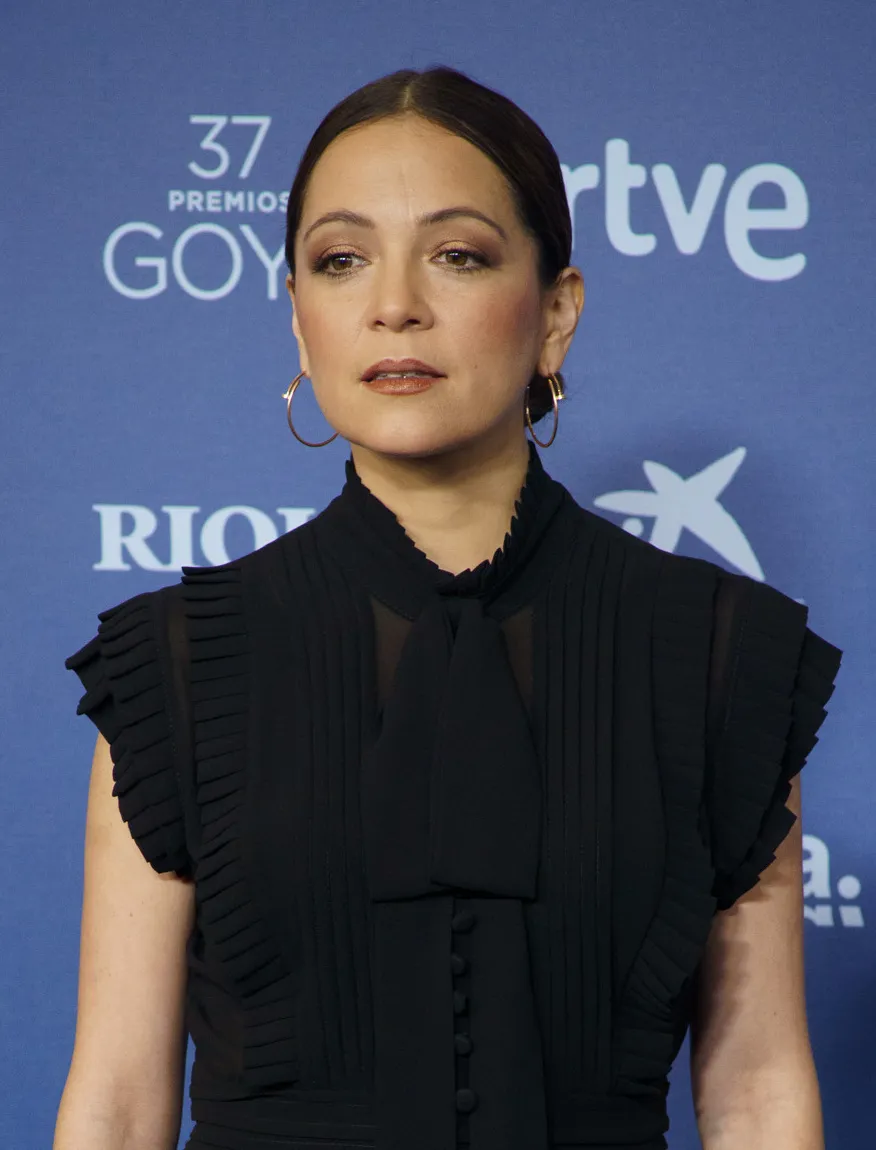
Photo by Pedro J Pacheco , licensed under CC BY-SA 4.0 · Wikimedia Commons
Rank #260
Natalia Lafourcade
From Wikipedia
María Natalia Lafourcade Silva is a Mexican singer. Her music combines elements of pop rock, jazz, and folk, characterized by poetic lyrics and her distinctive lyric soprano voice. She is regarded as one of the most influential Latin music artists of the 21st century. In 2025, Billboard named her one of the best female Latin pop artists of all time.
Discography & Previews
Browse through and click an album to open and play 30-second previews streamed from Apple Music.

Natalia Lafourcade
2002 · 14 tracks
- 1 Introducción ↗ 0:36
- 2 Busca Un Problema ↗ 3:07
- 3 En El 2000 ↗ 3:35
- 4 El Destino ↗ 3:04
- 5 Mango ↗ 2:36
- 6 Elefantes ↗ 4:10
- 7 Otra Vez ↗ 3:45
- 8 Te Quiero Dar ↗ 4:24
- 9 Georgina ↗ 3:57
- 10 Mírame, Mirate ↗ 3:58
- 11 Noche Divína ↗ 3:55
- 12 Mañana Olvídare ↗ 4:12
- 13 Mango (Remix) ↗ 4:49
- 14 Elefantes (Version Acustica) ↗ 4:02

Hu Hu Hu
2009 · 13 tracks
- 1 Cursis Melodías ↗ 4:28
- 2 No Víniste ↗ 4:05
- 3 Siempre Prisa ↗ 4:54
- 4 Tiempo al Víento ↗ 4:49
- 5 Let's Get Out ↗ 4:01
- 6 Hu Hu Hu ↗ 2:41
- 7 Ella Es Bonita ↗ 3:15
- 8 Niño Hojas ↗ 2:49
- 9 Running Too Fast ↗ 2:55
- 10 Azul ↗ 6:33
- 11 Hora de Compartir ↗ 3:45
- 12 Un Lugar Para Renacer ↗ 4:30
- 13 Look Outside ↗ 4:24

Mujer divina: Homenaje a Agustín Lara
2012 · 13 tracks
- 1 Mujer Divina ↗ 3:29
- 2 Limosna ↗ 3:53
- 3 Imposible ↗ 4:01
- 4 Farolito ↗ 2:41
- 5 La Fugitiva ↗ 3:15
- 6 Piensa en Mí ↗ 3:56
- 7 Si No Pueden Quererte ↗ 3:56
- 8 Morir y Renacer ↗ 3:49
- 9 Amor, Amor de Mis Amores ↗ 3:57
- 10 Aventurera ↗ 3:32
- 11 Oración Caribe ↗ 3:45
- 12 Azul ↗ 4:51
- 13 María Bonita (Versión Acústica) ↗ 4:09

Hasta la raíz
2015 · 15 tracks
- 1 Hasta la Raíz ↗ 3:42
- 2 Mi Lugar Favorito ↗ 4:57
- 3 Antes de Huir ↗ 3:52
- 4 Ya No Te Puedo Querer ↗ 4:47
- 5 Para Qué Sufrir ↗ 3:47
- 6 Nunca Es Suficiente ↗ 3:57
- 7 Palomas Blancas ↗ 4:37
- 8 Te Quiero Ver ↗ 3:27
- 9 Vámonos Negrito ↗ 4:34
- 10 Lo Que Construimos ↗ 4:39
- 11 Estoy Lista ↗ 4:42
- 12 No Más Llorar ↗ 5:34
- 13 Partir de Mí ↗ 3:48
- 14 Duele ↗ 3:35
- 15 Me Voy de Casa ↗ 4:04

Un canto por México, vol. 1
2020 · 14 tracks
- 1 El Balajú / Serenata Huasteca ↗ 4:29
- 2 Mexicana Hermosa ↗ 4:12
- 3 Veracruz ↗ 4:03
- 4 Una Vida ↗ 4:22
- 5 Hasta la Raíz ↗ 4:32
- 6 Ya No Vivo por Vivir ↗ 6:10
- 7 Mi Religión ↗ 3:36
- 8 Para Qué Sufrir ↗ 3:46
- 9 Nunca Es Suficiente ↗ 4:21
- 10 Sembrando Flores ↗ 4:46
- 11 Lo Que Construimos ↗ 4:06
- 12 Un Derecho de Nacimiento ↗ 5:21
- 13 Mi Tierra Veracruzana ↗ 4:12
- 14 Cucurrucucú Paloma ↗ 5:11

De todas las flores
2022 · 12 tracks
- 1 Vine solita ↗ 6:26
- 2 De todas las flores ↗ 5:22
- 3 Pasan los días ↗ 6:43
- 4 Llévame viento ↗ 6:25
- 5 El lugar correcto ↗ 3:51
- 6 Pajarito colibrí ↗ 5:08
- 7 María la Curandera ↗ 6:14
- 8 Caminar bonito ↗ 3:57
- 9 Mi manera de querer ↗ 3:54
- 10 Muerte ↗ 5:49
- 11 Canta la arena ↗ 6:02
- 12 Que te vaya bonito Nicolás ↗ 6:48

Cancionera
2025 · 14 tracks
- 1 Apertura Cancionera ↗ 5:20
- 2 Cancionera ↗ 5:36
- 3 Cocos en la Playa ↗ 4:26
- 4 Como Quisiera Quererte ↗ 4:18
- 5 Amor Clandestino ↗ 3:59
- 6 Mascaritas de Cristal ↗ 6:26
- 7 El Coconito ↗ 3:52
- 8 El Palomo y La Negra ↗ 7:01
- 9 Cariñito de Acapulco ↗ 6:36
- 10 La Bruja (Versión Cancionera) ↗ 6:04
- 11 Luna Creciente ↗ 6:48
- 12 Lágrimas Cancioneras ↗ 5:15
- 13 Amor Clandestino (Acústica) ↗ 4:51
- 14 Cancionera (Acústica) ↗ 5:30
-
 Natalia LafourcadeNatalia Lafourcade200214 tracks
 -
 Hu Hu HuNatalia Lafourcade200913 tracks
 -
 Mujer divina: Homenaje a Agustín LaraNatalia Lafourcade201213 tracks
 -
 Hasta la raízNatalia Lafourcade201515 tracks
 -
 Un canto por México, vol. 1Natalia Lafourcade202014 tracks
 -
 De todas las floresNatalia Lafourcade202212 tracks
 -
 CancioneraNatalia Lafourcade202514 tracks
Deep Dive
Overview
Natalia Lafourcade is a Mexican singer whose career spans from the early 2000s to the present, establishing herself as one of the most influential Latin music artists of the 21st century. Her work combines pop rock, jazz, folk, and Latin traditions into a distinctive artistic voice marked by poetic lyrics and a lyric soprano register that has become her calling card. Born in 1984, Lafourcade emerged during a period of Latin pop expansion and has navigated multiple musical identities—from mainstream pop rock to intimate folk reinterpretations—without losing the lyrical sophistication and emotional depth that define her output.
Billboard’s 2025 recognition of Lafourcade as one of the best female Latin pop artists of all time reflects a career trajectory that has been neither straightforward nor conventional. Rather than chasing commercial formula, she has pursued artistic reinvention and cultural reclamation, returning repeatedly to the folk traditions and songbooks of Latin America while maintaining the production values and songwriting intelligence of contemporary pop and alternative music.
Formation Story
Lafourcade was born in Mexico in 1984, entering the music world during an era when Latin pop was experiencing both commercial boom and artistic fragmentation. She grew up in a musical environment shaped by Mexican traditions, bolero, folk forms, and the broader pan-Latin landscape. Unlike many pop stars who emerged through televised talent competitions or industry machinations, Lafourcade developed her craft through engagement with repertory—learning existing songs, understanding their emotional architecture, and eventually applying those lessons to original composition.
Her emergence as a recording artist came with the release of her self-titled debut album, Natalia Lafourcade, in 2002, when she was eighteen years old. This first record introduced her lyric soprano voice and established the pop-rock foundation upon which subsequent work would build and eventually deconstruct. From the beginning, her approach signaled an interest in substance over trend; even her earliest commercial work maintained a thoughtfulness that set her apart from contemporary Latin pop radio staples.
Breakthrough Moment
While Lafourcade released Hu Hu Hu in 2009, the album that crystallized her artistic identity and widened her regional influence came with Hasta la raíz in 2015. This record marked a decisive turn toward intimacy and folk-inflected arrangement; it abandoned the fuller pop-rock textures of earlier work in favor of acoustic instruments, minimal production, and a vocal approach that emphasized vulnerability over projection. Hasta la raíz became a watershed moment in her career, signaling to audiences and industry alike that Lafourcade was not interested in remaining a pop-radio fixture but instead sought to engage with deeper currents in Latin American songwriting and musical tradition.
The critical and commercial response to Hasta la raíz established her as an artist of serious intent. It proved that a major-label recording artist (she has been signed to Sony Music Mexico) could build a substantial following around stripped-down, poetically rigorous material. The album’s success validated her subsequent turn toward curated reinterpretations of Latin American folk and classical repertoire.
Peak Era
From 2015 onward, Lafourcade entered her most creatively adventurous and culturally engaged period. After Hasta la raíz, she released Mujer divina: Homenaje a Agustín Lara in 2012—a reversal chronologically, but a project that exemplifies the direction her career would take: a full album dedicated to the songbook of Agustín Lara, one of Mexico’s most important classical composers and bolero masters. This homenaje approach became central to her artistic practice, a way of honoring tradition while asserting her interpretive voice.
Following this, the Musas project—released in two volumes in 2017 and 2018, subtitled Un homenaje al folclore latinoamericano en manos de Los Macorinos—extended the reinterpretation model into a broader exploration of Latin American folk and regional traditions. The two-volume Un canto por México series (2020, 2021) further deepened this focus, turning inward toward Mexican song and musical heritage. These projects, spanning from 2015 through 2021, represent the apex of her creative influence: albums that synthesize her technical gifts as a vocalist, her poetic sensibility, and her commitment to cultural reclamation and education through music.
Musical Style
Lafourcade’s sound has evolved considerably over her two-decade career, yet certain characteristics have remained consistent. Her lyric soprano voice—warm, precise, and capable of both projection and intimate whisper—provides the emotional center of her work. Early recordings employed full band arrangements within a pop-rock framework, with jazz harmonies and sophisticated chord progressions that elevated commercial material. Over time, her preference for acoustic instrumentation and minimal production has come to dominate.
Her work straddles multiple genres: Latin pop, Latin rock, Latin alternative, and indie pop according to genre classification, but these labels imperfectly capture the folk-classical orientation she has increasingly embraced. Poetic lyrics—often dealing with love, identity, and cultural memory—form another constant. What distinguishes Lafourcade from many Latin pop contemporaries is her refusal to treat folk or classical material as nostalgic museum pieces; instead, she renders these songs with the same emotional immediacy and interpretive boldness that she brings to original compositions. Her later albums suggest a vision of Latin American music as a living, breathing tradition available for personal transformation rather than period recreation.
Major Albums
Natalia Lafourcade (2002)
Her self-titled debut introduced her lyric soprano voice and pop-rock sensibility, establishing the foundation for all subsequent work and signaling an artist interested in lyrical substance from the start.
Hu Hu Hu (2009)
This album represented a developmental moment in her career, expanding beyond the debut’s commercial pop framework while she continued to refine her artistic identity.
Mujer divina: Homenaje a Agustín Lara (2012)
A full-length homage to bolero master Agustín Lara, this album announced her turn toward curated reinterpretations of canonical Latin American songbooks and established the model for much of her subsequent work.
Hasta la raíz (2015)
A watershed moment that marked her decisive shift toward intimate, folk-inflected acoustic arrangement and minimal production; the album crystallized her identity as a serious interpreter of poetic song and became the template for her artistic direction through the 2020s.
De todas las flores (2022)
A recent album continuing her exploration of intimate arrangement and lyrical depth, representing her sustained commitment to the artistic direction established by Hasta la raíz.
Cancionera (2025)
Her most recent release, continuing the trajectory of refined, lyrically centered material that has defined her mature period.
Signature Songs
- “Natalia Lafourcade” — Title track from her 2002 debut, establishing her lyric soprano voice and poetic sensibility for a broad audience.
- “Soledad” — A signature moment showcasing her gift for emotional vulnerability and intimate vocal delivery.
- “Hasta la raíz” — The title track from her 2015 album, encapsulating her artistic turn toward acoustic simplicity and emotional directness.
- “En el fuego” — Demonstrating her ability to convey intensity while maintaining lyrical sophistication.
- “María María” — A piece reflecting her engagement with folk and traditional Latin American musical forms.
Influence on Rock
Lafourcade’s influence operates primarily within Latin popular music rather than Anglo-American rock, yet her work participates in broader conversations about artistic integrity, genre transcendence, and the relationship between commercial viability and uncompromised artistry. In the Latin music sphere, she has demonstrated that acoustic folk-inflected material, classical song homenages, and poetically demanding lyrics can reach substantial audiences without dilution or commercial calculation. Her refusal to remain a pop-radio fixture—coupled with sustained commercial success—challenged prevailing assumptions about what kinds of Latin music audiences would support.
Her approach to the homenaje format, treating canonical songbooks as living repertoires available for personal interpretation rather than museum preservation, has influenced how younger Latin artists approach traditional material. Lafourcade proved that respect for tradition and artistic innovation need not be opposing forces; a singer could honor bolero, folk, and regional Mexican music while maintaining contemporary relevance and intimate emotional connection with listeners.
Legacy
Natalia Lafourcade’s career represents a model of sustained artistic growth and cultural engagement across two decades. Billboard’s 2025 designation as one of the best female Latin pop artists of all time reflects recognition that extends beyond commercial metrics to encompass artistic influence, vocal mastery, and significant contribution to Latin popular music. Her shift from mainstream pop toward folk reinterpretation, rather than diminishing her cultural footprint, has deepened it—establishing her as a major figure in contemporary Latin American music.
Her streaming presence remains substantial, and her albums continue to circulate widely across digital platforms. Beyond commercial measures, Lafourcade’s legacy resides in her demonstration that a Latin American female artist could maintain major-label status while pursuing progressively more intimate, traditionally rooted, and artistically demanding work. Her albums serve as documents of how contemporary pop-trained vocalists approach classical and folk repertoires; they function simultaneously as recordings, as educational statements about Latin American musical heritage, and as vehicles for personal artistic expression.
Fun Facts
- Lafourcade has released music continuously for over twenty years, moving from pop-rock radio formats to folk-based acoustic material without losing audience or critical respect.
- Her recent work encompasses two-volume projects (Musas and Un canto por México), suggesting a commitment to expansive, thematic album sequences rather than single stand-alone releases.
- Her 2012 homage to Agustín Lara, one of Mexico’s classical songbook composers, helped revive broader interest in traditional bolero and classical Mexican song among younger listeners.
- Lafourcade’s official website and Sony Music Mexico backing indicate significant institutional support for her work, unusual for an artist pursuing increasingly traditional and non-commercial material.