

Photo by Mike Hughes , licensed under CC BY 2.0 · Wikimedia Commons
Rank #407
Charlotte Church
From Wikipedia
Charlotte Maria Church is a Welsh singer-songwriter, actress, and television presenter from Cardiff.
Discography & Previews
Browse through and click an album to open and play 30-second previews streamed from Apple Music.
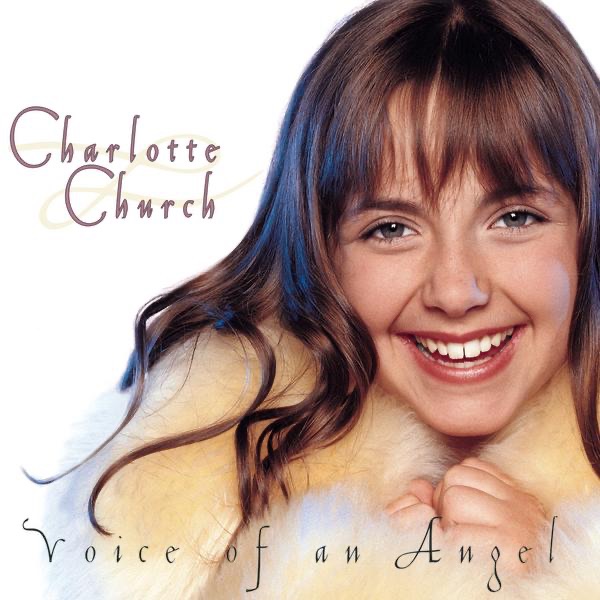
Voice of an Angel
1998 · 17 tracks
- 1 "Pie Jesu" from Requiem ↗ 3:26
- 2 Panis Angelicus ↗ 4:11
- 3 No. 21 - In Trutina from Carmina Burana ↗ 2:06
- 4 The Lord's Prayer ↗ 2:53
- 5 Jerusalem (And Did Those Feet In Ancient Time) ↗ 2:14
- 6 Ave Maria In a Minor ↗ 4:09
- 7 Psalm 23 ↗ 2:42
- 8 I Vow to Thee, My Country ↗ 3:54
- 9 Danny Boy ↗ 2:45
- 10 My Lagan Love ↗ 3:13
- 11 Suo-Gan ↗ 3:11
- 12 A Lullaby ↗ 2:58
- 13 Amazing Grace ↗ 2:42
- 14 Canueon y Tri Aderyn (Three Welsh Bird Songs): Canueon y Tri Aderyn (Three Welsh Bird Songs)/I. y Gylfinir - Allegretto ↗ 2:19
- 15 Canueon y Tri Aderyn (Three Welsh Bird Songs): Canueon y Tri Aderyn (Three Welsh Bird Songs)/II. Tylluanod - Andante ↗ 2:44
- 16 Canueon y Tri Aderyn (Three Welsh Bird Songs): Canueon y Tri Aderyn (Three Welsh Bird Songs)/III. Mae Hiraeth Yn y Mtr - Moderato ↗ 2:36
- 17 When At Night I Go to Sleep (Evening Hymn) From Hansel and Gretel - L'istesso Tempo ↗ 2:52
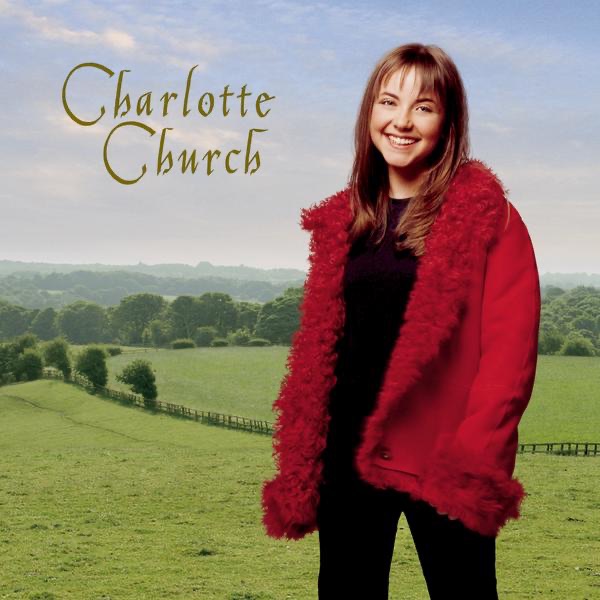
Charlotte Church
1999 · 17 tracks
- 1 Just Wave Hello ↗ 3:53
- 2 Soirées Musicales: La Pastorella (The Little Shepherdess) ↗ 2:27
- 3 The Tales of Hoffmann: Barcarolle (Night of Stars, and Night of Love) ↗ 2:38
- 4 Gianni Schicchi: O Mio Babbino Caro (Oh, My Beloved Daddy) ↗ 2:18
- 5 Rinaldo: Lascia Ch'io Pianga (Let Me Weep) ↗ 4:14
- 6 Cwm Rhondda: Guide Me Oh Thou Great Redeemer ↗ 2:38
- 7 The Holy City (Last Night I Lay Asleeping) ↗ 4:54
- 8 Plaisir d'amour ↗ 3:25
- 9 Porgy and Bess: Summertime ↗ 3:03
- 10 Faust: Ah! Je Dis de Me Voir Si Belle (The Jewel Song) ↗ 2:05
- 11 The Marriage of Figaro: Voi Che Sapete (Tell Me What Love Is, What Can It Be) ↗ 2:36
- 12 She Moved Through the Fair ↗ 3:01
- 13 Songs My Mother Taught Me, Op. 55, No. 4 ↗ 2:23
- 14 Bist Du Bei Mir (If Thou Are Near When Life Is Closing) ↗ 2:29
- 15 'Tis the Last Rose of Summer ↗ 3:16
- 16 Men of Harlech (Wele Goel Certh) ↗ 3:18
- 17 Lullaby (Roses Whisper Goodnight) ↗ 2:08
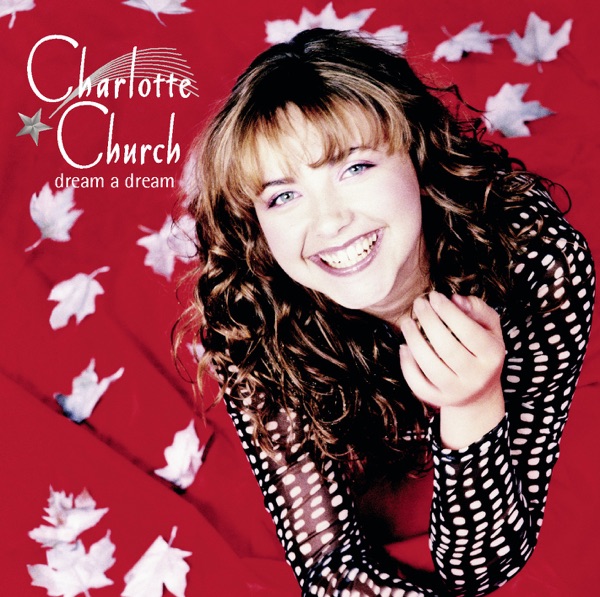
Dream a Dream
2000 · 19 tracks
- 1 Dream a Dream ↗ 3:49
- 2 O Come, All Ye Faithful ↗ 3:21
- 3 The Little Drummer Boy ↗ 2:55
- 4 Mary's Boy Child ↗ 3:29
- 5 Ding Dong! Merrily On High ↗ 2:18
- 6 Winter Wonderland ↗ 3:02
- 7 The Christmas Song (Chestnuts Roasting On an Open Fire) ↗ 3:27
- 8 Hark! the Herald Angels Sing ↗ 3:16
- 9 The Coventry Carol - Lully Lullay ↗ 2:30
- 10 Joy to the World ↗ 2:12
- 11 When a Child Is Born ↗ 2:29
- 12 What Child Is This - Greensleeves ↗ 2:44
- 13 God Rest Ye Merry, Gentlemen ↗ 1:59
- 14 Draw Tua Bethlehem - Far Over Bethlehem ↗ 3:35
- 15 Ave Maria ↗ 2:48
- 16 Gabriel's Message ↗ 2:41
- 17 O Holy Night ↗ 4:21
- 18 Lo! How a Rose E'er Blooming ↗ 2:32
- 19 Silent Night ↗ 3:47

Enchantment
2001 · 15 tracks
- 1 Westside Story - Tonight ↗ 2:26
- 2 Carrickfergus ↗ 4:27
- 3 Carmen - Habañera ↗ 4:28
- 4 South Pacific - Bali Ha'i ↗ 4:07
- 5 Papa Can You Hear Me? ↗ 2:52
- 6 Lakmé - The Flower Duet ↗ 3:56
- 7 The Little Horses ↗ 2:48
- 8 From My First Moment ↗ 4:09
- 9 The Water Is Wide ↗ 3:09
- 10 Showboat - Can't Help Lovin' Dat Man ↗ 4:16
- 11 Die Fledermaus - The Laughing Song ↗ 3:36
- 12 Carousel - If I Loved You ↗ 3:34
- 13 A Bit of Earth ↗ 3:56
- 14 Westside Story - Somewhere ↗ 2:47
- 15 The Prayer ↗ 4:25
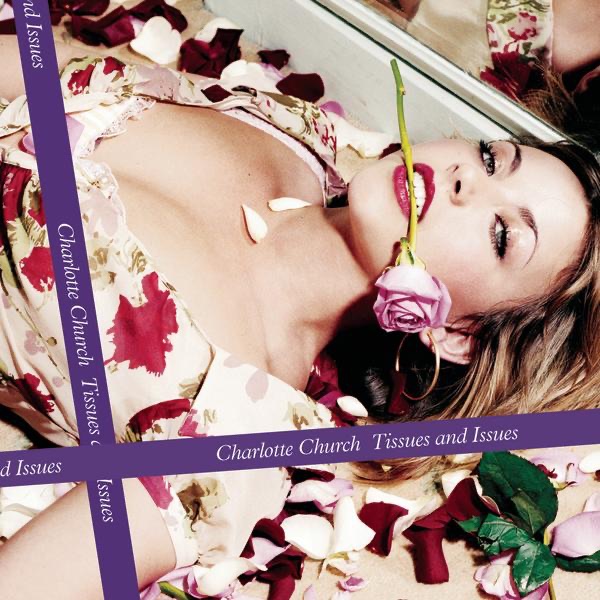
Tissues and Issues
2005 · 12 tracks
- 1 Call My Name ↗ 2:59
- 2 Crazy Chick ↗ 3:08
- 3 Moodswings (To Come At Me Like That) ↗ 3:10
- 4 Show a Little Faith ↗ 4:39
- 5 Finding My Own Way ↗ 4:05
- 6 Let's Be Alone ↗ 3:46
- 7 Easy to Forget ↗ 4:23
- 8 Fool No More ↗ 3:51
- 9 Easy Way Out ↗ 4:34
- 10 Casualty of Love ↗ 3:54
- 11 Even God ↗ 4:09
- 12 Confessional Song ↗ 5:07
-
 Voice of an AngelCharlotte Church199817 tracks
 -
 Charlotte ChurchCharlotte Church199917 tracks
 -
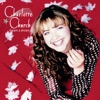 Dream a DreamCharlotte Church200019 tracks
 -
 EnchantmentCharlotte Church200115 tracks
 -
 Tissues and IssuesCharlotte Church200512 tracks
Deep Dive
Overview
Charlotte Maria Church is a Welsh singer-songwriter, actress, and television presenter whose career trajectory spans classical crossover pop, indie rock, and alternative music. Born in Cardiff in 1986, she emerged as a child vocalist in the late 1990s, achieving international recognition before transitioning into adult-oriented indie and alternative rock. Her artistic journey reflects a deliberate move away from the commercial pop framework that initially defined her fame, positioning herself instead as a serious alternative musician and cultural commentator.
Formation Story
Church grew up in Cardiff, Wales, in a musical household that exposed her to diverse idioms from classical to contemporary pop. Her early vocal training emphasized classical technique, but her formative years coincided with the rise of Britpop and alternative rock in the United Kingdom—a cultural moment that would ultimately shape her artistic ambitions. By her mid-teens, she had begun to resist the classical-crossover branding that had secured her early fame, seeking instead to establish herself within the indie and alternative rock landscapes that dominated British youth culture in the early 2000s.
Breakthrough Moment
Church’s initial breakthrough came with the release of Voice of an Angel in 1998, a classical-crossover album that positioned her as a prodigious young vocalist capable of blending operatic technique with contemporary pop sensibilities. This debut garnered significant commercial success and international attention, establishing her as one of the youngest artists to achieve platinum certification in multiple territories. However, her true breakthrough as an indie and alternative artist came later, when she began releasing work that deliberately departed from that classical framework. The albums Tissues and Issues (2005) and Back to Scratch (2010) marked her full commitment to indie rock and alternative idioms, repositioning her within the singer-songwriter tradition rather than the commercial pop establishment.
Peak Era
Church’s peak creative period as an alternative and indie artist unfolded across the 2000s and into the 2010s, following her strategic move away from the classical-crossover market. The releases of Tissues and Issues and Back to Scratch represented her most artistically autonomous work, allowing her to explore indie rock and alternative rock songwriting on her own terms. During this era, she solidified her identity as a serious musician willing to challenge the commercial expectations placed on her as a former child star. This period also coincided with her expanding work in television and as a cultural personality, adding dimensions to her public presence beyond recording artist.
Musical Style
Church’s sonic palette evolved significantly across her career, moving from classical-inflected pop productions toward indie rock and alternative sensibilities. Her early work emphasized orchestral arrangements and operatic vocal technique applied to pop melodies, creating a hybrid sound rooted in the classical-crossover trend of the 1990s. By the mid-2000s, her music increasingly incorporated the rawer production aesthetics, guitar-driven arrangements, and introspective songwriting characteristic of indie rock and alternative rock. Her vocal approach shifted from technically elaborate classical phrasing toward more direct, emotionally immediate delivery suited to alternative rock songwriting. The influence of Celtic music traditions—evident in her heritage and training—occasionally surfaced throughout her catalog, lending textural and melodic distinctiveness to her work across genres.
Major Albums
Voice of an Angel (1998)
Her debut established the classical-crossover formula that would dominate her early career, combining operatic vocals with contemporary pop production and securing her initial commercial breakthrough as a teenage artist.
Charlotte Church (1999)
This self-titled follow-up reinforced the classical-crossover aesthetic while expanding her repertoire, maintaining commercial momentum in the wake of her debut’s success.
Dream a Dream (2000)
Released during the peak of her fame as a classical-crossover artist, this album further consolidated her position in that market before her eventual artistic pivot.
Tissues and Issues (2005)
Marking her transition toward indie rock and alternative music, this album represented a deliberate artistic reinvention and rejection of the commercial classical-crossover framework that had defined her early fame.
Back to Scratch (2010)
Her most recent studio release, this album solidified her commitment to indie rock and alternative aesthetics, demonstrating her sustained artistic evolution away from the child-prodigy narrative.
Signature Songs
- “Voice of an Angel” — The title track from her 1998 debut, this song became her calling card and signature piece, exemplifying the classical-crossover sound that launched her international career.
- “Just Wave Hello” — A notable track from her early catalog that showcased her vocal range and emotional delivery across the operatic-pop hybrid style.
Influence on Rock
Church’s career trajectory influenced the broader conversation about genre boundaries and artistic authenticity within popular music. Her deliberate move from commercially successful classical-crossover work toward indie and alternative rock challenged narratives about child stars and market expectations, demonstrating that an artist could successfully reinvent herself across radically different musical territories. Her willingness to step away from a lucrative and established market position in favor of artistic autonomy offered a counternarrative to the commercial pressures facing young performers. Within alternative and indie rock circles, her presence legitimized the participation of artists from outside the traditional guitar-based rock lineage, expanding the genre’s perceived boundaries.
Legacy
Charlotte Church’s legacy encompasses both her pioneering role in classical-crossover pop and her subsequent reinvention as an alternative and indie rock artist. Her career demonstrates the possibility of artistic evolution and genre migration, resisting the calcification of identity around early commercial success. Beyond music, her work as a television presenter and cultural commentator has solidified her position as a multifaceted Welsh cultural figure. Her recorded work remains available through major streaming platforms and digital retailers, ensuring ongoing accessibility to both her early classical-crossover catalog and her later indie and alternative rock releases. She continues to perform and record, maintaining an active presence in music while pursuing additional work in television and public commentary.
Fun Facts
- Church released her debut album at age 12, becoming one of the youngest artists to achieve international commercial success in the late 1990s.
- She has worked across multiple record labels, including Sony Music and Columbia Records, reflecting her career’s evolution across different market segments and artistic identities.
- Beyond her music career, Church has established herself as a television presenter and cultural personality in the United Kingdom, diversifying her public presence beyond recording and performance.
- Her official website, charlottechurchmusic.com, maintains an active presence, connecting her with audiences and documenting her ongoing work across music and other media.