
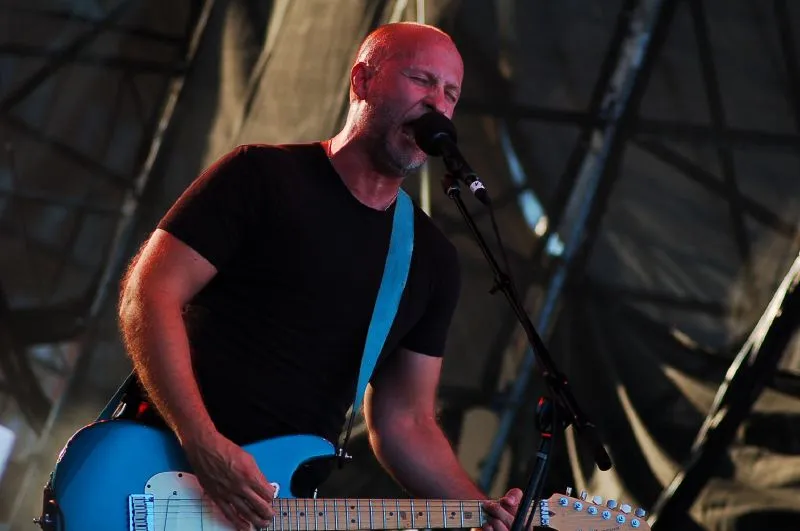
Photo by vivahate / angelo , licensed under CC BY 2.0 · Wikimedia Commons
Rank #417
Bob Mould
From Wikipedia
Robert Arthur Mould is an American musician, principally known for his work as guitarist, vocalist, and songwriter for alternative rock bands Hüsker Dü in the 1980s and Sugar in the 1990s.
Discography & Previews
Browse through and click an album to open and play 30-second previews streamed from Apple Music.

Workbook
1989 · 17 tracks
- 1 Sunspots ↗ 2:05
- 2 Wishing Well ↗ 5:13
- 3 Heartbreak a Stranger ↗ 5:53
- 4 See a Little Light ↗ 3:32
- 5 Poison Years ↗ 5:25
- 6 Sinners and Their Repentances ↗ 4:06
- 7 Brasilia Crossed With Trenton ↗ 6:39
- 8 Compositions for the Young and Old ↗ 4:40
- 9 Lonely Afternoon ↗ 4:30
- 10 Dreaming, I Am ↗ 4:16
- 11 Whichever Way the Wind Blows ↗ 6:27
- 12 All Those People Know ↗ 3:40
- 13 Shoot Out the Lights (Live) ↗ 5:56
- 14 Compositions for the Young and Old (Live) ↗ 4:20
- 15 If You're True (Live) ↗ 4:35
- 16 Poison Years (Live) ↗ 5:41
- 17 Brasilia Crossed With Trenton (Live) ↗ 7:10

Black Sheets of Rain
1990 · 12 tracks
- 1 Black Sheets of Rain ↗ 7:44
- 2 Stand Guard ↗ 5:31
- 3 It's Too Late ↗ 4:04
- 4 One Good Reason ↗ 6:19
- 5 Stop Your Crying ↗ 4:31
- 6 Hanging Tree ↗ 5:46
- 7 The Last Night ↗ 4:00
- 8 Hear Me Calling ↗ 4:57
- 9 Out of Your Life ↗ 3:33
- 10 Disappointed ↗ 4:11
- 11 Sacrifice / Let There Be Peace ↗ 5:34
- 12 Turning of the Tide ↗ 3:09


The Last Dog and Pony Show
1998 · 12 tracks

Modulate.
2002 · 14 tracks
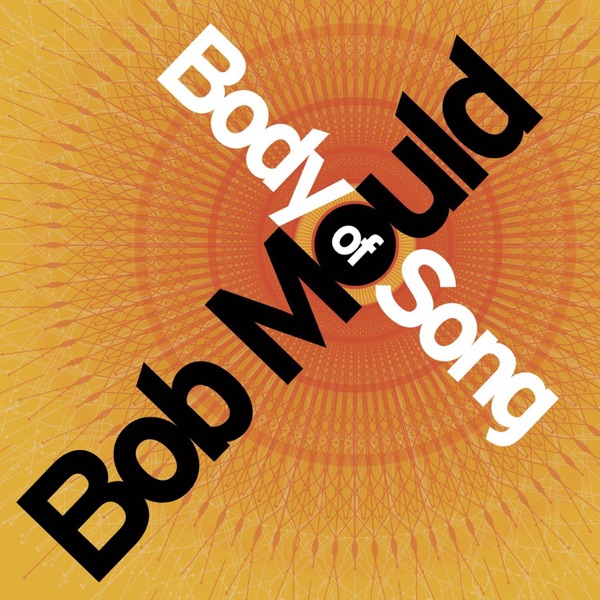
Body of Song
2005 · 12 tracks
- 1 Circles ↗ 3:56
- 2 (Shine Your) Light Love Hope ↗ 3:58
- 3 Paralyzed ↗ 3:55
- 4 I Am Vision, I Am Sound ↗ 3:50
- 5 Underneath Days ↗ 4:34
- 6 Always Tomorrow ↗ 4:00
- 7 Days of Rain ↗ 5:05
- 8 Best Thing ↗ 2:51
- 9 High Fidelity ↗ 3:49
- 10 Missing You ↗ 2:50
- 11 Gauze of Friendship ↗ 5:30
- 12 Beating Heart the Prize ↗ 6:31


Beauty & Ruin
2014 · 12 tracks

Patch the Sky
2016 · 12 tracks

Sunshine Rock
2019 · 12 tracks

Blue Hearts
2020 · 14 tracks
- 1 Heart on My Sleeve ↗ 1:58
- 2 Next Generation ↗ 2:21
- 3 American Crisis ↗ 2:29
- 4 Fireball ↗ 1:40
- 5 Forecast of Rain ↗ 2:27
- 6 When You Left ↗ 2:33
- 7 Siberian Butterfly ↗ 2:10
- 8 Everyth!ng to You ↗ 2:51
- 9 Racing to the End ↗ 1:52
- 10 Baby Needs a Cookie ↗ 2:58
- 11 Little Pieces ↗ 2:37
- 12 Leather Dreams ↗ 2:53
- 13 Password to My Soul ↗ 2:54
- 14 The Ocean ↗ 3:56

Here We Go Crazy
2025 · 11 tracks
-
 WorkbookBob Mould198917 tracks
 -
 Black Sheets of RainBob Mould199012 tracks
 -
 Bob MouldBob Mould199610 tracks
 -
 The Last Dog and Pony ShowBob Mould199812 tracks
 -
 Modulate.Bob Mould200214 tracks
 -
 Body of SongBob Mould200512 tracks
 -
 District LineBob Mould200810 tracks
 -
 Life and TimesBob Mould200810 tracks
 -
 Silver AgeBob Mould201210 tracks
 -
 Beauty & RuinBob Mould201412 tracks
 -
 Patch the SkyBob Mould201612 tracks
 -
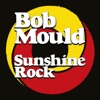 Sunshine RockBob Mould201912 tracks
 -
 Blue HeartsBob Mould202014 tracks
 -
 Here We Go CrazyBob Mould202511 tracks
Deep Dive
Overview
Bob Mould is an American guitarist, vocalist, and songwriter whose solo career has stretched from 1989 to the present day, encompassing over thirty-five years of continuous creative work. While widely recognized for his foundational role in the alternative rock bands Hüsker Dü and Sugar during the 1980s and 1990s, Mould’s solo output stands as a distinct and substantial body of work in its own right, characterized by restless genre exploration and a disciplined approach to songwriting. His solo output spans noise pop, power pop, post-hardcore, and alternative rock—a range that reflects both his musical lineage and his willingness to experiment across decades of changing musical contexts.
Formation Story
After the dissolution of Sugar in the mid-1990s, Mould launched his solo career in earnest, beginning with Workbook in 1989. Born in the immediate aftermath of his influential work in punk and post-hardcore contexts, Mould’s early solo albums emerged from a desire to step outside the band framework and pursue songwriting and arrangement on his own terms. The transition from band collaborator to solo artist marked a shift toward more introspective, often intimate arrangements, though his guitar-driven aesthetic and melodic sensibility remained constant through the transition. His solo career would become defined by prolific output and stylistic restlessness, with Mould continuing to record and perform across multiple decades and label environments.
Breakthrough Moment
Mould’s early solo albums Workbook (1989) and Black Sheets of Rain (1990) established the foundational template for his solo work: guitar-centric songwriting with carefully constructed arrangements and an emotional directness inherited from his band experience. These records demonstrated that Mould could sustain a creative vision independent of band dynamics, while maintaining the intensity and melodic clarity that had made his earlier work compelling. The release of his self-titled album in 1996 marked a renewed phase of solo visibility, signaling continued relevance and artistic vitality after the band era had concluded.
Peak Era
Mould’s most creatively consistent period as a solo artist spans roughly from 1996 through the early 2000s, encompassing the self-titled Bob Mould (1996), the live document Charleston SC - 1997-04-17 (1997), The Last Dog and Pony Show (1998), and Modulate. (2002). During this span, Mould refined his approach to power pop and post-hardcore songwriting, balancing melodic hooks with angular production and emotionally candid lyrics. The prolific pace continued unabated, with Mould proving capable of sustaining critical and listener interest across multiple album cycles and a landscape where alternative rock was itself fragmenting into numerous subgenres.
Musical Style
Mould’s solo work is defined by guitar-driven arrangements and direct vocal delivery, drawing on power pop’s melodic sensibilities while retaining the distorted intensity and angular song structures inherited from post-hardcore and punk rock lineage. His approach to songwriting emphasizes memorable hooks and lyrical directness, often exploring emotional vulnerability and introspection through a rock idiom. Across his career, Mould has moved between sparse, intimate arrangements and densely layered, production-heavy soundscapes, reflecting the broader shifts in rock music production and aesthetic priorities across the 1990s, 2000s, and beyond. His guitar tone, whether clean or distorted, remains a consistent signature, as does his ability to construct songs that balance accessibility with compositional complexity.
Major Albums
Workbook (1989)
Mould’s debut solo album established the template for his post-band work, presenting introspective songwriting and carefully arranged guitar work that demonstrated his capability as a solo artist beyond ensemble context.
Black Sheets of Rain (1990)
The follow-up consolidated Mould’s early solo approach, reinforcing his commitment to emotionally direct songwriting paired with guitar-centric arrangements and production.
The Last Dog and Pony Show (1998)
This album represents a significant moment in Mould’s late-1990s output, capturing his continued ability to balance melodic songwriting with the post-hardcore intensity that remained central to his artistic identity.
Modulate. (2002)
Released on Merge Records, this album exemplified Mould’s sustained creative engagement and his willingness to continue exploring sonic territory while maintaining the core sensibilities that defined his approach.
Silver Age (2012)
After a period of relative quietness in recorded output, Silver Age marked a significant return to sustained solo recording activity, demonstrating Mould’s continued artistic engagement and relevance in contemporary rock contexts.
Signature Songs
- “See a Little Light” — A defining moment from his early solo work, exemplifying Mould’s ability to craft power pop hooks with emotional authenticity.
- “Workbook” — The title track of his debut captures the introspective tone that became central to his solo identity.
- “Box of His Days” — Representative of Mould’s intimate songwriting approach and guitar arrangement sensibilities.
Influence on Rock
Mould’s solo career has operated largely in parallel to the broader alternative rock landscape rather than directly reshaping it, yet his sustained presence and prolific output have influenced subsequent generations of power pop and post-hardcore musicians. His willingness to explore stylistic variation—from sparse arrangements to densely produced soundscapes—has provided a model for artists seeking to evolve across decades while maintaining a recognizable artistic core. The solo work’s emotional directness and guitar-forward approach have also contributed to the broader lineage of introspective rock songwriting that has remained vital in alternative and indie rock contexts.
Legacy
Bob Mould’s legacy as a solo artist rests on his commitment to continuous creative work across changing musical contexts and decades. From 1989 through the present, he has maintained an active recording and touring presence, releasing over fifteen studio albums and maintaining artistic independence across multiple label environments including Merge Records, Virgin Records, and others. His solo career demonstrates the possibility of sustaining artistic relevance and creative integrity in rock music across an extended timeline, neither retreading past glories nor abandoning the core sensibilities that defined his earlier work. The breadth of his output—encompassing power pop, post-hardcore, alternative rock, and noise pop—reflects an artist committed to exploring the possibilities within rock idioms rather than chasing commercial trends.
Fun Facts
- Mould has remained actively engaged with live performance throughout his solo career, releasing live documents alongside studio albums.
- His official website, bobmould.com, has served as a direct channel to fans and a platform for his ongoing creative work.
- Across his career, Mould has worked with multiple prominent record labels, from major corporate entities like Warner Bros. to independent labels like Merge Records and Rough Trade, reflecting his movement across different sectors of the music industry.
- The year 2025 saw the release of Here We Go Crazy, demonstrating Mould’s continued commitment to recording and creative work well into his seventh decade of life.