
Photo by Kevin Dooley , licensed under CC BY 2.0 · Wikimedia Commons
Rank #499
Adrian Belew
From Wikipedia
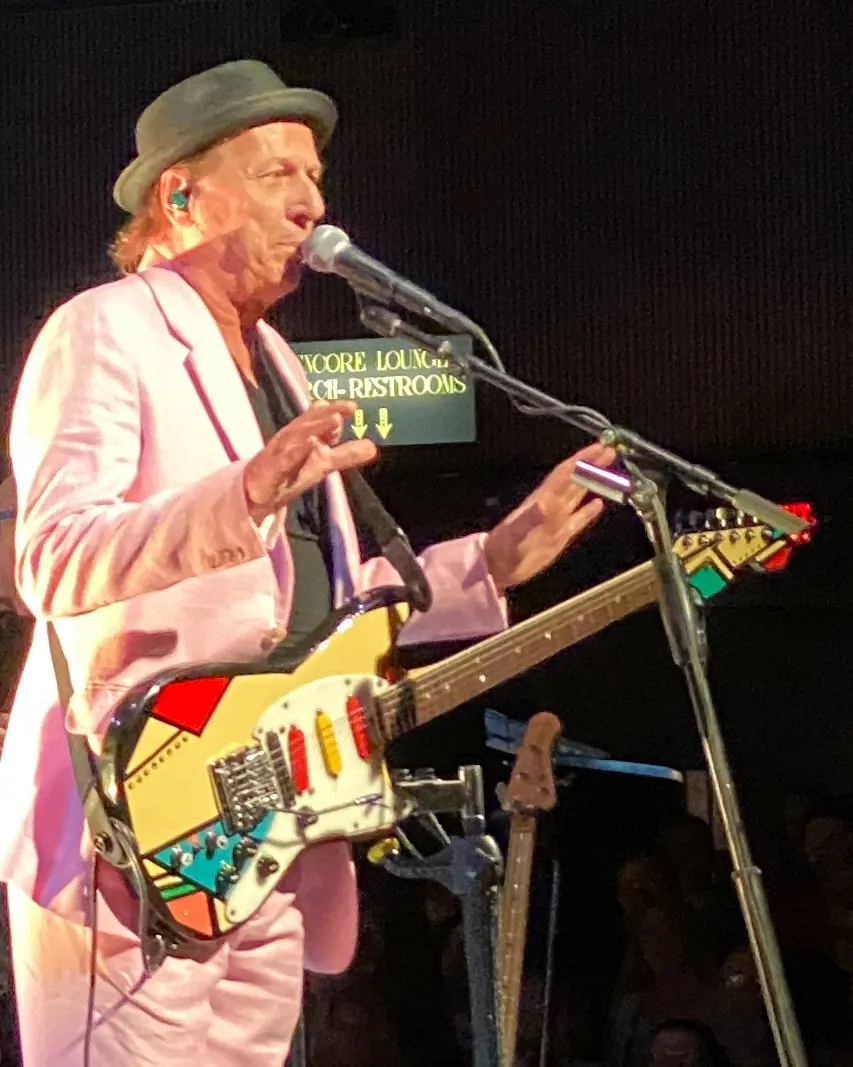
Robert Steven "Adrian" Belew is an American musician, singer, songwriter, and record producer. A multi-instrumentalist primarily known as a guitarist and singer, he is noted for his unusual approach to the instrument, his playing cited as fluid, expressive, and often resembling "animal noises or mechanical rumblings".
Discography & Previews
Browse through and click an album to open and play 30-second previews streamed from Apple Music.


Twang Bar King
1983 · 12 tracks


Inner Revolution
1992 · 12 tracks
- 1 Inner Revolution (LP Version) ↗ 3:14
- 2 This Is What I Believe In (LP Version) ↗ 3:29
- 3 Standing In the Shadow (LP Version) ↗ 3:46
- 4 Big Blue Sun (LP Version) ↗ 3:50
- 5 Only a Dream (LP Version) ↗ 3:33
- 6 Birds (LP Version) ↗ 2:24
- 7 I'd Rather Be Right Here (LP Version) ↗ 3:09
- 8 The War In the Gulf Between Us (LP Version) ↗ 3:31
- 9 I Walk Alone (LP Version) ↗ 2:47
- 10 Everything (LP Version) ↗ 2:58
- 11 Heavens Bed (LP Version) ↗ 4:06
- 12 Member of the Tribe (LP Version) ↗ 3:12

Salad Days
1999 · 16 tracks
- 1 The Lone Rhinoceros ↗ 2:37
- 2 Men In Helicopters ↗ 3:09
- 3 The Rail Song ↗ 3:42
- 4 Everything ↗ 2:56
- 5 Three of a Perfect Pair ↗ 4:09
- 6 Return of the Chicken ↗ 1:34
- 7 Never Enough ↗ 3:30
- 8 The Man In the Moon ↗ 2:12
- 9 I Remember How to Forget ↗ 3:34
- 10 Bad days ↗ 2:56
- 11 Fly (Live In Argentina) ↗ 3:54
- 12 Young Lions ↗ 3:06
- 13 Things You Hit With a Stick ↗ 2:05
- 14 Cage ↗ 2:24
- 15 Dinosaur ↗ 5:43
- 16 One of These Days ↗ 3:01


Side Three
2006 · 12 tracks
- 1 Troubles ↗ 3:14
- 2 Incompetence Indifference ↗ 5:02
- 3 Water Turns to Wine ↗ 3:47
- 4 Crunk ↗ 1:17
- 5 Drive ↗ 3:27
- 6 Cinemusic ↗ 1:37
- 7 Whatever ↗ 3:18
- 8 Men In Helicopters v4.0 ↗ 3:07
- 9 Beat Box Car ↗ 4:30
- 10 Truth Is ↗ 1:34
- 11 The Red Bull Rides a Boomerang Across the Blue Constellation ↗ 4:34
- 12 & ↗ 3:18
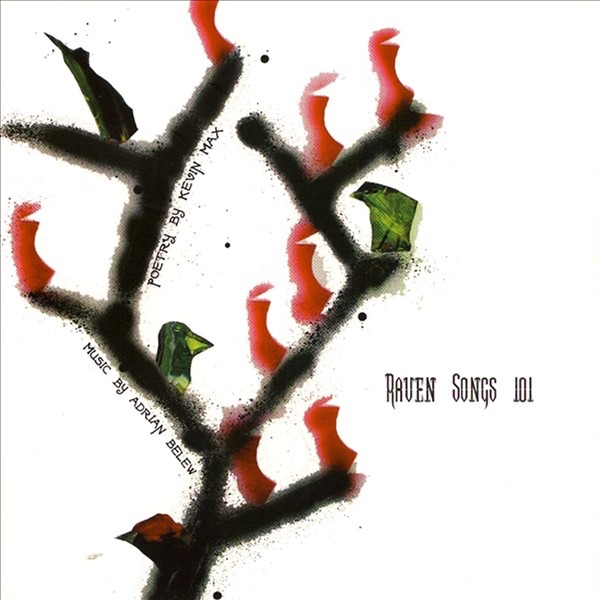

Pop Sided
2019 · 11 tracks
-
 Lone RhinoAdrian Belew198211 tracks
 -
 Twang Bar KingAdrian Belew198312 tracks
 -
 Desire Caught by the TailAdrian Belew19868 tracks
 -
 Inner RevolutionAdrian Belew199212 tracks
 -
 Salad DaysAdrian Belew199916 tracks
 -
 Side OneAdrian Belew20059 tracks
 -
 Side TwoAdrian Belew200510 tracks
 -
 Side ThreeAdrian Belew200612 tracks
 -
 eAdrian Belew200911 tracks
 -
 Pop SidedAdrian Belew201911 tracks
Deep Dive
Overview
Adrian Belew is an American guitarist, singer, and songwriter whose career spans from the early 1980s to the present day. Born Robert Steven Belew in 1949, he has established himself as a multi-instrumentalist whose approach to the guitar distinguishes him from his contemporaries. His playing style—characterized by fluid, expressive technique and sounds often described as resembling animal noises or mechanical rumblings—has made him a distinctive voice in rock music. Belew’s work as both a solo artist and collaborator has positioned him as a guitarist willing to explore unconventional sonic territories.
Formation Story
Adrian Belew’s path to music emerged during the 1950s and 1960s, an era of rapid evolution in rock and popular music. Growing up during this formative period, Belew gravitated toward the guitar and developed his distinctive approach to the instrument—one that would eventually set him apart from mainstream rock practitioners. By the early 1980s, he had developed the technical proficiency and sonic vision necessary to launch a solo career, beginning what would become a prolific and varied body of work. His emergence as a recording artist coincided with the maturation of independent and progressive rock production, giving him the freedom to pursue idiosyncratic instrumental and compositional approaches that major-label constraints might have restricted.
Breakthrough Moment
Belew’s solo career formally began in 1982 with the release of Lone Rhino, an album that introduced his signature guitar-driven sound to audiences. The following year, Twang Bar King (1983) further established his identity as a guitarist-songwriter unafraid of stylistic experimentation. These early releases set the trajectory for his subsequent work: albums that prioritized instrumental innovation and tonal exploration over commercial accessibility. By establishing himself on independent and alternative labels early in his career, Belew created a template for artistic autonomy that would define his decades-long output.
Peak Era
The mid-to-late 1980s and 1990s represented Belew’s most creatively expansive period. Albums such as Desire Caught by the Tail (1986), Mr. Music Head (1989), Young Lions (1990), Inner Revolution (1992), and The Acoustic Adrian Belew (1993) showcased his willingness to shift sonic approaches and explore different facets of his musicianship. The Guitar as Orchestra (1995) particularly exemplified Belew’s philosophy that a single instrument could serve as a complete ensemble, layered and orchestrated to create rich, complex textures. This period also saw the release of Salad Days (1999), which demonstrated his continued vitality as both composer and performer. Across these years, Belew remained committed to releasing work on independent and alternative labels—Discipline Global Mobile, Caroline Records, and others—that allowed him creative control unavailable on major-label rosters.
Musical Style
Adrian Belew’s musicianship centers on the electric guitar, but his approach differs fundamentally from most rock guitarists. Rather than relying on traditional blues-based phrasing or speed-oriented technique, Belew treats the guitar as a sound-design instrument. His technique incorporates unconventional effects, unusual tunings, and extended techniques that produce textures ranging from percussive and mechanical to organic and vocal-like. These “animal noises or mechanical rumblings,” as critics have described them, suggest influences from experimental and avant-garde music traditions alongside rock heritage. His singing voice, when present, serves as another textural element rather than a dominant focal point. Compositionally, Belew favors instrumental exploration and layered arrangements over verse-chorus-verse song structures, though he has worked across both instrumental and song-based formats throughout his career. His production choices—often emphasizing clarity of individual tonal elements and spatial arrangement—reflect his background in studio work and his commitment to making unconventional guitar techniques audible and engaging.
Major Albums
Lone Rhino (1982)
Belew’s debut established his core identity: a guitarist-songwriter prioritizing tonal innovation and instrumental detail. The album announced his arrival as a singular voice in rock music.
The Acoustic Adrian Belew (1993)
This album stripped away electric production to showcase Belew’s acoustic guitar work, demonstrating that his innovations were not dependent on electronic effects but rooted in fundamental instrumental mastery and creative arrangement.
The Guitar as Orchestra (1995)
Ambitious in scope, this record exemplified Belew’s philosophy that a single instrument, layered and orchestrated, could generate the complexity and emotional range typically associated with full ensembles.
Salad Days (1999)
Released late in the twentieth century, this album reaffirmed Belew’s vitality as both composer and performer, blending instrumental showcase passages with more song-oriented structures.
Dust (2014)
A return to recording after a five-year interval, Dust demonstrated Belew’s continued creative engagement with guitar-based composition and production.
Signature Songs
- “Lone Rhino” — The title track of his debut, establishing his signature instrumental approach and unconventional guitar voice.
- “Elephant Talk” — A showcase for his percussive, rhythmically complex playing style that defies categorization as either melodic or purely textural.
- “Blue Devils” — A composition highlighting his ability to balance accessibility with instrumental innovation.
- “Young Lions” — The title track of his 1990 album, demonstrating his compositional maturity and evolving production sensibilities.
Influence on Rock
Adrian Belew’s impact on rock music lies not in mainstream commercial dominance but in demonstrating an alternative model for guitar-based rock innovation. By maintaining artistic control through independent and alternative labels, he created a blueprint for musicians uninterested in conforming to major-label expectations. His treatment of the guitar as a textural and compositional instrument—rather than a vehicle for traditional rock gesture—influenced musicians in experimental, progressive, and alternative rock who sought to expand the instrument’s expressive possibilities. His prolific output across four decades established that artistic longevity could coexist with stylistic consistency, even when that style resisted easy categorization or commercial leverage.
Legacy
Adrian Belew’s career represents a sustained commitment to artistic independence and instrumental innovation across more than forty years. From his initial recordings on independent labels through his continued activity in the 2020s, he has maintained creative autonomy and stylistic integrity. His official website and presence across multiple independent and established record labels testify to his enduring engagement with music-making. The breadth of his discography—nineteen studio albums through 2022, including acoustic reissues and collaborative projects—demonstrates his refusal to rest on early achievements or adopt a legacy-act posture. For listeners and musicians seeking models of independent artistic practice, Belew’s career offers sustained demonstration that unconventional approaches to rock instrumentation and production can sustain a lifetime of meaningful work.
Fun Facts
- Belew released a series of “Flux” albums across multiple volumes (2016, 2017, 2018), demonstrating his interest in treating related musical material as evolving, revisable projects rather than fixed statements.
- His studio work under the Discipline Global Mobile label positioned him as a collaborator with other experimental musicians and producers, expanding his influence beyond his own compositions.
- The acoustic reissues The Acoustic Adrian Belew (1993) and Belew Prints: The Acoustic Adrian Belew, Vol. 2 (1998) showcased his commitment to reexamining previous work from alternative sonic perspectives.
- His continued recording and release activity through the 2020s—including e for orchestra (2020) and Elevator (2022)—places him among rock musicians who have sustained creative productivity well into their seventh and eighth decades.