
Photo by Peter Gowland · Wikimedia Commons
Rank #52
Weezer
Power-pop nerds with two iconic 90s records and a long, divisive run.
From Wikipedia
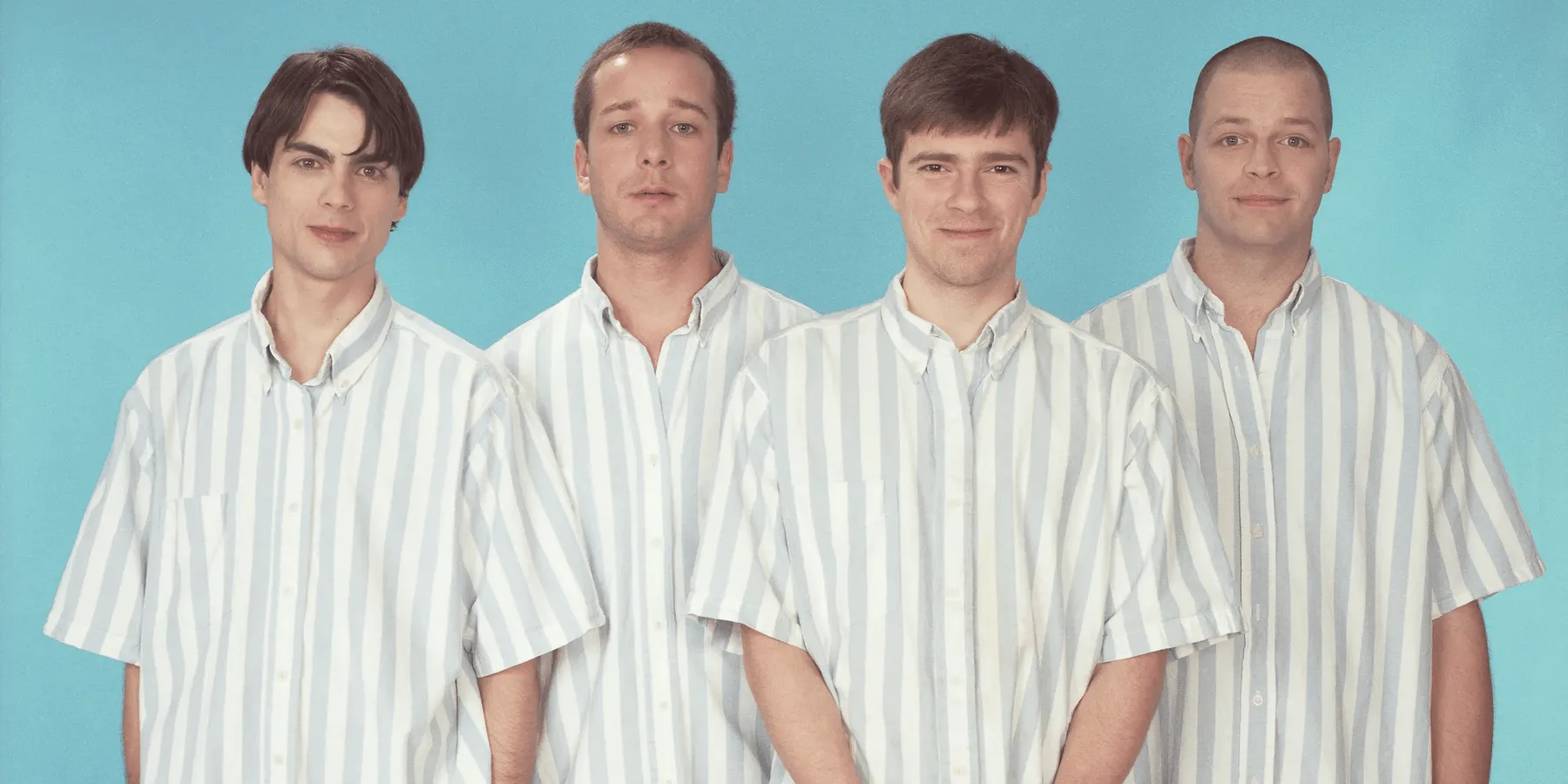
Weezer is an American rock band formed in Los Angeles, California, in 1992. Since 2001, the band has consisted of Rivers Cuomo, Patrick Wilson (drums), Brian Bell, and Scott Shriner. They have sold 10 million albums in the United States and over 35 million worldwide.
Members
- Jason Cropper (1992–1993)
- Matt Sharp (1992–1998)
- Brian Bell (1993–present)
- Mikey Welsh (1998–2001)
- Scott Shriner (2001–present)
- Patrick Wilson
- Rivers Cuomo
Studio Albums
- 1994 Weezer
- 1996 Pinkerton
- 2001 Weezer
- 2002 Maladroit
- 2005 Make Believe
- 2008 Weezer
- 2009 Raditude
- 2010 Hurley
- 2014 Everything Will Be Alright in the End
- 2016 Weezer
- 2017 Pacific Daydream
- 2019 Weezer
- 2019 Weezer
- 2021 Van Weezer
- 2021 OK Human
Source: MusicBrainz
Deep Dive
Overview
Weezer is an American rock band that emerged from Los Angeles in 1992, anchored by Rivers Cuomo’s distinctive voice and songwriting. Over the course of more than three decades, they became one of the decade’s defining acts, selling over 35 million albums worldwide and establishing themselves as an unlikely bridge between power-pop accessibility and alternative rock credibility. Their early work redefined what nerdy, introspective songwriting could accomplish within the rock mainstream, setting a template for countless bands that followed.
Formation Story
Weezer coalesced in Los Angeles in 1992 from a lineup that initially included Rivers Cuomo, Matt Sharp, Patrick Wilson, and Jason Cropper. The band’s early configuration reflected the emerging Los Angeles alternative scene, though their sensibility drew more from power-pop lineage and new-wave production aesthetics than from the grunge-dominated climate of the early 1990s. Cropper’s departure in 1993 was followed by the arrival of Brian Bell, solidifying the core unit that would record their debut album. The band’s formation period coincided with the post-grunge opening in rock radio, a context that would prove crucial to their eventual breakthrough.
Breakthrough Moment
Weezer’s self-titled debut album, released in 1994, became a surprise commercial and critical success, introducing audiences to Rivers Cuomo’s nervy, melodically sophisticated songwriting and the band’s crystalline production approach. The album’s combination of intricate guitar work, emotionally vulnerable lyrics, and perfectly constructed pop hooks resonated widely, establishing them as major players in mid-1990s alternative rock. That same year marked the beginning of their ascent toward mainstream visibility, a trajectory that would accelerate with their follow-up.
Peak Era
The mid-to-late 1990s constituted Weezer’s peak creative and commercial period. Pinkerton, released in 1996, deepened and complicated their artistic reach, demonstrating that the promise of their debut was not merely a one-album phenomenon. During this window—roughly 1994 to 1996—the band established themselves as essential voices in the alternative-rock landscape, drawing audiences who might have been skeptical of art-rock self-consciousness but were won over by the directness and infectious melodies beneath the surface complexity. Their 1992–1998 lineup, with Matt Sharp’s melodic bass playing central to their sound, became the definitive classic-era configuration.
Musical Style
Weezer’s sound married power-pop sensibilities with alternative-rock production and intricate, often self-directed songwriting. Rivers Cuomo’s vocals possessed a nervy, slightly pinched quality that conveyed emotional sincerity without sacrificing melodic appeal, while the band’s guitar work emphasized clean tones, layered arrangements, and rhythmic precision over overdrive or distortion. The band drew from multiple genealogies—new wave, power pop, and post-punk—yet synthesized these influences into something that felt contemporary to 1990s alternative rock. Their lyrics often engaged openly with alienation, romantic longing, and the intersection of nerdy interests with emotional vulnerability, a combination that differentiated them from the heavier, more conventionally masculine posturing of contemporary rock. Over subsequent decades, their sound would evolve through various production and compositional approaches while maintaining that fundamental melodic DNA.
Major Albums
Weezer (1994)
Their debut, often referred to as the Blue Album, stands as one of the decade’s most carefully constructed rock records, introducing their signature combination of hooky melodies and introspective lyrics with immaculate production clarity.
Pinkerton (1996)
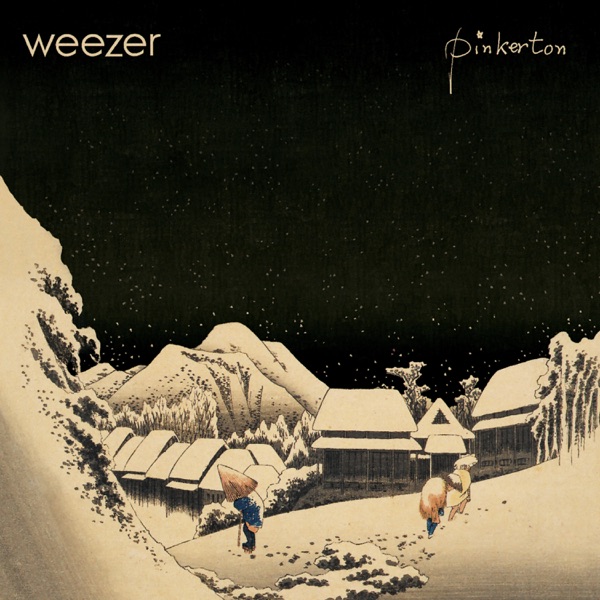
A more emotionally raw and sonically experimental follow-up that deepened their artistic ambitions, proving the debut was not a one-off achievement and establishing them as album artists rather than hit-song purveyors.
Weezer (2001)
Their third self-titled album arrived after a significant gap, establishing a new lineup configuration with Scott Shriner on bass and marking a compositional return after the creative pause of the late 1990s.
Make Believe (2005)
A polished mid-2000s offering that demonstrated the band’s continued commercial viability and their capacity to adapt to contemporary production aesthetics while maintaining core melodic identity.
Everything Will Be Alright in the End (2014)
A late-career statement that revisited earlier sonic territory while engaging with their long history, signaling renewed artistic direction after years of variable output.
Signature Songs
- “Undone – The Sweater Song” — Acoustic fingerpicking and lovelorn vulnerability established this as a signature moment from their debut, defining their approach to stripped-down emotional directness.
- “Buddy Holly” — The quintessential Weezer statement, pairing power-pop perfection with explicit nerd-culture references and infectious melodic hooks.
- “My Name Is Jonas” — An opening-track mission statement that introduced their combination of technical precision and earnest emotional exposure.
- “Butterfly” — From Pinkerton, a showcase for their willingness to explore vulnerability and guitar texture beyond the obvious pop-song structure.
Influence on Rock
Weezer’s emergence and success in the mid-1990s altered the landscape of acceptable rock songwriting, demonstrating that introspection, self-aware humor, and overt nerd-culture references could coexist with mainstream success and radio accessibility. They established a template that influenced countless alternative and pop-punk bands of the 1990s and beyond, proving that power-pop sensibilities and art-rock ambition were not mutually exclusive. Their career trajectory—early critical and commercial success followed by years of variable reception and reinvention—also mapped out a model for how legacy rock acts could maintain relevance and catalog across extended periods. The band’s willingness to engage openly with their fan base and their cultural positioning as proudly nerdy also opened space for subsequent rock acts to embrace similar identity positioning.
Legacy
With over 35 million albums sold worldwide and a continuous presence in rock culture from their 1992 formation through the present, Weezer established themselves as one of the most enduring acts of their era. The Blue Album and Pinkerton remain canonical 1990s rock records, regularly included in greatest-album-of-the-decade discussions and continuing to resonate with new audiences through streaming and cultural reference. Their 2001 reunion with a new lineup proved that the band could persist beyond the initial classic configuration, and their continued output through the 2010s and 2020s—including Van Weezer and OK Human in 2021—demonstrated an ongoing commitment to recording and touring. The band’s long run in the industry and their evolution across multiple decades positioned them as elder statesmen of 1990s alternative rock, their influence visible in multiple strains of contemporary rock, pop, and indie music.
Fun Facts
- Weezer released two different albums both titled “Weezer” in 2001 and again in 2008, continuing a tradition of self-titled releases that began with their 1994 debut.
- The band has cycled through multiple lineup iterations, most significantly with the departure of bassist Matt Sharp in 1998 and his replacement by Scott Shriner in 2001, a shift that fundamentally altered their recorded and live sound.
- Mikey Welsh served as bassist between Sharp’s departure and Shriner’s arrival, a transitional period that saw the band navigate a creative and commercial lull before their 2001 self-titled revival.
Discography & Previews
Click any album to expand its track list. Each track plays a 30-second preview streamed from Apple Music. Tap the link icon next to a track to open it in Apple Music for full playback.

- 1 My Name Is Jonas (2024 Remaster) ↗ 3:24
- 2 No One Else (2024 Remaster) ↗ 3:05
- 3 The World Has Turned And Left Me Here (2024 Remaster) ↗ 4:18
- 4 Buddy Holly (2024 Remaster) ↗ 2:39
- 5 Undone - The Sweater Song (2024 Remaster) ↗ 5:05
- 6 Surf Wax America (2024 Remaster) ↗ 3:06
- 7 Say It Ain't So (2024 Remaster) ↗ 4:19
- 8 In The Garage (2024 Remaster) ↗ 3:56
- 9 Holiday (2024 Remaster) ↗ 3:25
- 10 Only In Dreams (2024 Remaster) ↗ 8:04



- 1 Memories ↗ 3:14
- 2 Ruling Me ↗ 3:29
- 3 Trainwrecks ↗ 3:21
- 4 Unspoken ↗ 3:01
- 5 Where's My Sex? ↗ 3:28
- 6 Run Away ↗ 2:55
- 7 Hang On ↗ 3:33
- 8 Smart Girls ↗ 3:11
- 9 Brave New World ↗ 3:57
- 10 Time Flies ↗ 3:46
- 11 All My Friends Are Insects ↗ 1:53
- 12 Viva La Vida (Live) ↗ 4:06
- 13 I Want To Be Something ↗ 2:55
- 14 Represent (Rocked Out Mix) ↗ 4:12

- 1 Ain't Got Nobody ↗ 3:21
- 2 Back To the Shack ↗ 3:05
- 3 Eulogy For a Rock Band ↗ 3:25
- 4 Lonely Girl ↗ 2:49
- 5 I've Had It Up To Here ↗ 2:49
- 6 The British Are Coming ↗ 4:08
- 7 Da Vinci ↗ 4:06
- 8 Go Away ↗ 3:14
- 9 Cleopatra ↗ 3:12
- 10 Foolish Father ↗ 4:32
- 11 The Futurescope Trilogy: I. The Waste Land ↗ 1:56
- 12 The Futurescope Trilogy: II. Anonymous ↗ 3:20
- 13 The Futurescope Trilogy: III. Return To Ithaka ↗ 2:18



- 1 All My Favorite Songs ↗ 3:23
- 2 Aloo Gobi ↗ 3:04
- 3 Grapes Of Wrath ↗ 2:51
- 4 Numbers ↗ 3:21
- 5 Playing My Piano ↗ 2:36
- 6 Mirror Image ↗ 1:17
- 7 Screens ↗ 2:12
- 8 Bird With A Broken Wing ↗ 3:51
- 9 Dead Roses ↗ 2:17
- 10 Everything Happens For A Reason ↗ 0:24
- 11 Here Comes The Rain ↗ 2:27
- 12 La Brea Tar Pits ↗ 2:50