

Photo by Fabio Venni from London, UK; modified by anetode , licensed under CC BY-SA 2.0 · Wikimedia Commons
Rank #46
The White Stripes
Detroit duo whose stripped-down blues garage revived rock's primal urge.
From Wikipedia
The White Stripes were an American rock duo formed in Detroit, Michigan, in 1997. The group consisted of Jack White and Meg White. They were a leading group of the 2000s indie and garage rock revivals.
Members
- Jack White
- Meg White
Studio Albums
- 1999 The White Stripes
- 2000 De Stijl
- 2001 White Blood Cells
- 2003 Ellie
- 2003 Elephant
- 2005 Get Behind Me Satan
- 2007 Icky Thump
Source: MusicBrainz
Deep Dive
Overview
The White Stripes were an American rock duo formed in Detroit, Michigan, in 1997, consisting of Jack White and Meg White. Operating as a two-piece with minimal instrumentation, they became one of the defining acts of the 2000s indie and garage rock revivals. Their aesthetic was deliberately restrained—guitar, drums, and vocals—yet their music channeled raw blues energy and punk aggression into a sound that felt both timeless and urgently contemporary. The band’s influence on early 2000s rock music cannot be overstated; they proved that rock did not require complexity or technological excess to command attention.
Formation Story
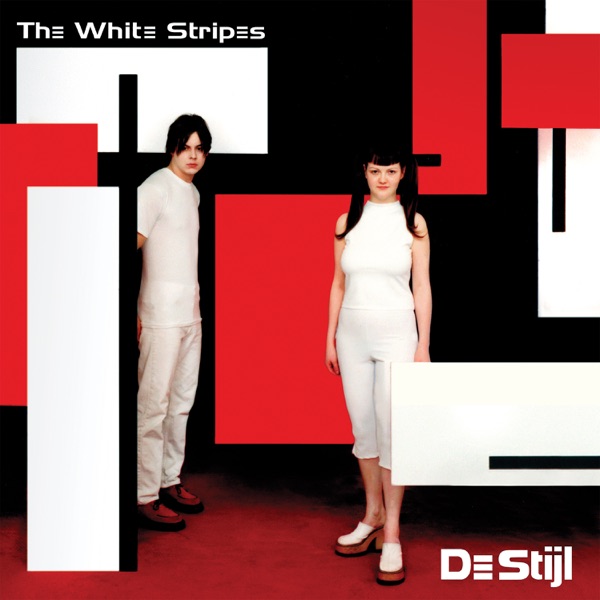
Jack White and Meg White formed The White Stripes in Detroit in 1997, a city with deep roots in both blues and industrial music. The duo emerged during a period when rock music had become layered with synthesizers, samples, and production techniques that often obscured raw emotional power. Working as a two-piece stripped them to essentials: Jack White’s guitar work, Meg White’s drumming, and the interplay between them. Detroit’s musical heritage—from Motown to MC5—informed their approach; they were reaching backward to reclaim an immediacy that rock music seemed to have lost. The band’s identity crystallized quickly around a minimalist visual aesthetic as well: red, white, and black became their signature color scheme, appearing in their logo, stage design, and album artwork.
Breakthrough Moment
The White Stripes’ commercial and critical breakthrough came with White Blood Cells in 2001. The album demonstrated that their two-piece format was not a limitation but a strength, allowing each instrument to cut through with clarity and urgency. Songs on the record showcased Jack White’s ability to write hooks that felt both modern and rooted in blues tradition, while Meg White’s drumming provided a driving, minimalist backbone. The album’s success brought the band wider attention beyond indie and garage rock circles, signaling that there was an audience hungry for rock music stripped of artifice. White Blood Cells established them as more than a novelty or throwback act; they were redefining what contemporary rock could be.
Peak Era
The White Stripes reached their commercial and artistic peak between 2003 and 2005 with the release of two landmark albums: Elephant (2003) and Get Behind Me Satan (2005). Elephant, arriving two years after their breakthrough, solidified their position as leading figures of the garage rock revival. The record maintained their minimalist approach while deepening their blues influences and expanding their songwriting range. Get Behind Me Satan continued this trajectory, further refining their sound and demonstrating a band at the height of their creative powers. During this period, The White Stripes became a major touring act and cultural phenomenon, with Jack White’s guitar work and dynamic stage presence drawing comparisons to rock’s most vital figures. Their red-white-and-black aesthetic had become instantly recognizable, influencing design and fashion well beyond music.
Musical Style
The White Stripes’ sound was grounded in a direct lineage from blues rock and punk, executed with striking clarity through their two-instrument setup. Jack White’s guitar approach combined blues bending and riffing with punk’s economy of motion and distortion; he rarely played complex chord voicings, instead favoring single-note runs and heavily processed tones that could sound almost orchestral despite their harmonic simplicity. Meg White’s drumming was notably sparse and powerful—she favored straightforward beats over technical flourishes, allowing space within songs rather than filling it. Their songwriting drew from blues structures and call-and-response patterns, often built around infectious hooks that lodged immediately in the listener’s mind. Vocally, Jack White’s delivery ranged from strained shouting to intimate whispers, and his voice became an instrument itself—processed, layered, and sometimes nearly unrecognizable through production. The band’s evolution across their studio albums showed increasing experimentation with production and arrangement, yet they never abandoned the core principle that limitation could be a source of power rather than a constraint.
Major Albums
White Blood Cells (2001)
The album that introduced The White Stripes to a mainstream audience, proving their minimalist two-piece format could sustain an entire record of compelling songs. The record balanced punk rawness with blues sophistication and became their commercial breakthrough.
Elephant (2003)
Arguably their most fully realized work, Elephant deepened their blues influences while maintaining the urgency and clarity that defined their earlier output. The album represented The White Stripes at maximum creative power and cultural prominence.
Get Behind Me Satan (2005)
Their most adventurous record, featuring expanded instrumentation and production techniques that moved beyond the pure two-piece sound while maintaining their core identity. The album showcased a band confident enough to experiment without losing their essential character.
Icky Thump (2007)
The band’s final studio album, released near the end of their active period, continued their exploration of sonic textures and musical experimentation while delivering some of their most directly accessible material.
Signature Songs
- “Seven Nation Army” — The duo’s most recognizable song, built around a guitar riff that became ubiquitous in popular culture and sports broadcasting.
- “Fell in Love with a Girl” — A punchy, hook-laden track that exemplified their ability to craft immediate melodies from minimal ingredients.
- “Icky Thump” — A chaotic, maximalist departure that showcased their willingness to push against their own minimalist aesthetic.
- “Effect and Cause” — Demonstrated their blues sensibilities and Jack White’s ability to deliver emotionally charged vocal performances.
- “Hotel Yorba” — A gentle, almost naive-sounding love song that proved they could convey tenderness within their stripped-down format.
Influence on Rock
The White Stripes’ impact on 2000s rock music was substantial and multifaceted. They provided a counter-model to the maximize-and-layer approach that had dominated rock production since the 1980s, proving that subtraction could be more powerful than addition. Their influence helped fuel the broader garage rock and indie rock revivals of the early 2000s, alongside bands like The Black Keys and later acts who adopted similar approaches to stripped-down rock music. Jack White’s guitar work influenced a generation of players to seek clarity and aggression over technical complexity. The band also demonstrated that visual and sonic identity could be married into a complete artistic statement; the red-white-and-black aesthetic became as important to their brand as their music. Their success opened doors for other minimalist and blues-influenced rock acts, establishing a template that remained relevant long after their dissolution.
Legacy
The White Stripes disbanded in 2011 after fourteen years of activity, leaving behind a catalog that remained deeply influential in rock music well into subsequent decades. Their studio albums continued to circulate widely and maintain cultural presence through streaming platforms. The band’s visual aesthetic and design principles influenced graphic design and branding far beyond music. Jack White’s subsequent solo work and ventures—including the founding of Third Man Records—extended their legacy, while Meg White maintained a largely private profile after the band’s dissolution. The simplicity and power of songs like “Seven Nation Army” ensured continued exposure through sports events, films, and popular culture. The White Stripes represented a pivotal moment in rock music’s early 2000s when minimalism and blues-driven intensity offered a compelling alternative to the era’s dominant sonic trends, and their influence remained evident in the work of countless rock musicians who emerged in their wake.
Fun Facts
- The band adopted the red-white-and-black color scheme as their official visual identity, appearing consistently across all album artwork, stage design, and promotional materials throughout their career.
- Despite their minimalist approach, The White Stripes released seven studio albums across their active period, demonstrating consistent productivity alongside their commercial success.
- Detroit’s rich musical heritage—from Motown to the MC5—directly informed the band’s approach to combining blues tradition with contemporary rock urgency.
Discography & Previews
Click any album to expand its track list. Each track plays a 30-second preview streamed from Apple Music. Tap the link icon next to a track to open it in Apple Music for full playback.

- 1 You're Pretty Good Looking (For a Girl) ↗ 1:50
- 2 Hello Operator ↗ 2:36
- 3 Little Bird ↗ 3:07
- 4 Apple Blossom ↗ 2:13
- 5 I'm Bound to Pack It Up ↗ 3:10
- 6 Death Letter ↗ 4:30
- 7 Sister, Do You Know My Name? ↗ 2:52
- 8 Truth Doesn't Make a Noise ↗ 3:15
- 9 A Boy's Best Friend ↗ 4:22
- 10 Let's Build a Home ↗ 1:58
- 11 Jumble, Jumble ↗ 1:54
- 12 Why Can't You Be Nicer to Me? ↗ 3:22
- 13 Your Southern Can Is Mine ↗ 2:29

- 1 Dead Leaves and the Dirty Ground ↗ 3:02
- 2 Hotel Yorba ↗ 2:10
- 3 I'm Finding It Harder To Be a Gentleman ↗ 2:54
- 4 Fell In Love With a Girl ↗ 1:50
- 5 Expecting ↗ 2:03
- 6 Little Room ↗ 0:50
- 7 The Union Forever ↗ 3:26
- 8 The Same Boy You've Always Known ↗ 3:07
- 9 We're Going to Be Friends ↗ 2:20
- 10 Offend In Every Way ↗ 3:06
- 11 I Think I Smell a Rat ↗ 2:04
- 12 Aluminum ↗ 2:19
- 13 I Can't Wait ↗ 3:39
- 14 Now Mary ↗ 1:47
- 15 I Can Learn ↗ 3:32
- 16 This Protector ↗ 2:12

- 1 Seven Nation Army ↗ 3:52
- 2 Black Math ↗ 3:04
- 3 There's No Home For You Here ↗ 3:44
- 4 I Just Don't Know What to Do With Myself ↗ 2:46
- 5 In The Cold, Cold Night ↗ 2:58
- 6 I Want To Be The Boy To Warm Your Mother's Heart ↗ 3:21
- 7 You've Got Her In Your Pocket ↗ 3:41
- 8 Ball and Biscuit ↗ 7:19
- 9 The Hardest Button to Button ↗ 3:33
- 10 Little Acorns ↗ 4:10
- 11 Hypnotize ↗ 1:48
- 12 The Air Near My Fingers ↗ 3:40
- 13 Girl, You Have No Faith In Medicine ↗ 3:18
- 14 It's True That We Love One Another ↗ 3:40

- 1 Blue Orchid ↗ 2:38
- 2 The Nurse ↗ 3:47
- 3 My Doorbell ↗ 4:02
- 4 Forever For Her (Is Over For Me) ↗ 3:15
- 5 Little Ghost ↗ 2:19
- 6 The Denial Twist ↗ 2:36
- 7 White Moon ↗ 4:01
- 8 Instinct Blues ↗ 4:16
- 9 Passive Manipulation ↗ 0:35
- 10 Take, Take, Take ↗ 4:23
- 11 As Ugly As I Seem ↗ 4:10
- 12 Red Rain ↗ 3:53
- 13 I'm Lonely (But I Ain't That Lonely Yet) ↗ 4:20

- 1 Icky Thump ↗ 4:15
- 2 You Don't Know What Love Is (You Just Do as You're Told) ↗ 3:54
- 3 300 M.P.H. Torrential Outpour Blues ↗ 5:29
- 4 Conquest ↗ 2:48
- 5 Bone Broke ↗ 3:14
- 6 Prickly Thorn, But Sweetly Worn ↗ 3:06
- 7 St. Andrew (This Battle Is In the Air) ↗ 1:50
- 8 Little Cream Soda ↗ 3:45
- 9 Rag and Bone ↗ 3:48
- 10 I'm Slowly Turning Into You ↗ 4:35
- 11 A Martyr for My Love for You ↗ 4:20
- 12 Catch Hell Blues ↗ 4:18
- 13 Effect and Cause ↗ 3:00