
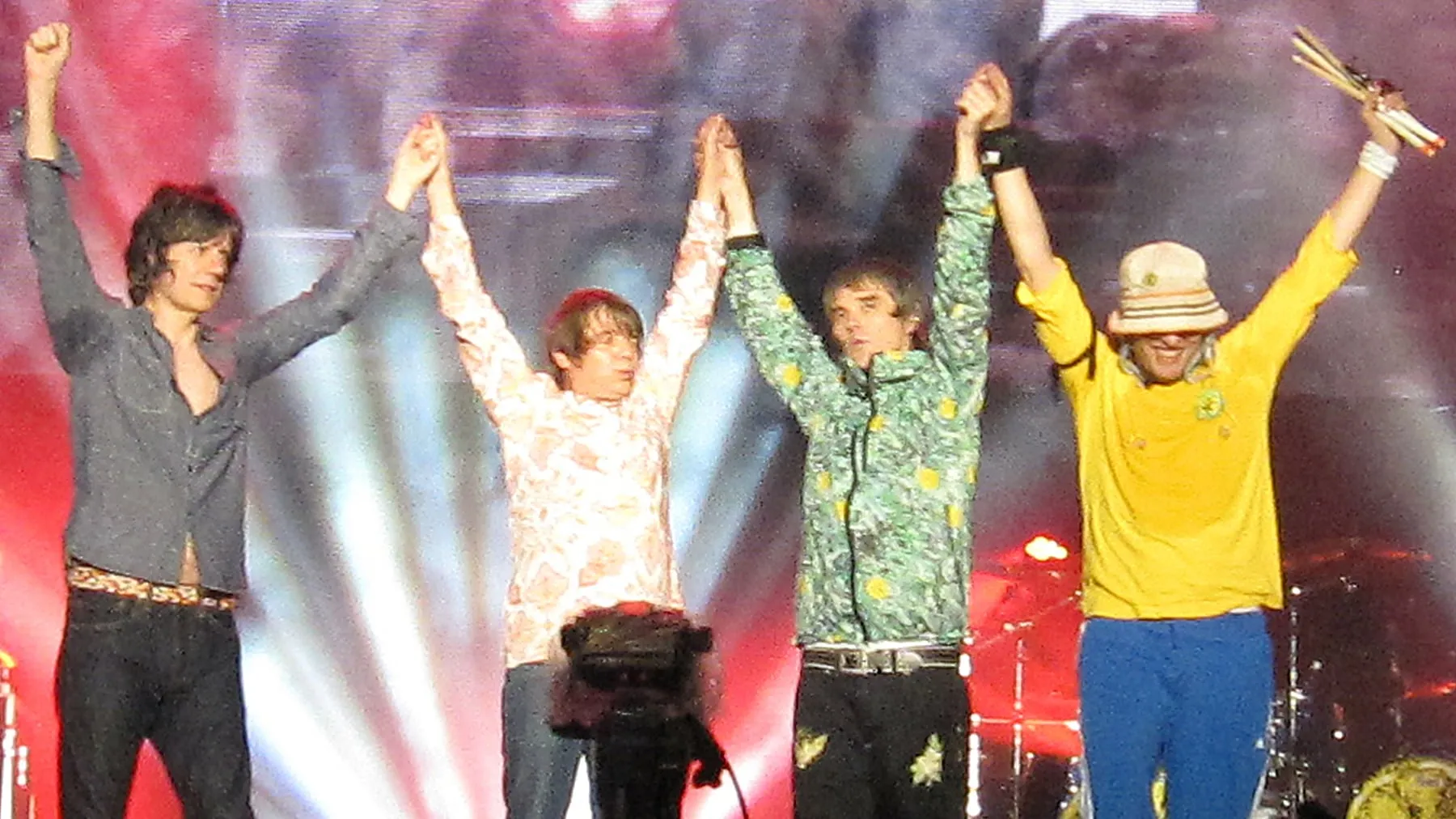
Photo by mari , licensed under CC BY 2.0 · Wikimedia Commons
Rank #464
The Stone Roses
Manchester band whose self-titled debut anchored Madchester and shaped Britpop.
From Wikipedia
The Stone Roses were an English rock band formed in Manchester in 1983. They were one of the pioneering groups of the Madchester movement in the late 1980s and early 1990s. The band's classic and most prominent lineup consisted of the vocalist Ian Brown, the guitarist John Squire, the bassist Gary "Mani" Mounfield and the drummer Alan "Reni" Wren.
Members
- Gary Mounfield
- Ian Brown
Studio Albums
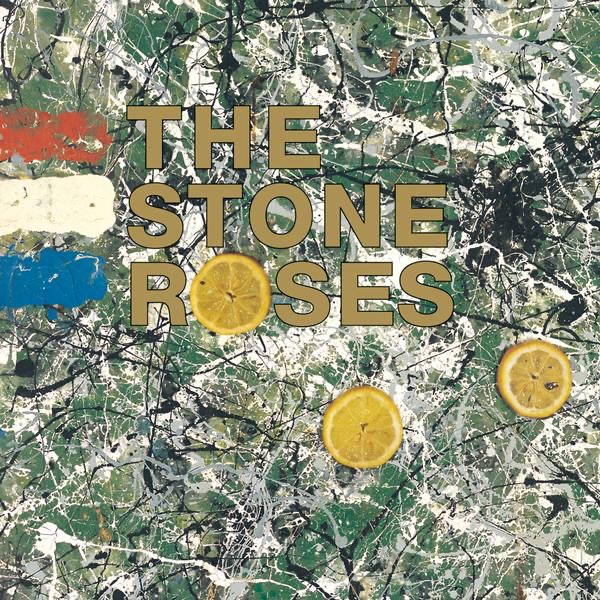
- 1989 The Stone Roses
- 1994 Second Coming
Source: MusicBrainz
Deep Dive
Overview
The Stone Roses were an English rock band formed in Manchester in 1983, emerging as one of the most significant acts of the late 1980s and early 1990s. They anchored the Madchester movement—a fusion of psychedelic rock, funk, house music, and rave culture centered in their native city—and their influence extended far beyond that moment into the broader landscape of British rock. Their 1989 self-titled debut remains a cornerstone of late-twentieth-century rock music, establishing a blueprint for how alternative bands could marry guitar-driven rock with electronic and dance elements while maintaining emotional depth and melodic sophistication.
Formation Story
The Stone Roses formed in Manchester in 1983, coalescing around the creative partnership of vocalist Ian Brown and guitarist John Squire. The band’s classic lineup—completed by bassist Gary “Mani” Mounfield and drummer Alan “Reni” Wren—crystallized the chemistry that would define their early recorded output and live performances. Manchester in the mid-1980s was fertile ground for experimental rock; the city had recently produced Joy Division and New Order, post-punk acts that had already demonstrated the viability of synthesizer-inflected rock music. The Stone Roses built on that legacy while pushing toward something more eclectic, drawing from British psychedelia, funk grooves, and the emerging acid house and rave cultures that were beginning to reshape British youth culture.
Breakthrough Moment
The Stone Roses’ breakthrough came with the release of their self-titled debut album in 1989. The Stone Roses arrived at a cultural inflection point: Manchester’s club scene, particularly venues like the Haçienda, was becoming a nexus for rock musicians and electronic dance culture. The album fused jangly, psychedelic guitars with Squire’s intricate playing, Brown’s distinctive vocal delivery, and rhythm arrangements that incorporated funk and dance grooves. The record’s commercial and critical success transformed the band from a promising local act into one of the most important voices in British rock, a status they would consolidate throughout the early 1990s. The album’s arrival helped crystallize what would become known as the Madchester sound—a distinctly Manchester-derived fusion that positioned the city as a creative epicenter on par with London for the first time in years.
Peak Era
The Stone Roses’ peak creative and commercial period stretched from the release of their debut in 1989 through the mid-1990s. This was an era when the band transcended the confines of cult alternative status to achieve substantial mainstream reach in the United Kingdom and Europe. Their performances and the surrounding cultural moment—characterized by flamboyant stage presence, youth culture energy, and the broader Britpop phenomenon that would dominate British rock in the mid-to-late 1990s—made them central figures of the era. The release of Second Coming in 1994 extended their influence, though the five-year gap between albums testified to internal pressures and the difficulties of sustaining momentum in a rapidly shifting musical landscape. By the mid-1990s, the Britpop wave they had helped initiate was cresting, with bands like Oasis, Blur, and Pulp capturing the commercial mainstream that had once belonged primarily to The Stone Roses.
Musical Style
The Stone Roses’ sound was built on the interplay between John Squire’s guitar work and the band’s rhythm section, anchored by Mounfield’s melodic bass lines and Wren’s flexible drumming. Squire’s guitar style drew from British psychedelic traditions—the shimmer and texture of 1960s-influenced psychedelia—but deployed it within arrangements that incorporated funk rhythms, electronic textures, and production choices influenced by contemporary dance and house music. Ian Brown’s vocals operated as a unifying presence: conversational rather than technically virtuosic, they conveyed emotional directness and sang simple, memorable melodies that gave the band’s more experimental arrangements emotional accessibility. The combination—psychedelic guitars, funk grooves, dance-influenced production, and accessible melody—created a sound that felt simultaneously retro and contemporary, rooted in rock tradition while engaged with the electronic and dance music of its moment. This hybrid approach helped define the broader Madchester aesthetic and influenced countless bands navigating similar territory in the 1990s.
Major Albums
The Stone Roses (1989)
The band’s debut stands as a landmark alternative rock album, introducing the psychedelic-funk-house fusion that would define Madchester and establishing The Stone Roses as one of the decade’s most important acts. Its arrival crystallized a new sound for British rock and earned both critical acclaim and substantial commercial success.
Second Coming (1994)
Released five years after their debut, Second Coming found the band refining and extending their established approach while navigating the intense cultural and commercial pressures of the intervening years. The album demonstrated their continued artistic ambition, though the long gap between releases and the shifting musical landscape made its commercial moment more complicated than their debut’s.
Signature Songs
- “She Bangs the Drums” — A propulsive early showcase of the band’s ability to balance psychedelic texture with funk-influenced groove and commercial directness.
- “Waterfall” — Demonstrates the band’s lyrical sophistication and their capacity to create emotionally resonant songs atop dance-influenced arrangements.
- “Love Spreads” — The Second Coming era single that further solidified their place in 1990s alternative rock, balancing heavy guitar work with the band’s characteristic melodic sensibility.
- “Fool” — A track showcasing the band’s ability to work with slower tempos and more introspective emotional territory.
Influence on Rock
The Stone Roses’ impact on 1990s rock cannot be overstated. They demonstrated that alternative rock could synthesize disparate influences—psychedelia, funk, electronic music, and dance culture—without compromising either experimental ambition or commercial accessibility. Their success elevated Manchester’s status as a creative center and helped establish a template that influenced the broader Britpop movement, including acts who embraced more guitar-heavy approaches while drawing from the eclecticism The Stone Roses had modeled. The band proved that rock musicians could engage authentically with contemporary electronic and dance music without diluting rock tradition, a lesson that resonated across 1990s alternative rock. Their influence extended to bands exploring the intersection of alternative rock and electronic culture throughout the decade and beyond.
Legacy
The Stone Roses disbanded in 1996, ending their first chapter at a moment when the broader cultural wave they rode was beginning to recede. Their two studio albums remain central documents of late-1980s and early-1990s British rock, canonical texts in the alternative rock canon. The band’s absence from recording through the subsequent decades meant their reputation remained rooted in that original moment of creative innovation and cultural influence. They remain deeply embedded in how the Madchester movement is understood and remembered, and their approach to synthesizing rock, funk, and electronic influences continues to resonate with musicians and listeners examining how rock music could evolve without abandoning its core traditions. The Stone Roses in particular has maintained its position as one of the essential alternative rock albums of the era.
Fun Facts
- The band formed in Manchester in 1983, a city that had produced Joy Division and New Order, giving them access to a deep well of post-punk and electronic innovation they would synthesize into their own sound.
- Their debut album was released on Silvertone Records, a partnership that proved crucial to bringing their sound to a broader audience.
- The five-year gap between their first and second albums (1989–1994) reflected the intense pressures of early 1990s rock stardom and the difficulty of following a debut of such cultural significance.
Discography & Previews
Click any album to expand its track list. Each track plays a 30-second preview streamed from Apple Music. Tap the link icon next to a track to open it in Apple Music for full playback.
- 1 I Wanna Be Adored (Remastered 2009) ↗ 4:53
- 2 She Bangs the Drums (Remastered 2009) ↗ 3:52
- 3 Waterfall (Remastered 2009) ↗ 4:39
- 4 Don't Stop (Remastered 2009) ↗ 5:21
- 5 Bye Bye Bad Man (Remastered 2009) ↗ 4:04
- 6 Elizabeth My Dear (Remastered 2009) ↗ 0:53
- 7 (Song for My) Sugar Spun Sister (Remastered 2009) ↗ 3:27
- 8 Made of Stone (Remastered 2009) ↗ 4:15
- 9 Shoot You Down (Remastered 2009) ↗ 4:13
- 10 This Is the One (Remastered 2009) ↗ 4:59
- 11 I Am the Resurrection (Remastered 2009) ↗ 8:13
- 12 Fools Gold (Remastered 2009) ↗ 9:54

- 1 Breaking Into Heaven ↗ 11:20
- 2 Driving South ↗ 5:10
- 3 Ten Storey Love Song ↗ 4:30
- 4 Daybreak ↗ 6:34
- 5 Your Star Will Shine ↗ 2:56
- 6 Straight to the Man ↗ 3:14
- 7 Begging You ↗ 4:54
- 8 Tightrope ↗ 4:24
- 9 Good Times ↗ 5:40
- 10 Tears ↗ 6:50
- 11 How Do You Sleep ↗ 4:59
- 12 Love Spreads ↗ 5:47
- 13 Foz ↗ 6:26