
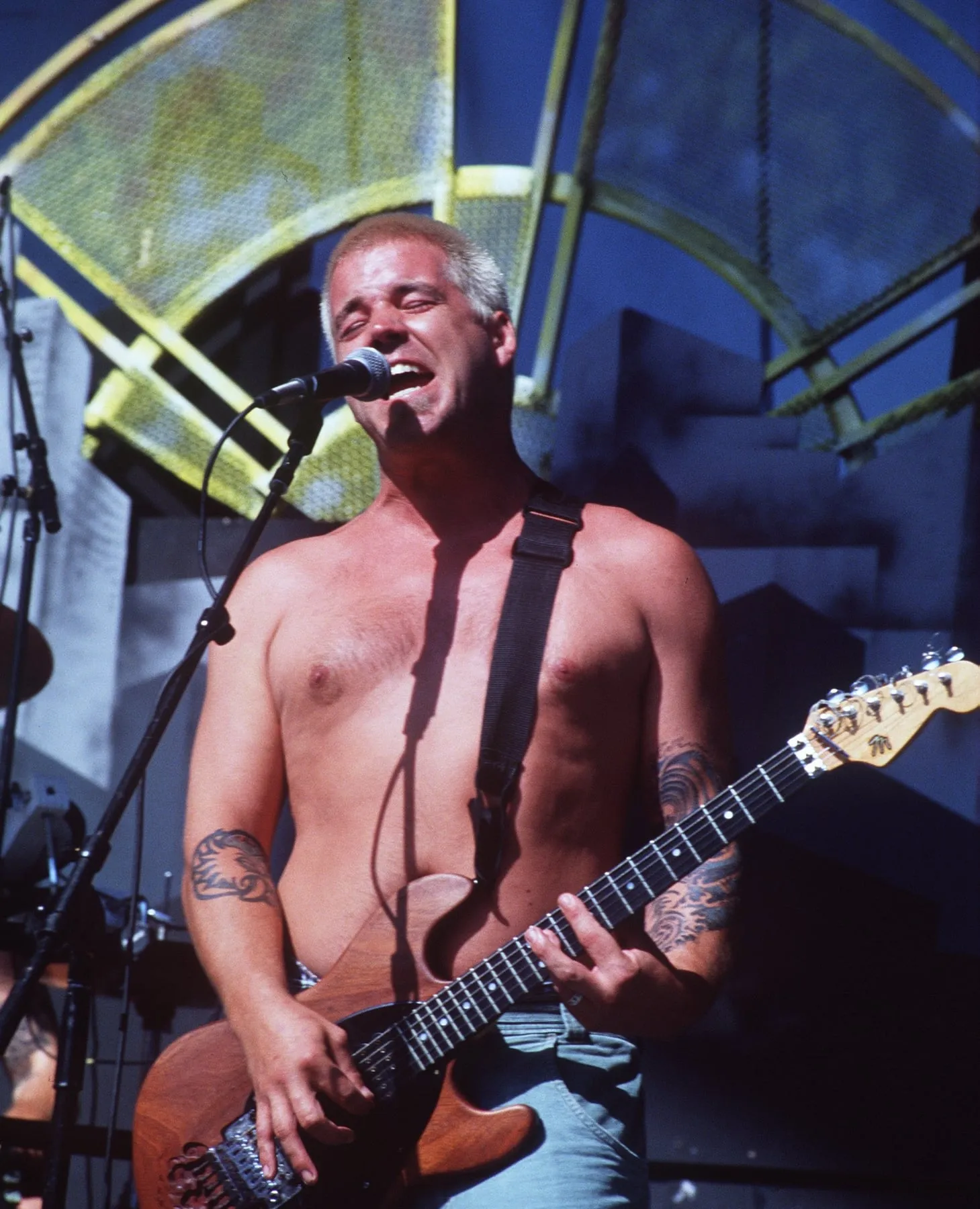
Photo by Unknown author Unknown author , licensed under CC BY-SA 4.0 · Wikimedia Commons
Rank #411
Sublime
Long Beach band whose ska-punk-reggae stew became a SoCal staple.
From Wikipedia
Sublime is an American ska punk band from Long Beach, California. Founded in 1988, the band's original lineup consisted of Bradley Nowell, Eric Wilson (bass), and Bud Gaugh (drums). Lou Dog, Nowell's dalmatian, was the mascot of the band. Nowell died of a heroin overdose in 1996, resulting in the band's breakup. In 1997, songs such as "What I Got", "Santeria", "Wrong Way", "Doin' Time", and "April 29, 1992 (Miami)" were released to U.S. radio.
Members
- Jakob James Nowell (2023–present)
- Bradley Nowell (?–1996)
- Bud Gaugh
- Eric Wilson
Deep Dive
Overview
Sublime was an American ska punk band from Long Beach, California, formed in 1988. Operating at the intersection of punk, reggae, and ska, they created a hybrid sound that became synonymous with Southern California’s alternative rock landscape in the early-to-mid 1990s. Though the band’s active years spanned less than a decade before internal tragedy cut them short, their catalog and cultural footprint proved far more durable than their brief lifespan suggested.
Formation Story
Sublime coalesced in Long Beach in 1988 with a lineup centered on vocalist Bradley Nowell, bassist Eric Wilson, and drummer Bud Gaugh. The three musicians found common ground in a musical vision that blended the driving rhythms and offbeat guitar work of ska with reggae’s laid-back sensibility and punk rock’s raw energy. Long Beach in the late 1980s was fertile ground for genre-bending acts; the city’s music scene had already produced and hosted a diverse range of alternative rock styles. The addition of Lou Dog, Nowell’s dalmatian, as the band’s unofficial mascot became an early part of the group’s identity, reflecting both their casual approach to performance and their connection to the local beach and street culture of their hometown.
Breakthrough Moment
Sublime’s first full album, 40 oz. to Freedom, arrived in 1992. The record showcased the three-piece’s ability to move fluidly between genres while maintaining infectious melodic sensibilities. 40 oz. to Freedom established their core sound and introduced audiences to the band’s capacity to balance humor, urgency, and genuine musicianship. The album laid the groundwork for what would become their signature approach: upbeat instrumental arrangements, playful yet often socially aware lyrics, and an undeniable verve that made their music impossible to ignore. Though initial commercial breakthrough was gradual, the album built Sublime a solid foundation within punk and ska communities.
Peak Era
Sublime reached their commercial and creative zenith between 1994 and 1996. Robbin’ the Hood (1994) refined and expanded the template established by their debut, while their self-titled album Sublime (1996) emerged as their most fully realized work. By this period, the band had cultivated a devoted following throughout Southern California and beyond. Radio began picking up individual tracks in 1997—notably “What I Got,” “Santeria,” “Wrong Way,” “Doin’ Time,” and “April 29, 1992 (Miami)“—bringing their music to mainstream audiences. Ironically, this surge in commercial attention coincided with the band’s dissolution: Bradley Nowell died of a heroin overdose in 1996, an event that ended Sublime’s recording and touring activities immediately.
Musical Style
Sublime’s sound was built on the collision of three distinct influences. Ska punk provided the angular, syncopated guitar riffs and the uptempo percussion that drove many of their arrangements. Reggae contributed rhythmic swing, dub-influenced production textures, and a certain compositional looseness that kept their songs from feeling formulaic. Punk rock supplied the raw vocal delivery, simple but effective song structures, and a defiant attitude toward mainstream polish. Nowell’s vocals—sometimes shouted, sometimes sung in a rapid-fire staccato—carried an unfussy quality that complemented rather than dominated the instrumental mix. The band typically eschewed overproduction; their recordings retained an immediate, almost live-in-the-studio quality that made their music feel direct and unpretentious. This combination appealed to audiences across rock and alternative scenes, transcending the boundaries that often separated reggae listeners, punk fans, and mainstream rock audiences.
Major Albums
40 oz. to Freedom (1992)
Sublime’s debut established their core sound and introduced their ability to move between genres within a single song. The album’s willingness to juxtapose humorous lyrics with genuinely skilled musicianship set an early template for their entire career.
Robbin’ the Hood (1994)
The second full-length further refined Sublime’s formula, expanding their instrumental arrangements and demonstrating greater confidence in their genre-blending approach. The album deepened their following in California and the broader punk-ska underground.
Sublime (1996)
The self-titled stands as Sublime’s most cohesive and fully realized work. Released in the year of Nowell’s death, it contained several of their most enduring songs and represented the band at peak creative and commercial confidence. The album became their most famous release, gaining renewed attention after their breakup when radio finally embraced tracks from it.
Signature Songs
- “What I Got” — A laid-back reggae-inflected singalong that became perhaps the band’s best-known track, released to radio in 1997.
- “Santeria” — A mid-tempo ska-driven song showcasing the band’s ability to build momentum through instrumental detail.
- “Doin’ Time” — A bouncing, upbeat track that exemplified Sublime’s ability to maintain levity while crafting genuinely memorable melodies.
- “April 29, 1992 (Miami)” — A socially engaged song that addressed urban unrest with urgency while maintaining Sublime’s characteristic musical lightness.
- “Wrong Way” — A more introspective moment in Sublime’s catalog, revealing the band’s capacity for serious subject matter.
Influence on Rock
Sublime’s relatively brief existence belied their influence on rock and alternative music trajectories in the 1990s and beyond. They demonstrated that punk rock and reggae were not incompatible aesthetics but could be synthesized into something commercially viable and artistically legitimate. In doing so, they opened a lane that influenced subsequent ska-punk and reggae-punk acts, and their example proved that Southern California bands could draw from diverse musical sources without sacrificing credibility in any single community. The band’s refusal to take themselves too seriously—maintained through their humor and through artistic choices like featuring Lou Dog on their album artwork—also influenced how punk and alternative rock approached self-presentation in an era increasingly defined by irony and self-awareness.
Legacy
Bradley Nowell’s death in 1996 transformed Sublime from a rising regional act into a tragic historical moment. The band never reunited or recorded again. However, the release of songs to radio in 1997, a year after Nowell’s passing, unexpectedly brought Sublime to mainstream audiences exactly when they could no longer capitalize on the attention. This posthumous success ensured that their three studio albums remained in print and in cultural circulation. Sublime’s music has maintained consistent streaming presence and continues to be heard on alternative rock radio. The band’s catalog—particularly the self-titled album—has been canonized as essential 1990s California punk-reggae, and their influence can be traced through numerous ska and reggae-influenced acts that emerged in subsequent decades. Though their active life was brief, the specificity and memorability of their sound ensured that Sublime’s music transcended the fate of many other regional 1990s acts and became embedded in the broader narrative of American alternative rock.
Fun Facts
- Lou Dog, Bradley Nowell’s dalmatian, served as the band’s mascot and appeared on album artwork, becoming nearly as iconic to fans as the musicians themselves.
- The track “April 29, 1992 (Miami)” referenced the 1992 Los Angeles riots, demonstrating the band’s willingness to engage with contemporary social events despite their generally upbeat musical approach.
- Though Sublime disbanded in 1996, their unexpected radio success came in 1997, a full year after Bradley Nowell’s death—a timing that ensured their peak commercial moment arrived after the band had ceased to exist.