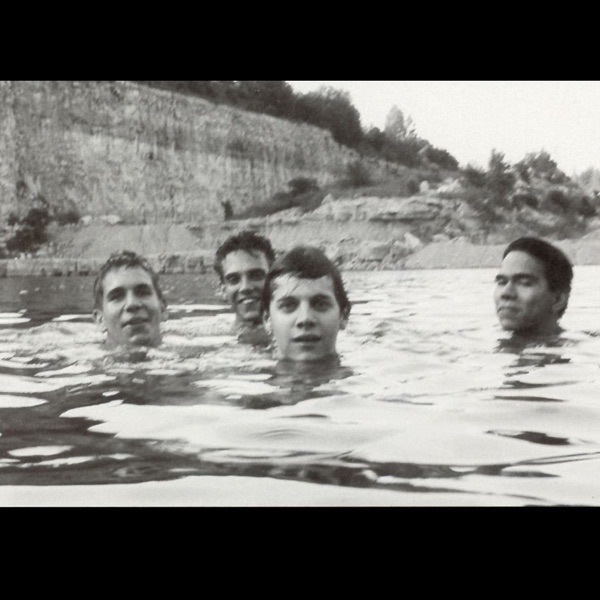

Photo by michael morel , licensed under CC BY 2.0 · Wikimedia Commons
Rank #439
Slint
Louisville band whose 'Spiderland' is a foundational text for math rock and post-rock.
From Wikipedia
Slint was an American rock band from Louisville, Kentucky, formed in 1986 after the dissolution of two local bands, Squirrel Bait and Maurice. It initially consisted of guitarist-vocalist Brian McMahan, guitarist David Pajo, drummer-vocalist Britt Walford and bassist Ethan Buckler. Though little known during their original run, they gained a cult following and acclaim as one of the pioneers of post-rock and math rock.
Members
- Brian McMahan
- Britt Walford
- David Pajo
- Ethan Buckler
Studio Albums
- 1989 Tweez
- 1991 Spiderland
- 2000 Los Fabulosos
Source: MusicBrainz
Deep Dive
Overview
Slint was an American rock band from Louisville, Kentucky, that emerged from the dissolution of two local acts—Squirrel Bait and Maurice—in 1986. Though they operated largely outside mainstream attention during their initial seven-year existence, they became recognized as pioneers of two interlocking genres: math rock and post-rock. Their 1991 album Spiderland stands as a foundational document for both movements, establishing a template for instrumental tension, rhythmic complexity, and emotional restraint that would influence countless bands in the decades that followed.
Formation Story
Slint coalesced in Louisville in 1986 from the wreckage of two local bands. Guitarist-vocalist Brian McMahan, guitarist David Pajo, drummer-vocalist Britt Walford, and bassist Ethan Buckler combined their collective experience into a new project that would synthesize post-punk clarity with progressive rock’s structural ambition. The band’s origins in the Louisville underground gave them access to a small but dedicated community of experimental music listeners, though they remained largely unknown outside that circuit during their initial years.
Breakthrough Moment
Slint’s breakthrough came with the release of Spiderland on Touch and Go Records in 1991. The album’s nine instrumental and vocal-minimal compositions showcased a band in complete command of dynamics, space, and mathematical precision. Songs built around odd time signatures, angular guitar figures, and drums that seemed to operate independently of conventional song structure, then collapsed into moments of stark, crystalline silence. While the album sold modestly upon release, it gradually accumulated influence through college radio play and word-of-mouth circulation among musicians and critics attuned to experimental rock. Spiderland became the record that would define Slint’s legacy and establish the band as essential listening for anyone engaged with post-rock and math rock’s emergence in the 1990s.
Peak Era
Slint’s peak era, spanning their debut Tweez (1989) through their final original album Spiderland (1991), represented a two-album arc of increasing sophistication and clarity of vision. Tweez introduced their core aesthetic—dense, rhythmically unorthodox arrangements played with meticulous precision—while Spiderland refined and perfected that approach, dispensing with excess and arriving at a sound of almost stark elegance. During these years, the band operated as the rare experimental act that could balance intellectual rigor with genuine emotional impact. The compositions on Spiderland, in particular, demonstrated that instrumental rock and post-rock complexity need not abandon melody, tension, or the human element; they could simply reorganize it in unexpected ways.
Musical Style
Slint’s sound emerged from the intersection of post-punk’s emphasis on space and constraint with math rock’s embrace of polyrhythmic complexity and unconventional song structures. Pajo and McMahan’s guitars rarely played in unison; instead, they established separate melodic or textural territories that created tension through dissonance or independence rather than harmony. Walford’s drumming, often the most immediately striking element of the band’s sound, moved in conversations with bass and guitar rather than simply keeping time—fills and patterns that seemed to anticipate or contradict the harmonic movement around them. Buckler’s bass lines provided melodic counterpoint as often as rhythmic foundation. The overall effect was one of controlled chaos: every element heard, nothing wasteful, yet always slightly off-center. Vocally, both McMahan and Walford deployed sparse, understated delivery, treating the voice as another textural instrument rather than the dominant focal point.
Major Albums
Tweez (1989)
Slint’s debut introduced the band’s core approach: angular guitars, polyrhythmic drums, and instrumental focus punctuated by reserved vocal passages, establishing the template that would evolve into Spiderland.
Spiderland (1991)
The masterwork that defined post-rock and math rock’s possibilities, Spiderland presented nine pieces of escalating emotional and structural sophistication, from the opening sparse geometry of “Breadcrumb Trail” to the ten-minute final track “Good Morning, Captain.” This album became the reference point for an entire generation of experimental rock musicians.
Los Fabulosos (2000)
Released nine years after their initial breakup, this album returned Slint to recording, showing that their compositional approach and instrumental precision had not diminished despite the extended hiatus.
Signature Songs
- “Breadcrumb Trail” — The album opener that announces Spiderland’s aesthetic: sparse, rhythmically fractured, and immediately arresting in its refusal of conventional song structure.
- “Nosferatu Man” — A mid-album showcase for the band’s ability to sustain tension through repetition, minimal melodic variation, and purely instrumental interplay.
- “Darlene” — A moment of rare vocal presence and narrative clarity within Spiderland, the track’s spoken-word passages and driving rhythmic pulse made it the closest thing to an accessible entry point on the album.
- “Good Morning, Captain” — The ten-minute album finale that builds from whispered speech and ambient guitar toward a wall of sustained, distorted sound, representing the culmination of Spiderland’s emotional and technical arc.
Influence on Rock
Slint’s influence on post-rock cannot be overstated. While the term “post-rock” existed before Spiderland, the album gave the genre both a philosophical core and a sonic blueprint. Bands emerging in the mid-1990s onward—Tortoise, Godspeed You! Black Emperor, and countless others—found in Spiderland proof that rock music could operate outside verse-chorus-verse structures, could foreground texture and dynamics over traditional melody and rhythm, and could achieve emotional weight through restraint rather than volume. The album also became essential to math rock’s development, demonstrating that rhythmic complexity and instrumental virtuosity could serve emotional expression rather than mere technical display. Slint showed that the future of experimental rock lay not in wholesale rejection of rock’s tools but in their reorganization according to new principles.
Legacy
Slint’s cultural footprint has only grown since their initial run. Though they dissolved in 1991, the band reunited periodically and eventually resumed recording with Los Fabulosos in 2000, confirming that their sound and approach had not been tied to a specific moment but represented an enduring musical philosophy. Spiderland remains in continuous circulation through streaming platforms and physical reissues, reaching new generations of listeners and musicians. The album’s influence on contemporary experimental rock, indie rock, and progressive music generally stands as one of the 1990s’ most significant legacies. Slint’s career arc—from local Louisville obscurity through cult recognition to foundational status—exemplifies how innovation in rock music often occurs outside mainstream channels, only to become central to the genre’s understanding of itself.
Fun Facts
- Slint emerged from Louisville’s underground music scene alongside bands like Squirrel Bait and Maurice, both of which dissolved to allow their members to form Slint, demonstrating the interconnected nature of regional punk and post-punk communities.
- Touch and Go Records, the label that released both Tweez and Spiderland, became known for championing experimental and post-rock acts during the 1990s, with Slint among their most influential signings.
- Spiderland was recorded as a single continuous session, contributing to the album’s cohesive atmosphere and the tight interplay between all four musicians.
Discography & Previews
Click any album to expand its track list. Each track plays a 30-second preview streamed from Apple Music. Tap the link icon next to a track to open it in Apple Music for full playback.