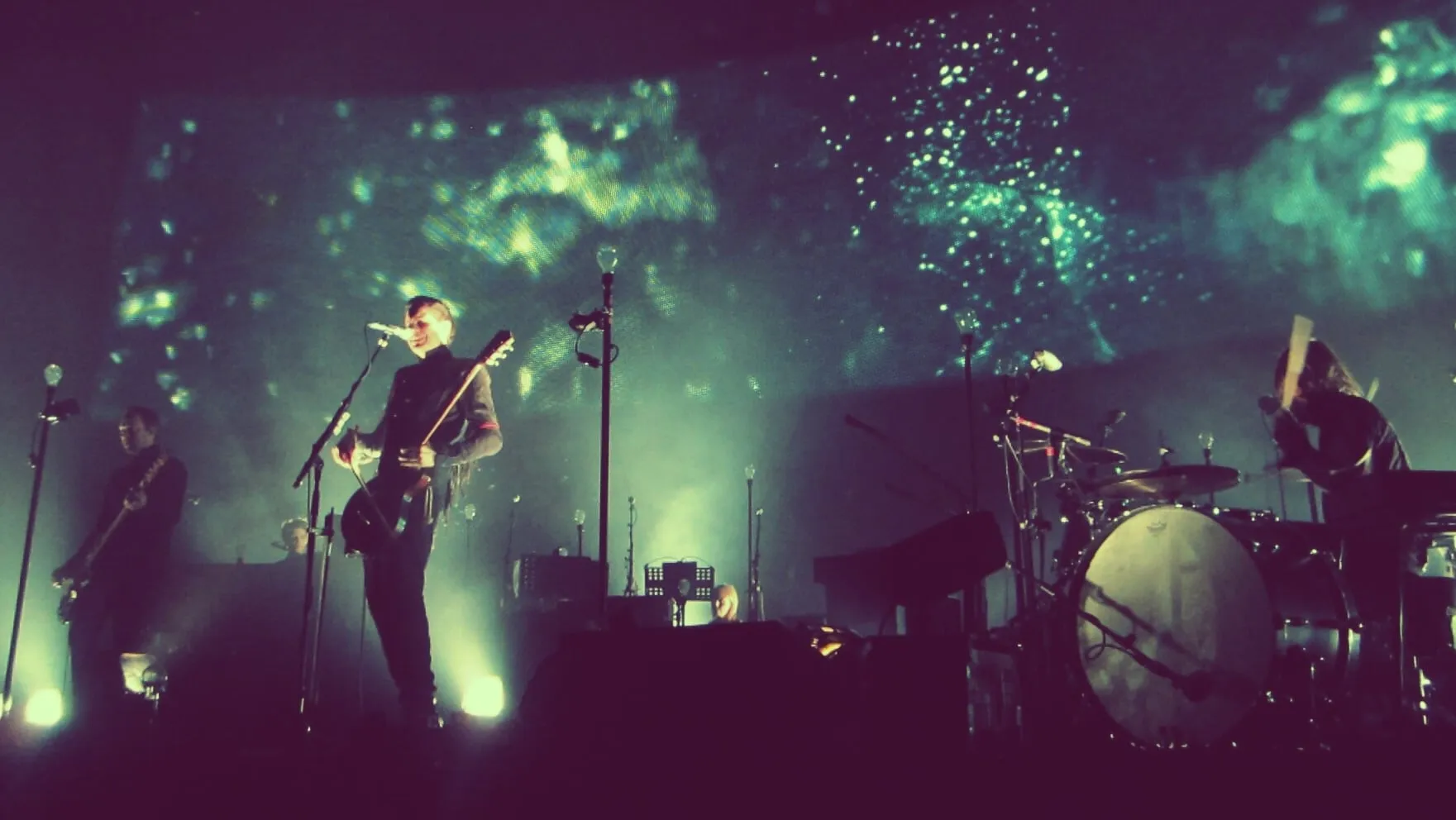
Photo by Alive87 , licensed under CC BY 2.0 · Wikimedia Commons
Rank #117
Sigur Rós
Icelandic ambient-rock band whose bowed guitars feel weather-borne.
From Wikipedia
Sigur Rós is an Icelandic post-rock band that formed in 1994 in Reykjavík. It comprises lead vocalist and guitarist Jón Þór "Jónsi" Birgisson, bassist Georg Hólm, and keyboardist Kjartan Sveinsson. Known for their ethereal sound, frontman Jónsi's falsetto vocals, and their use of bowed guitar, Sigur Rós incorporate classical and minimal aesthetic elements. Jónsi's vocals are sung in Icelandic and non-linguistic vocalisations the band terms Vonlenska. They have released eight studio albums, and attracted critical and commercial attention with their second album Ágætis byrjun.
Members
- Ágúst Ævar Gunnarsson
- Georg Hólm
- Jónsi
- Kjartan Sveinsson
- Orri Páll Dýrason
Studio Albums
- 1997 Von
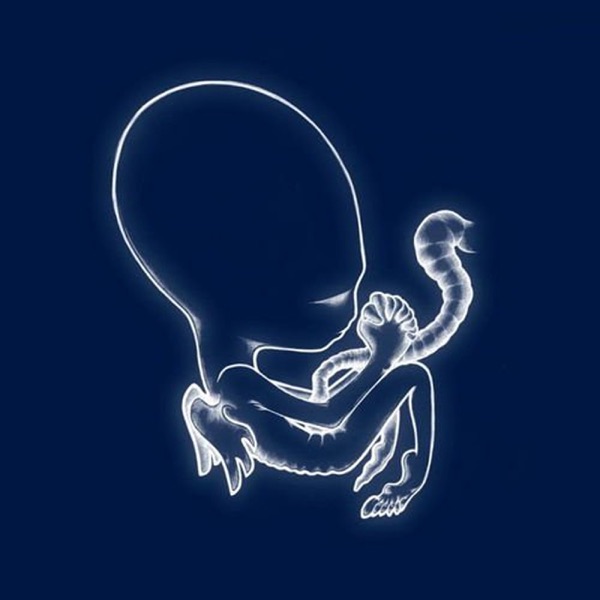
- 1999 Ágætis byrjun
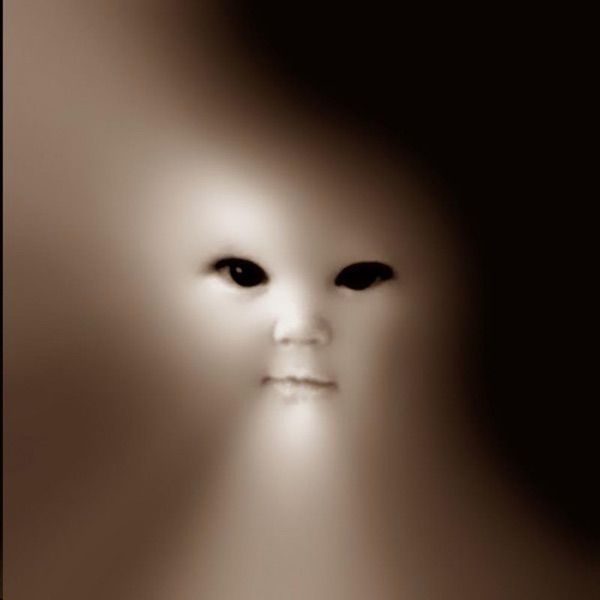
- 2002 ( )
- 2005 Takk…
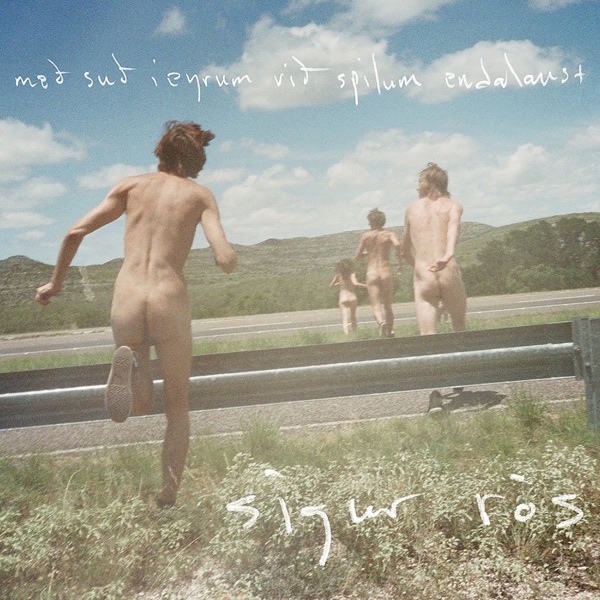
- 2008 Með suð í eyrum við spilum endalaust
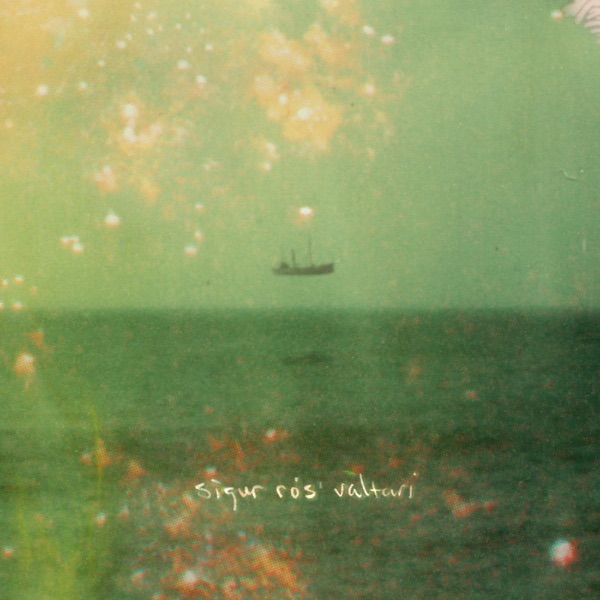
- 2012 Valtari
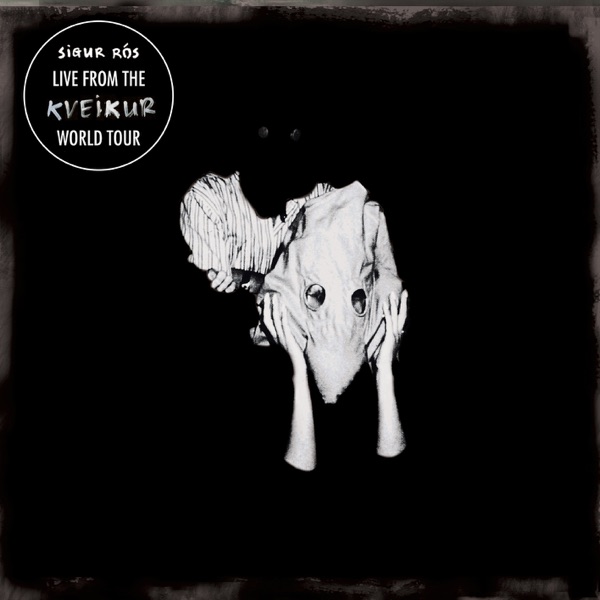
- 2013 Kveikur
- 2017 Route One
- 2019 22° Lunar Halo
- 2019 Variations on Darkness
- 2019 Sigur Rós Presents Liminal Sleep
- 2023 ÁTTA
Source: MusicBrainz
Deep Dive
Overview
Signur Rós is an Icelandic post-rock band that emerged from Reykjavík in 1994 and has since become one of the defining acts of ambient-inflected rock music. The band’s sound is characterized by ethereal textures, classically informed instrumentation, and the distinctive falsetto vocals of frontman Jón Þór “Jónsi” Birgisson, often sung in Icelandic alongside non-linguistic vocalizations the band calls Vonlenska. Their use of bowed guitar—an unconventional approach in rock—combined with minimalist compositional principles and orchestral arrangements, positioned them at the intersection of post-rock’s experimental ambitions and dream-pop’s emotional accessibility.
Formation Story
Signur Rós coalesced in Reykjavík in 1994 around Jónsi and bassist Georg Hólm. The early lineup gradually stabilized to include keyboardist Kjartan Sveinsson, drummer Ágúst Ævar Gunnarsson, and later percussionist Orri Páll Dýrason. Iceland’s small but vibrant music scene in the mid-1990s provided fertile ground for the band’s experimentalism; the country’s geographic and cultural isolation fostered a willingness to pursue unconventional sonic paths. By the time of their debut, Sigur Rós had established a sonic foundation that would distinguish them immediately from their contemporaries in the nascent post-rock movement.
Breakthrough Moment
Sigur Rós released their debut album Von in 1997 on FatCat Records, but it was their second album, Ágætis byrjun, in 1999 that brought them international critical and commercial attention. The album’s immersive soundscapes and Jónsi’s otherworldly vocal presence resonated with audiences and critics seeking an alternative to the then-dominant rock and pop trends. Ágætis byrjun established the template that would define the band’s approach: extended instrumental passages built on bowed guitar and synthesizer, carefully placed vocal phrases that functioned as additional instruments rather than traditional song vehicles, and an overall aesthetic that felt more like film score than conventional rock album. The record’s success opened doors across Europe and North America, confirming that post-rock’s margins had expanded into genuine mainstream alternative currency.
Peak Era
Signur Rós’s creative and commercial zenith extended across the 2000s, anchored by three landmark albums. Their third record, the self-titled ( ), arrived in 2002 and deepened their atmospheric approach with even more abstract instrumental work. Takk…, released in 2005, achieved their broadest reach, combining the band’s signature ethereal textures with more accessible song structures. Með suð í eyrum við spilum endalaust followed in 2008, marking another evolution toward varied compositional approaches while maintaining their core aesthetic. Throughout this period, Sigur Rós became festival mainstays and toured extensively, their live performances showcasing how their intricate studio productions translated to the concert setting through meticulous arrangement and genuine improvisational sensitivity.
Musical Style
Signur Rós’s sound rests on a foundation of bowed electric guitar, played either by Jónsi or through keyboard-controlled string synthesizers, layered beneath Jónsi’s falsetto and complemented by rich keyboard orchestration and subtle rhythm work. The band’s approach to melody and harmony draws from classical music—evident in their use of string arrangements and harmonic progression—while their deployment of repetitive structures and gradual dynamic shifts owes much to minimalism. Vonlenska, the non-linguistic vocalization used extensively on their recordings, transforms Jónsi’s voice into an instrument of pure texture, divorcing the human voice from semantic meaning and allowing it to function as part of the instrumental whole. Dynamically, Sigur Rós tracks typically build from hushed, near-silent passages toward crescendos of layered guitars and keyboards, creating a cinematic arc that has led to their music being used frequently in film and television. Sonically, the band maintains a focus on clarity and space; rather than dense distortion or aggressive production, they favor crystalline tones and generous use of silence, allowing each element to exist in articulate isolation.
Major Albums
Ágætis byrjun (1999)
The breakthrough that announced Sigur Rós to the world, establishing their signature interplay of bowed guitars, ethereal synths, and Jónsi’s falsetto as a commercially viable alternative to dominant rock trends.
( ) (2002)
A more abstractly instrumental work that doubled down on soundscape composition, pushing the band’s aesthetic toward pure texture and away from traditional vocal-centric songwriting.
Takk… (2005)
Reached their widest audience by balancing ethereal atmospherics with more structured compositional frameworks, making their experimental sound accessible without diluting its essential character.
Með suð í eyrum við spilum endalaust (2008)
Demonstrated stylistic range within the band’s established palette, varying song lengths and approach while sustaining their core commitment to orchestral arrangement and emotional resonance.
Valtari (2012)
Marked a step back toward introspection and minimalism following a decade of touring and visibility, returning to quieter, more deliberately paced compositional approaches.
Kveikur (2013)
Showed a slightly more uptempo and rhythmically assertive direction compared to Valtari, adding textural variety while remaining within the band’s post-rock-ambient framework.
Signature Songs
- Hoppípolla — A rare moment of comparative brightness and uplift in the Sigur Rós catalog, built on spiraling piano and Jónsi’s doubled vocal hooks.
- Svefn-g-englar — From Ágætis byrjun, a sprawling instrumental anchored by bowed guitar and synthesizer that exemplifies the band’s ability to sustain emotional arc without traditional verse-chorus structure.
- Starálfur — An extended composition that showcases the band’s mastery of dynamic buildout, moving from intimate guitar work to orchestral swell.
- Brennisteinn — A piece that demonstrates the band’s textural sophistication and use of Vonlenska as a primary melodic instrument.
Influence on Rock
Signur Rós arrived during post-rock’s consolidation as a credible alternative movement and became one of its highest-profile ambassadors, proving that instrumental-heavy, orchestrally informed rock could achieve international chart presence and cultural resonance. Their success opened space for other ambient-leaning and classically influenced rock acts in the 2000s and validated a sonic approach—bowed instruments, minimalist composition, non-verbal vocalization—that would have seemed commercially unviable a decade earlier. The band’s influence extends beyond strict post-rock boundaries into dream pop, art rock, and the broader category of soundtrack and film-music composers working in rock registers. Their meticulous attention to production clarity and spatial arrangement influenced how subsequent indie and alternative acts approached the studio as an instrument in itself.
Legacy
Signur Rós has maintained continuous activity through the 2010s and 2020s, releasing albums including Route One (2017), 22° Lunar Halo (2019), and ÁTTA (2023), demonstrating sustained creative commitment decades after their initial breakthrough. The band’s back catalog has remained in steady rotation across streaming platforms and in film and television placements, suggesting their music has achieved a kind of timeless quality befitting their aesthetic approach. Though they emerged at a specific moment in post-rock’s history, their fundamental musical innovations—the integration of bowed guitar into rock contexts, the use of non-linguistic vocalization as melody, the marriage of classical minimalism and contemporary production—have proven durable enough to transcend period markers. Sigur Rós represents a successful case of an avant-garde aesthetic achieving mainstream visibility and chart presence without compromise to artistic intent.
Fun Facts
- Vonlenska, the band’s term for non-linguistic vocalization, translates loosely to “Hopelandic” and was coined by the band themselves to describe Jónsi’s sung syllables that approximate language without semantic content.
- The album title ( ), released in 2002, is represented by parentheses—a visual representation of emptiness or the space between things, reflecting its instrumental-heavy approach.
- Sigur Rós’s music has featured prominently in film and television soundtracks, significantly extending their cultural reach beyond the traditional rock audience.
- Despite being from a small island nation of roughly 300,000 people, Sigur Rós achieved touring presence comparable to major rock acts from much larger markets, a testament to their international appeal and fanbase loyalty.
Discography & Previews
Click any album to expand its track list. Each track plays a 30-second preview streamed from Apple Music. Tap the link icon next to a track to open it in Apple Music for full playback.