
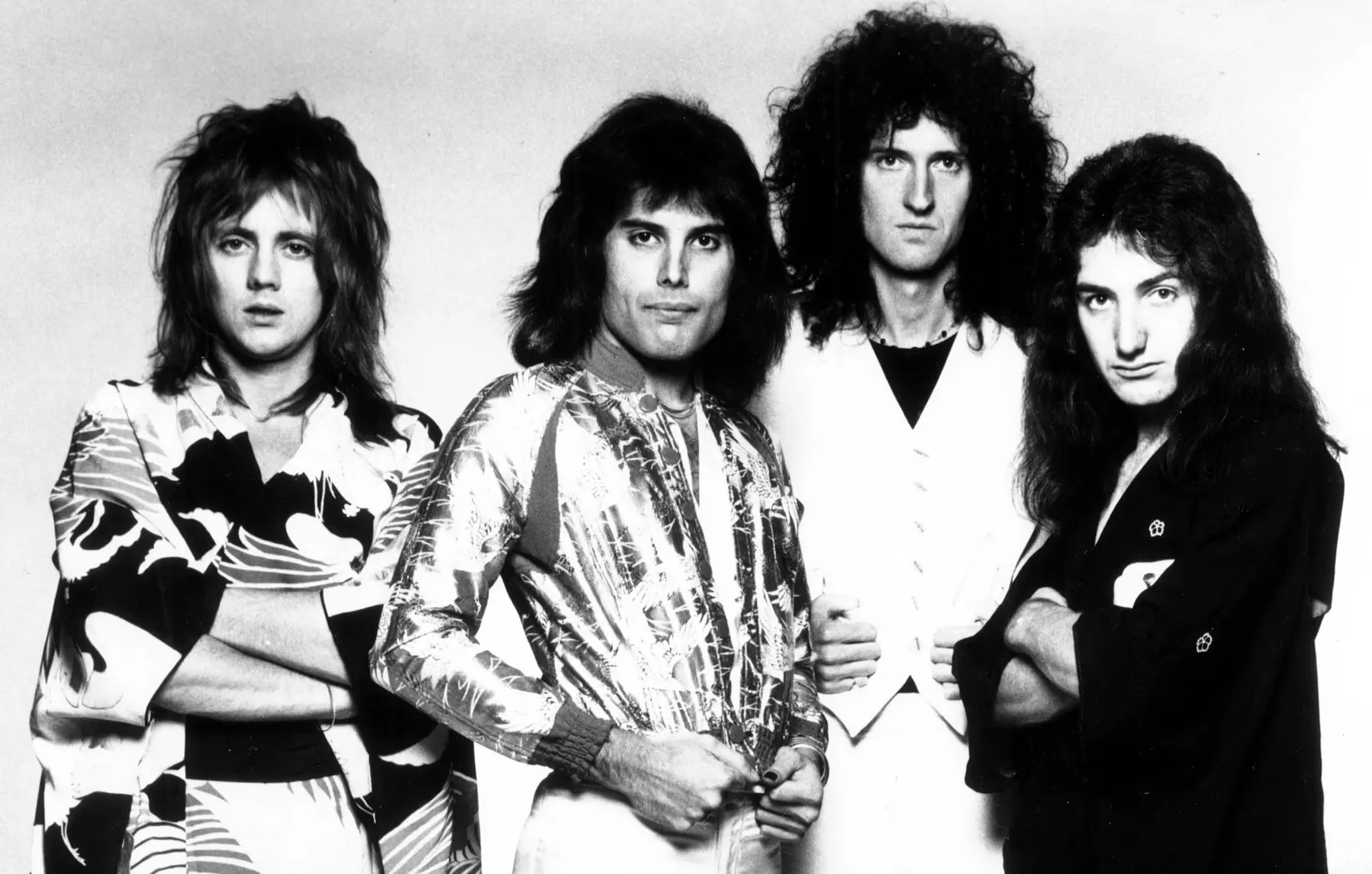
Photo by Koh Hasebe; Distributed by Elektra Records , licensed under Public domain · Wikimedia Commons
Rank #5
Queen
Theatrical rock virtuosos behind some of the most-performed anthems ever.
From Wikipedia
Queen are a British rock band formed in London in 1970 by Freddie Mercury, Brian May, and Roger Taylor, later joined by John Deacon (bass). Their earliest works were influenced by progressive rock, hard rock and heavy metal, but the band gradually ventured into more conventional and radio-friendly works by incorporating further styles, such as arena rock and pop rock.
Members
- Brian May (1970–present)
- Freddie Mercury (1970–1991)
- Roger Taylor (1970–present)
- John Deacon (1971–1997)
Studio Albums
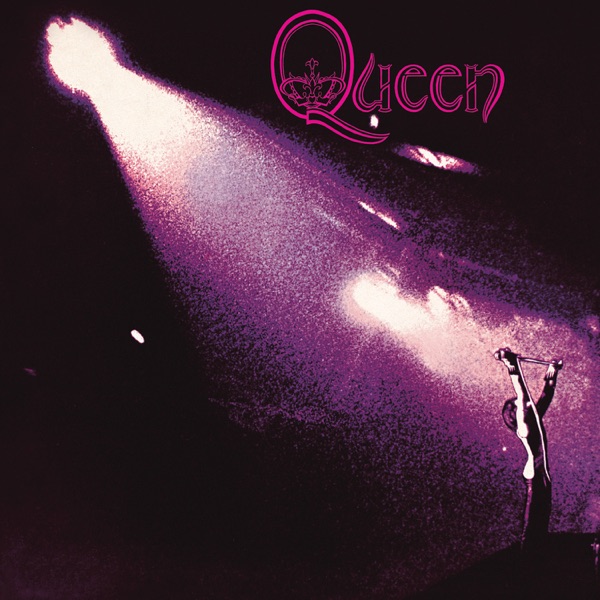
- 1973 Queen
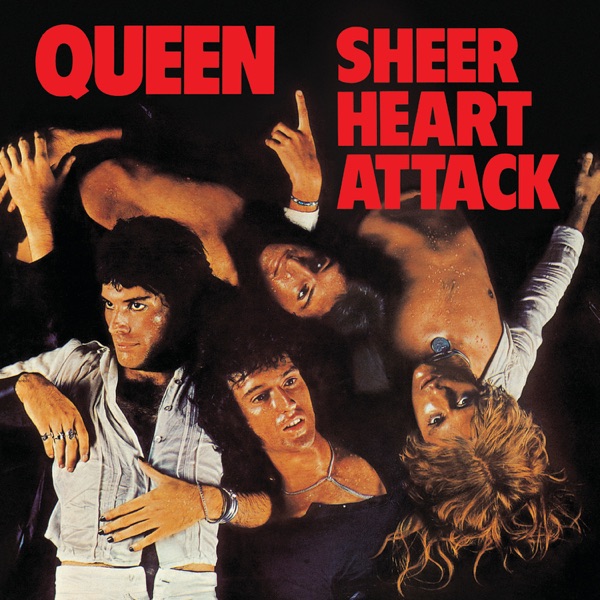
- 1974 Sheer Heart Attack
- 1974 Queen II
- 1975 A Night at the Opera
- 1976 A Day at the Races
- 1977 News of the World
- 1978 Jazz
- 1980 The Game
- 1982 Hot Space
- 1984 The Works
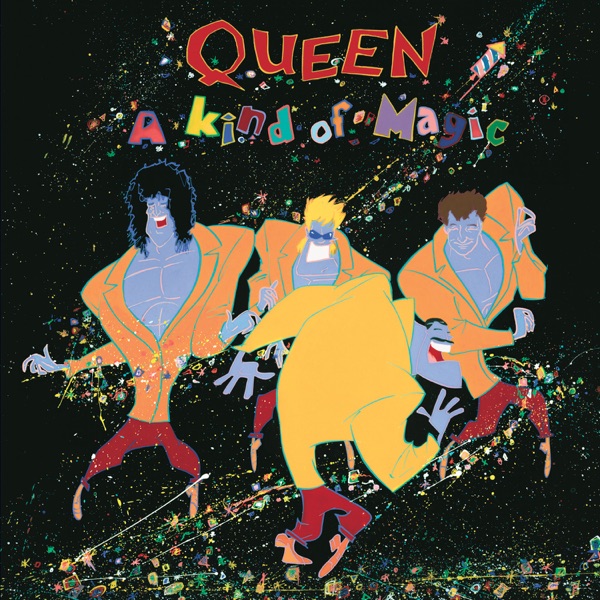
- 1986 A Kind of Magic
- 1989 The Miracle
- 1991 Innuendo
- 1995 Made in Heaven
Source: MusicBrainz
Deep Dive
Overview
Queen are a British rock band that emerged from London in 1970 and established themselves as one of rock music’s most enduring and creatively ambitious acts. Founded by Freddie Mercury, Brian May, and Roger Taylor—later completed by bass guitarist John Deacon in 1971—Queen constructed a sound that moved across hard rock, progressive rock, and heavy metal on their early records before gradually incorporating arena rock and pop rock sensibilities into their songwriting and production. Their trajectory traces not a retreat from rock’s core but rather an expansion of what rock music could contain: layered vocal harmonies, intricate guitar work, theatrical presentation, and melodies built for both stadium crowds and radio airplay.
Over nearly three decades of continuous output, Queen created some of the most-performed songs in modern music history. Their influence extends across multiple genres and generations, shaping how subsequent bands approached both the sonic and visual dimensions of rock performance.
Formation Story
Freddie Mercury, Brian May, and Roger Taylor came together in London in 1970, a time when British rock was fragmenting into competing aesthetic camps: the raw blues-based hard rock of Led Zeppelin and Black Sabbath, the conceptual ambitions of progressive rock, and the glam rock movement emerging from the capital itself. The three founding members brought distinct musical backgrounds and technical training. John Deacon joined as bass guitarist in 1971, solidifying the classic quartet that would record their first seven albums and establish the band’s core identity.
The band’s name, Queen, was chosen to project regal authority and theatrical grandeur—a symbolic stance that would shape their visual presentation and conceptual approach for decades to come. Their early years coincided with a broader opening in rock toward genre-blending and technical virtuosity, trends that Queen would embrace and amplify.
Breakthrough Moment
Queen’s initial self-titled album appeared in 1973, followed quickly by Sheer Heart Attack in 1974, which began to establish their presence beyond London’s underground. However, it was A Night at the Opera in 1975 that marked their decisive shift into wider recognition. The album signaled a maturation of their songwriting and an embrace of larger production ambitions, with vocal arrangements and instrumental passages that positioned Queen as musicians unafraid to invest substantial studio resources in individual tracks. A Day at the Races (1976) reinforced that trajectory, establishing the band as serious contenders in the arena rock marketplace.
By 1977, with News of the World, Queen had become a fixture on both album-oriented radio and in concert halls. Their ability to construct songs that worked equally as compact radio singles and extended live performances gave them commercial reach that many of their harder rock contemporaries lacked.
Peak Era
The period from the mid-1970s through the mid-1980s represented Queen’s most sustained creative intensity and commercial dominance. Beginning with A Night at the Opera in 1975 and continuing through The Works in 1984, the band released a string of albums that explored different rock and pop variants while maintaining a distinctive house style. News of the World (1977) and Jazz (1978) experimented with rhythm and groove while retaining hard rock foundations. The Game (1980) and Hot Space (1982) showed Queen engaging directly with emerging synthesizer-based pop and funk influences without abandoning the band’s rock core.
A Kind of Magic (1986) and The Miracle (1989) extended their reach further into pop territory while maintaining the sophisticated vocal arrangements and instrumental performances that had become their signature. Throughout this period, Freddie Mercury’s compositional voice grew increasingly dominant, though Brian May continued to contribute songs that showcased his distinctive guitar sound and songwriting perspective.
Musical Style
Queen’s sound rested on four foundational elements: Brian May’s red Special guitar, played through effects and amp techniques that created a distinctly orchestral tone; Freddie Mercury’s four-octave vocal range and instinctive melodic sensibility; Roger Taylor’s intricate and sometimes unconventional drumming; and John Deacon’s bass lines, which functioned as both rhythmic foundation and melodic counterpoint. Mercury’s voice became the instrument around which most arrangements pivoted—his ability to shift between delicate falsetto, muscular belting, and rhythmic spoken passages gave him a vocal vocabulary uncommon in rock music.
The band’s production approach evolved significantly across their career. Their earliest albums drew on progressive rock’s studio techniques—multiple overdubs, layered instrumentation, and orchestral textures created through amplified and processed guitar rather than traditional orchestral instruments. As the 1980s progressed, Queen integrated synthesizers and drum machines, but always as extensions of rather than replacements for their core band sound. Their arrangements tended toward density and harmonic complexity; even radio-oriented songs often contained unexpected chord changes or metric shifts that rewarded close listening.
Vocally, Queen became known for intricate harmony arrangements, with all four members contributing vocal parts on many tracks. This approach drew partly from glam rock influences and partly from May’s and Mercury’s love of classical music and music hall traditions.
Major Albums
A Night at the Opera (1975)
A Night at the Opera marked Queen’s emergence as a major rock force. The album’s expansive production, sophisticated songwriting, and genre-spanning ambition—moving from hard rock to music hall pastiche to classical arrangements within individual tracks—demonstrated the band’s creative confidence. The album’s success established Queen as artists willing to invest substantial studio time in individual songs, a commitment that would define their approach throughout the 1970s and 1980s.
News of the World (1977)
Released in 1977, News of the World solidified Queen’s position as stadium rock architects. The album showcased the band’s ability to construct songs that functioned as both intimate studio creations and arena spectacles. Their songwriting had become tighter while their instrumental and vocal ambitions remained uncompromised, creating a balance between accessibility and complexity that few rock acts achieved.
The Game (1980)
The Game in 1980 represented Queen’s most direct engagement with rhythm-based rock and synthesizer textures while maintaining their signature vocal arrangements and instrumental sophistication. The album demonstrated the band’s ability to absorb new production approaches and electronic instruments without losing their identity, a flexibility that extended their relevance into a new decade.
A Kind of Magic (1986)
By A Kind of Magic in 1986, Queen had fully embraced pop sensibilities while retaining the technical virtuosity and vocal sophistication that distinguished them from straightforward pop acts. The album showed Freddie Mercury at his most melodically inventive, crafting songs that balanced immediate accessibility with subtle harmonic and structural sophistication.
Signature Songs
Queen’s catalog includes numerous songs that have become part of popular culture’s shared vocabulary. Their compositions ranged from hard rock numbers that showcased May’s guitar work to ballads that highlighted Mercury’s melodic gifts to rhythm-driven tracks emphasizing Taylor’s and Deacon’s rhythm section work. Many of their songs have achieved remarkable staying power, remaining staples of radio playlists and public events decades after their initial release.
Influence on Rock
Queen’s influence extended across multiple directions in rock music. They demonstrated that hard rock and progressive rock need not remain separate from pop accessibility, and that technical virtuosity and theatrical presentation could coexist with broad commercial appeal. Their approach to vocal harmony—building arrangements from multiple voices rather than a single lead—influenced subsequent rock and pop acts. Their embrace of studio experimentation as a core creative tool, rather than as a luxury, helped establish higher production standards as an expectation across rock music.
The band’s visual presentation and concert approach—investing in staging, lighting, and choreography as integral to the rock experience—influenced how rock performances were conceived in subsequent decades. Their willingness to draw from diverse musical traditions (music hall, classical, funk, pop, hard rock) without genre gatekeeping opened space for other acts to pursue similarly eclectic approaches.
Legacy
Queen’s music has proven extraordinarily durable in cultural circulation. Following Freddie Mercury’s death in 1991 and John Deacon’s retirement from the band in 1997, Queen continued with guest vocalists, ensuring that the band’s catalog remained active in concert halls and radio formats. The release of Innuendo in 1991—their final album with Mercury—and the posthumous compilation Made in Heaven in 1995 extended the band’s presence into the 1990s.
Queen’s songs have become standard features of sporting events, celebrations, and public gatherings worldwide, a cultural ubiquity unusual for rock bands. Their influence appears in the work of rock, pop, and theatrical artists who cite the band as a model for ambition and technical sophistication. Subsequent generations of musicians and audiences have discovered Queen’s catalog through streaming platforms, film soundtracks, and concert recordings, ensuring their reach has extended far beyond their original era.
Fun Facts
- Brian May, the band’s guitarist, studied physics and astrophysics before committing fully to music, and later earned his PhD in the field in 2007, well after Queen had become established as a major rock act.
- The band recorded albums across multiple record labels throughout their career, including Parlophone, EMI, Elektra, Island, Capitol, and Hollywood Records, reflecting their global commercial presence and evolving industry relationships.
- Queen were among the earliest rock bands to invest substantially in music video production during the 1970s and 1980s, using the emerging medium to enhance their visual presentation and theatrical approach to rock performance.
- John Deacon’s bass lines were more melodic and prominent in the mix than was typical for rock bands of their era, often functioning as a secondary melodic voice rather than purely rhythmic accompaniment.
Discography & Previews
Click any album to expand its track list. Each track plays a 30-second preview streamed from Apple Music. Tap the link icon next to a track to open it in Apple Music for full playback.
- 1 Brighton Rock ↗ 5:10
- 2 Killer Queen ↗ 3:01
- 3 Tenement Funster ↗ 2:47
- 4 Flick of the Wrist ↗ 3:17
- 5 Lily of the Valley ↗ 1:45
- 6 Now I'm Here ↗ 4:18
- 7 In the Lap of the Gods ↗ 3:22
- 8 Stone Cold Crazy ↗ 2:17
- 9 Dear Friends ↗ 1:09
- 10 Misfire ↗ 1:50
- 11 Bring Back That Leroy Brown ↗ 2:15
- 12 She Makes Me (Stormtrooper In Stilettos) ↗ 4:09
- 13 In the Lap of the Gods... Revisited ↗ 3:45

- 1 Procession ↗ 1:12
- 2 Father to Son ↗ 6:14
- 3 White Queen (As It Began) ↗ 4:36
- 4 Some Day One Day ↗ 4:22
- 5 The Loser In the End ↗ 4:06
- 6 Ogre Battle ↗ 4:09
- 7 The Fairy Feller's Master-Stroke ↗ 2:41
- 8 Nevermore ↗ 1:19
- 9 The March of the Black Queen ↗ 6:33
- 10 Funny How Love Is ↗ 2:51
- 11 Seven Seas of Rhye ↗ 2:47

- 1 Death On Two Legs (Dedicated To...) ↗ 3:43
- 2 Lazing On a Sunday Afternoon ↗ 1:07
- 3 I'm In Love With My Car ↗ 3:05
- 4 You're My Best Friend ↗ 2:52
- 5 '39 ↗ 3:31
- 6 Sweet Lady ↗ 4:04
- 7 Seaside Rendezvous ↗ 2:20
- 8 The Prophet's Song ↗ 8:21
- 9 Love of My Life ↗ 3:39
- 10 Good Company ↗ 3:23
- 11 Bohemian Rhapsody ↗ 5:54
- 12 God Save the Queen ↗ 1:15


- 1 We Will Rock You ↗ 2:01
- 2 We Are the Champions ↗ 2:59
- 3 Sheer Heart Attack ↗ 3:28
- 4 All Dead, All Dead ↗ 3:10
- 5 Spread Your Wings ↗ 4:34
- 6 Fight from the Inside ↗ 3:06
- 7 Get Down, Make Love ↗ 3:50
- 8 Sleeping On the Sidewalk ↗ 3:08
- 9 Who Needs You ↗ 3:08
- 10 It's Late ↗ 6:28
- 11 My Melancholy Blues ↗ 3:29

- 1 Mustapha ↗ 3:01
- 2 Fat Bottomed Girls ↗ 4:17
- 3 Jealousy ↗ 3:14
- 4 Bicycle Race ↗ 3:03
- 5 If You Can't Beat Them ↗ 4:15
- 6 Let Me Entertain You ↗ 3:07
- 7 Dead On Time ↗ 3:23
- 8 In Only Seven Days ↗ 2:30
- 9 Dreamer's Ball ↗ 3:31
- 10 Fun It ↗ 3:30
- 11 Leaving Home Ain't Easy ↗ 3:15
- 12 Don't Stop Me Now ↗ 3:29
- 13 More of That Jazz ↗ 4:15



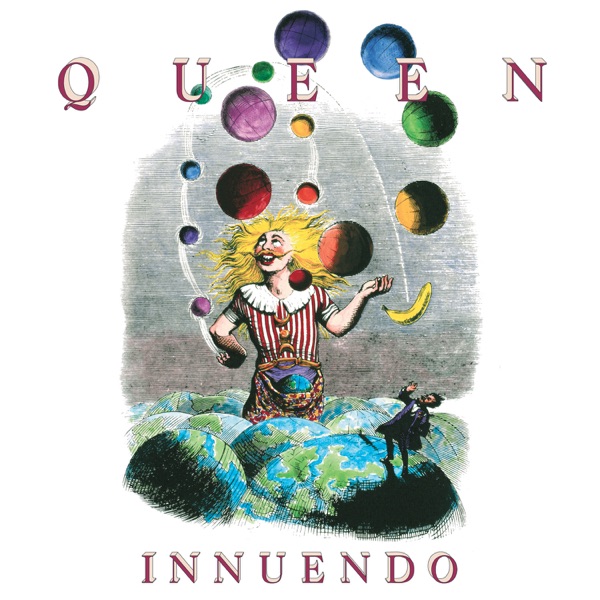
- 1 Innuendo ↗ 6:32
- 2 I'm Going Slightly Mad ↗ 4:23
- 3 Headlong ↗ 4:38
- 4 I Can't Live with You ↗ 4:34
- 5 Don't Try So Hard ↗ 3:40
- 6 Ride the Wild Wind ↗ 4:43
- 7 All God's People ↗ 4:22
- 8 These Are the Days of Our Lives ↗ 4:15
- 9 Delilah ↗ 3:35
- 10 The Hitman ↗ 4:57
- 11 Bijou ↗ 3:37
- 12 The Show Must Go On ↗ 4:36

- 1 It's a Beautiful Day ↗ 2:33
- 2 Made In Heaven ↗ 5:25
- 3 Let Me Live ↗ 4:46
- 4 Mother Love ↗ 4:49
- 5 My Life Has Been Saved ↗ 3:15
- 6 I Was Born to Love You ↗ 4:50
- 7 Heaven for Everyone ↗ 5:36
- 8 Too Much Love Will Kill You ↗ 4:20
- 9 You Don't Fool Me ↗ 5:25
- 10 A Winter's Tale ↗ 3:50
- 11 It's a Beautiful Day (Reprise) ↗ 3:00
- 12 Yeah ↗ 0:04
- 13 Untitled ↗ 22:33