
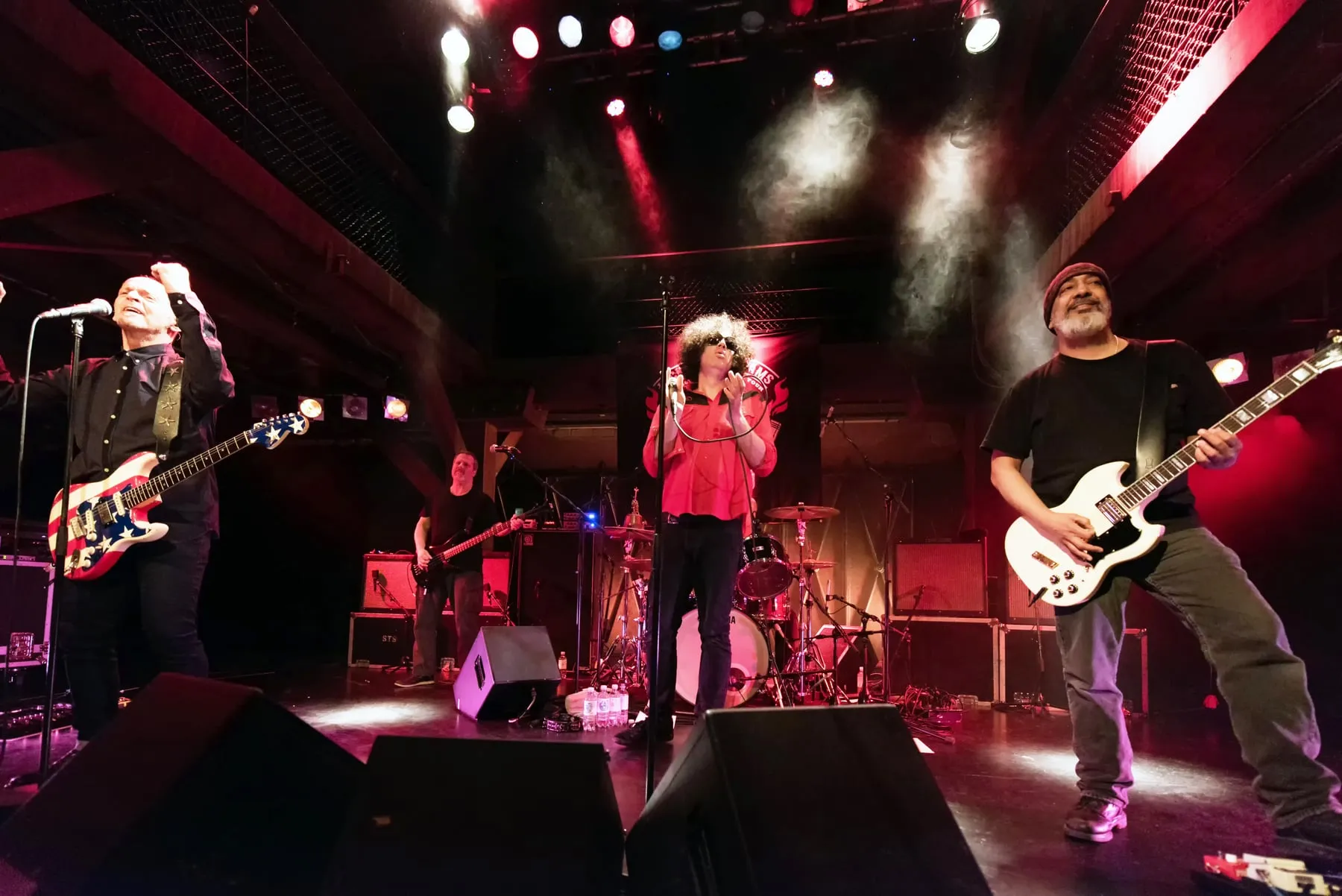
Photo by Frank Schwichtenberg , licensed under CC BY-SA 4.0 · Wikimedia Commons
Rank #206
MC5
Detroit revolutionaries whose live energy lit the fuse for punk.
From Wikipedia
MC5 was an American rock band formed in Lincoln Park, Michigan, in 1963. The classic lineup consisted of vocalist Rob Tyner, guitarists Wayne Kramer and Fred "Sonic" Smith, bassist Michael Davis, and drummer Dennis Thompson. MC5 were listed by Parade as one of the best rock bands of all time and by VH1 as one of the greatest hard rock artists of all time. The band's music is widely recognized as influential, and their 1969 song "Kick Out the Jams" has been covered by many artists.
Members
- Wayne Kramer
Studio Albums
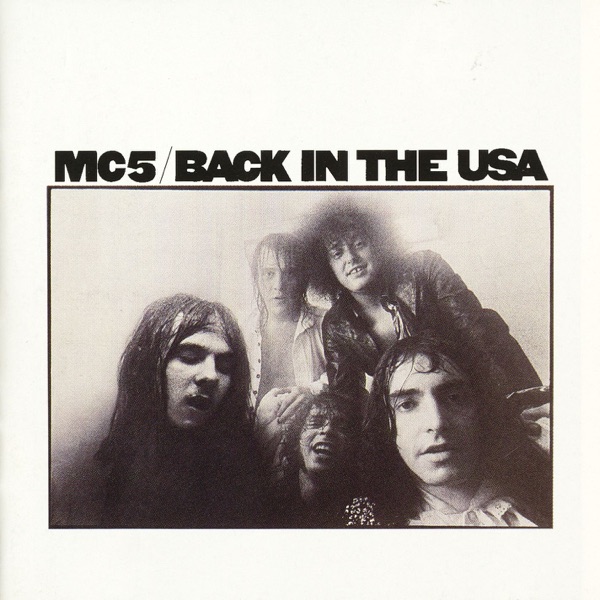
- 1970 Back in the USA
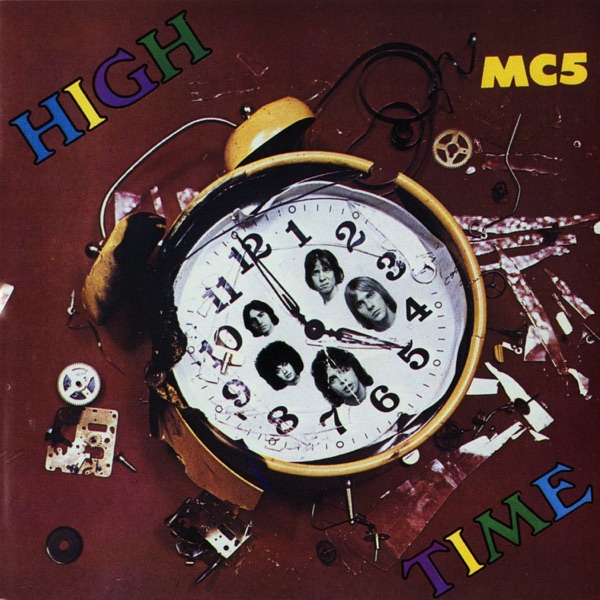
- 1971 High Time
- 2024 Heavy Lifting
Source: MusicBrainz
Deep Dive
Overview
MC5 was an American rock band formed in Detroit in 1964, emerging as one of the most electrifying and culturally defiant acts of the late 1960s. Their five-piece lineup—Rob Tyner on vocals, guitarists Wayne Kramer and Fred “Sonic” Smith, bassist Michael Davis, and drummer Dennis Thompson—forged a sound that bridged garage rock’s raw energy with hard rock’s amplified aggression, creating music that anticipated punk rock’s arrival by several years. The band’s legacy rests not only on their recorded output but on their legendary live performances, which combined musical virtuosity with an anarchic stage presence that influenced generations of rock and punk musicians.
Formation Story
MC5 coalesced in Lincoln Park, Michigan, in the mid-1960s during a period when Detroit’s motor-city grit and working-class ethos permeated its music scene. The classic lineup solidified around Tyner’s commanding vocal presence and the dual-guitar interplay between Kramer and Smith, anchored by the rhythmic foundation of Davis and Thompson. The band’s name itself—with some accounts tracing it to “Motor City 5”—reflected their origins in Detroit, a city whose industrial character and racial tensions would shape the band’s increasingly political stance. By the mid-1960s, they had begun building a reputation as a fearless live act, known for performances that blurred the line between rock concert and street-level rebellion.
Breakthrough Moment
MC5’s watershed moment arrived with their 1969 song “Kick Out the Jams,” a raucous declaration that became their signature anthem. The track’s crude energy, Tyner’s unpolished vocal aggression, and the song’s explicit political and social messaging captured the band at their rawest—a stark contrast to the production values dominating FM radio. The song was covered by numerous artists in subsequent decades, cementing its place in rock history and establishing MC5 as more than a local act; they had become a symbol of countercultural resistance. This breakthrough propelled them toward their first major-label recording and established their reputation as a band willing to provoke rather than placate their audience.
Peak Era
MC5’s most commercially and creatively significant period spanned 1970–1971, bookended by their releases Back in the USA (1970) and High Time (1971). These albums captured the band at full throttle—Kramer and Smith’s guitars locked in a furious push-pull dynamic, Davis’s bass running thick and prominent, Thompson’s drumming propulsive and unrelenting, and Tyner’s voice raw and unadorned. The band operated at maximum intensity during these sessions, delivering hard rock that retained the garage-rock spirit of their roots while demonstrating genuine musicianship and songwriting sophistication. The early 1970s represented the apex of their influence, before internal pressures, changing industry winds, and the band’s own self-destructive energy conspired to limit their commercial runway.
Musical Style
MC5’s sound stood at the intersection of Detroit garage rock tradition and the emerging hard rock of the early 1970s. Kramer and Smith generated a wall of guitar tone that was simultaneously jagged and muscular—not the polished, blues-derived leads of guitar heroes, but rather a more direct, distortion-heavy approach that privileged intensity over technique. Davis’s bass work was thick and audible, functioning almost as a third melodic voice rather than mere rhythm accompaniment. Tyner’s vocals were unpolished and forceful, lacking the technical refinement of contemporaries but compensating with raw emotional conviction and political urgency. Lyrically and thematically, MC5 embraced social confrontation; their music was inseparable from late-1960s and early-1970s radicalism, anti-war sentiment, and anti-establishment posturing. This fusion of sonic aggression and political content positioned them as an important bridge between 1960s rock and the punk movement that would crystallize in the mid-1970s.
Major Albums
Back in the USA (1970)
MC5’s debut major-label release showcased a slightly more controlled version of their raw energy, featuring songs built on solid compositional foundations while retaining their explosive delivery. The album stands as their most accessible recording without sacrificing intensity.
High Time (1971)
Their final album before dissolution, High Time deepened the band’s sonic sophistication, revealing greater range and ambition than their debut. The record demonstrated that MC5 were capable of nuance and development while remaining uncompromising in their fundamental approach.
Signature Songs
- “Kick Out the Jams” — Their most enduring song, a three-minute assault of raw attitude that became an anthem for social defiance and influenced countless punk and garage rock acts.
- “Rocket Reducer No. 62 (Rama Lama Fa Fa Fa)” — A showcase for Kramer and Smith’s guitar interplay and the band’s ability to sustain controlled chaos across a longer arrangement.
- “Come Together” — A showcase of the band’s ability to rework material with maximum energy and presence.
- “Looking at You” — An early song that distilled the band’s garage-rock roots into a tight, propulsive statement.
Influence on Rock
MC5’s impact on rock music extended well beyond their 1964–1972 active years. Their fusion of raw garage energy with political consciousness and their refusal to soften their image or music for commercial viability established a template that punk rock would adopt and refine. Wayne Kramer’s guitar approach—heavy, distorted, and rhythmically aggressive—anticipated the guitar styles that would dominate punk and post-punk rock. Rob Tyner’s vocal presence, untrained and emotionally direct, offered an alternative to the technical virtuosity prized in progressive rock. The band’s live performances, legendary for their anarchic energy and boundary-pushing behavior, established an aesthetic that remained influential across punk, garage rock revival, and alternative rock movements. Bands ranging from the Ramones to Sonic Youth to later Detroit-scene acts traced lineage back to MC5’s fundamental principle that rock music could be a weapon of social statement as much as an entertainment product.
Legacy
MC5 disbanded in 1972 as internal tensions and the music industry’s shift toward stadium rock and progressive forms marginalized their unpolished approach. Their recorded output remained relatively modest—two major studio albums—but those recordings, particularly “Kick Out the Jams,” acquired legendary status through bootleg circulation and retrospective reassessment. The band was recognized as a foundational proto-punk act when punk scholarship became formalized in the 1980s and beyond. VH1 named them one of the greatest hard rock artists of all time, while Parade magazine listed them among the best rock bands ever. Individual members pursued various paths after the band’s dissolution, but MC5 remained defined by those two years of maximum creative output and cultural ferment. In the decades following their breakup, MC5 achieved a kind of immortality in rock history—a band whose actual recorded discography was far smaller than their mythological footprint, a testament to the power of their live presence and the prophetic nature of their sound relative to punk’s imminent emergence.
Fun Facts
- MC5’s connection to Detroit’s radical political scene was unusually deep; their music was inseparable from the city’s late-1960s countercultural movements and anti-war activism.
- “Kick Out the Jams” was released in both a studio version and a live version, with the live take becoming the more widely circulated and celebrated recording.
- The band’s reputation for explosive live performances often overshadowed their studio recordings during their active years, a dynamic that reversed only after their dissolution when critics reassessed their recorded legacy.
Discography & Previews
Click any album to expand its track list. Each track plays a 30-second preview streamed from Apple Music. Tap the link icon next to a track to open it in Apple Music for full playback.

- 1 Heavy Lifting (feat. Tom Morello) ↗ 3:20
- 2 Barbarians at the Gate ↗ 4:19
- 3 Change, No Change ↗ 4:04
- 4 The Edge of the Switchblade (feat. William DuVall & Slash) ↗ 4:17
- 5 Black Boots (feat. Brad Brooks) ↗ 2:53
- 6 I Am the Fun (The Phoney) ↗ 3:36
- 7 Twenty-Five Miles ↗ 3:54
- 8 Because of Your Car ↗ 3:02
- 9 Boys Who Play with Matches ↗ 3:10
- 10 Blind Eye (feat. Dennis Thompson) ↗ 3:17
- 11 Can't Be Found (feat. Vernon Reid & Dennis Thompson) ↗ 3:48
- 12 Blessed Release ↗ 3:03
- 13 Hit It Hard (feat. Joe Berry) ↗ 2:43