
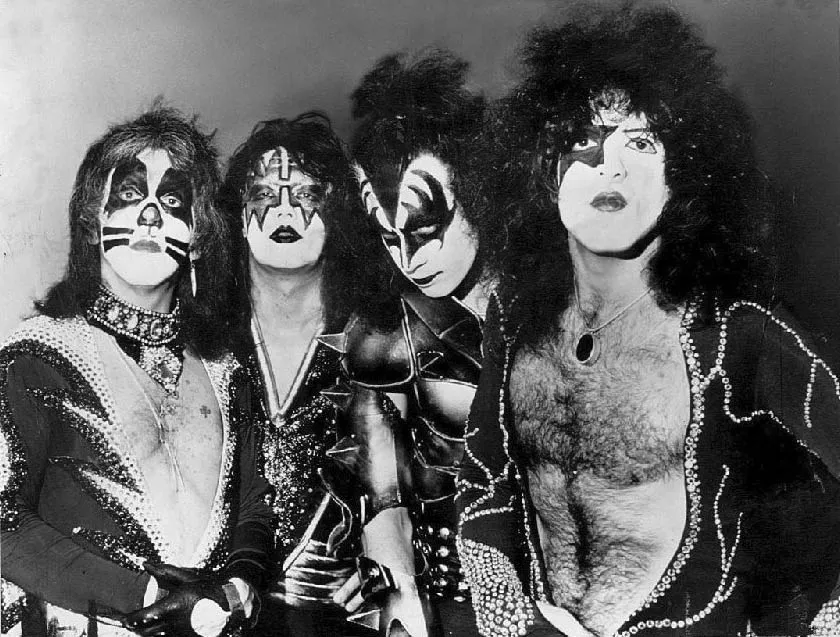
Photo by Casablanca Records , licensed under Public domain · Wikimedia Commons
Rank #66
Kiss
Face-painted New Yorkers whose theatrical shows scaled rock to spectacle.
From Wikipedia
Kiss was an American rock band formed in New York City in 1973 by Paul Stanley, Gene Simmons, Ace Frehley and Peter Criss. Known for their face paint and stage outfits, the group rose to prominence in the mid-1970s with shock rock–style live performances that featured fire-breathing, blood-spitting, smoking guitars, shooting rockets, levitating drum kits and pyrotechnics. The band went through several lineup changes, starting with drummer Eric Carr replacing original drummer Peter Criss in 1980, with only Stanley and Simmons remaining the only consistent members. The final lineup consisted of Stanley, Simmons, Tommy Thayer and Eric Singer.
Members
- Eric Singer (2004–present)
- Ace Frehley
- Eric Carr
- Gene Simmons
- Paul Stanley
- Peter Criss
- Tommy Thayer
Studio Albums
- 1974 Hotter Than Hell
- 1974 KISS
- 1975 Dressed to Kill
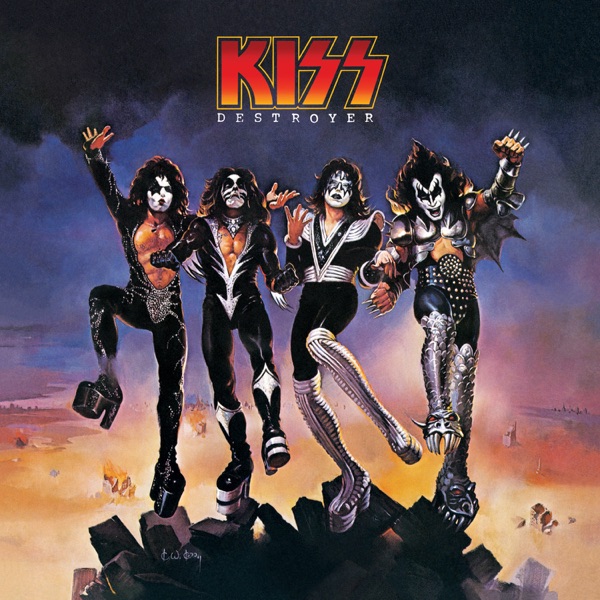
- 1976 Destroyer
- 1976 Rock and Roll Over
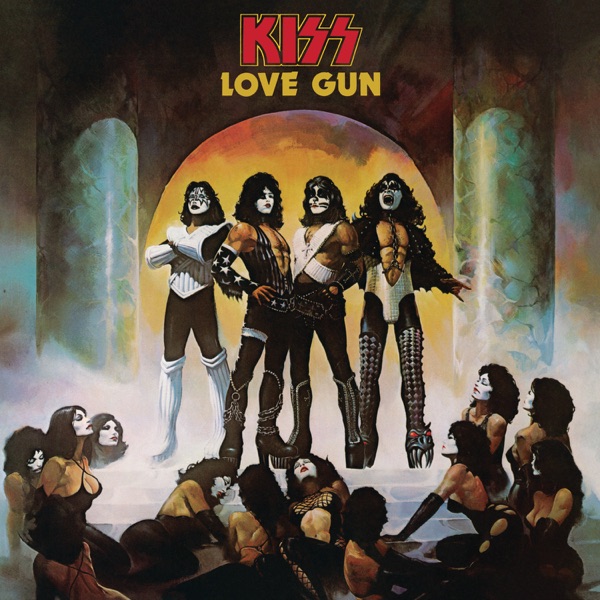
- 1977 Love Gun
- 1979 Dynasty
- 1980 Unmasked
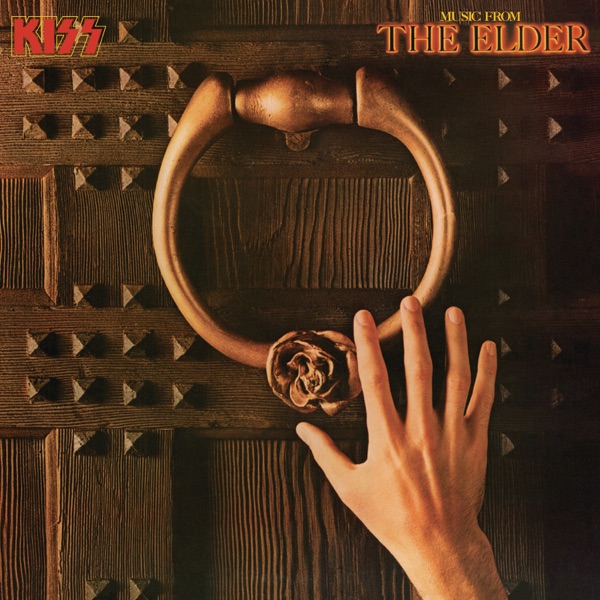
- 1981 Music From “The Elder”
- 1982 Creatures of the Night
- 1983 Lick It Up
- 1984 Animalize
- 1985 Asylum
- 1987 Crazy Nights
- 1989 Hot in the Shade
- 1992 Revenge
- 1997 Carnival of Souls: The Final Sessions
- 1998 Psycho Circus
- 2009 Sonic Boom
- 2012 Monster
- — Solos
Source: MusicBrainz
Deep Dive
Overview
Kiss emerged from New York City in 1973 as a hard rock band whose primary innovation was not musical but visual and performative. Fronted by Paul Stanley and Gene Simmons, with Ace Frehley on guitar and Peter Criss on drums, the group built their reputation on shock rock–style stage presentations that treated rock concert attendance as theatrical experience. Where most rock bands of the era aimed for musical virtuosity or lyrical depth, Kiss weaponized spectacle—face paint, fire-breathing, blood-spitting, smoking guitars, pyrotechnics, and levitating drum kits became their signature. This approach to performance scaled rock music beyond the concert hall into arena-sized production values, influencing not just how bands presented themselves but what audiences came to expect from live rock performance.
Formation Story
Kiss formed in 1973 in New York City as a deliberate fusion of hard rock musicianship and theatrical presentation. Paul Stanley and Gene Simmons, the songwriting and performance core, recruited Ace Frehley as lead guitarist and Peter Criss as drummer, completing the original lineup. The band’s face paint and stage costumes were conceived from the outset as integral to their identity, not an afterthought. This unified visual and sonic branding set them apart in an era when most rock acts relied on album artwork and concert lighting for visual impact. The New York scene they emerged from had a tradition of theatrical rock going back to early 1970s glam rock, but Kiss synthesized that aesthetic with hard rock’s heavier instrumentation and simpler, more anthemic songwriting.
Breakthrough Moment
Kiss achieved mainstream recognition through relentless touring and a sequence of well-received studio albums released in rapid succession. Their debut, Kiss (1974), introduced both their musical approach and visual identity, followed immediately by Hotter Than Hell (1974). The band consolidated their position with Dressed to Kill (1975), Destroyer (1976), and Rock and Roll Over (1976)—five albums in three years that built a growing fan base. By the mid-1970s, Kiss had become one of the top-drawing live acts in rock, with their shows becoming legendary for spectacle and energy. The band’s willingness to tour constantly, combined with their distinctive visual presentation, allowed them to break through on their own terms rather than relying on radio-friendly hit singles.
Peak Era
The period from 1976 through 1979, spanning Destroyer, Rock and Roll Over, Love Gun (1977), and Dynasty (1979), represents Kiss at their commercial and creative peak. During these years, the band achieved arena-headliner status, their albums charted consistently, and their concert reputation reached mythical proportions. The formula remained consistent: straightforward hard rock songwriting, high-energy performances, and stage production that seemed to grow more elaborate with each tour. This era established Kiss not just as a rock band but as a touring institution, setting attendance records and pioneering the scaled-up arena rock experience that would define stadium touring for decades. Their ability to balance simple, memorable songs with maximum visual spectacle proved commercially potent and creatively sustainable.
Musical Style
Kiss played straightforward hard rock anchored by power chords, clear vocal melodies, and a rhythm section that emphasized groove over technical complexity. Gene Simmons’ bass playing was melodic and prominent in the mix, while Ace Frehley’s guitar work, though not virtuosic, was effective at delivering catchy riffs and solos that served the song structure. Paul Stanley’s vocals were direct and often anthemic, designed to carry simple, singalong melodies that contrasted with the heavy instrumentation. The songwriting approach favored repetition, hook-driven structures, and thematic simplicity—romance, rebellion, partying, and theatrical boasting rather than introspection or narrative complexity. This accessibility, combined with the visual spectacle, made Kiss simultaneously one of the heaviest rock bands and one of the most commercially straightforward. Over their long career, their sound evolved—Crazy Nights (1987) and Hot in the Shade (1989) showed influence from 1980s hard rock production trends—but the core formula of simple riffs, clear melodies, and theatrical presentation remained constant.
Major Albums
Destroyer (1976)
The album that solidified Kiss as major arena act, featuring some of their most durable songs and a production that emphasized clarity and punch. Destroyer became their highest-charting work and remains their most acclaimed release.
Rock and Roll Over (1976)
Released the same year as Destroyer, this album maintained momentum with an even more raw, blues-inflected approach to their hard rock formula, proving the band could sustain quality across multiple releases in quick succession.
Love Gun (1977)
Continuing their commercial ascent, Love Gun showcased the mature hard rock band at peak touring form, with songs built for live performance and audience participation.
Dynasty (1979)
Marking the end of their initial peak era, Dynasty saw Kiss experimenting slightly with production and arrangement while maintaining their essential identity, proving adaptability within their established formula.
Revenge (1992)
A notable later-era release that demonstrated Kiss could still command attention in the 1990s, after years of lineup changes and shifting musical landscapes.
Signature Songs
- “Rock and Roll All Nite” — The quintessential Kiss anthem, built on a simple chant melody and party-rock ethos.
- “Strutter” — An early showcase of their direct, groove-oriented hard rock approach.
- “Detroit Rock City” — A signature mid-1970s track that became a staple of their live performances.
- “Love Gun” — One of their most recognizable songs, emblematic of their straightforward, theatrical approach to rock.
- “Crazy Nights” — Demonstrated the band’s ability to adapt to 1980s production trends while maintaining their core identity.
Influence on Rock
Kiss fundamentally altered what a rock concert could be by treating visual presentation as equally important as musical performance. They proved that a rock band could achieve major commercial success without radio hits or critical acclaim, building their empire through touring and merchandise. The band’s success opened the door for subsequent rock and metal acts to embrace theatrical production, elaborate staging, and visual merchandising as core to their brand. Their approach influenced glam metal acts of the 1980s and continues to echo in the production values expected of touring rock and metal bands. Beyond specific musical influence, Kiss changed the economics and logistics of rock touring, demonstrating that bands could generate enormous revenue through concert attendance, merchandise, and brand extension rather than album sales alone.
Legacy
Kiss remains active as of their formation history (1973–present), with only Paul Stanley and Gene Simmons persisting from the original lineup, while Eric Carr served as drummer before Eric Singer took the role in 2004, and Tommy Thayer joined on guitar. The band’s catalog spans from their 1974 debut through Monster (2012) and Sonic Boom (2009), documenting a career of consistent commercial viability if not critical reconsideration. Their influence on rock performance and arena touring remains substantial: countless rock and metal bands cite Kiss as a primary inspiration for their approach to live shows. The band’s longevity and touring frequency established them as a multi-generational phenomenon, with their concerts remaining major touring events. Kiss redefined rock stardom as performance-and-merchandising-based rather than purely recording-based, a shift that would influence how rock acts build and sustain careers across the following decades.
Fun Facts
- Kiss recorded solo albums (listed simply as “Solos” in the discography) by individual members during their career, a rare practice that emphasized the distinct personalities within the band.
- The band went through significant lineup changes beginning in 1980, when Eric Carr replaced original drummer Peter Criss, yet Paul Stanley and Gene Simmons maintained creative control and continuity.
- Kiss’s face paint and costume design were conceived as permanent visual identity rather than show-specific elements, turning individual band members into recognizable characters with distinct looks and personas.
- The band’s willingness to tour constantly while most of their peers scaled back in the 1990s and 2000s allowed them to remain a profitable touring concern independent of new album success.
Discography & Previews
Click any album to expand its track list. Each track plays a 30-second preview streamed from Apple Music. Tap the link icon next to a track to open it in Apple Music for full playback.


- 1 Room Service (2025 Remaster) ↗ 3:00
- 2 Two Timer (2025 Remaster) ↗ 2:49
- 3 Ladies In Waiting (2025 Remaster) ↗ 2:32
- 4 Getaway (2025 Remaster) ↗ 2:45
- 5 Rock Bottom (2025 Remaster) ↗ 3:56
- 6 C'mon And Love Me (2025 Remaster) ↗ 2:59
- 7 Anything For My Baby (2025 Remaster) ↗ 2:32
- 8 She (2025 Remaster) ↗ 4:08
- 9 Love Her All I Can (2025 Remaster) ↗ 2:43
- 10 Rock And Roll All Nite (2025 Remaster) ↗ 2:48




- 1 Creatures Of The Night (2022 Remastered) ↗ 4:04
- 2 Saint And Sinner (2022 Remastered) ↗ 4:50
- 3 Keep Me Comin' (2022 Remastered) ↗ 3:57
- 4 Rock And Roll Hell (2022 Remastered) ↗ 4:13
- 5 Danger (2022 Remastered) ↗ 3:57
- 6 I Love It Loud (2022 Remastered) ↗ 4:15
- 7 I Still Love You (2022 Remastered) ↗ 6:07
- 8 Killer (2022 Remastered) ↗ 3:19
- 9 War Machine (2022 Remastered) ↗ 4:17


- 1 Rise to It ↗ 4:05
- 2 Betrayed ↗ 3:40
- 3 Hide Your Heart ↗ 4:25
- 4 Prisoner of Love ↗ 3:45
- 5 Read My Body ↗ 3:50
- 6 Love's a Slap In the Face ↗ 4:04
- 7 Forever ↗ 3:52
- 8 Silver Spoon ↗ 4:47
- 9 Cadillac Dreams ↗ 3:46
- 10 King of Hearts ↗ 4:25
- 11 The Street Giveth and the Street Taketh Away ↗ 3:33
- 12 You Love Me to Hate You ↗ 4:03
- 13 Somewhere Between Heaven and Hell ↗ 3:50
- 14 Little Caesar ↗ 3:12
- 15 Boomerang ↗ 3:32


- 1 Hell or Hallelujah ↗ 4:07
- 2 Wall of Sound ↗ 2:55
- 3 Freak ↗ 3:35
- 4 Back to the Stone Age ↗ 3:01
- 5 Shout Mercy ↗ 4:04
- 6 Long Way Down ↗ 3:51
- 7 Eat Your Heart Out ↗ 4:06
- 8 The Devil Is Me ↗ 3:41
- 9 Outta This World ↗ 4:29
- 10 All for the Love of Rock & Roll ↗ 3:21
- 11 Take Me Down Below ↗ 3:24
- 12 Last Chance ↗ 3:06
- 13 Right Here Right Now ↗ 3:59