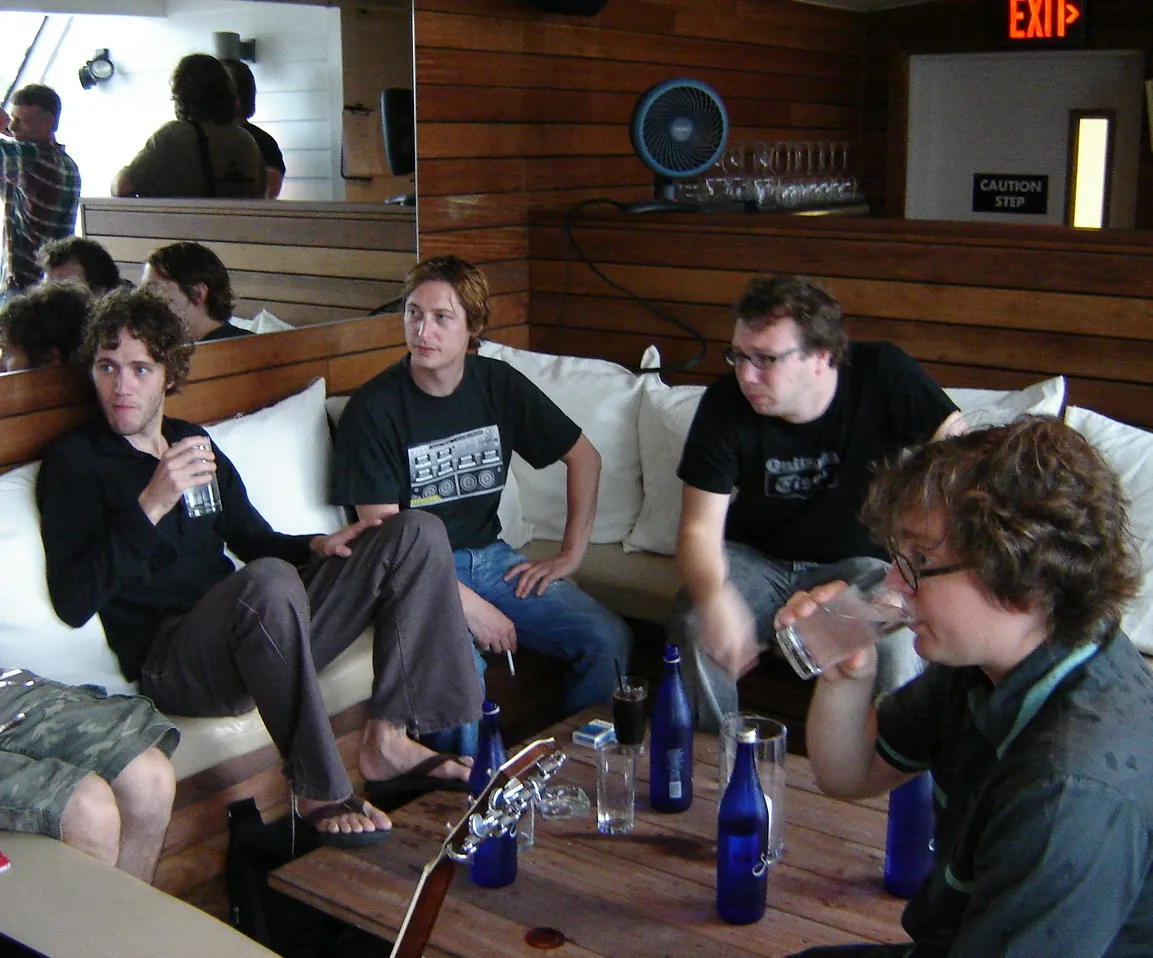
Photo by Kubacheck , licensed under CC BY 2.0 · Wikimedia Commons
Rank #471
Gomez
Southport indie-rockers whose 'Bring It On' won the 1998 Mercury Prize.
From Wikipedia
Gomez are an English indie rock band from Southport, Merseyside, comprising Ian Ball, Paul "Blackie" Blackburn (bass), Tom Gray, Ben Ottewell and Olly Peacock. The band has three singers and four songwriters, employing traditional and electronic instruments. Their music covers the genres of blues, indie, alternative, rock, folk, psychedelic and experimental.
Members
- Ian Ball
Studio Albums
- 1998 Bring It On
- 1999 Liquid Skin
- 2002 In Our Gun
- 2004 Split the Difference
- 2006 How We Operate
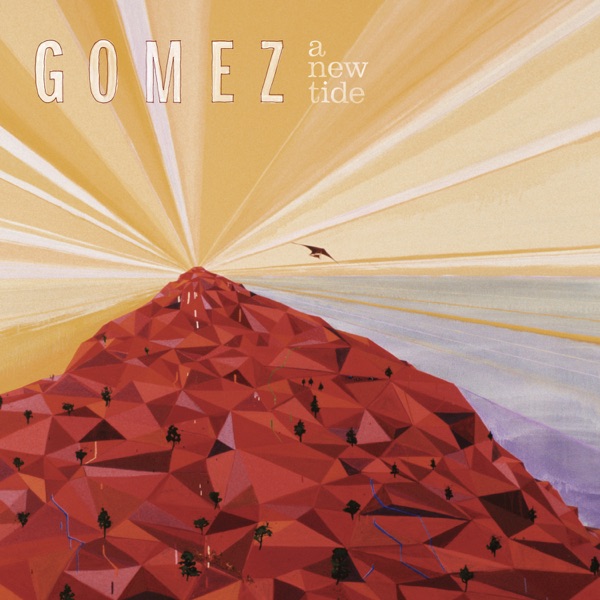
- 2009 A New Tide
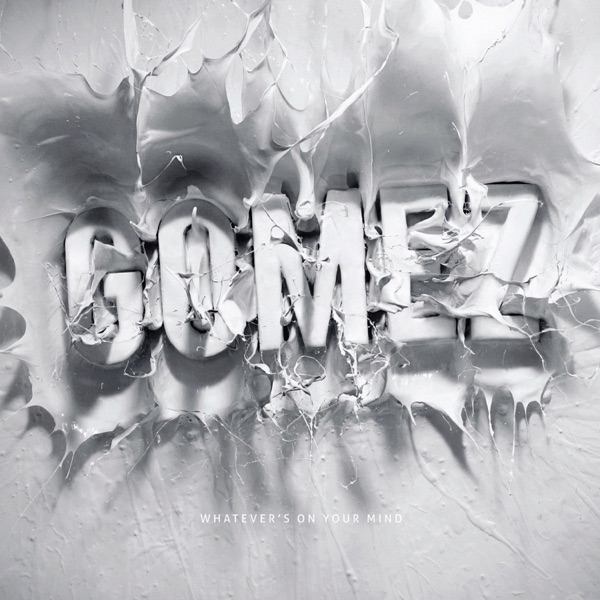
- 2011 Whatever’s on Your Mind
Source: MusicBrainz
Deep Dive
Overview
Gomez are an English indie rock band from Southport, Merseyside, who emerged in the mid-1990s as one of Britain’s most distinctive indie rock acts. Comprising five members—Ian Ball, Paul “Blackie” Blackburn on bass, Tom Gray, Ben Ottewell, and Olly Peacock—the band distinguished itself through a democratic songwriting structure, with three singers and four songwriters contributing material across a genre-spanning palette. Their 1998 debut album Bring It On secured the prestigious Mercury Prize, an honor that confirmed their position as significant voices in late-1990s British rock and introduced their blend of indie rock, folk, blues, and experimental instrumentation to a broader audience.
Formation Story
Gomez coalesced in Southport in 1996, a port town in Merseyside better known for spawning The Christians and other Mersey-based acts than for indie rock innovation. The five-piece assembled around a shared aesthetic that rejected the prevailing britpop orthodoxy of the mid-1990s, instead drawing on a deeper well of American blues, folk traditions, and contemporary experimental production. Their formation came during a moment when indie rock in the UK was beginning to fracture into regional variations, and Gomez’s Northwesterness—combined with their refusal to fit neatly into any single genre—gave them an immediate character distinct from London-centric guitar bands.
Breakthrough Moment
Gomez’s breakthrough arrived with remarkable speed and decisive validation. Their 1998 debut, Bring It On, not only announced the band’s arrival but won the Mercury Prize, one of the UK’s most prestigious and closely watched annual awards for best album. The album’s combination of folk instrumentation, electronic textures, understated vocals, and sophisticated arrangements caught the ear of both critics and the Mercury voting body. This early success positioned Gomez as serious contenders in the broader indie rock landscape and generated significant commercial interest. The Mercury Prize victory provided momentum that sustained them through the turn of the millennium and established their credential as artists of substance rather than trend followers.
Peak Era
Gomez’s most creatively fertile and commercially successful period spanned the early 2000s, anchored by the albums Liquid Skin (1999), In Our Gun (2002), and Split the Difference (2004). During these years, the band refined their signature sound—a deliberate weaving of organic and electronic elements, multiple vocal perspectives, and songwriting that moved across folk, blues, and alternative rock terrain without settling into any single mode. The period saw them tour extensively and cement their reputation as a live act of considerable power, translating their studio sophistication into engaging concert experiences. By the mid-2000s, with the release of How We Operate (2006), they had established themselves as consistent and respected figures in indie rock without ever achieving the mainstream dominance that some had predicted after their Mercury Prize victory.
Musical Style
Gomez’s sound is built on the collision and collaboration of traditional and electronic instrumentation, a trait present from their debut and evolving across their discography. Their use of the sitar, flute, strings, and acoustic guitars alongside synthesizers and drum machines created a sonic palette that was simultaneously rootsy and contemporary. The band’s three-singer configuration—with Ball, Gray, and Ottewell all taking lead vocal duties across different songs—prevented any single vocal personality from dominating the band’s identity, instead creating a kaleidoscopic effect where different songs inhabited different emotional and stylistic registers. Their songwriting often favored introspection, oblique lyricism, and compositional sophistication over hook-driven accessibility. The influence of blues and folk traditions ran throughout their work, manifesting in fingerpicked guitar passages, modal harmonic structures, and a certain restraint in arrangement that favored space and texture over maximalism.
Major Albums
Bring It On (1998)
Gomez’s debut and Mercury Prize winner established their sonic identity: spare, folk-inflected indie rock with unexpected electronic and orchestral textures woven throughout, built on songs of modest ambition and genuine emotional resonance rather than stadium grandeur.
Liquid Skin (1999)
Their follow-up deepened the template set by Bring It On, exploring the space between organic and synthetic instrumentation with growing confidence and moving further into blues and soul inflection without abandoning their indie rock foundation.
In Our Gun (2002)
Released at a moment when post-britpop indie rock was fragmenting, In Our Gun showcased Gomez’s refusal to follow trends, instead doubling down on their commitment to genre-spanning experimentalism and multi-voiced songwriting.
Split the Difference (2004)
This album found the band at peak sophistication, balancing their folk and electronic impulses while expanding their instrumental palette and exploring more ambitious arrangement and production choices.
How We Operate (2006)
Reflecting a moment of relative critical reconsideration of 1990s indie rock, How We Operate saw Gomez integrate their accumulated experience into a mature, assured statement that prioritized song quality and arrangement nuance.
Signature Songs
- “Whippin’ Piccadilly” — An understated gem from Bring It On that exemplified the band’s ability to suggest melancholy and depth without resorting to bombast.
- “Bubble” — A folk-tinged, sitar-informed track that highlighted the band’s genre-spanning approach and their use of non-Western instruments.
- “Make It Better” — One of their more overtly emotional tracks, showcasing the band’s capacity for introspective balladry.
- “Silence” — A contemplative piece that demonstrated their mastery of space and restraint as compositional tools.
Influence on Rock
Gomez’s significance in late-1990s and early-2000s rock lay in their insistence that indie rock could accommodate folk, blues, experimental production, and world instruments without sacrifice of artistic integrity or commercial viability. While they did not spawn a direct lineage of imitators the way some of their contemporaries did, their willingness to reject genre orthodoxy at a moment when britpop had established rigid expectations influenced the broader indie rock conversation about what was possible within the form. Their success, particularly the Mercury Prize, validated a more eclectic approach to indie rock songwriting and arrangement, encouraging other bands to experiment across genre boundaries. In a decade increasingly defined by laptop production and electronic experimentation, Gomez’s insistence on acoustic and organic instrumentation as equal partners to electronic sounds offered an alternative aesthetic that influenced the texture and orientation of subsequent indie and alternative rock.
Legacy
Gomez remain active as of the early 2010s, having released A New Tide in 2009 and Whatever’s on Your Mind in 2011, though without recapturing the critical momentum of their first decade. Their 1998 Mercury Prize victory stands as one of the award’s most decisive choices, and Bring It On continues to be recognized as a significant artifact of late-1990s British indie rock. The band represents a particular moment when indie rock was genuinely open to formal experimentation and genre hybridity, before industry consolidation and streaming economics narrowed the space for such eclecticism. Streaming platforms and archival reissues have sustained steady listener engagement with their catalog, introducing younger audiences to their work decades after initial release. Their influence manifests less in direct emulation than in the example they set: that integrity, genre-mixing, and refusal of commercial compromise could coexist with genuine musical success and institutional recognition.
Fun Facts
- Gomez were named after Gomez Addams, the character from The Addams Family, chosen for its generic quality and absence of prior association with any musical act.
- The band’s democratic songwriting structure meant that lead vocals often rotated among Ball, Gray, and Ottewell, with different members taking the microphone on different songs, a rarity in rock music that prevented any single personality from dominating the band’s identity.
- Despite being from Southport, a port town in the Northwest of England, Gomez avoided the Mersey-pop legacy and britpop trends that dominated 1990s British rock, instead creating a distinctive regional sound rooted in folk, blues, and experimental production.
Discography & Previews
Click any album to expand its track list. Each track plays a 30-second preview streamed from Apple Music. Tap the link icon next to a track to open it in Apple Music for full playback.

- 1 Get Miles ↗ 5:16
- 2 Whippin' Piccadilly ↗ 3:12
- 3 Make No Sound ↗ 3:26
- 4 78 Stone Wobble ↗ 4:22
- 5 Tijuana Lady ↗ 7:09
- 6 Here It Comes the Breeze ↗ 5:29
- 7 Love Is Better Than a Warm Trombone ↗ 3:30
- 8 Get Myself Arrested ↗ 4:04
- 9 Free to Run ↗ 4:32
- 10 Bubble Gum Years ↗ 3:21
- 11 Rie's Wagon ↗ 9:08
- 12 The Comeback ↗ 0:45


- 1 Do One ↗ 2:40
- 2 These 3 Sins ↗ 2:38
- 3 Silence ↗ 2:56
- 4 Me, You and Everybody ↗ 4:25
- 5 Don't Know Where We're Going ↗ 4:43
- 6 Sweet Virginia ↗ 6:07
- 7 Catch Me Up ↗ 3:48
- 8 Where Ya Going? ↗ 3:42
- 9 Meet Me In the City ↗ 3:12
- 10 Chicken Out ↗ 3:32
- 11 Extra Special Guy ↗ 3:32
- 12 Nothing Is Wrong ↗ 5:36
- 13 There It Was ↗ 3:42

- 1 Notice ↗ 4:02
- 2 See the World ↗ 4:04
- 3 How We Operate ↗ 5:26
- 4 Hamoa Beach ↗ 3:35
- 5 Girlshapedlovedrug ↗ 4:01
- 6 Chasing Ghosts With Alcohol ↗ 3:42
- 7 Tear Your Love Apart ↗ 4:07
- 8 Charley Patton Songs ↗ 5:14
- 9 Woman! Man! ↗ 4:05
- 10 All Too Much ↗ 4:33
- 11 Cry On Demand ↗ 4:22
- 12 Don't Make Me Laugh ↗ 4:34