
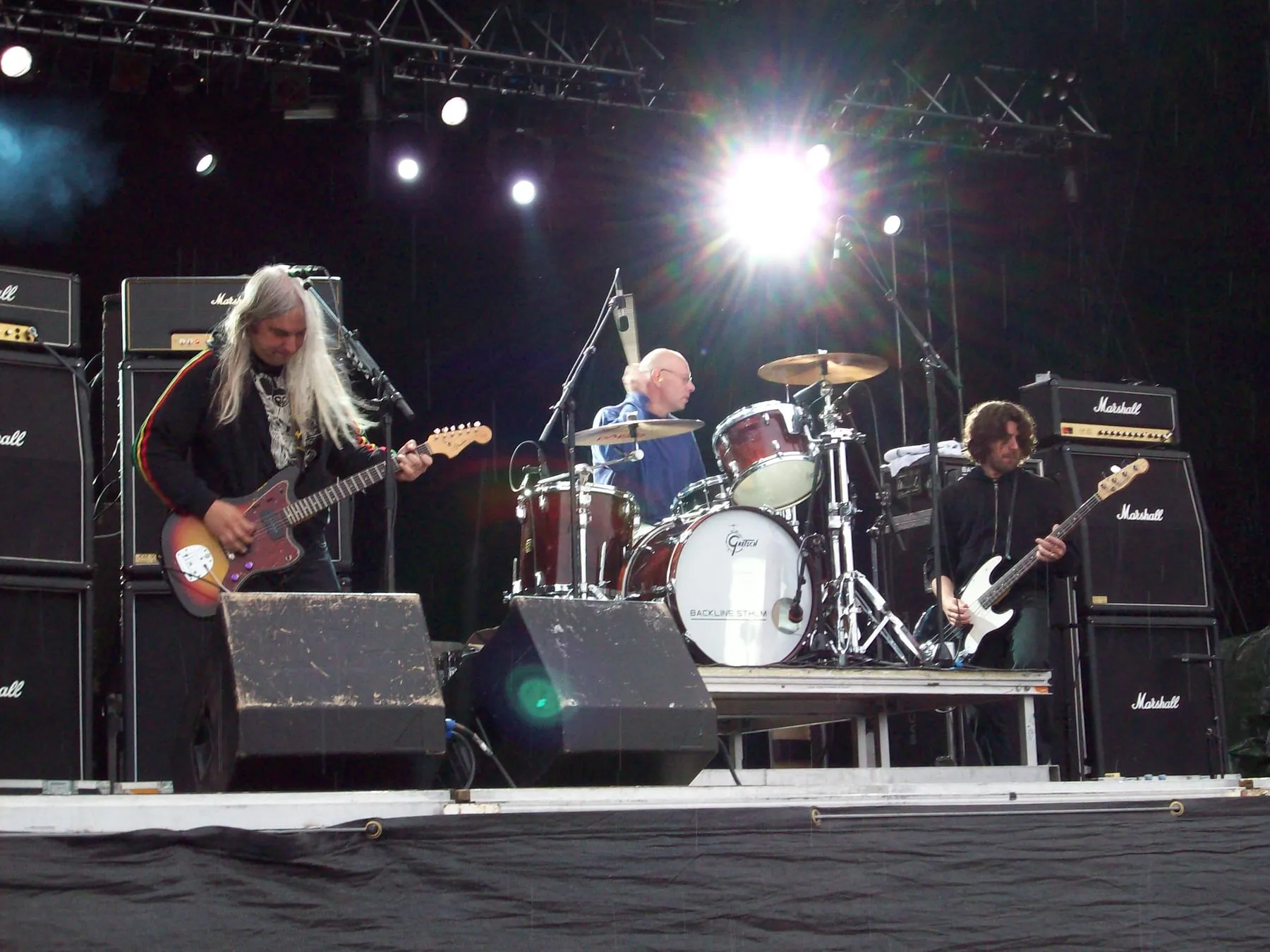
Photo by Johannes Scherman , licensed under CC BY 3.0 · Wikimedia Commons
Rank #137
Dinosaur Jr.
Massachusetts indie noise legends whose loud-soft template shaped 90s alt-rock.
From Wikipedia
Dinosaur Jr. is an American rock band formed in Amherst, Massachusetts, in 1984. The band was founded by J Mascis, Lou Barlow, and Murph (drums). After three albums on independent labels, the band earned a reputation as one of the formative influences on American alternative rock. Creative tension led to Mascis firing Barlow, who later formed Sebadoh and Folk Implosion. His replacement, Mike Johnson, came aboard for three major-label albums. Murph eventually quit, with Mascis taking over drums on the band's albums before the group disbanded in 1997. The original lineup reformed in 2005, releasing five albums thereafter.
Members
- J Mascis
- Lou Barlow
- Murph
Studio Albums
- 1985 Dinosaur
- 1987 You’re Living All Over Me
- 1988 Bug
- 1991 Green Mind
- 1993 Where You Been
- 1994 Without a Sound
- 1997 Hand It Over
- 2007 Beyond
- 2009 Farm
- 2012 I Bet on Sky
- 2016 Give a Glimpse of What Yer Not
- 2021 Sweep It Into Space
Source: MusicBrainz
Deep Dive
Overview
Dinosaur Jr. stands as one of the most influential American rock bands of the late 1980s and 1990s, emerging from Amherst, Massachusetts in 1984 to pioneer a sonic template that would define much of the alternative rock landscape. The band’s fusion of distorted guitars, visceral dynamics, and unconventional song structures established a loud-soft approach that became foundational to how countless bands would think about composition and production throughout the decade. Formed by J Mascis, Lou Barlow, and Murph, the group began on independent labels before becoming major-label artists, yet maintained an uncompromising aesthetic that resisted easy categorization.
Formation Story
Dinosaur Jr. took shape in Amherst in 1984 around the core trio of J Mascis on guitar and vocals, Lou Barlow on bass, and Murph on drums. The town’s musical ecosystem—rooted in the Five College area and its experimental music traditions—provided the fertile ground from which the band emerged. Rather than chase existing trends, the three musicians began crafting a sound that drew from punk’s raw energy and post-punk’s structural ambition while introducing the heavily distorted guitar textures that would become their signature. The band’s early years were spent building a local reputation and recording on independent labels, establishing themselves as part of a broader American underground rock revival happening outside major commercial centers.
Breakthrough Moment
With the release of Bug in 1988, Dinosaur Jr. began earning serious attention beyond the indie underground. The album showcased the band’s ability to marry noise and melody, constructing songs that were simultaneously abrasive and emotionally resonant. By the early 1990s, the alternative rock market had expanded dramatically, and Green Mind (1991) marked the band’s entry into the major-label world, significantly raising their profile. The album demonstrated that the band’s unorthodox approach could thrive in a professional studio setting, and tracks from Green Mind circulated widely through college radio and MTV’s alternative programming, cementing Dinosaur Jr. as major players in the movement that had become mainstream.
Peak Era
The period from 1991 to 1994, spanning Green Mind, Where You Been (1993), and Without a Sound (1994), represents the band’s most commercially and creatively vital stretch. During these years, Dinosaur Jr. commanded significant attention in rock culture, competing for mindshare with contemporary acts like Nirvana, Sonic Youth, and My Bloody Valentine. Where You Been in particular showcased the band’s songwriting maturity, with Mascis developing a more controlled vocal presence while maintaining the aggressive guitar work that fans expected. The major-label investment allowed the band to work with top-tier producers and session musicians, resulting in polished productions that never compromised the group’s foundational noisiness. These albums sold substantially better than their indie-label predecessors and established Dinosaur Jr. as genuine arena-level performers.
Musical Style
Dinosaur Jr.’s sound was built on the tension between carefully constructed melodies and aggressive guitar distortion, a dichotomy that defined their approach from the beginning. J Mascis’s guitar work—heavily processed through effects pedals and amplifiers—created walls of sound that could obscure or emphasize the underlying songwriting depending on the moment. His vocal delivery ranged from conversational singing to cathartic wailing, often mixed low in the final productions so that the guitar could breathe. Lou Barlow’s basslines provided rhythmic grounding and harmonic movement beneath the guitar noise, while Murph’s drumming combined post-punk precision with occasional bursts of controlled chaos. The band’s songwriting typically featured dynamic shifts between quiet verses and explosive choruses, a template that influenced how rock musicians would think about contrast and dynamics for years to come. Though fundamentally rooted in guitar-driven rock, Dinosaur Jr. absorbed influences from psychedelia, punk, and early noise rock, synthesizing these elements into something that felt contemporary to the alternative rock boom of the early 1990s.
Major Albums
Bug (1988)
The album that brought Dinosaur Jr. to serious critical and underground attention, Bug refined the band’s ability to balance aggressive guitar textures with genuine melodic craft, establishing the loud-soft dynamic that would define their career.
Green Mind (1991)
The band’s first major-label release demonstrated that their distinctive approach could succeed in professional studio environments, resulting in their most polished production to date while maintaining their core aesthetic.
Where You Been (1993)
Featuring some of Mascis’s most developed songwriting and vocal performances, Where You Been cemented Dinosaur Jr.’s position as leading figures in 1990s alternative rock during the height of the genre’s commercial expansion.
Without a Sound (1994)
The band’s final album before their initial breakup, Without a Sound represented the peak of their major-label era, showcasing sophisticated production and songwriting alongside their signature sonic aggression.
Beyond (2007)
Marking the original lineup’s return after an eight-year absence, Beyond demonstrated that the band’s core chemistry and songwriting voice remained vital, setting the tone for a productive reunion period.
Signature Songs
- “Freak Scene” — A centerpiece of the band’s early major-label push that exemplified their ability to craft hooks within heavy distortion.
- “Feel the Pain” — One of their most recognizable tracks, combining vulnerable songwriting with the band’s characteristic guitar assault.
- “Thumb” — A showcase for Mascis’s guitar textures and his capacity to build emotional intensity through instrumental detail.
- “Get Me” — Demonstrating the band’s skill at constructing rock songs with unexpected structural turns and dynamic shifts.
Influence on Rock
Dinosaur Jr.’s influence on alternative rock in the 1990s cannot be overstated. Their loud-soft dynamics became a template that shaped how countless bands approached songwriting, production, and performance during the decade’s explosion of guitar-driven rock. The band proved that uncompromising musical vision could coexist with commercial success, influencing both more experimental and more mainstream acts. Their approach to guitar distortion—treating it as a melodic and textural tool rather than simply a sign of aggression—opened new possibilities for how rock musicians could think about tone and production. Beyond their direct stylistic influence, Dinosaur Jr. exemplified the indie-to-major-label pathway that became increasingly common in the 1990s, showing that underground credibility and mainstream visibility were not mutually exclusive. The band’s success helped validate alternative rock as a commercially viable genre, even as they maintained the aesthetic values of the underground scenes from which they emerged.
Legacy
After disbanding in 1997, the original lineup reformed in 2005, releasing five studio albums over the subsequent years and establishing themselves as enduring figures in rock music. This reunion demonstrated the lasting resonance of their work and the genuine connection between the three original members. Dinosaur Jr. has remained actively performing and recording, with releases including I Bet on Sky (2012), Give a Glimpse of What Yer Not (2016), and Sweep It Into Space (2021), all of which continued to explore their foundational sonic territory while incorporating new production techniques and compositional approaches. The band’s streaming presence reflects their sustained cultural relevance, with their 1990s material continuing to reach new listeners while their contemporary recordings maintain their standing as active artists. Dinosaur Jr. represents a rare example of a band that achieved both critical and commercial success in one era, successfully navigated major industry transitions, and returned to relevant artistic output in their later years, all while maintaining their fundamental artistic principles.
Fun Facts
- Lou Barlow left the band in 1989 due to creative tension, going on to form both Sebadoh and Folk Implosion, continuing his influence on indie rock in separate projects.
- Mike Johnson replaced Barlow on bass for the band’s three major-label albums in the 1990s, providing a different sonic and collaborative dynamic during the band’s commercial peak.
- Following Murph’s departure, J Mascis took over drum duties on the band’s albums, handling both guitar and percussion on studio recordings.
- The band’s catalog spans across multiple independent and major labels, including releases on Joyful Noise Recordings, Blast First, Fat Possum Records, and Jagjaguwar, reflecting their journey through different eras of the music industry.
Discography & Previews
Click any album to expand its track list. Each track plays a 30-second preview streamed from Apple Music. Tap the link icon next to a track to open it in Apple Music for full playback.


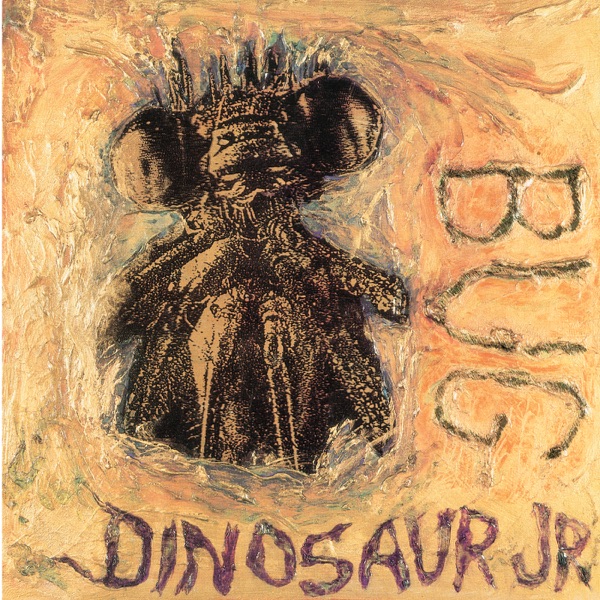


- 1 Don't Pretend You Didn't Know ↗ 5:32
- 2 Watch the Corners ↗ 5:00
- 3 Almost Fare ↗ 4:52
- 4 Stick a Toe In ↗ 5:23
- 5 Rude ↗ 2:50
- 6 I Know It Oh So Well ↗ 4:43
- 7 Pierce the Morning Rain ↗ 2:45
- 8 What Was That ↗ 5:28
- 9 Recognition ↗ 3:51
- 10 See It On Your Side ↗ 6:41
- 11 Pond Song (Live) [Bonus Track] ↗ 2:57

