
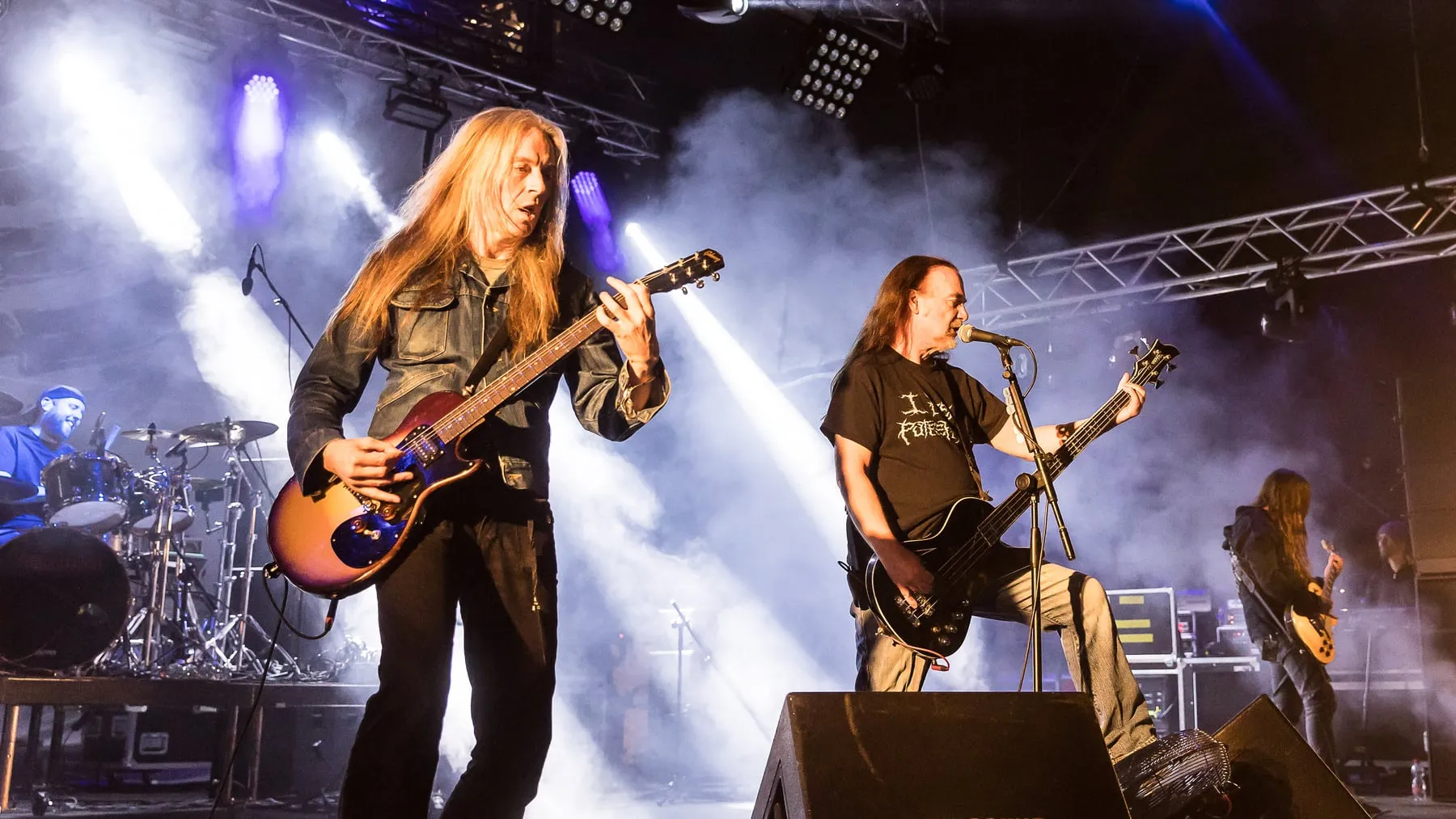
Photo by S. Bollmann , licensed under Attribution · Wikimedia Commons
Rank #255
Carcass
Liverpool grindcore-to-melodeath pioneers whose 'Heartwork' is a touchstone.
From Wikipedia
Carcass are an English death metal band from Liverpool, formed in 1985. The band have gone through several line-up changes, leaving guitarist Bill Steer and bassist-vocalist Jeff Walker as the only constant members. They broke up in 1996, but reformed in 2007 without original drummer Ken Owen, for health reasons. To date, the band have released seven studio albums, two compilation albums, four EPs, two demo albums, one video album, and six music videos.
Members
- Bill Steer
- Jeffrey Walker
- Ken Owen
- Michael Amott
Studio Albums
- 1988 Reek of Putrefaction
- 1989 Symphonies of Sickness
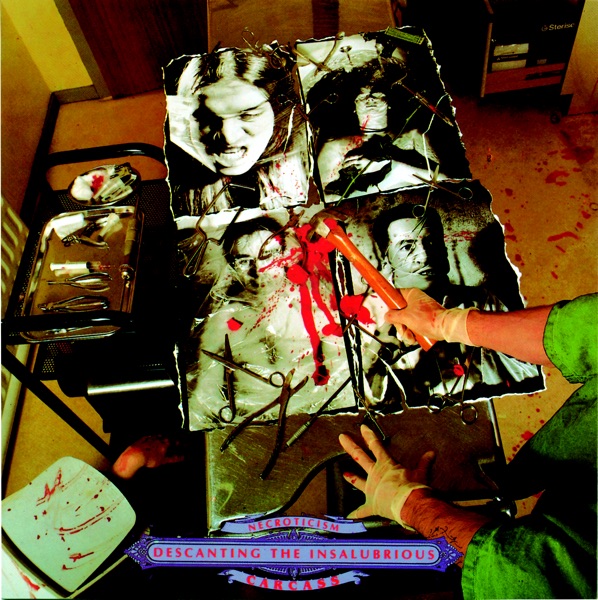
- 1991 Necroticism: Descanting the Insalubrious
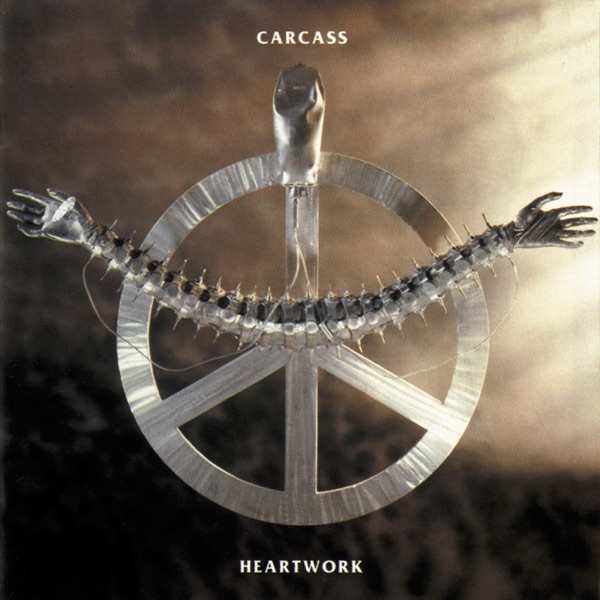
- 1993 Heartwork
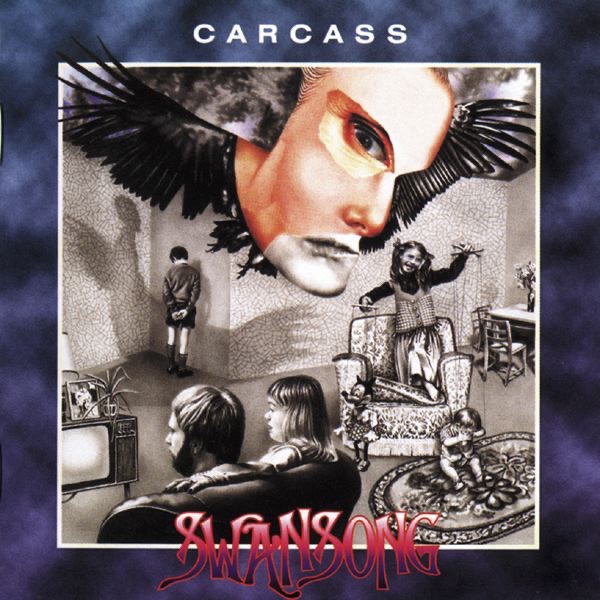
- 1995 Swansong
- 2013 Surgical Steel
- 2021 Torn Arteries
Source: MusicBrainz
Deep Dive
Overview
Carcass are an English death metal band from Liverpool whose impact on extreme metal extends far beyond their three decades of existence. Formed in 1985, they navigated an arc from surgical grindcore brutality through to landmark melodic death metal, establishing themselves as singular architects of a sound that balanced visceral aggression with compositional sophistication. Their position in rock history stems not from mainstream penetration but from the depth of their influence on metal’s underground and the durability of Heartwork, an album that transformed melodic sensibilities within death metal into a sustainable and artistically rich direction.
Formation Story
Carcass emerged from Liverpool in 1985, assembling themselves amid the city’s post-punk and emerging extreme metal milieu. The founding lineup coalesced around bassist-vocalist Jeff Walker and guitarist Bill Steer, who would prove to be the band’s anchors across all subsequent transformations. The early band included drummer Ken Owen, whose jazz-inflected, complex fills became a signature trait of their sound. Liverpool in the mid-1980s was not yet recognized as a death metal stronghold; the band’s formation coincided with the UK’s broader embrace of extreme metal aesthetics, but Carcass would define a distinctly British approach to grindcore and death metal that diverged sharply from their American and Swedish contemporaries.
Breakthrough Moment
Carcass’s breakthrough arrived across a sequence of releases rather than a single moment. Their debut, Reek of Putrefaction (1988), announced their arrival as a grindcore outfit of technical ambition and medical-lyrical brutality. Symphonies of Sickness (1989) refined that formula, deepening the songwriting and production clarity. However, Necroticism: Descanting the Insalubrious (1991) marked a decisive leap—it introduced melody, harmony, and structural sophistication that hinted at the transformation to come. With Heartwork (1993), released on Earache Records, Carcass completed their migration from grindcore extremity to melodic death metal without sacrificing heaviness or integrity. Heartwork became the touchstone that proved melodic death metal could emerge organically from grindcore’s foundations and stand as a landmark work within extreme metal broadly.
Peak Era
The early 1990s, spanning the releases of Necroticism through Heartwork and into Swansong (1995), represented Carcass at their creative and commercial peak. During this period, the band secured a place at the forefront of death metal innovation while maintaining the technical rigor that had defined their earlier work. Heartwork, in particular, solidified their status as pioneers of melodic death metal, a subgenre that would flourish throughout the 1990s partly on the strength of the template they had established. The presence of guitarist Michael Amott alongside Bill Steer during this era enriched the band’s harmonic palette. By the time of Swansong, Carcass had achieved a rare synthesis: albums that satisfied both the underground’s demand for uncompromising heaviness and a growing audience’s appetite for song-driven metal with genuine melodic architecture.
Musical Style
Carcass’s sound evolved considerably from 1985 to 1995. In their grindcore phase, they wielded distorted guitars, programmed drums on early recordings, and Jeff Walker’s guttural vocals as weapons of surgical precision—reinforced by their lyrical obsession with medical gore and pathology. The band’s early identity was shaped by the collision of punk’s brevity and intensity with metal’s heaviness and technical capacity. As they progressed, melodic elements infiltrated the riffing; harmonized guitar lines emerged; Ken Owen’s drumming grew more compositionally integrated rather than purely percussive. By Heartwork, Carcass had absorbed influences from Swedish melodic death metal while retaining their own grindcore heritage and British sensibility. The result was music that could be simultaneously brutal and beautiful, with dual guitar harmonies, dynamic song structures, and production that allowed every instrument clarity without sacrificing depth. Walker’s vocals remained extreme—growled and distorted—but the songs themselves contained hooks and memorable passages that made them accessible to listeners beyond the most devoted extreme metal fans.
Major Albums
Reek of Putrefaction (1988)
Carcass’s debut announced their grindcore credentials and lyrical fixation on medical horror, establishing the template for their early sound: short, sharp songs built on distorted riffs, chaotic percussion, and Walker’s corrosive vocal assault. The album’s raw production and songwriting brevity became defining markers of UK grindcore.
Symphonies of Sickness (1989)
The follow-up deepened the songwriting and refined the production without abandoning grindcore’s chaos; extended passages and more sophisticated arrangements hinted at the melodic future to come while maintaining the band’s extreme core.
Necroticism: Descanting the Insalubrious (1991)
A transitional masterpiece, Necroticism introduced harmonic guitar lines and more elaborate compositions, widening the gap between grindcore speed-violence and a slower, heavier melodic sensibility that would fully crystallize on the next album.
Heartwork (1993)
The definitive Carcass record and a cornerstone of melodic death metal, Heartwork balanced intricate dual-guitar melodies, complex song structures, and full production clarity with undiminished heaviness and vocal extremity. It became the touchstone proving melodic death metal could sustain artistic and commercial viability.
Swansong (1995)
The band’s final album before their 1996 dissolution, Swansong consolidated the melodic-death-metal direction with greater accessibility and polish, showcasing Carcass at the height of their commercial moment before internal pressures and industry shifts prompted a breakup.
Surgical Steel (2013)
After a 17-year hiatus, Carcass’s reunion album Surgical Steel demonstrated that the band’s core vision remained intact, blending the melodic sophistication of their 1990s peak with renewed heaviness and a production sensibility that honored their legacy without veering into nostalgia.
Signature Songs
- Heartwork — The title track from their masterpiece album, a perfect distillation of melodic harmony, brutal riffing, and Walker’s guttural delivery.
- No Love Lost — From Heartwork, exemplifying the band’s capacity to embed hooks within death metal structures without compromise.
- Corporeal Jigsore Quandary — A Necroticism standout showcasing the band’s technical precision and darkly clinical lyricism.
- Exhume to Consume — An early-period grindcore statement establishing Carcass’s medical-gore aesthetic and punk-influenced brevity.
Influence on Rock
Carcass’s influence on extreme metal cannot be overstated. They were not the first to merge melody with death metal, but they proved—most decisively through Heartwork—that melodic death metal could be both commercially viable and artistically uncompromising. The album became a blueprint for countless bands in the 1990s and beyond, from fellow Earache Records artists to Swedish acts who would consolidate the melodic-death-metal boom. The very concept of incorporating song-like structures, guitar harmonies, and memorable passages into music of extreme heaviness and vocal intensity owes a significant debt to Carcass’s trajectory. Furthermore, their grindcore roots meant they helped establish the British branch of extreme metal’s family tree, distinctly different from American death metal and Scandinavian black metal.
Legacy
Carcass disbanded in 1996 but reformed in 2007 on Earache Records and later moved to Nuclear Blast, releasing Surgical Steel in 2013 and Torn Arteries in 2021. The band’s two constant members—Bill Steer and Jeff Walker—have stewarded the Carcass name through a genuine second act, proving that the band’s musical identity transcended any single era. Heartwork remains a benchmark album within death metal and melodic metal broadly, frequently cited in discussions of the subgenre’s founding documents. The band’s longevity, spanning from 1985 to the present, underscores the enduring appetite for their sound and their role in extreme metal history. Streaming platforms have introduced new generations to their catalog, and the reissue and preservation of their earlier work on vinyl and digital formats have ensured their discography remains accessible to listeners seeking the roots of melodic death metal.
Fun Facts
- Carcass’s lyrics and album artwork drew heavily from medical textbooks and pathological imagery, a thematic consistency that distinguished them from peers who favored war, violence, or fantasy imagery.
- The band released material on both Earache Records and Nuclear Blast, two of extreme metal’s most significant independent labels, reflecting their importance within the underground.
- Ken Owen, the original drummer, did not participate in the band’s 2007 reformation due to health reasons, yet the band’s identity remained intact with subsequent drummers maintaining his technical legacy.
- Heartwork arrived in 1993, a pivotal year for metal, and stands alongside releases from other landmark melodic-death-metal bands as a text that defined the decade’s direction within extreme music.
Discography & Previews
Click any album to expand its track list. Each track plays a 30-second preview streamed from Apple Music. Tap the link icon next to a track to open it in Apple Music for full playback.

- 1 Genital Grinder ↗ 1:32
- 2 Regurgitation of Giblets ↗ 1:24
- 3 Maggot Colony ↗ 1:38
- 4 Pyosisified (Rotten to the Gore) ↗ 2:55
- 5 Carbonized Eyesockets ↗ 1:11
- 6 Frenzied Detruncation ↗ 0:59
- 7 Vomited Anal Tract ↗ 1:45
- 8 Festerday ↗ 0:22
- 9 Fermenting Innards ↗ 2:35
- 10 Excreted Alive ↗ 1:21
- 11 Suppuration ↗ 2:19
- 12 Foeticide ↗ 2:46
- 13 Microwaved Uterogestation ↗ 1:24
- 14 Feast On Dismembered Carnage ↗ 1:27
- 15 Splattered Cavities ↗ 1:54
- 16 Psychopathologist ↗ 1:18
- 17 Burnt to a Crisp ↗ 2:43
- 18 Pungent Excruciation ↗ 2:31
- 19 Manifestation of Verrucose Urethra ↗ 1:02
- 20 Oxidised Razor Masticator ↗ 3:12
- 21 Mucopurulence Excretor ↗ 1:10
- 22 Malignant Defecation ↗ 2:15

- 1 Reek of Putrefaction ↗ 4:10
- 2 Exhume to Consume ↗ 3:51
- 3 Excoriating Abdominal Emanation ↗ 4:32
- 4 Ruptured In Purulence ↗ 4:11
- 5 Empathological Necroticism ↗ 5:45
- 6 Embryonic Necropsy and Devourment ↗ 5:14
- 7 Swarming Vulgar Mass of Infected Virulency ↗ 3:11
- 8 Cadaveric Incubator of Endo-Parasites ↗ 3:24
- 9 Slash Dementia ↗ 3:23
- 10 Crepitating Bowel Erosion ↗ 5:29
- 1 Keep On Rotting In the Free World ↗ 3:41
- 2 Tomorrow Belongs to Nobody ↗ 4:18
- 3 Black Star ↗ 3:29
- 4 Cross My Heart ↗ 3:34
- 5 Childs Play ↗ 5:42
- 6 Room 101 ↗ 4:36
- 7 Polarized ↗ 4:02
- 8 Generation Hexed ↗ 3:47
- 9 Firm Hand ↗ 5:23
- 10 R**K the Vote ↗ 3:52
- 11 Don't Believe a Word ↗ 3:57
- 12 Go to Hell ↗ 3:19

- 1 1985 ↗ 1:15
- 2 Thrasher's Abattoir ↗ 1:50
- 3 Cadaver Pouch Conveyor System ↗ 4:02
- 4 A Congealed Clot of Blood ↗ 4:14
- 5 The Master Butcher's Apron ↗ 4:00
- 6 Noncompliance to Astm F899-12 Standard ↗ 6:07
- 7 The Granulating Dark Satanic Mills ↗ 4:10
- 8 Unfit for Human Consumption ↗ 4:25
- 9 316L Grade Surgical Steel ↗ 5:20
- 10 Captive Bolt Pistol ↗ 3:17
- 11 Mount of Execution ↗ 8:25
- 12 Intensive Battery Brooding ↗ 4:43

- 1 Torn Arteries ↗ 4:00
- 2 Dance Of Ixtab (Psychopomp & Circumstance March No. 1) ↗ 4:29
- 3 Eleanor Rigor Mortis ↗ 4:14
- 4 Under The Scalpel Blade ↗ 3:55
- 5 The Devil Rides Out ↗ 5:22
- 6 Flesh Ripping Sonic Torment Limited ↗ 9:43
- 7 Kelly's Meat Emporium ↗ 3:24
- 8 In God We Trust ↗ 3:57
- 9 Wake Up And Smell The Carcass / Caveat Emptor ↗ 4:37
- 10 The Scythe's Remorseless Swing ↗ 5:21