
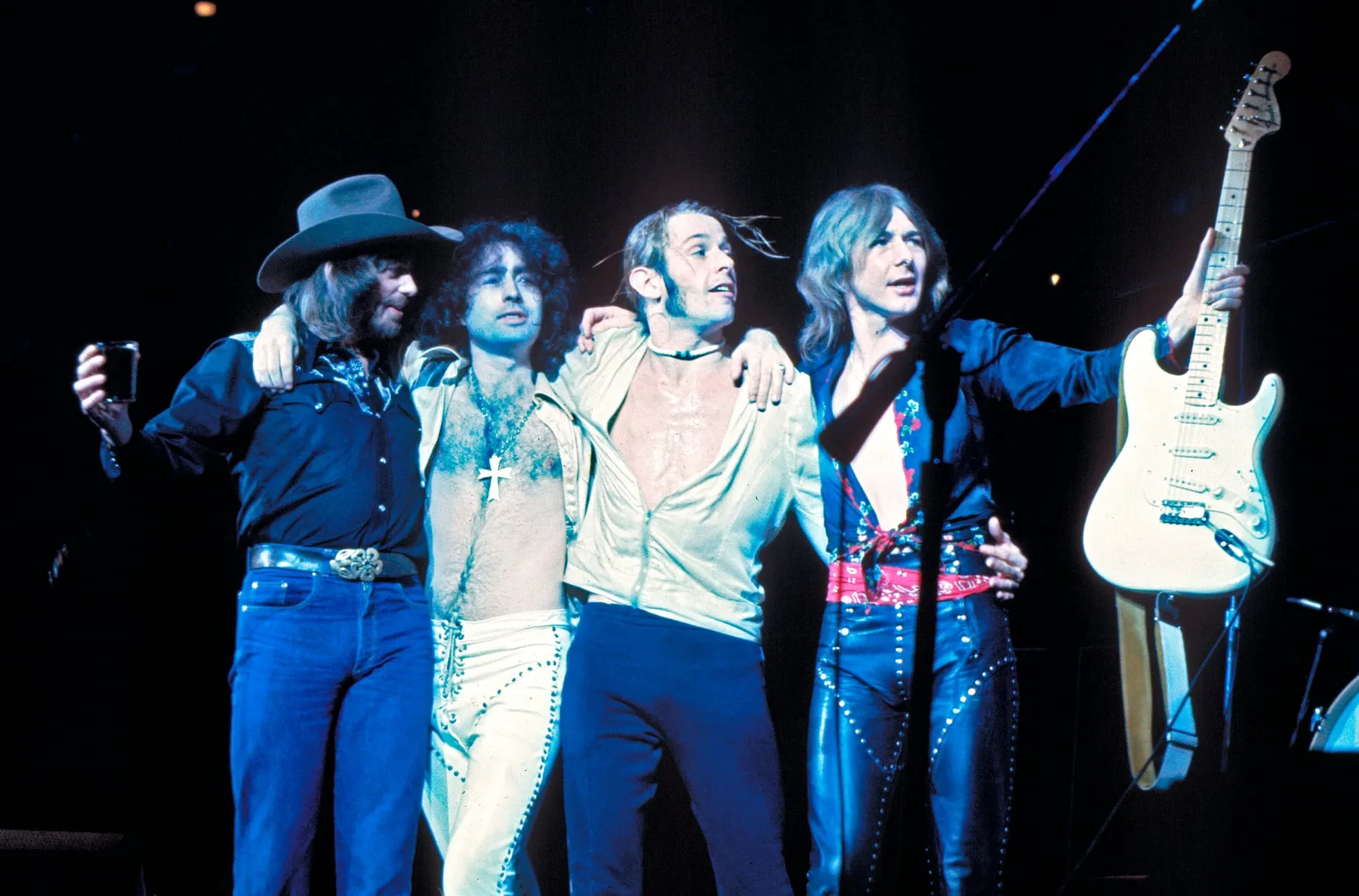
Photo by Jim Summaria , licensed under CC BY-SA 3.0 · Wikimedia Commons
Rank #74
Bad Company
British supergroup behind a string of bluesy hard-rock hits.
From Wikipedia
Bad Company were an English rock supergroup formed in London in 1973 by singer Paul Rodgers and drummer Simon Kirke, guitarist Mick Ralphs and bassist Boz Burrell. Kirke was the only member to remain throughout the band's entire run, while he and Ralphs were the only members to appear on every studio album. Peter Grant, who managed the rock band Led Zeppelin, also managed Bad Company until 1982. Burrell died in 2006, followed by Ralphs in 2025, leaving Kirke and Rodgers as the only surviving members of the original line-up.
Studio Albums
- 1974 Bad Company
- 1974 Stuff That Duck
- 1975 Straight Shooter
- 1976 Run With the Pack
- 1977 Burnin’ Sky
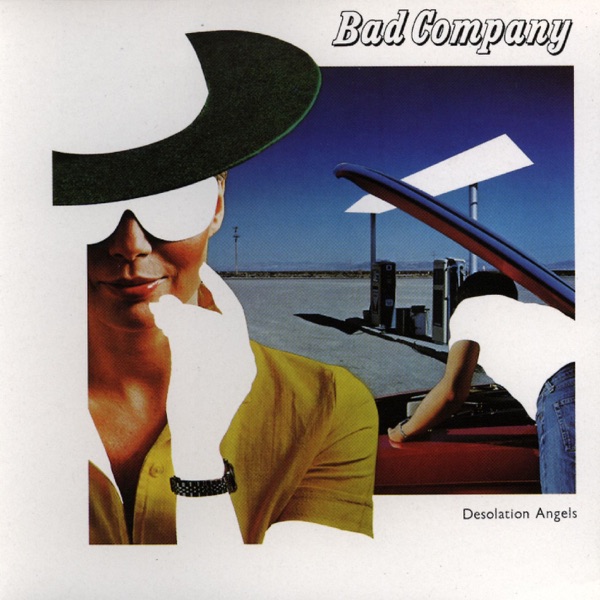
- 1979 Desolation Angels
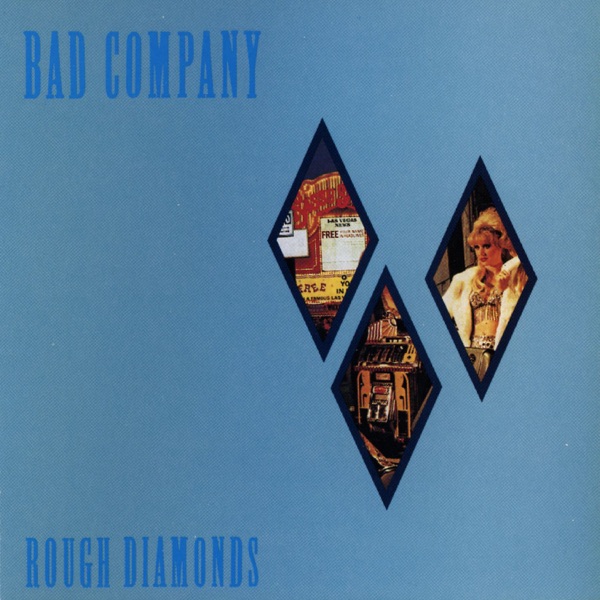
- 1982 Rough Diamonds
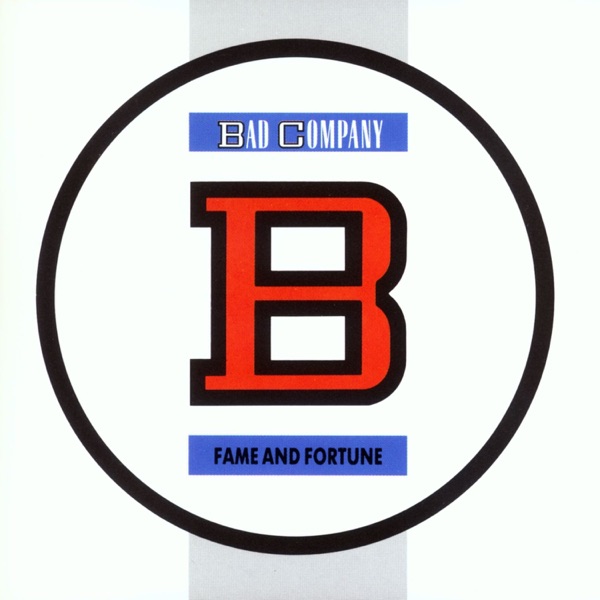
- 1986 Fame and Fortune
- 1988 Dangerous Age
- 1990 Holy Water
- 1992 Here Comes Trouble
- 1993 Can't Get Enough Of These Guys
- 1995 Company of Strangers
- 1996 Stories Told & Untold
Source: MusicBrainz
Deep Dive
Overview
Bad Company were an English rock supergroup formed in London in 1973, assembling a collection of accomplished musicians from established British acts to forge a new enterprise in blues-tinged hard rock. The band built their reputation on a series of commercially successful albums throughout the 1970s, combining blues sensibility with the volume and muscle of contemporary hard rock, creating a template that would influence countless bands in the decades that followed. Their straightforward approach to songwriting and performance—grounded in blues progressions yet delivered with amplified power—positioned them as significant figures in the hard rock landscape of their era.
Formation Story
Bad Company emerged from the London scene in 1973, bringing together four seasoned musicians each with prior band credentials. Paul Rodgers served as vocalist, Simon Kirke as drummer, Mick Ralphs on guitar, and Boz Burrell on bass. The formation represented a calculated partnership of talent aimed at capitalizing on the post-glam, pre-punk hard rock boom. Peter Grant, the manager of Led Zeppelin, took the band under his wing, lending credibility and industry muscle to their launch. The newly formed supergroup quickly signed with Atlantic Records and Island Records, positioning themselves at the center of a thriving market for energetic, blues-rooted rock music.
Breakthrough Moment
Bad Company’s debut album, released in 1974, established them as a significant presence in rock radio and albums charts. The same year they released Stuff That Duck, demonstrating a prolific output that capitalized on their initial momentum. These early releases introduced audiences to their direct, blues-informed hard rock approach and the distinctive vocal presence of Rodgers, whose phrasing drew from soul and blues traditions yet carried the power needed to front a rock ensemble. The band’s ability to write memorable, radio-friendly songs anchored by guitar riffs and driving rhythms quickly translated to commercial success and touring opportunities that would define their prominence throughout the mid-to-late 1970s.
Peak Era
The years 1974–1979 represented Bad Company’s most commercially vital period, during which they released a succession of albums that solidified their status as major players in the hard rock market. Straight Shooter (1975) and Run With the Pack (1976) deepened their catalog with songs that balanced accessible songcraft against genuine musical strength. Burnin’ Sky (1977) extended this success, maintaining the blues-rock formula that had proven effective while refining both production and arrangements. Throughout this period, Simon Kirke remained the sole consistent member, providing a rhythmic anchor through the band’s evolution, while Ralphs maintained his place as the primary architectural force behind the guitar-driven sound. Their albums on Atlantic Records reached significant chart positions and generated substantial touring revenue, establishing Bad Company as a reliable draw for hard rock audiences globally.
Musical Style
Bad Company’s musical identity rested on a fusion of electric blues and hard rock, executed with a preference for clarity and directness over complexity. Ralphs’ guitar work relied on blues-derived phrasing and pentatonic sensibilities deployed at high volume, supported by Burrell’s solid, understated bass lines that grounded the arrangements without overcrowding them. Kirke’s drumming favored straightforward, groove-oriented patterns that emphasized pocket over flash, creating the rhythmic platform upon which Rodgers’ vocals operated. Rodgers’ voice—marked by a soulful rasp and phrasing rooted in soul and blues vocal traditions—distinguished Bad Company from purely guitar-centered hard rock acts of the era. The band avoided the prog-rock complexity that characterized some contemporaries, instead favoring song structures and production clarity that made their records accessible to AM radio stations and FM rock programmers alike. Over their subsequent decades of work, they maintained these core stylistic traits even as production aesthetics and musical fashions shifted around them.
Major Albums
Bad Company (1974)
The eponymous debut introduced the band’s blues-rooted hard rock formula and established Rodgers and Ralphs as a potent songwriting partnership, setting the template for the band’s early commercial success.
Straight Shooter (1975)
This second album deepened Bad Company’s songwriting and production, demonstrating that their initial success was not a one-off achievement and confirming their status as a stable, evolving ensemble.
Run With the Pack (1976)
Relying on tested formulas while refining arrangements and vocal performances, this album maintained Bad Company’s commercial momentum during the mid-1970s hard rock boom.
Burnin’ Sky (1977)
The band’s fifth studio album continued their streak of commercially successful releases, balancing blues-influenced material against the commercial imperatives of mainstream rock radio.
Desolation Angels (1979)
Released at the end of the 1970s, this album marked a transition point in the band’s career as punk and new wave began fragmenting the monolithic hard rock audience they had dominated.
Signature Songs
- “Can’t Get Enough” — A blues-based rocker that became one of Bad Company’s most enduring radio staples and concert fixtures.
- “Feel Like Makin’ Love” — A slower-tempo blues number showcasing Rodgers’ soulful vocal approach and the band’s ability to execute material beyond straightforward hard rock tempo.
- “Movin’ On” — A mid-tempo groove emphasizing the band’s blues sensibilities within a rock framework.
- “Run With the Pack” — The title track exemplifying the band’s direct, riff-driven approach to songwriting.
Influence on Rock
Bad Company’s approach to hard rock—rooted in blues language yet executed with 1970s amplification and production values—influenced the trajectory of blues-rock fusion in subsequent decades. Their commercial success demonstrated that guitar-based hard rock with genuine blues roots could achieve mainstream acceptance without sacrificing musical integrity. Bands emerging throughout the 1980s and 1990s that blended blues sensibilities with rock power drew implicit lessons from Bad Company’s formula, while their emphasis on straightforward songcraft influenced the stadium rock ethos of the 1980s. The band’s longevity and relative consistency also established a model for supergroups that transcended the initial short-term novelty that had characterized earlier rock supergroup experiments.
Legacy
Bad Company’s career spanned five decades, with the band continuing to tour and record into the 21st century. Peter Grant’s management through 1982 helped establish their financial and strategic foundation, contributing to their ability to maintain touring and recording presence even as their initial chart dominance waned. Simon Kirke’s presence throughout the band’s entire operational history—the sole member to appear on every studio album alongside Ralphs—provided continuity and institutional memory. The deaths of Boz Burrell in 2006 and Mick Ralphs in 2025 marked the loss of founding members, leaving Kirke and Rodgers as the surviving original members. Their music remains accessible through streaming platforms and catalog reissues, maintaining presence for both longtime listeners and new audiences discovering 1970s hard rock through modern distribution channels.
Fun Facts
- Simon Kirke was the only member to remain with Bad Company throughout its entire operational period, making him the institutional continuity point through all lineup changes.
- Mick Ralphs and Simon Kirke appeared on every studio album released by Bad Company, marking them as the core creative partnership anchoring the band’s recorded output.
- Peter Grant, known primarily as the manager of Led Zeppelin, managed Bad Company until 1982, lending industry credibility to the newly formed supergroup and connecting them to the upper echelon of 1970s rock management.
Discography & Previews
Click any album to expand its track list. Each track plays a 30-second preview streamed from Apple Music. Tap the link icon next to a track to open it in Apple Music for full playback.


- 1 Live For the Music (Remastered) ↗ 4:00
- 2 Simple Man (Remastered) ↗ 3:39
- 3 Honey Child (Remastered) ↗ 3:17
- 4 Love Me Somebody (Remastered) ↗ 3:09
- 5 Run With the Pack (Remastered) ↗ 5:25
- 6 Silver, Blue & Gold (Remastered) ↗ 5:05
- 7 Young Blood (Remastered) ↗ 2:42
- 8 Do Right By Your Woman (Remastered) ↗ 2:54
- 9 Sweet Lil' Sister (Remastered) ↗ 3:32
- 10 Fade Away (Remastered) ↗ 2:56

- 1 Burnin' Sky (Remastered) ↗ 5:11
- 2 Morning Sun (Remastered) ↗ 4:08
- 3 Leaving You (Remastered) ↗ 3:24
- 4 Like Water (Remastered) ↗ 4:20
- 5 Knapsack (The Happy Wanderer) [Remastered] ↗ 1:21
- 6 Everything I Need (Remastered) ↗ 3:29
- 7 Heartbeat (Remastered) ↗ 2:37
- 8 Peace of Mind (Remastered) ↗ 3:26
- 9 Passing Time (Remastered) ↗ 2:31
- 10 Too Bad (Remastered) ↗ 3:53
- 11 Man Needs Woman (Remastered) ↗ 3:45
- 12 Master of Ceremony (Remastered) ↗ 7:13


- 1 Holy Water ↗ 4:06
- 2 Walk Through Fire ↗ 4:49
- 3 Stranger Stranger ↗ 4:51
- 4 If You Needed Somebody ↗ 4:21
- 5 Fearless ↗ 3:33
- 6 Lay Your Love On Me ↗ 4:05
- 7 Boys Cry Tough ↗ 5:35
- 8 With You In a Heartbeat ↗ 4:35
- 9 I Don't Care ↗ 4:33
- 10 Never Too Late ↗ 3:42
- 11 Dead of the Night ↗ 3:41
- 12 I Can't Live Without You ↗ 3:50
- 13 100 Miles ↗ 1:57

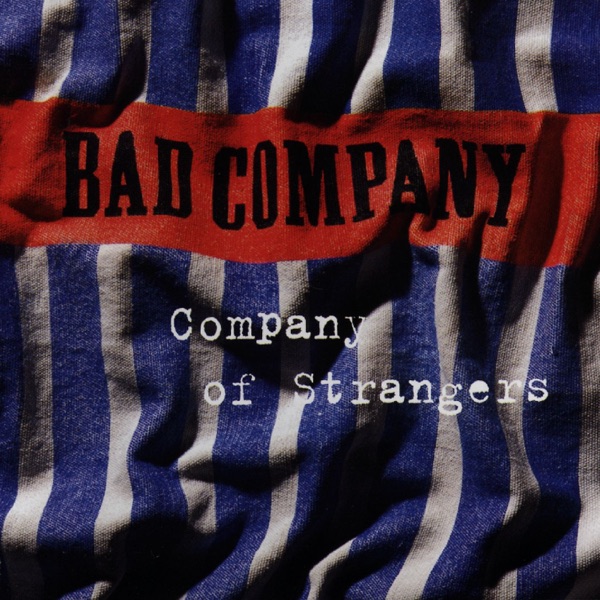
- 1 Company of Strangers ↗ 5:14
- 2 Clearwater Highway ↗ 3:25
- 3 Judas My Brother ↗ 4:45
- 4 Little Martha ↗ 2:57
- 5 Gimme Gimme ↗ 3:33
- 6 Where I Belong ↗ 4:02
- 7 Down Down Down ↗ 3:19
- 8 Abandoned and Alone ↗ 5:39
- 9 Down and Dirty ↗ 4:51
- 10 Pretty Woman ↗ 3:32
- 11 You're the Only Reason ↗ 3:47
- 12 Dance With the Devil ↗ 3:06
- 13 Loving You Out Loud ↗ 2:49